
End Mill Grinder | Made in Taiwan | 1-Year Warranty
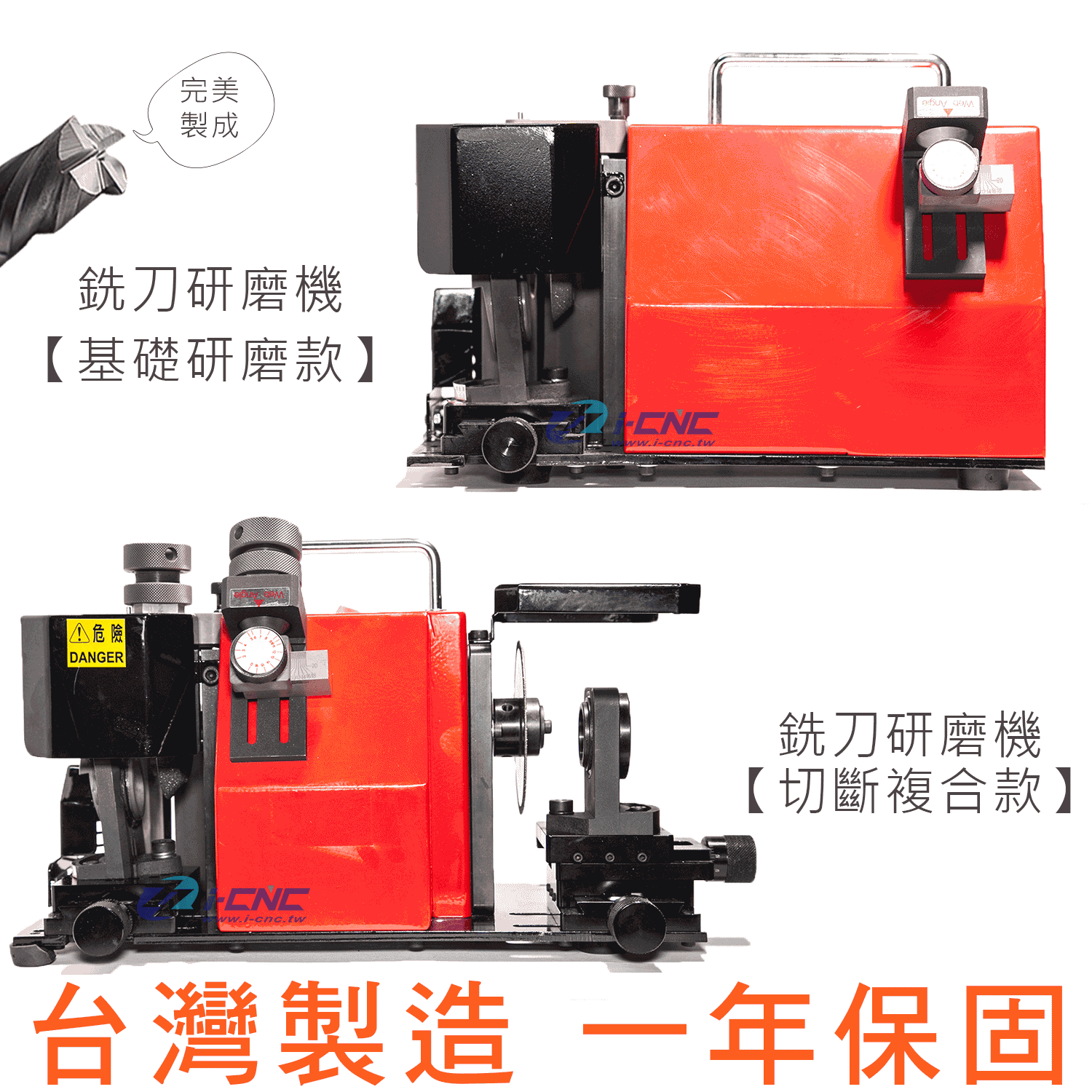
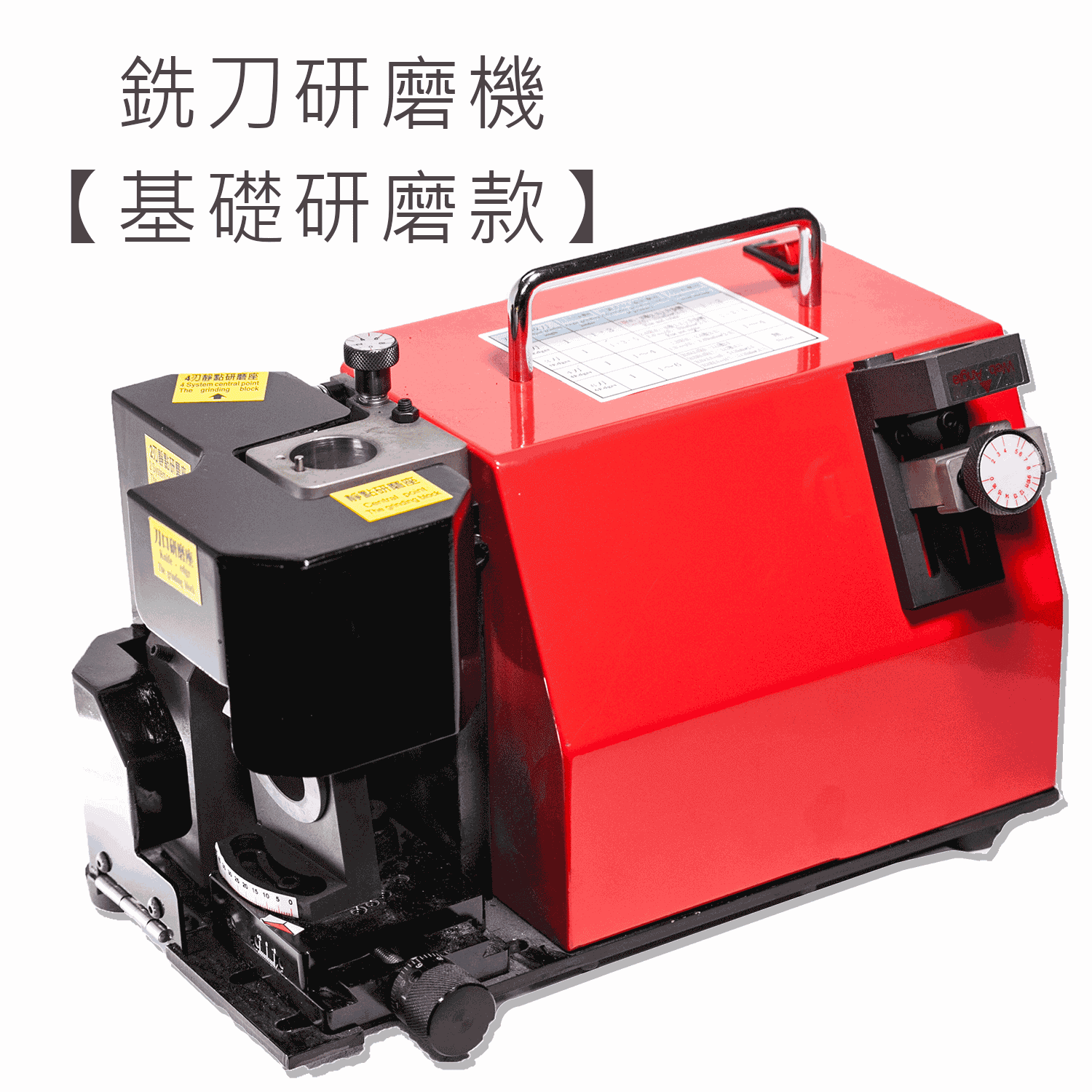
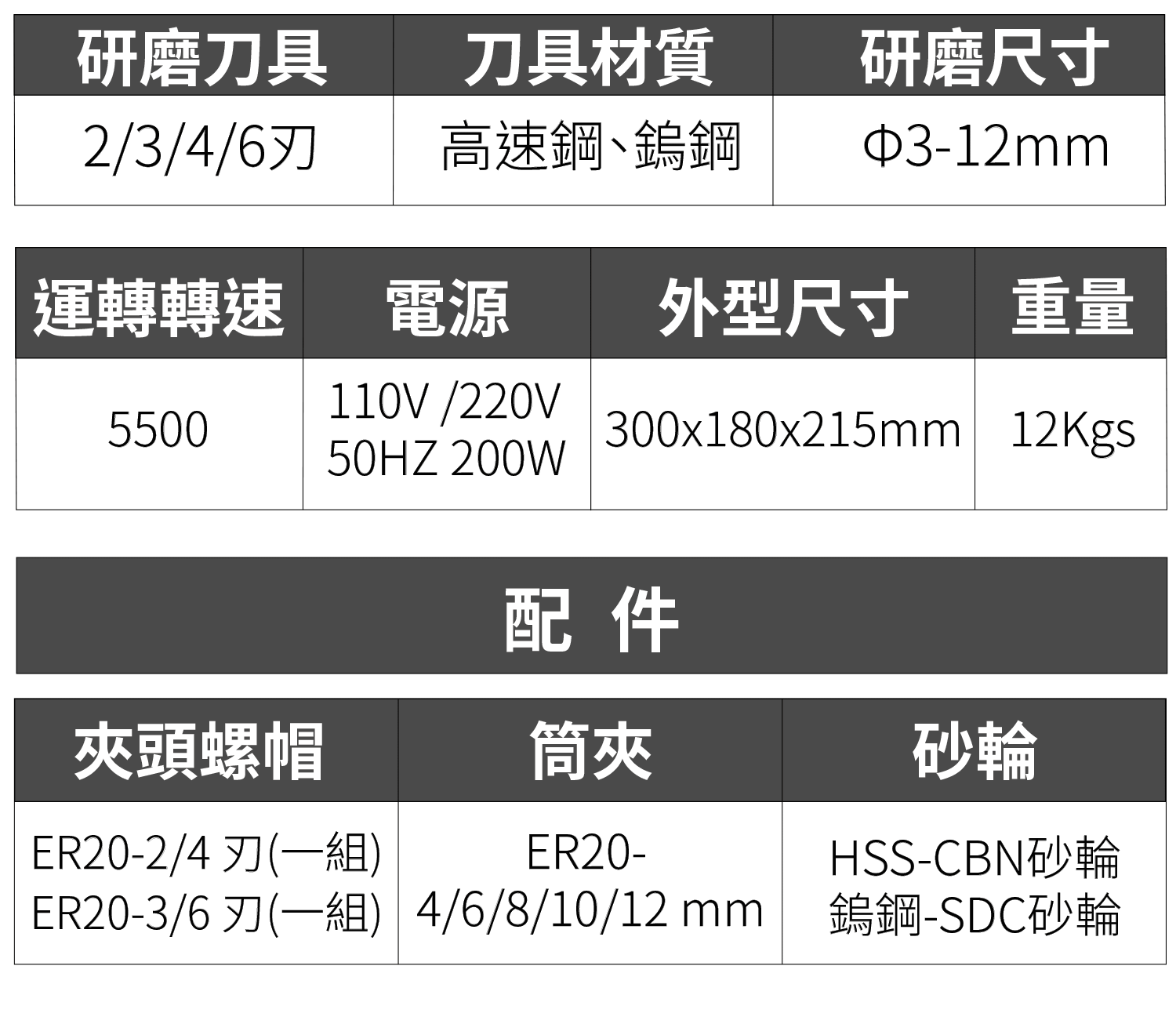
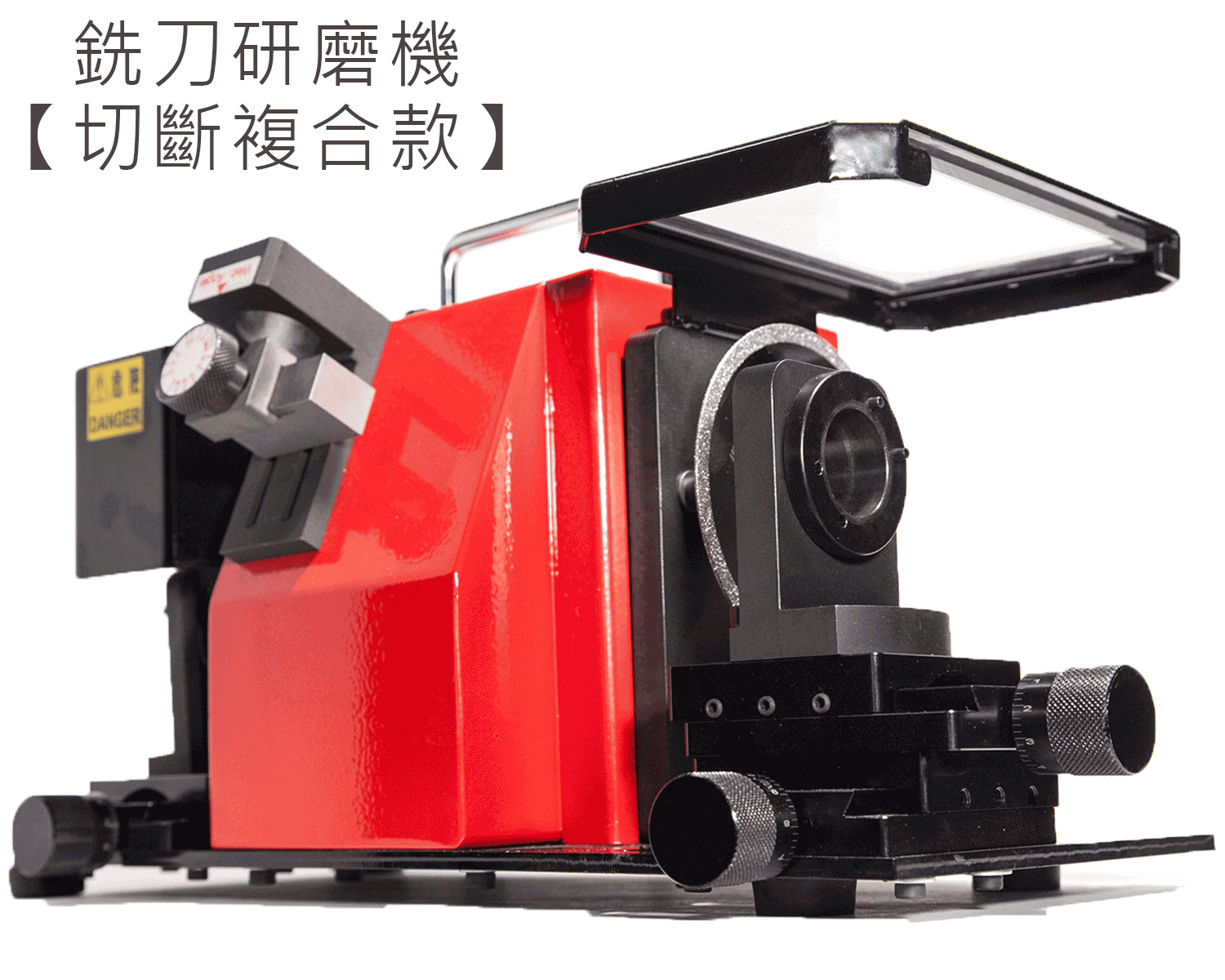
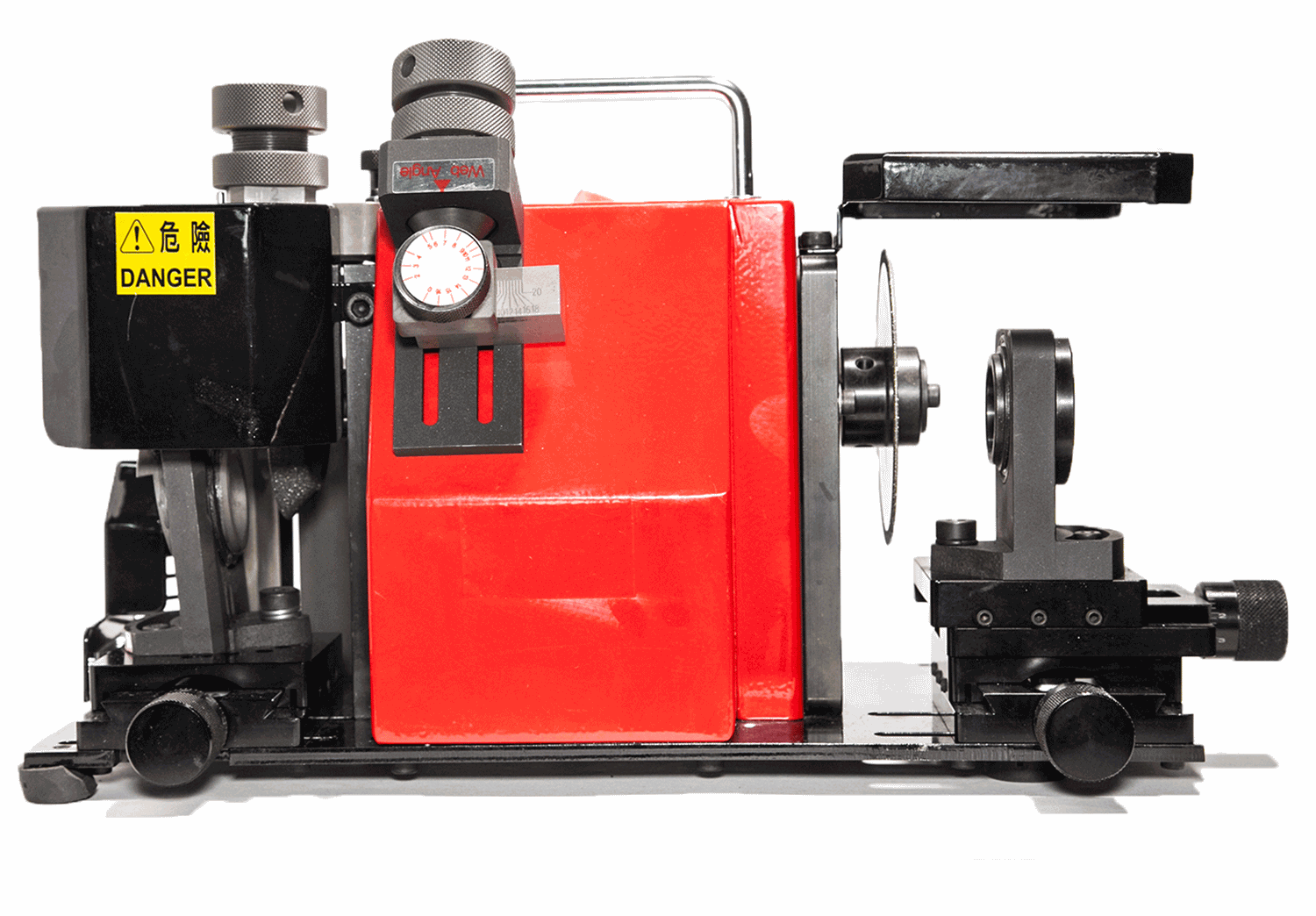
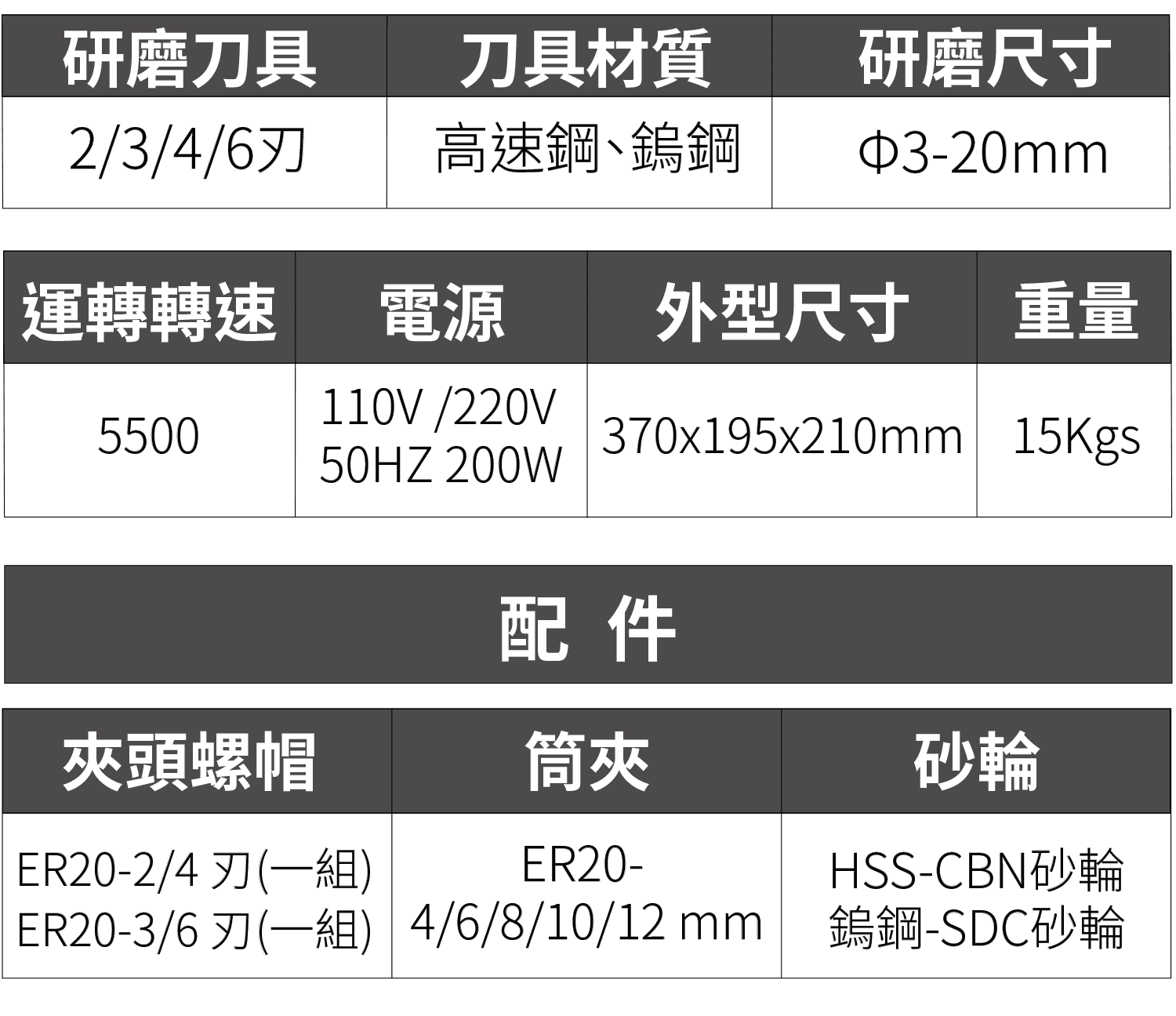
A new carbide end mill costs about TWD 500–2,000, yet regrinding one costs under TWD 100. With an end mill grinder, a dull tool no longer has to be scrapped — regrind it in-house and use it right away, and tool spend drops sharply. The machine is designed and built in Taiwan, suits tool diameters Φ3–12mm / Φ3–20mm, and a "mill + cut-off" combo model is also available; both carbide and HSS end mills can be reground. It ships with a one-year warranty and two on-site training sessions — a core machine for CNC and mold shops to extend tool life and cut consumable cost.
Benefits at a glance
- Tool cost: one carbide end mill can be reground many times, so tool cost drops sharply
- Range: Φ3–20mm; carbide / HSS / cut-off tools can all be ground
- Purchase assurance: made in Taiwan · one-year warranty · two on-site trainings
Models
| Model | Tool diameter | Function |
|---|---|---|
| End Mill Grinder Φ3–12mm | 3 mm – 12 mm | General tool grinding |
| End Mill Grinder Φ3–20mm | 3 mm – 20 mm | Large-diameter regrind |
| Mill + Cut-off Grinder Φ3–12mm | 3 mm – 12 mm | Mill & cut-off combo |
| Mill + Cut-off Grinder Φ3–20mm | 3 mm – 20 mm | Mill & cut-off combo |


Features (your pain point, and how this machine solves it)
| Common pain point | How this machine solves it |
|---|---|
| Carbide end mills get scrapped once dull; tool cost stays high | One tool can be reground many times, sharply lowering tool cost, done in-house |
| Imported machines vary in quality and are hard to service | Designed and built in Taiwan; parts are easy to get and service is easy to reach |
| Bought a machine but the operator can't use it | Purchase includes two on-site training sessions to get started correctly |
| Unsure how the 12mm and 20mm models differ | Clear specs and pricing (see the table above); confirm by online enquiry |
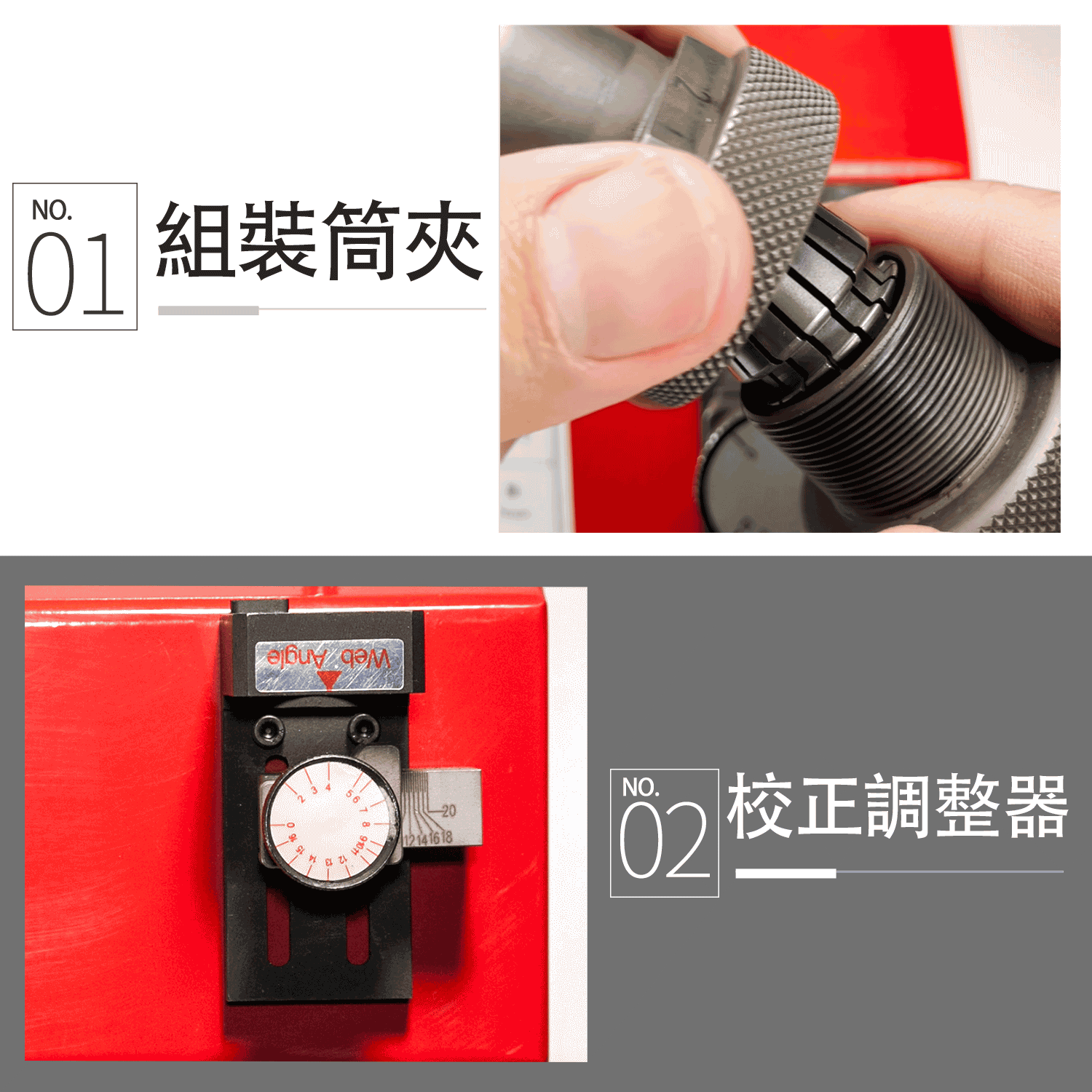
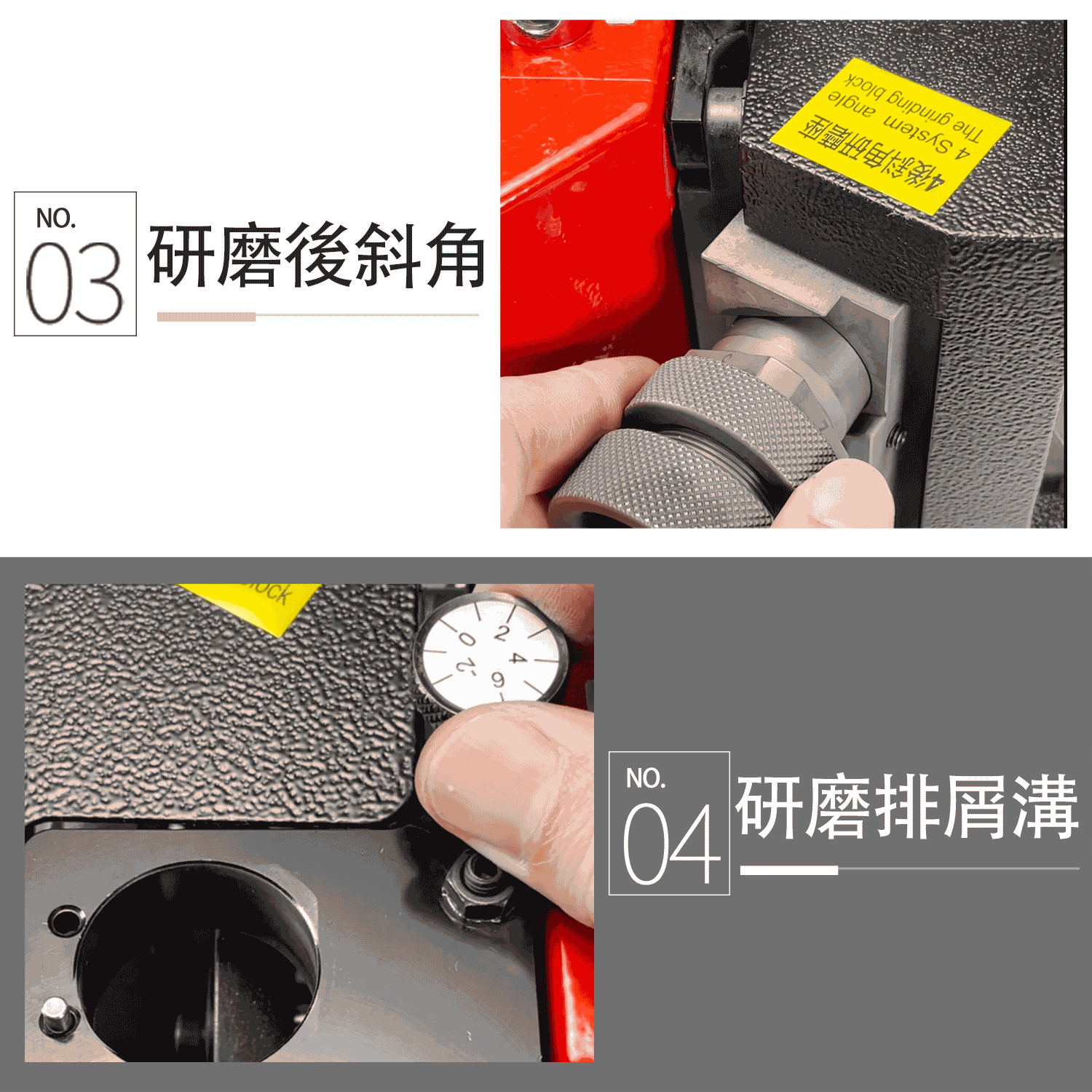
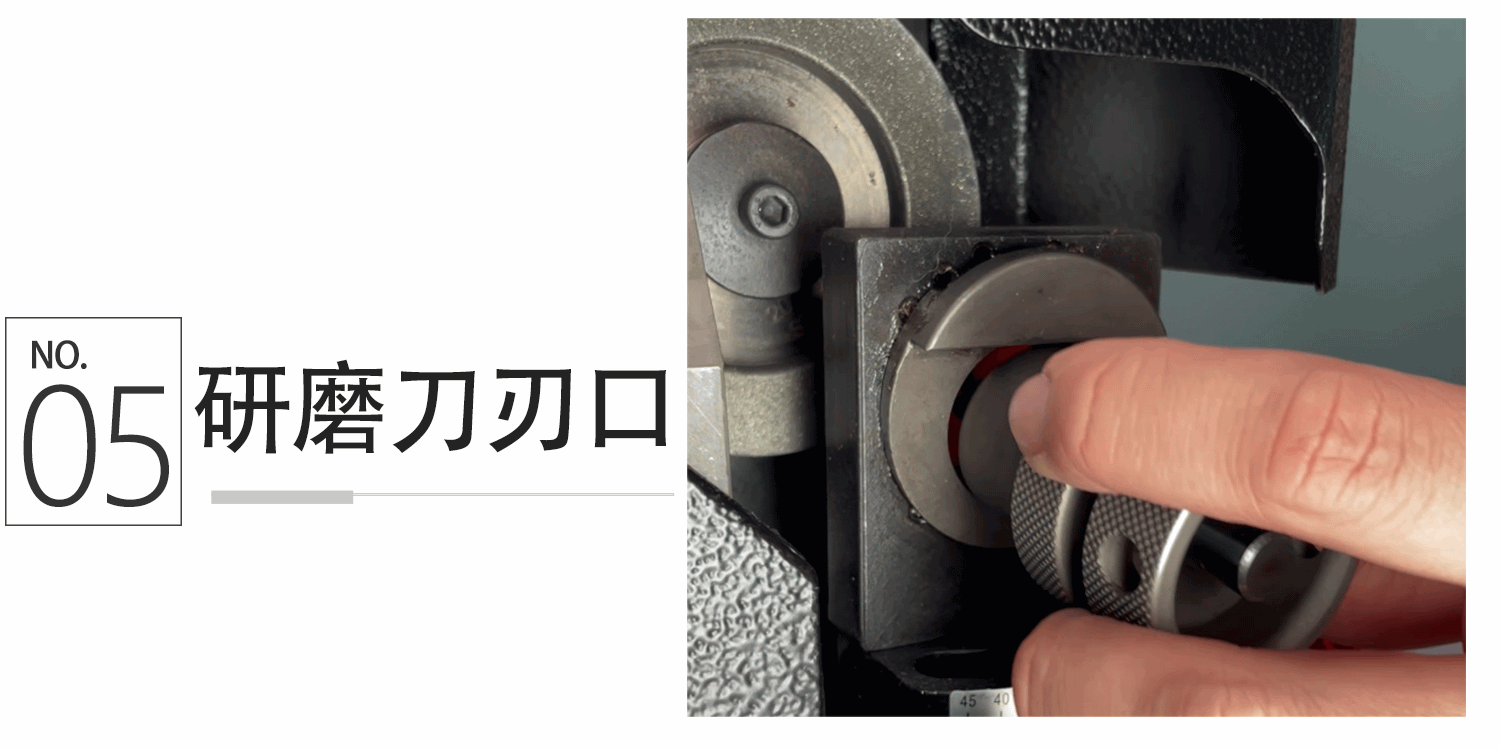
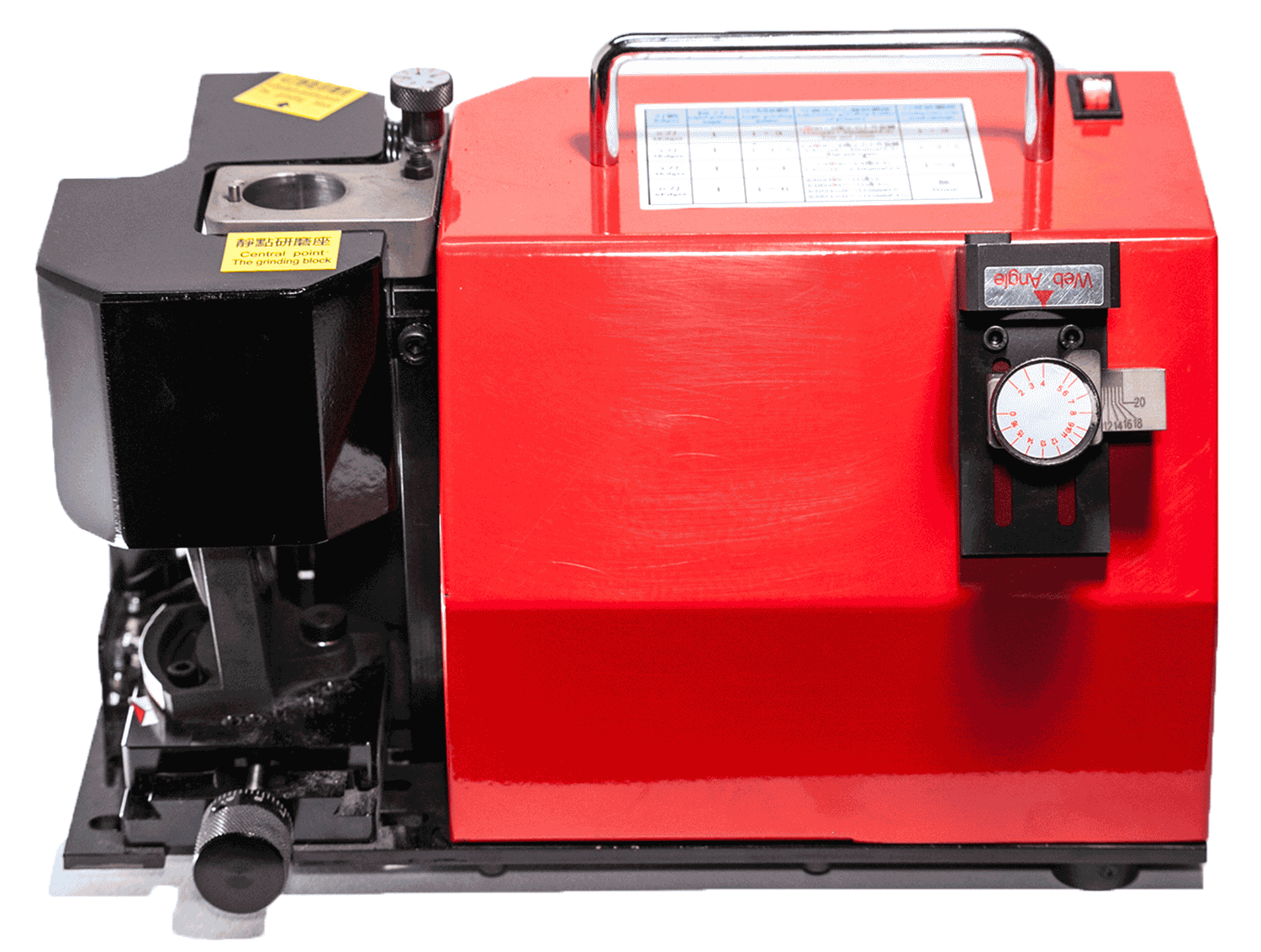
| Can't set the clamping angle; afraid of ruining the tool | Clamping angle adjusts quickly, the operation is intuitive and reduces mistakes |
Why you need an end mill grinder
During high-speed cutting, friction heat and mechanical wear gradually dull an end mill's edge. If a dull edge is left untreated, three problems follow:
- Dimensional drift and rougher surface finish → higher reject rate
- Feed has to be reduced → longer cycle time and higher time cost
- Frequent tool changes → tool purchasing alone becomes a sizeable yearly cost
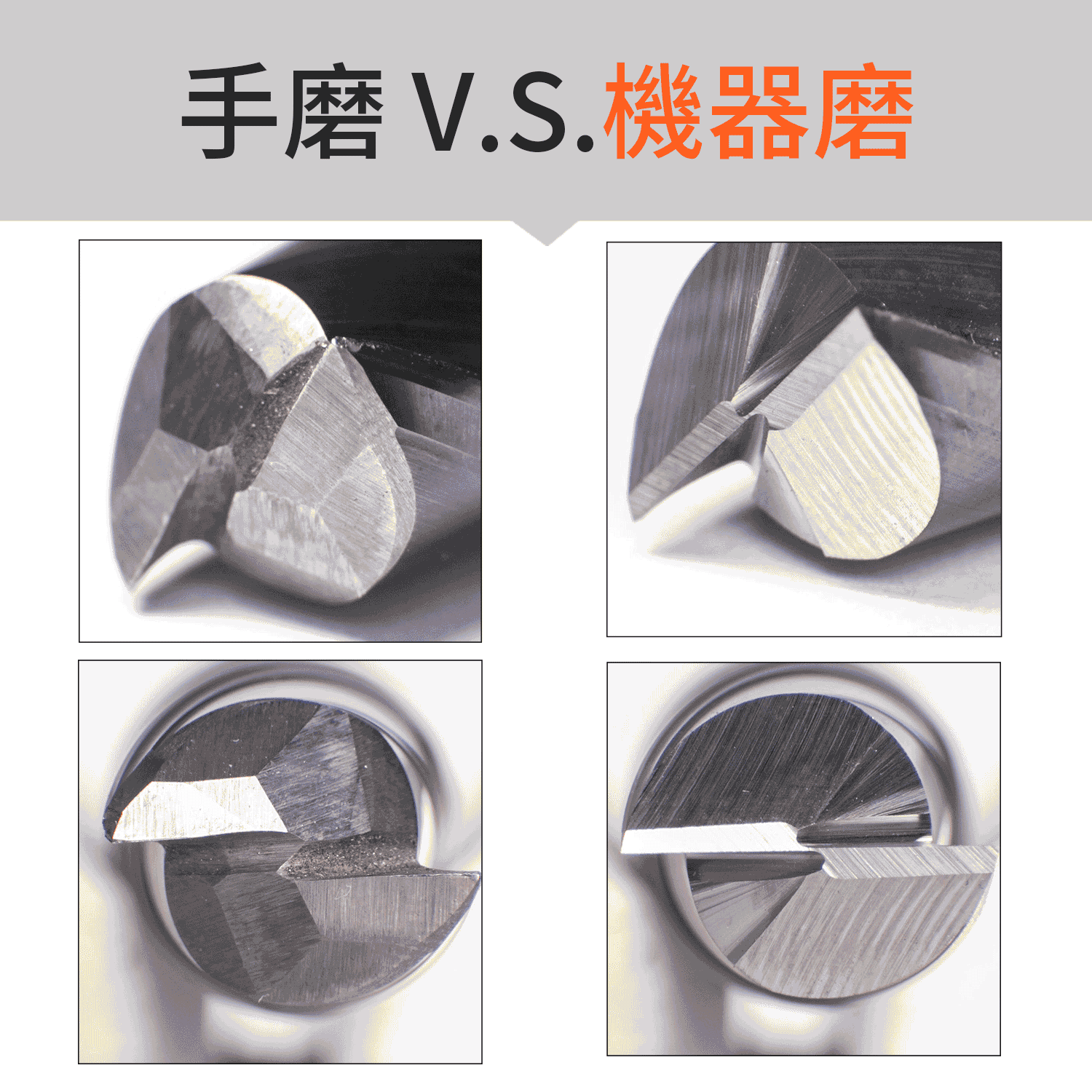
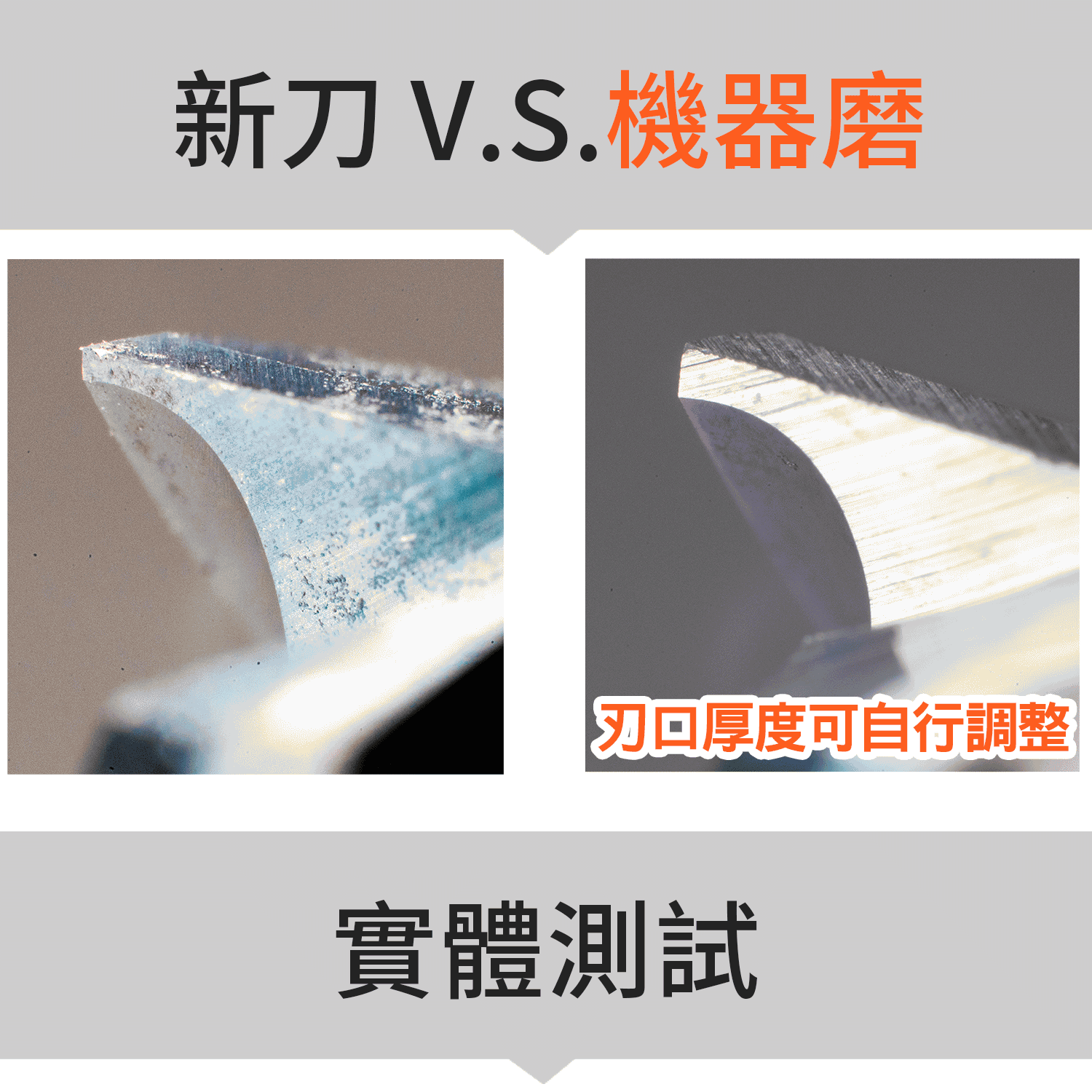
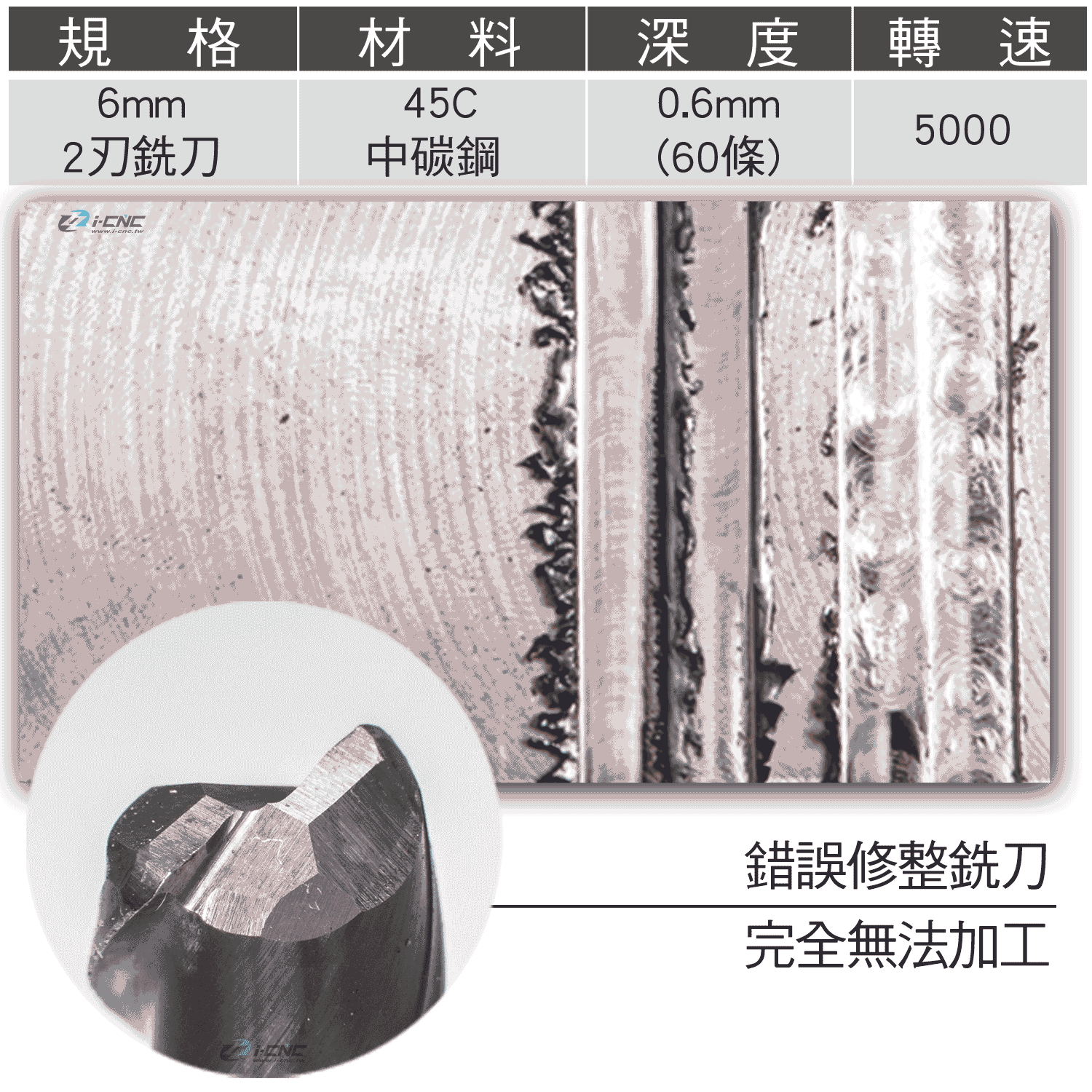
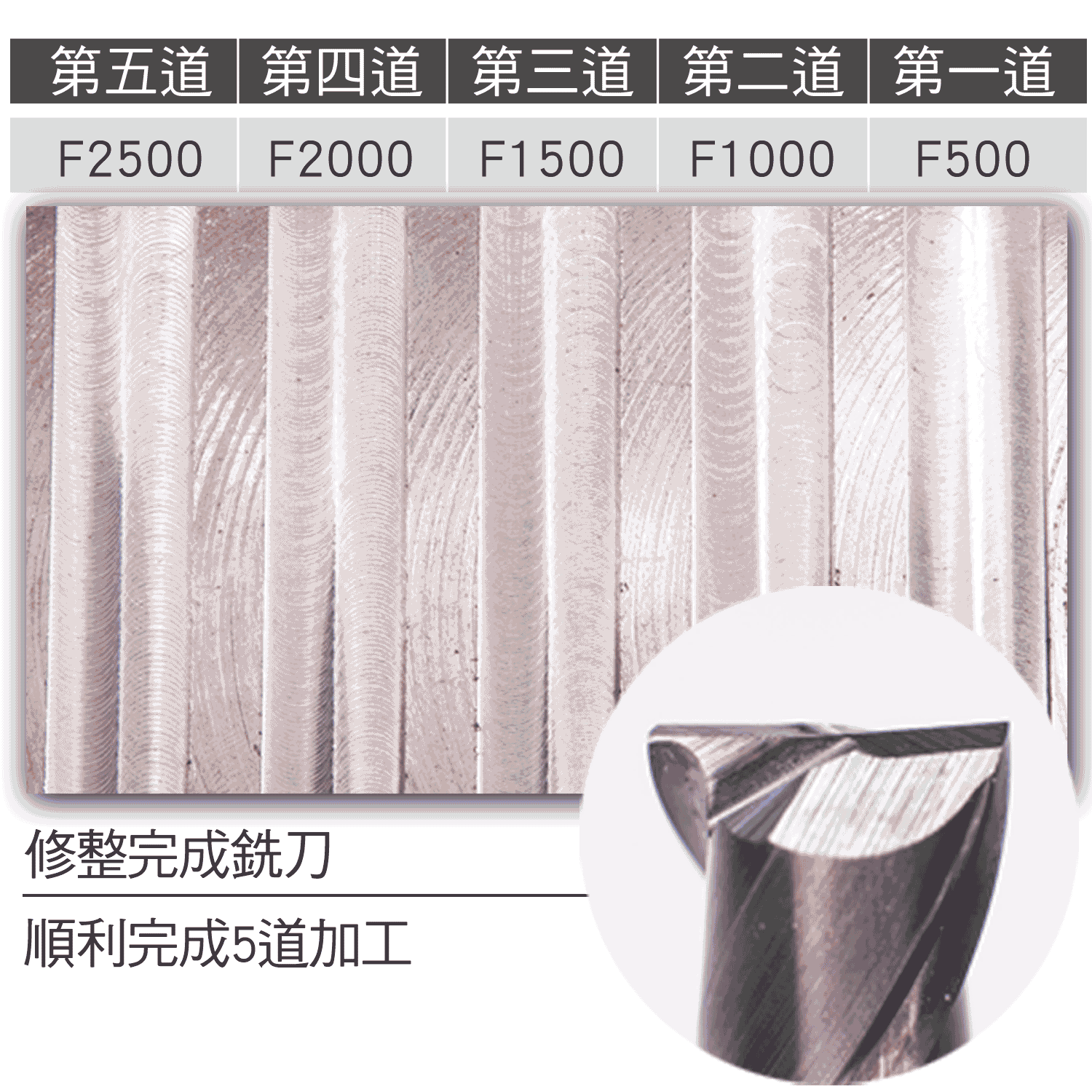
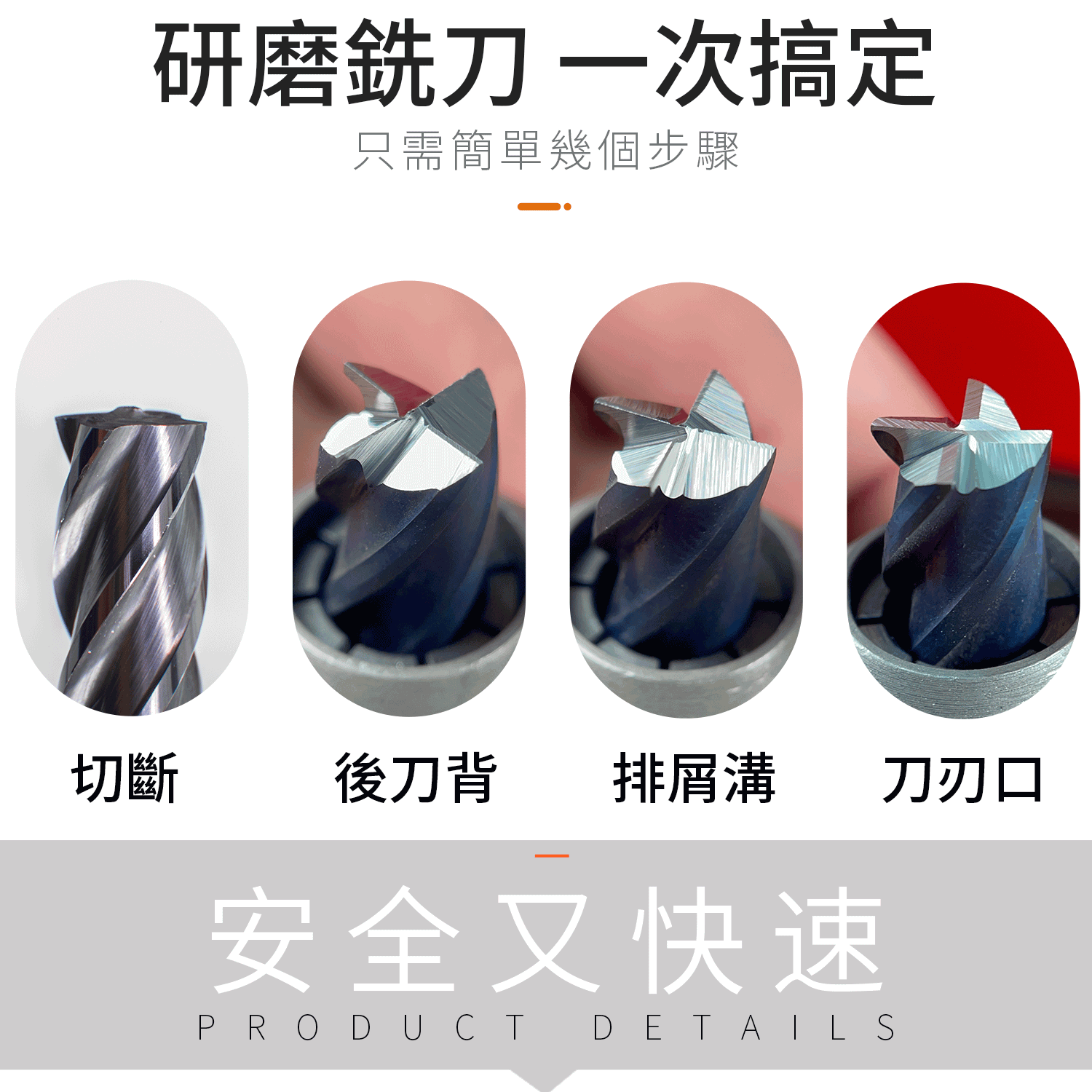
With this machine, tool regrinding can be done in-house — restoring a sharp edge, keeping machining stable, with a short payback period and clear long-term benefit.
Applicable tool types
- Flat-bottom end mills (2-, 3-, 4-flute)
- Carbide end mills
- HSS (high-speed steel) end mills
- Tool cut-off and end-mill neck relief (combo model)
Q: How long until it pays for itself?
A: With a new carbide end mill at about TWD 500–2,000 and a regrind cost of about TWD 100, each regrind saves hundreds to over a thousand in tool-change cost. Regrinding 2–3 tools a day can save roughly TWD 20,000+ a month; against an entry model at TWD 37,000, payback is about 2–6 months. (Actual results vary with tool spec, price, usage and regrind count.)
Q: How do I choose between the Φ3–12mm and Φ3–20mm models?
A: If your shop mostly uses tools under 12mm, the Φ3–12mm is enough; if you need large-diameter end mills (12–20mm), choose the Φ3–20mm model.
Q: Which shops suit the combo (mill + cut-off) model?
A: The combo model is two-in-one — it can cut off a chipped front edge and also do simple angle grinding or end-mill neck relief, with no need for wire-cut or a surface grinder, saving equipment cost and space.
Q: How does it compare with imported (e.g. China-made) machines?
A: This machine is designed and built in Taiwan with consistent quality control; parts are easy to get and service is easy to reach, and it comes with a one-year warranty and two on-site training sessions, so after-sales support is never a worry.
Q: Can I visit to see the machine or arrange a demo?
A: On-site operation demos are welcome by appointment — contact us via the enquiry form or customer service to arrange.
Q: What does the warranty cover?
A: Within one year of purchase, mechanical faults from non-human causes can be handled by contacting our service team for repair.
Q: Can a beginner operate it?
A: We provide two on-site training sessions of about 60–120 minutes each, ensuring operators learn to use it well.
Still deciding? Read these first
No rush — first get clear on "should you regrind, how to count the savings, and where prices are heading", then come back to evaluate a model:
- Regrind yourself vs send-out vs buy new — which is cheapest? Lays out per-tool cost and downtime for all three so you can see why in-house regrinding wins.
- Is your end mill dull? 5 signs to regrind & the right process Five shop-floor signs to judge regrind timing, with the correct steps.
- End mill wear analysis | normal vs abnormal wear, a full guide Understand wear mechanisms and the right time to change tools to extend tool life.
- Tungsten prices surge — how do shops hold tool cost? Three ways to keep tool cost down as tungsten keeps climbing.
Ready to evaluate? Contact us via the footer details or add our official LINE, and we'll help estimate your payback period based on your tool diameters and usage.