End Mill Wear Analysis
The performance of an end mill hinges on managing its wear, which falls into two categories: normal wear and abnormal wear. Normal wear progresses through three stages (initial, steady, terminal) as cutting time increases; abnormal wear includes chipping, flaking and thermal cracking. Once wear reaches the terminal stage, tool performance drops sharply and the tool should be reground or replaced promptly. Understanding wear mechanisms and countermeasures extends tool life and improves CNC milling stability.
Basic Concepts of End Mill Wear
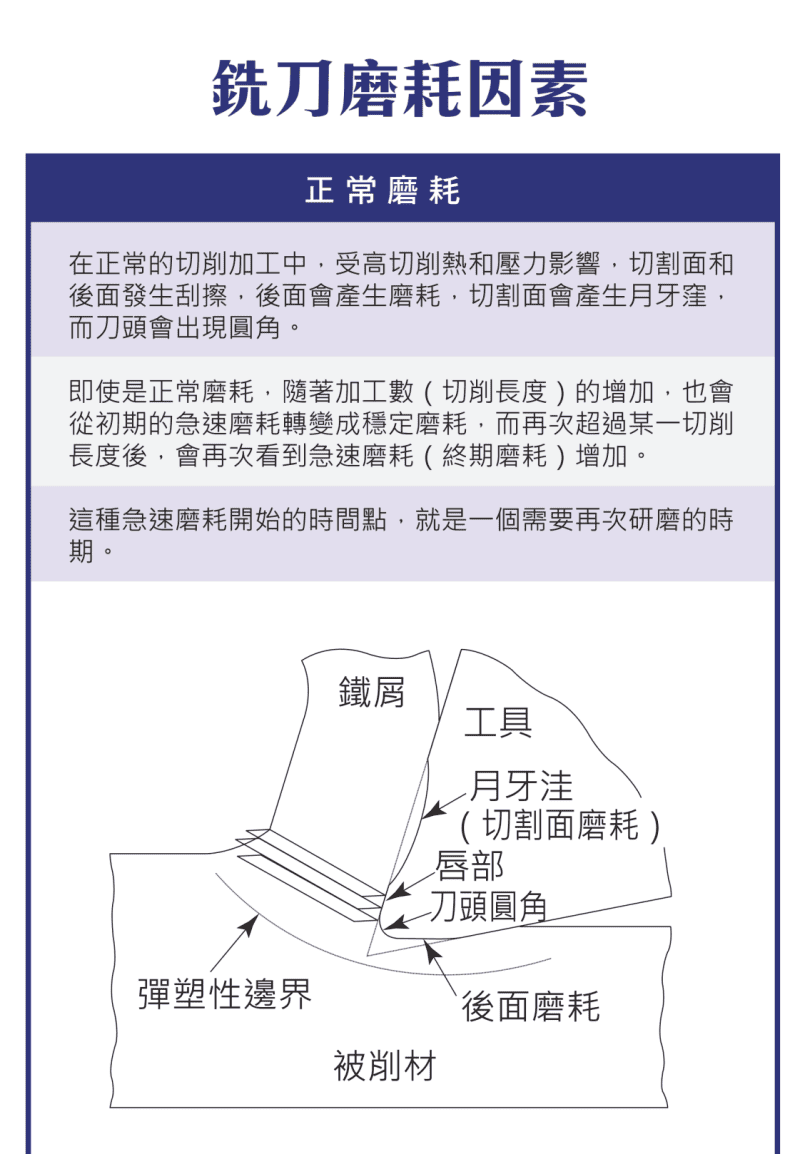
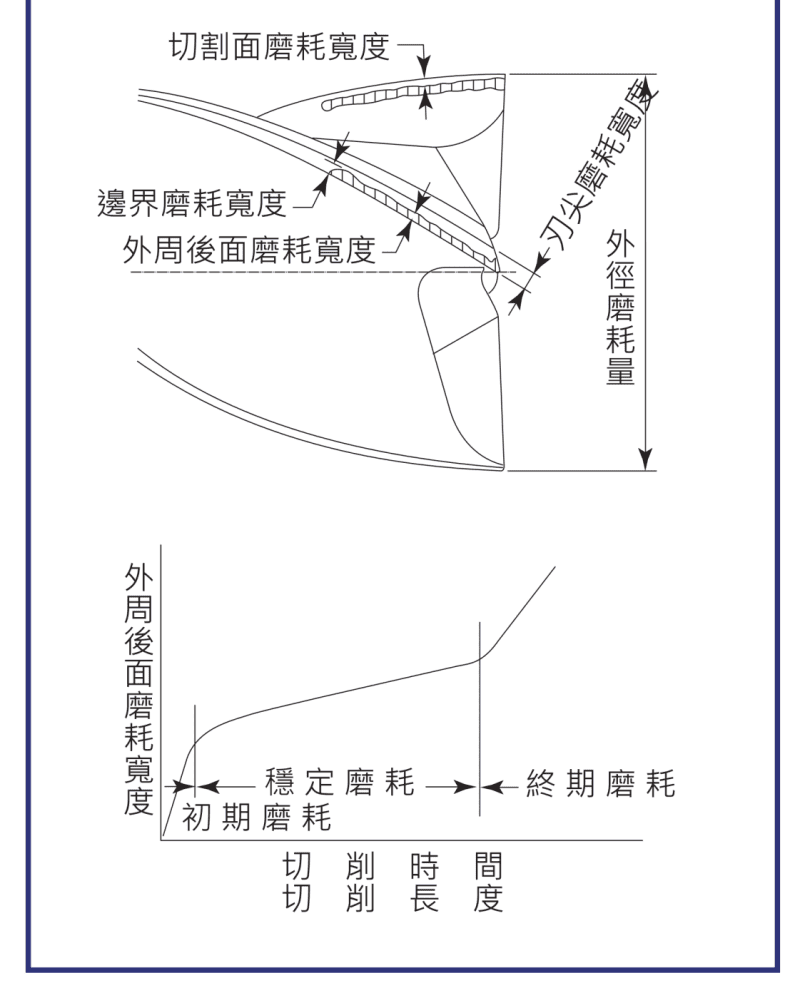
During machining, an end mill wears from high temperature, high pressure and friction, directly affecting machining accuracy, surface quality and tool life. Wear can be measured by indicators such as crater (rake-face) wear width, boundary wear width, peripheral flank wear width, corner wear width and outer-diameter wear.
Normal Wear Mechanism
Normal wear mainly consists of flank wear, crater wear (rake face) and corner rounding. Over cutting time (cutting length), the wear curve has three stages:
| Stage | Wear characteristic |
|---|---|
| Initial wear | Relatively fast at the start |
| Steady wear | The wear rate stabilizes |
| Terminal wear | Wear increases sharply |
Key: the onset of terminal wear is the right time to regrind.
Types of Abnormal Wear
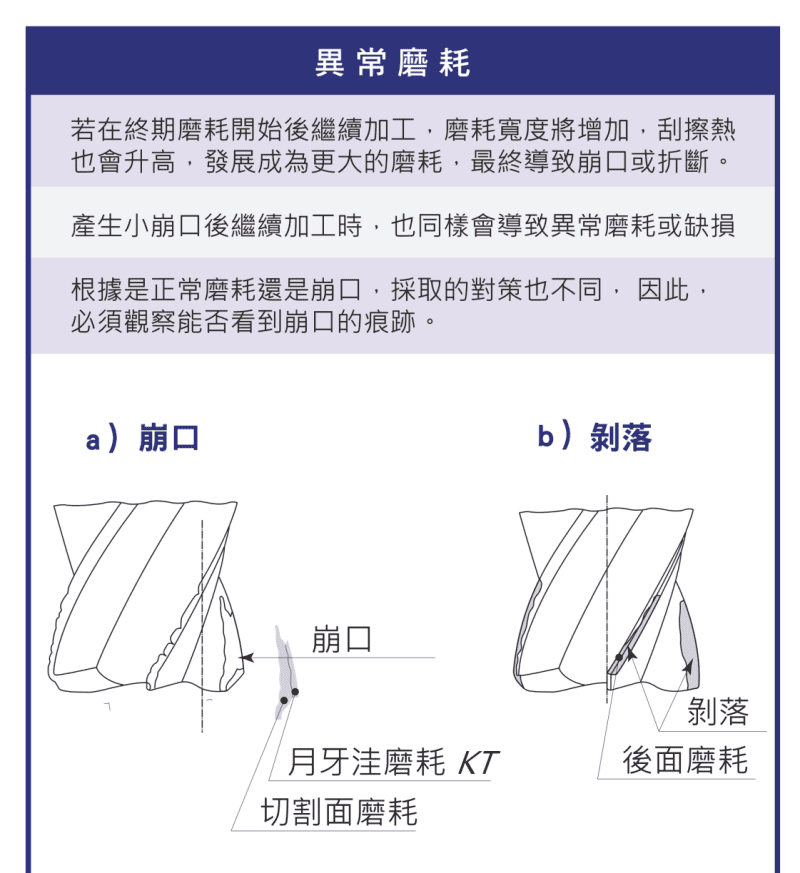
Common types of abnormal wear and their descriptions:
| Abnormal wear type | Description |
|---|---|
| Chipping | Localized edge breakage |
| Flaking | Surface material peeling |
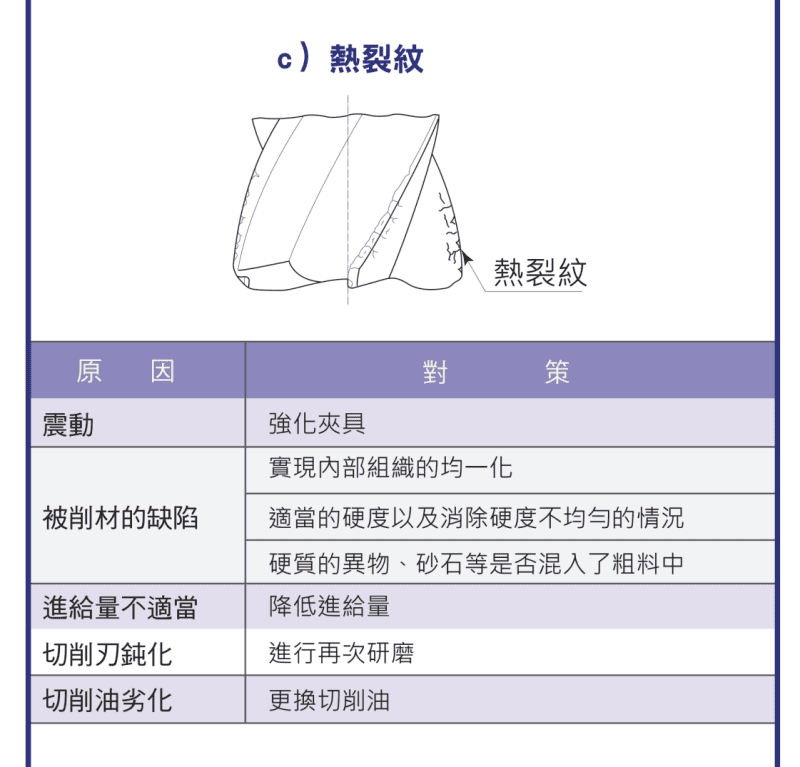
| Thermal cracking | Cracks caused by thermal stress |
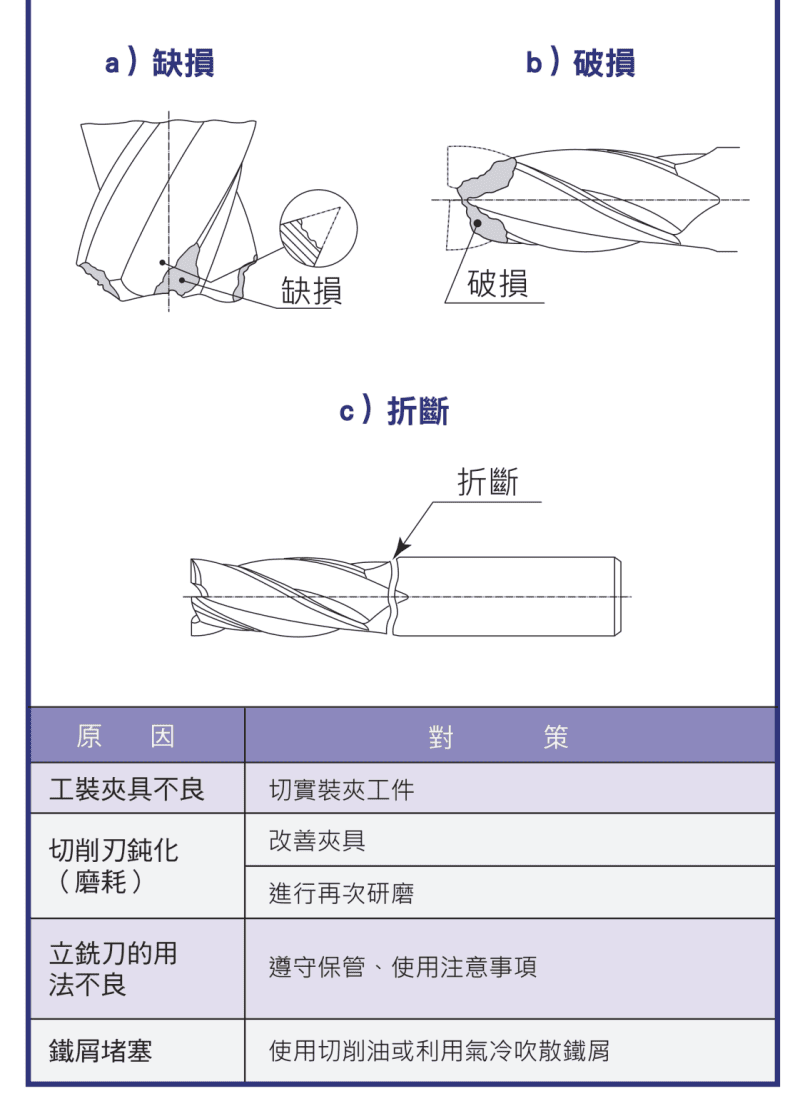
| Defect & breakage | Severe structural damage |
| Fracture | Complete tool failure |
Whether chipping is present affects the countermeasure, so inspect the edge for chipping marks.
Wear and Tool Life
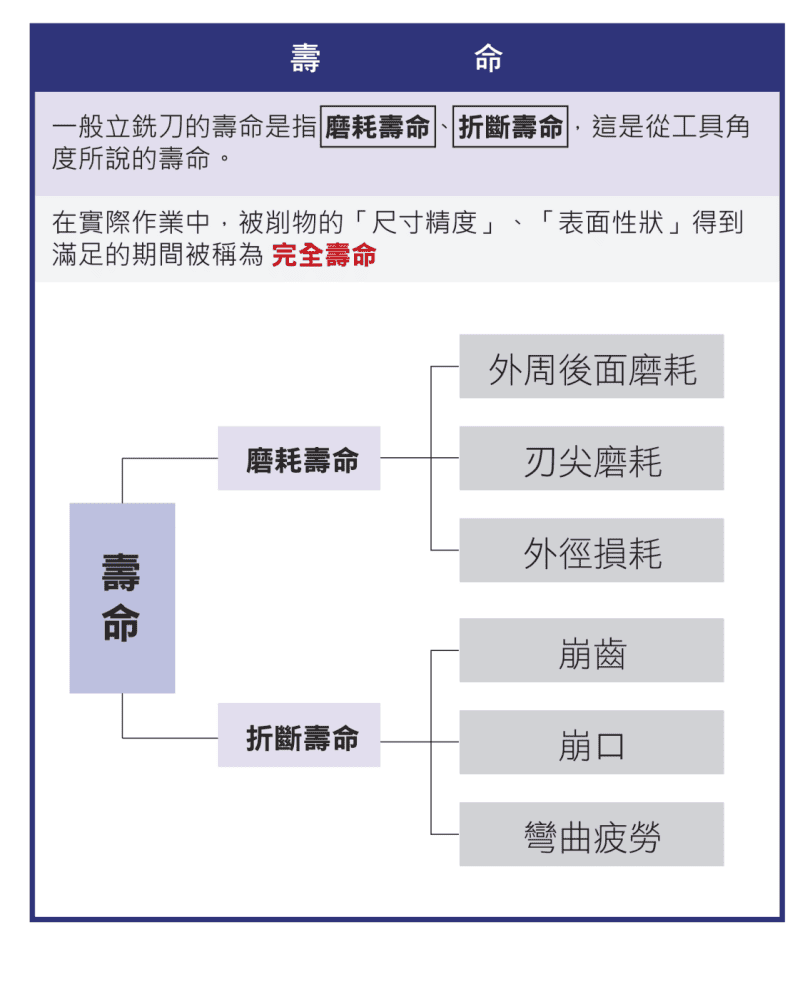
Tool life can be judged in three ways:
| Criterion | Basis of judgment |
|---|---|
| Wear life | Judged by the amount of wear |
| Fracture life | Judged by breakage |
| Total life | Judged by machining quality (dimension & surface) |
In practice, "total life" is the most important indicator.
Causes and Countermeasures of Abnormal Wear
Common causes and countermeasures for abnormal wear (including thermal cracking):
| Cause | Countermeasure |
|---|---|
| Vibration | Strengthen the clamping |
| Workpiece defects | Homogenize the internal structure; use appropriate hardness and eliminate hardness variation; avoid hard inclusions or sand in the stock |
| Improper feed rate | Reduce the feed rate |
| Edge dulling | Regrind the tool |
| Coolant degradation | Replace the cutting fluid |
Common causes and countermeasures for defects and fracture:
| Cause | Countermeasure |
|---|---|
| Poor fixturing | Clamp the workpiece securely |
| Edge dulling (wear) | Improve clamping; regrind the tool |
| Improper end mill use | Follow storage and usage guidelines |
| Chip clogging | Use cutting fluid or an air blast to clear chips |
Practical Wear Control Tips
| Item | Description |
|---|---|
| Establish a wear-monitoring routine | Inspect the edge regularly |
| Set a regrinding standard | Regrind before terminal wear |
| Avoid overuse | Avoid machining after terminal wear or chipping |
| Choose suitable tooling | Choose tool material and wear-resistant coating suited to the workpiece |
Related Equipment
Before terminal wear or minor chipping, regrinding restores the cutting edge for reuse at far lower cost than replacement. Learn more: End Mill Grinder (Made in Taiwan, 1-Year Warranty).
FAQ
When should an end mill be reground?
When the wear curve enters the terminal stage and the wear rate rises sharply. Continuing past this point rapidly worsens wear and can lead to chipping or fracture.
How can I tell normal wear from abnormal wear?
Normal wear (flank/crater wear, corner rounding) progresses gradually with cutting time; abnormal wear (chipping, flaking, thermal cracking, defect, fracture) is sudden structural damage. Inspect the edge for chipping marks to judge.
How is tool life determined?
By wear life (amount of wear), fracture life (breakage) and total life (dimensional and surface quality). In practice, total life is the most important.
Does a worn end mill always need replacing?
No. Before terminal wear or minor chipping, a carbide end mill can be reground and reused many times at far lower cost than replacement; only severe fracture or breakage requires a new tool.
For the full reading guide on this topic, see Tool Life and Wear: A Complete Reading Guide.
This article is part of End Mills: The Complete Guide - Know the Cutter, Choose It, Set the Conditions; Toolpaths Are Another Line; that guide shows how the whole topic fits together.