Drill Shank & Morse Taper Guide: MT Sizes & Shank Structure
Drill shanks and the Morse Taper are key specs for stable holding and torque transmission. Standardized tapers (MT1–MT6) with tang or threaded designs raise holding strength, prevent slipping and secure accuracy. Different shank forms suit different machines and conditions. This guide covers the shank and taper concept, Morse-taper specs, tang vs threaded shanks and selection rules as a reference for drill selection and CNC machining.
1. Shank and Taper Concept
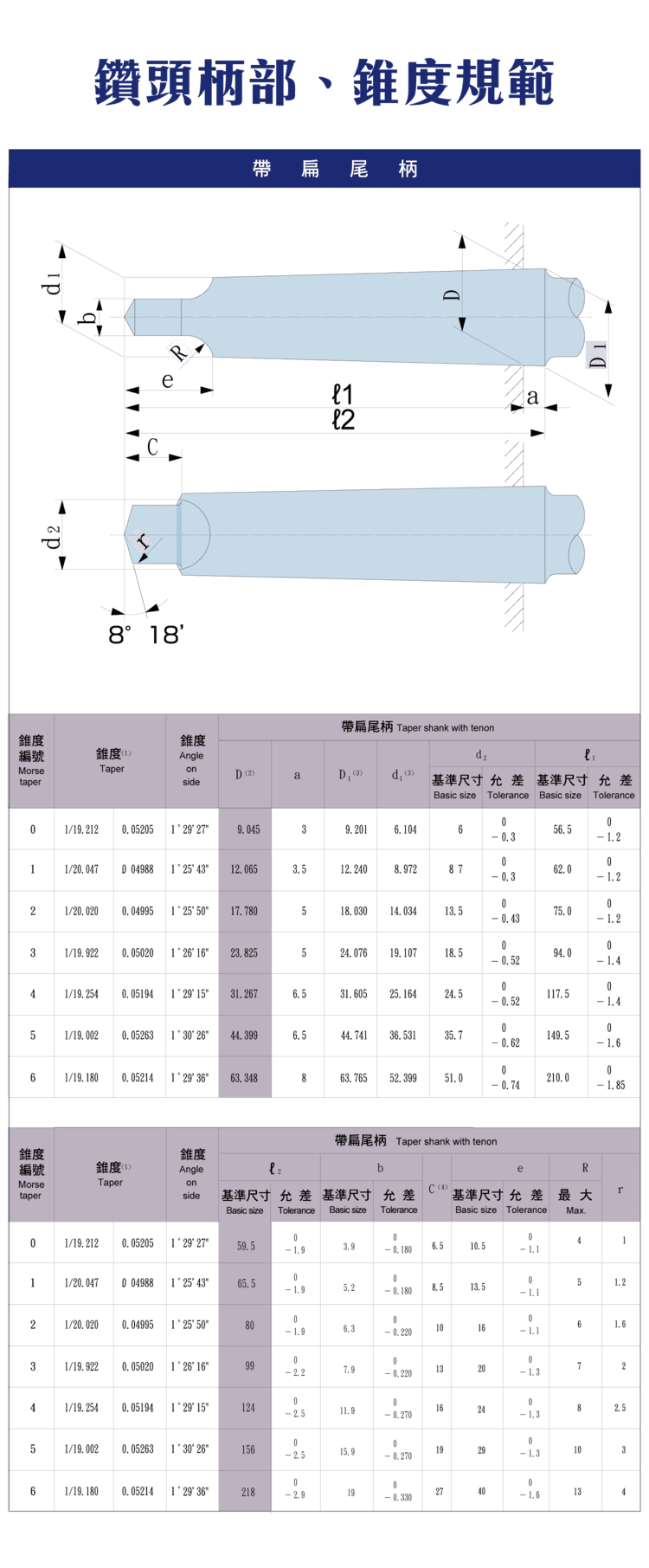
The shank connects the drill to the machine and transmits torque; the taper is an angled holding structure that fixes by friction, raising holding stability and lowering slip risk.
2. Morse Taper
| Item | Description |
|---|---|
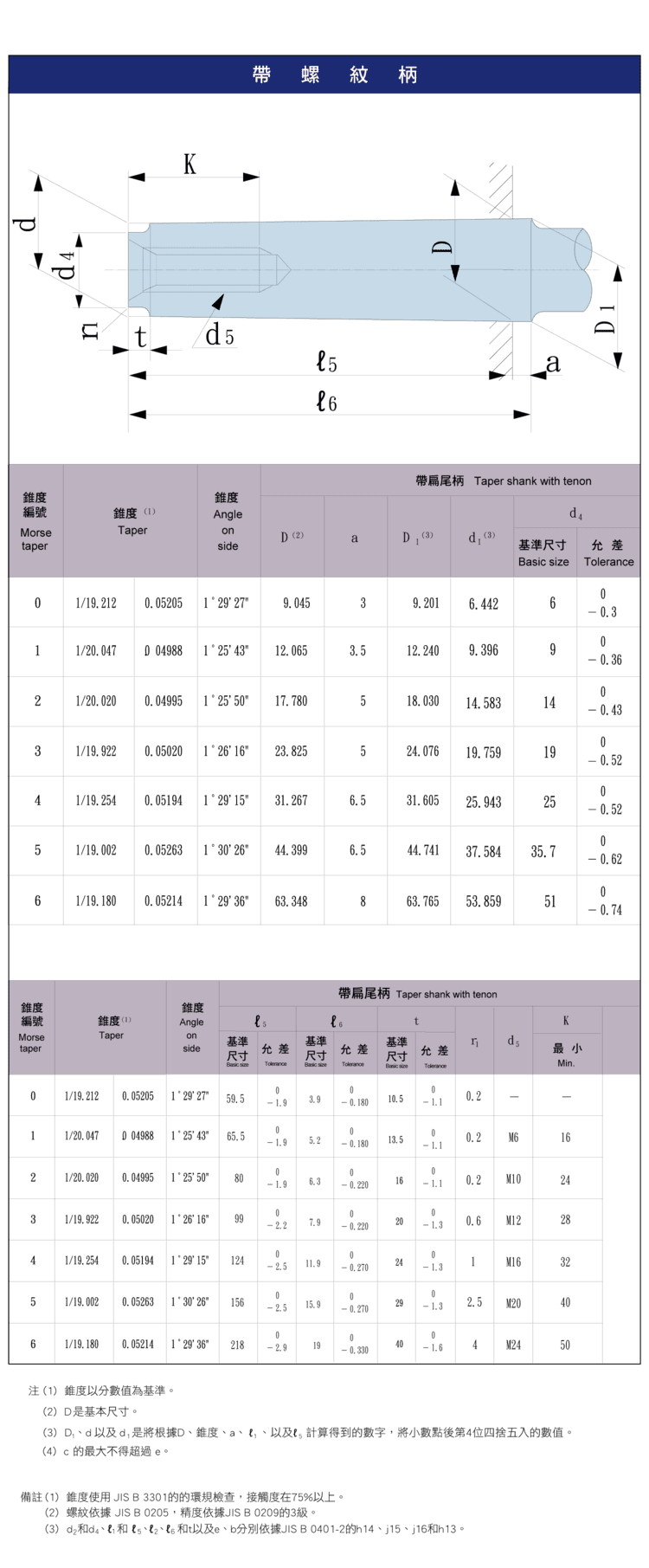
| Common sizes | MT1, MT2, MT3, MT4, MT5, MT6 |
| Traits | Self-locking design, high concentricity |
| Advantages | Quick mounting, high load capacity |
| Taper angle | approx. 1.49° (small angle self-locks) |
| Dimensions | D large-end dia, d small-end dia, L length |
3. Tang Shank vs Threaded Shank
| Shank | Structure & advantage | Application |
|---|---|---|
| Tang shank | End tang prevents rotation/slip, stable drive, easy removal | Traditional machines, heavy cutting |
| Threaded shank | Internal/end thread, axial fixation, anti-pullout | CNC machines, high-speed and precision work |
4. Taper vs Straight Shank
| Shank | Traits |
|---|---|
| Taper shank | High stability, suits large-size work |
| Straight shank | Universal, suits chuck holding |
For straight-shank diameter spec and runout, see the Straight Shank Drill Specification and Runout.
5. Shank Selection
| Need | Suggested shank |
|---|---|
| Heavy cutting | Taper + tang |
| High speed | Threaded shank |
| General work | Straight shank |
| High precision | High-precision taper |
Choose the shank by machine type, load and precision to raise stability, reduce vibration and extend tool life.
FAQ
Q: What are Morse tapers MT1–MT6?
Standardized taper-shank sizes; a larger number means a larger taper and higher load. Their small angle (~1.49°) self-locks, with high concentricity and quick mounting.
Q: Tang or threaded shank?
A tang shank prevents rotation/slip and is easy to remove, suiting traditional machines and heavy cutting; a threaded shank gives axial fixation and anti-pullout, suiting CNC high-speed and precision work.
Q: Is a taper shank better than straight?
Each has its place. Taper shanks are stable and suit large sizes and heavy cutting; straight shanks are universal for chuck holding and general CNC. Choose by spindle interface and load.
Q: Why does a taper shank self-lock?
The Morse taper has a very small angle (~1.49°), so once inserted it locks by cone friction and transmits torque without extra tightening, keeping high concentricity.
This article is part of Drill Bits: The Complete Guide - Start From Depth-to-Diameter, Then Pick the Drill and Set the Conditions; that guide shows how the whole topic fits together.
Published: 2026-03-24 | Last updated: 2026-07-25