Tap Thread Tolerance Guide: P-Class, 6H/7H & Gauges
Internal-thread precision grades (P-class, JIS, ISO) directly affect thread fit, machining stability and assembly quality, with the pitch diameter being the key size. P-class offers flexible pitch-dia tolerance bands (types A to D), while JIS/ISO use standard grades like 5H and 6H. This guide covers grades, the pitch-diameter and gauge relationship, machining-condition effects and selection rules to lower tapping torque, avoid breakage and keep thread quality stable.
1. What Precision Grade Means
The precision grade controls the internal-thread pitch-diameter tolerance, setting fit tightness and assembly. It mainly affects tapping torque, thread accuracy and fit stability. Internal size is set by the tap: tap accuracy sets the size, pitch dia sets the fit, and the gauge verifies quality — together a complete machining-and-inspection system. See Metric Thread Gauge Guide: GO/NO GO & External/Internal Tolerance for details.
2. P-Class (Types A to D)
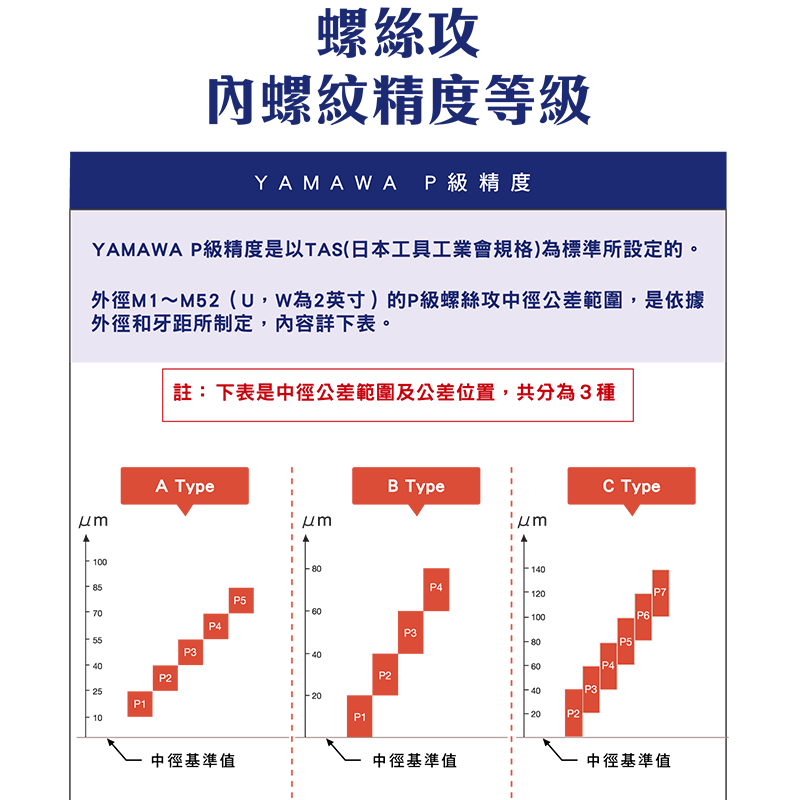
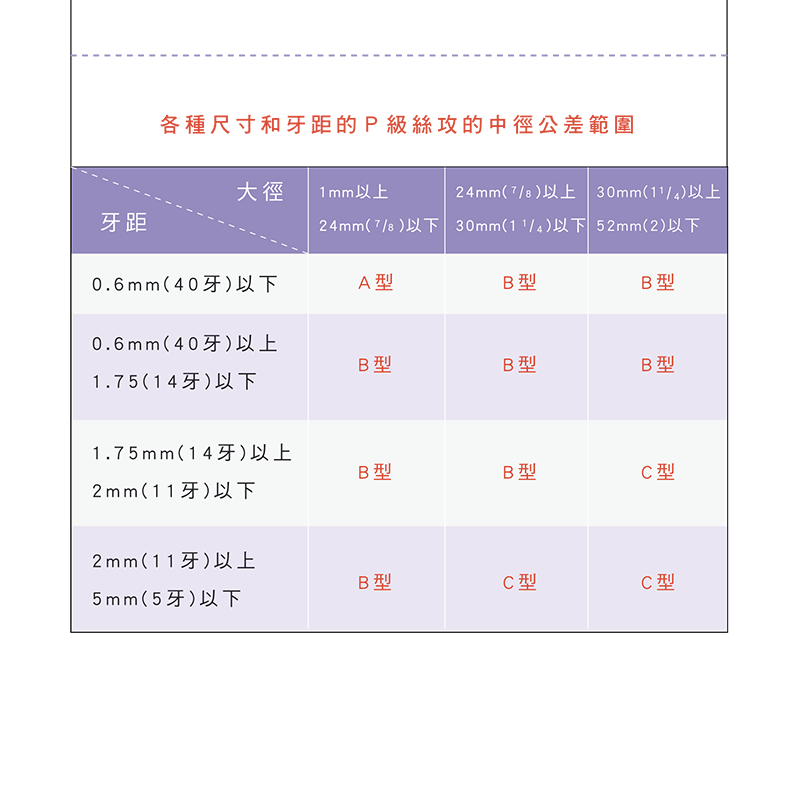
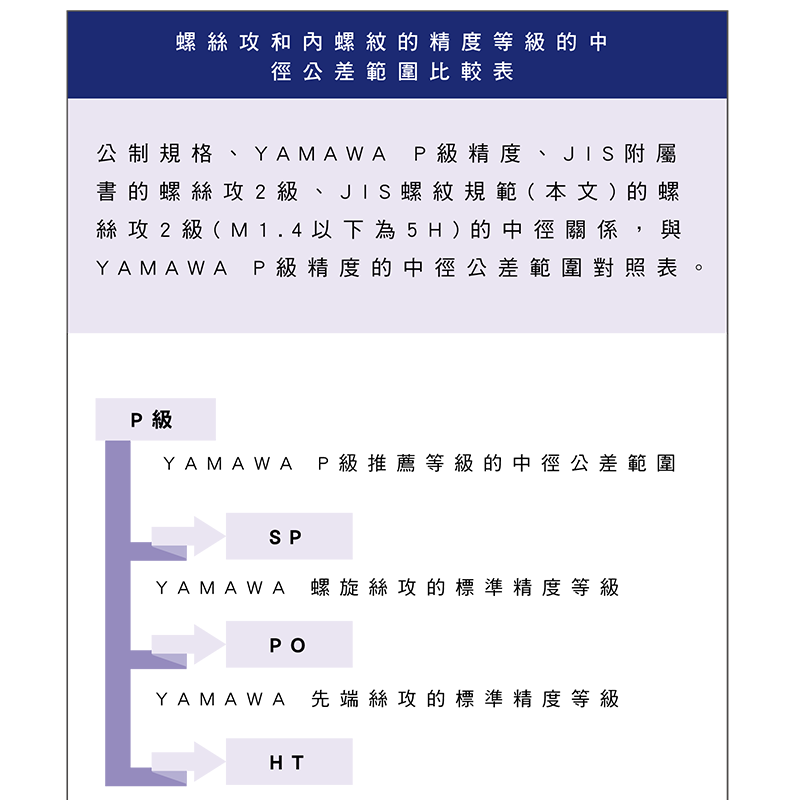
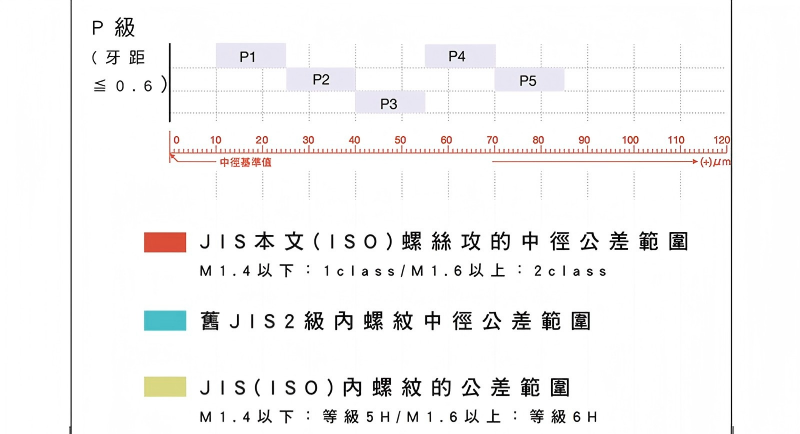
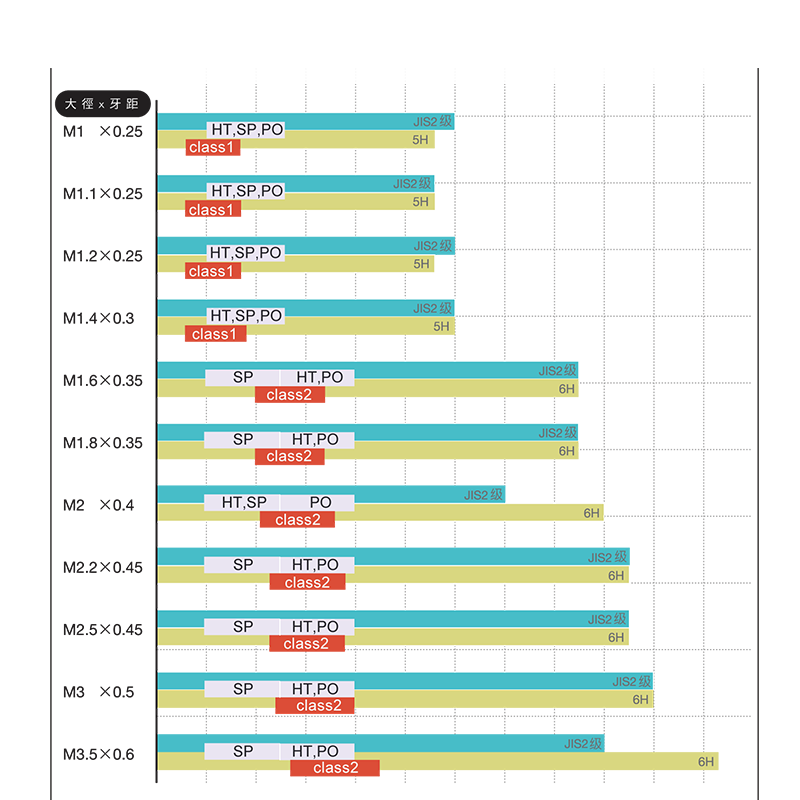
P-class is a tap maker’s grading of the tap pitch diameter, measured upward from the basic pitch diameter. It has four types, A, B, C and D, by the tolerance width of each grade, and the type is set by nominal diameter and pitch (per the YAMAWA general catalogue 2025-2026). Older catalogues list only types A, B and C (see the chart above); the current edition adds type D for very coarse, large-diameter taps.
| Type | Width per grade | Grade zones (μm) | Applies to |
|---|---|---|---|
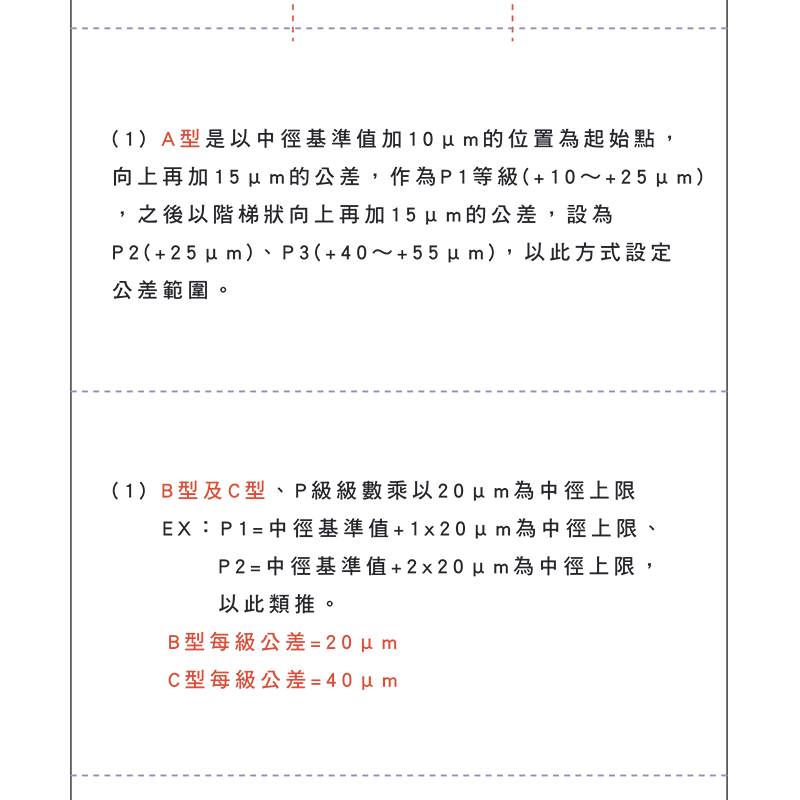
| A | 15 μm | P1 +10 to +25, P2 +25 to +40, P3 +40 to +55, and so on | Pitch 0.6 or finer, diameter up to 24 mm |
| B | 20 μm | P1 0 to +20, P2 +20 to +40, P3 +40 to +60, P4 +60 to +80 | Most sizes with pitch over 0.6; the most common type |
| C | 40 μm | P2 0 to +40, P3 +20 to +60, each grade 20 up, to P7 +100 to +140 | Pitch 2 over 30 mm diameter; pitch over 2 over 24 mm |
| D | 60 μm | P3 0 to +60, P4 +20 to +80, each grade 20 up, to P8 +100 to +160 | Pitch 5.5 or 6, diameter over 52 mm |
Within one type every grade has the same width; in types C and D neighbouring grades are only 20 μm apart, so their zones overlap. For large diameters, follow the maker’s catalogue.
3. P1–P8 Logic: a Higher Number Cuts Larger
| Grade | Zone position | When to choose |
|---|---|---|
| Lower (e.g. P2) | Closest to basic size; smaller thread, tighter fit | Spiral-flute taps, which tend to cut oversize, start low |
| One higher (e.g. P3) | One step up | Spiral-point taps, which rarely cut oversize |
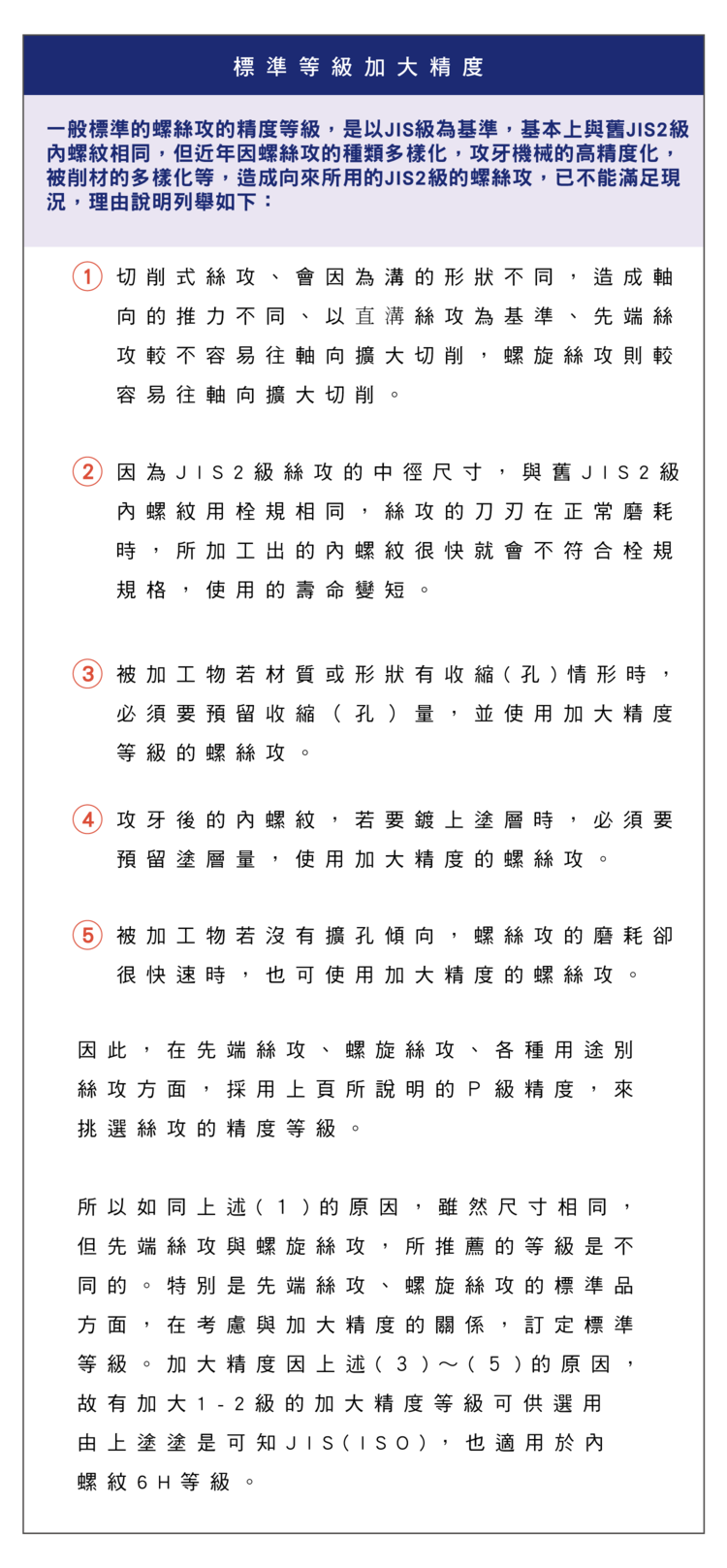
| 1–2 grades more | Oversize class | Shrinking material, plating after tapping or fast tap wear; see section 7 |
A higher number moves the zone up, cutting a larger thread with a looser fit; the zone width is set by the type and does not grow with the number. The grades above are a maker’s example (per YAMAWA technical data): for M10×1.5 a spiral-flute tap takes P2 (+20 to +40 μm) and a spiral-point tap P3 (+40 to +60 μm).
4. JIS / ISO Standard Grades
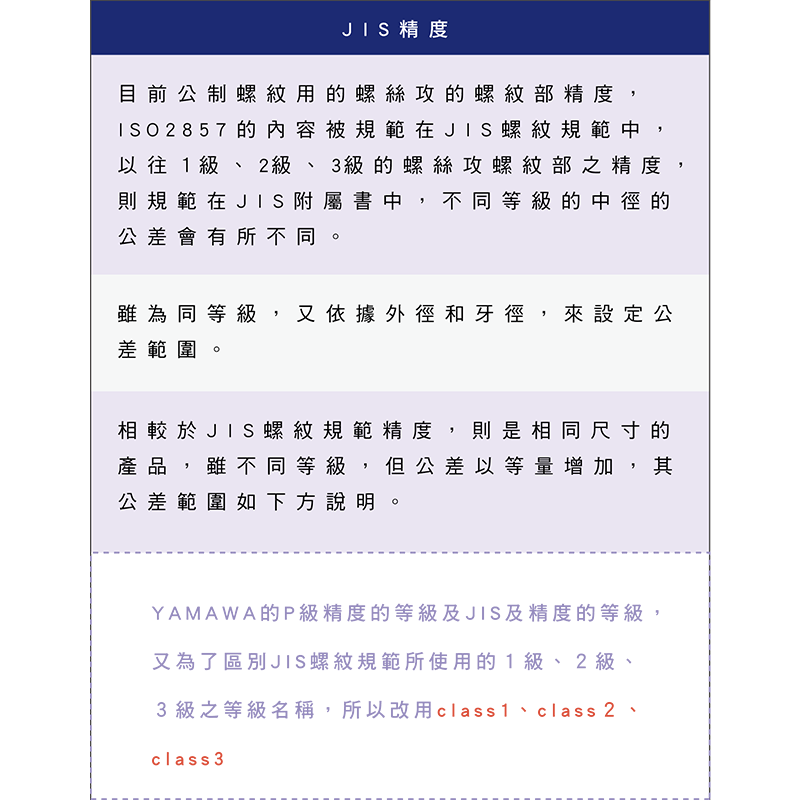
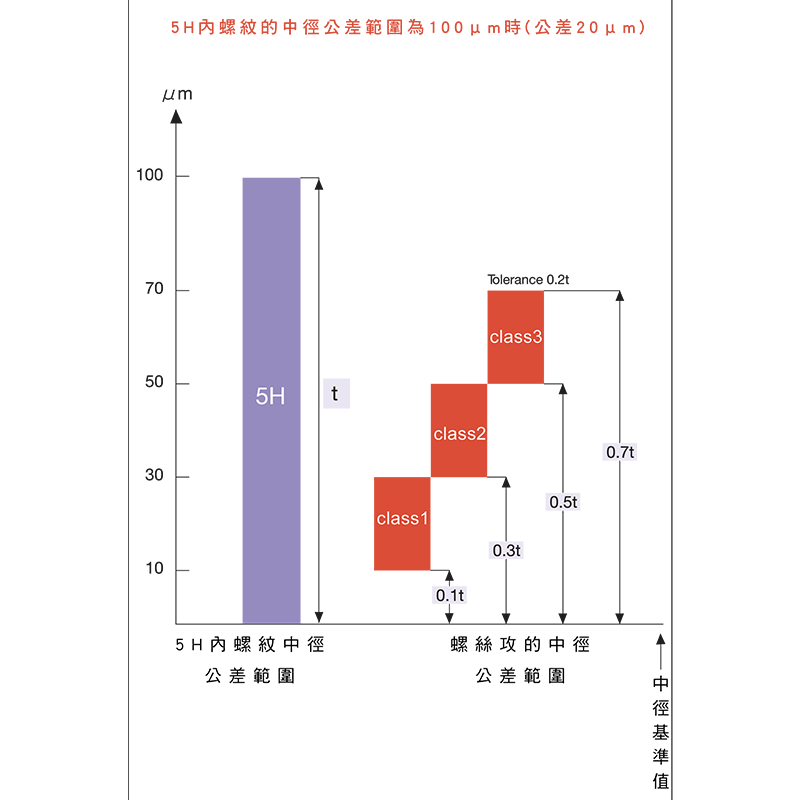
JIS and ISO express internal threads with standard grades such as 6H (standard) and 7H (wider); Unified threads use classes 1B/2B/3B, where 2B is the general-purpose class and a higher number means a closer fit — the opposite of the metric grades, where a smaller number is more precise, so the two sets of numbers cannot be compared by size. Match the internal grade to the external-thread grade; 2B is a grade for the workpiece’s internal thread and is a separate system from the tap’s own JIS class 1/2/3 accuracy grades.
5. Pitch Diameter Is Key
The pitch diameter is the most critical thread size, setting fit accuracy, locking quality and clearance/interference. For M10×1.5 the basic pitch dia is about 9.026mm; different grades give different pitch-dia tolerance, directly affecting the actual fit.
6. Gauges and Inspection
| Gauge | Function |
|---|---|
| Go | Enters freely — pitch dia is at or above the lower limit |
| No-Go | Should not enter (or only a few threads) — pitch dia within the upper limit |
Go passes and No-Go stops means the pitch dia is within tolerance and to standard.
7. Effect of Machining Conditions
Accuracy is affected by material shrinkage (post-machining distortion), surface treatment (e.g. plating needs allowance), tool wear and machine rigidity. When material shrinks, plating follows, tools wear fast, or a rigid machine is used, switch to an oversize-class tap (1–2 grades up) and leave a compensation allowance; for plating, the oversize is about 4 times the plating thickness (maker’s guidance).
8. Cutting vs Forming, and Selection
Cutting taps give stable accuracy; forming taps give a better surface but the size must be re-evaluated (chipless, plastic forming). The key is to pick the right grade, control pitch dia and use a matching gauge — avoiding too-loose or too-tight threads and raising assembly yield.
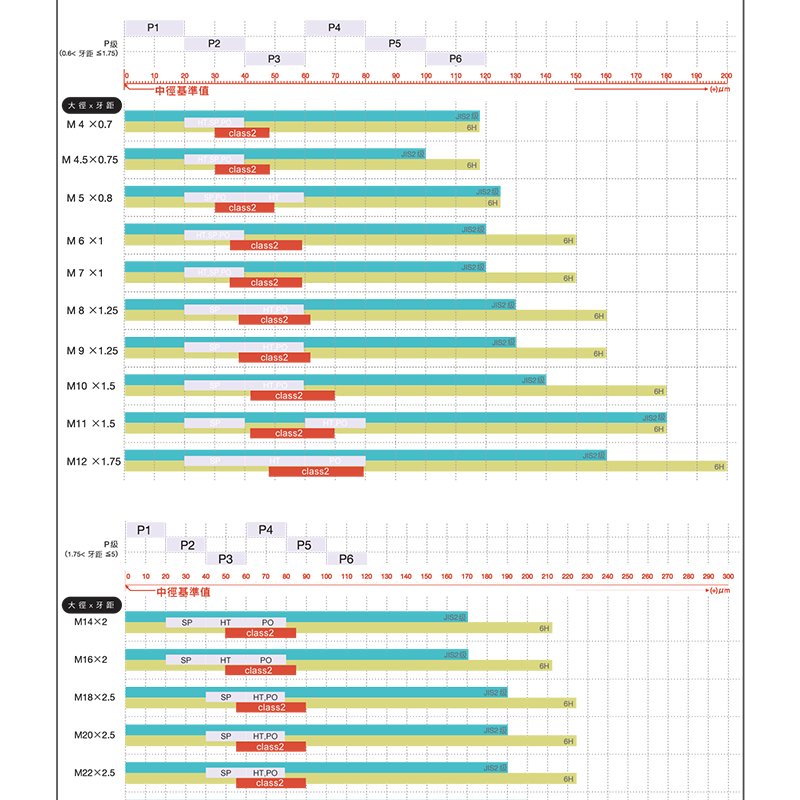
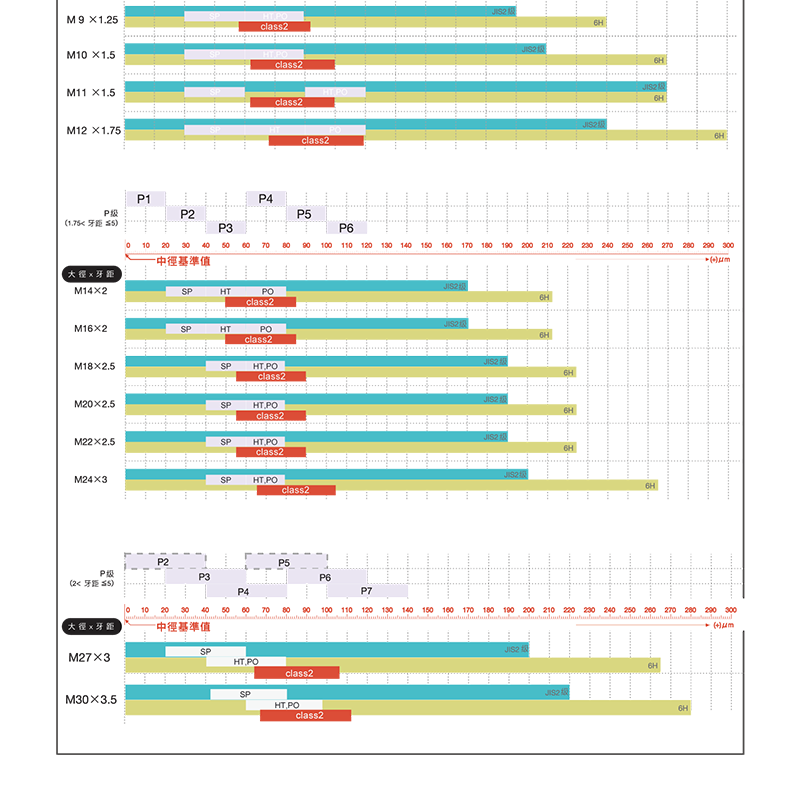
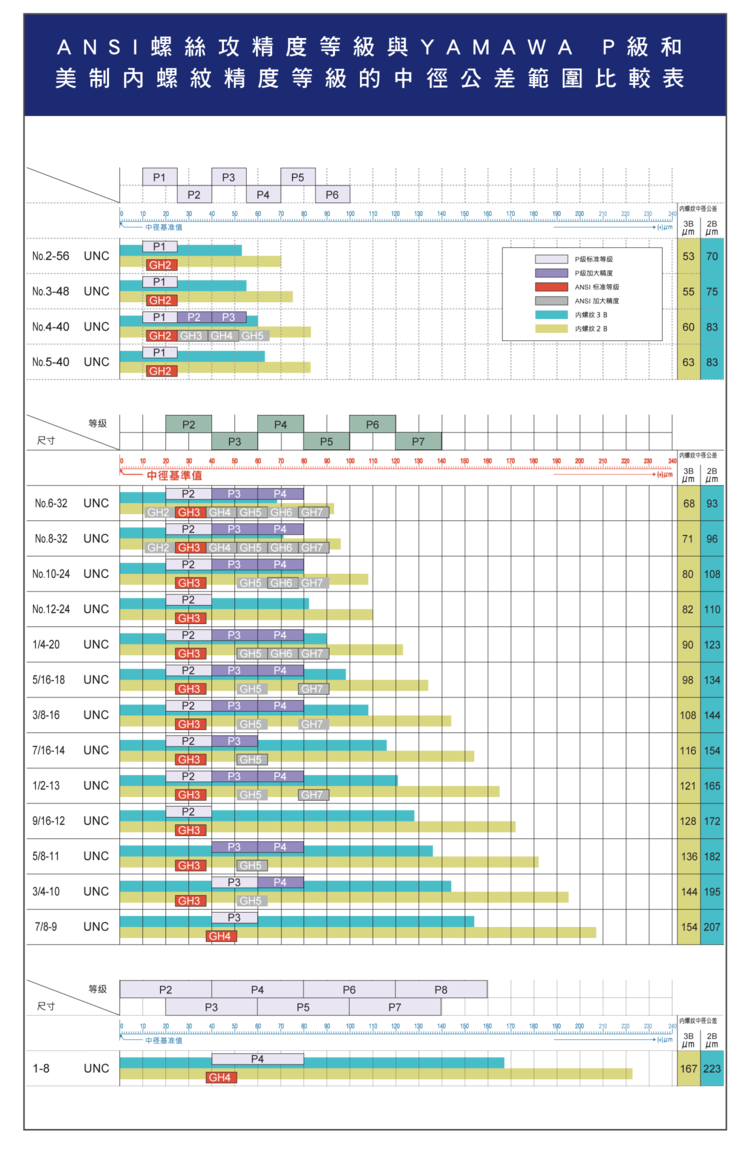
※ Full grade and tolerance charts above; detailed values per the original tables and maker catalog.
For pilot holes see the Metric Tap Drill Chart; for metric tolerance see the Metric Thread Tolerance Chart; for engagement see the Thread Engagement Guide; for forming taps see the Form Tap Guide.
FAQ
Q: How do P-class and JIS 6H correspond?
P-class is a practical system expressed by pitch-dia tolerance bands (types A–D, P1–P8); JIS/ISO use standard grades like 6H, 7H. Both describe internal pitch-dia tolerance — use the maker's correspondence table when selecting.
Q: Why is pitch diameter so important?
Pitch diameter sets fit tightness, locking quality and clearance/interference — the most critical thread size. After tapping, Go/No-Go gauges check the pitch dia against tolerance, not just the major or minor diameter.
Q: How to choose grade when plating follows?
Plating adds thickness and shrinks the bore, so switch to an oversize-class tap, oversized by about 4 times the plating thickness (maker’s guidance), so the thread isn't too tight afterward.
Q: Go passes but No-Go also enters — what does that mean?
It means the pitch dia is oversize (past the upper limit) — the thread is too loose and fails. Causes include tap wear, a loose grade or hole enlargement. Check the tap and conditions and switch to a tighter grade or a new tap.
For the full reading guide on this topic, see Thread Machining: A Complete Reading Guide.
Published: 2026-03-23 | Last updated: 2026-10-31