Face Milling Clamping Guide: Rigidity, Overhang & Vibration
In face milling, clamping and machine rigidity directly affect tool life, finish and stability. Fast wear, chipping, rough surfaces or burrs usually trace back to low clamping rigidity, long overhang and machine clearance. Optimising the setup, shortening overhang and raising rigidity cut vibration and improve accuracy.
1. Why Clamping Matters
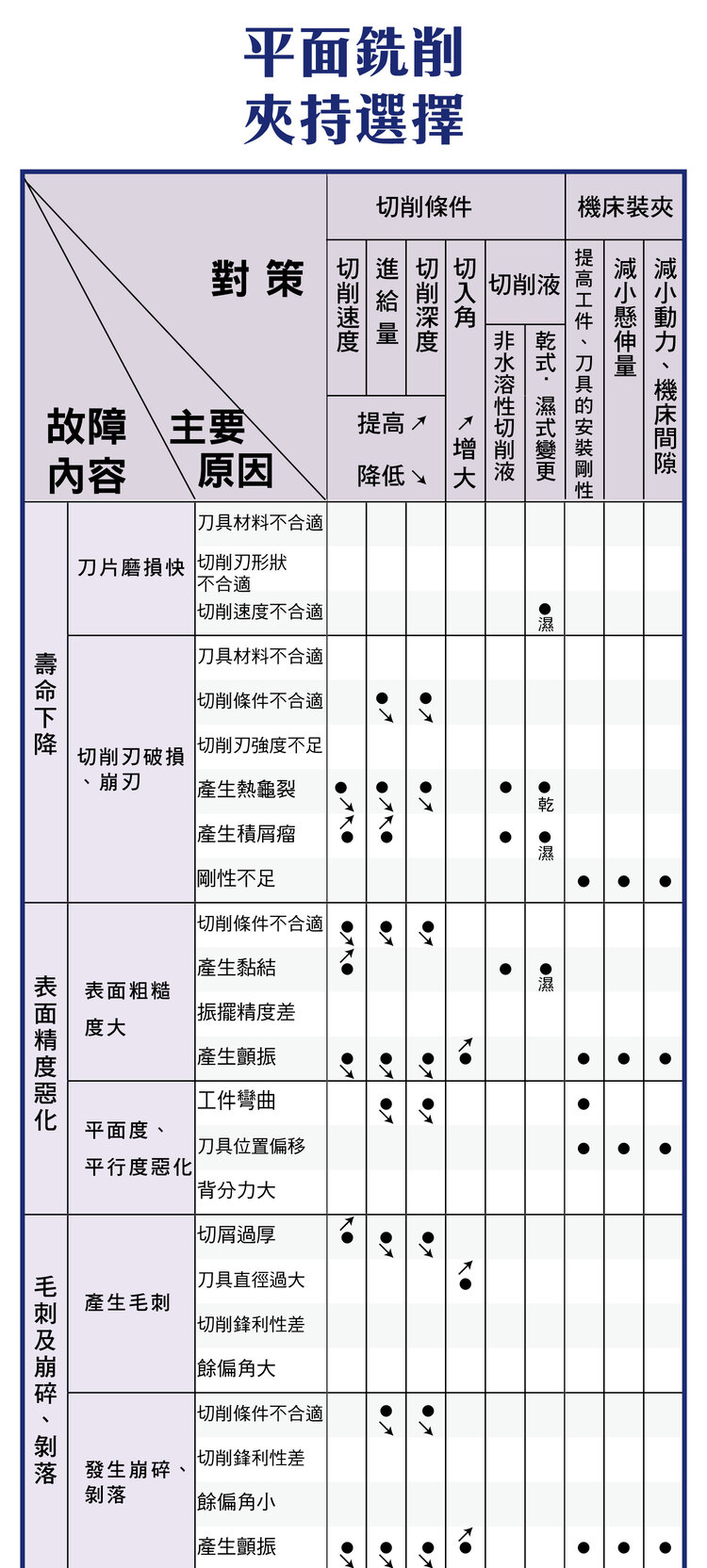
Clamping directly affects tool stability, cutting vibration and accuracy. Three main factors: tool clamping method, machine rigidity and overhang length. Low clamping rigidity is a common root cause of vibration and chipping.
2. Cutting Conditions vs Clamping
Higher cutting speed, feed, depth and entry angle demand more clamping and rigidity. Heavy-load work needs stiff support; with weak clamping or machine rigidity, unstable conditions cause vibration, then wear, chipping and poor surfaces. For parameters see the Face Milling Formula Guide.
3. Coolant Effect
| Method | Effect |
|---|---|
| Wet (water-soluble / neat oil) | Lowers temperature, reduces wear, improves finish |
| Dry | Avoids thermal shock (cast iron, coated inserts), less mess |
Match coolant to material and insert coating; steel is often wet, cast iron often dry to avoid thermal-shock cracking in interrupted cuts.
4. Improving Clamping and Rigidity
| Action | Effect |
|---|---|
| Raise rigidity | Stronger workholding, more stable tool clamping |
| Reduce overhang | Less vibration, better accuracy |
| Reduce clearance | Less mechanical error, more stability |
5. Problems and Clamping Fixes
| Problem | Cause | Clamping fix |
|---|---|---|
| Fast insert wear | Low rigidity, conditions too high | Raise rigidity, use suitable coolant |
| Breakage / chipping | Overhang too long, heavy vibration | Shorten stick-out, strengthen clamping |
| Poor finish | Vibration, tool wobble | Improve machine accuracy and clamping |
| Flatness / parallelism off | Unstable workholding, tool offset | Strengthen clamping, correct tool position |
| Burrs, flaking, fracture | Unstable cutting, uneven load, low rigidity | Cut vibration, add support, optimise conditions |
For tool material and geometry pairing see the Face Milling Tool Selection Guide.
FAQ
Q: Face milling keeps vibrating — where to start?
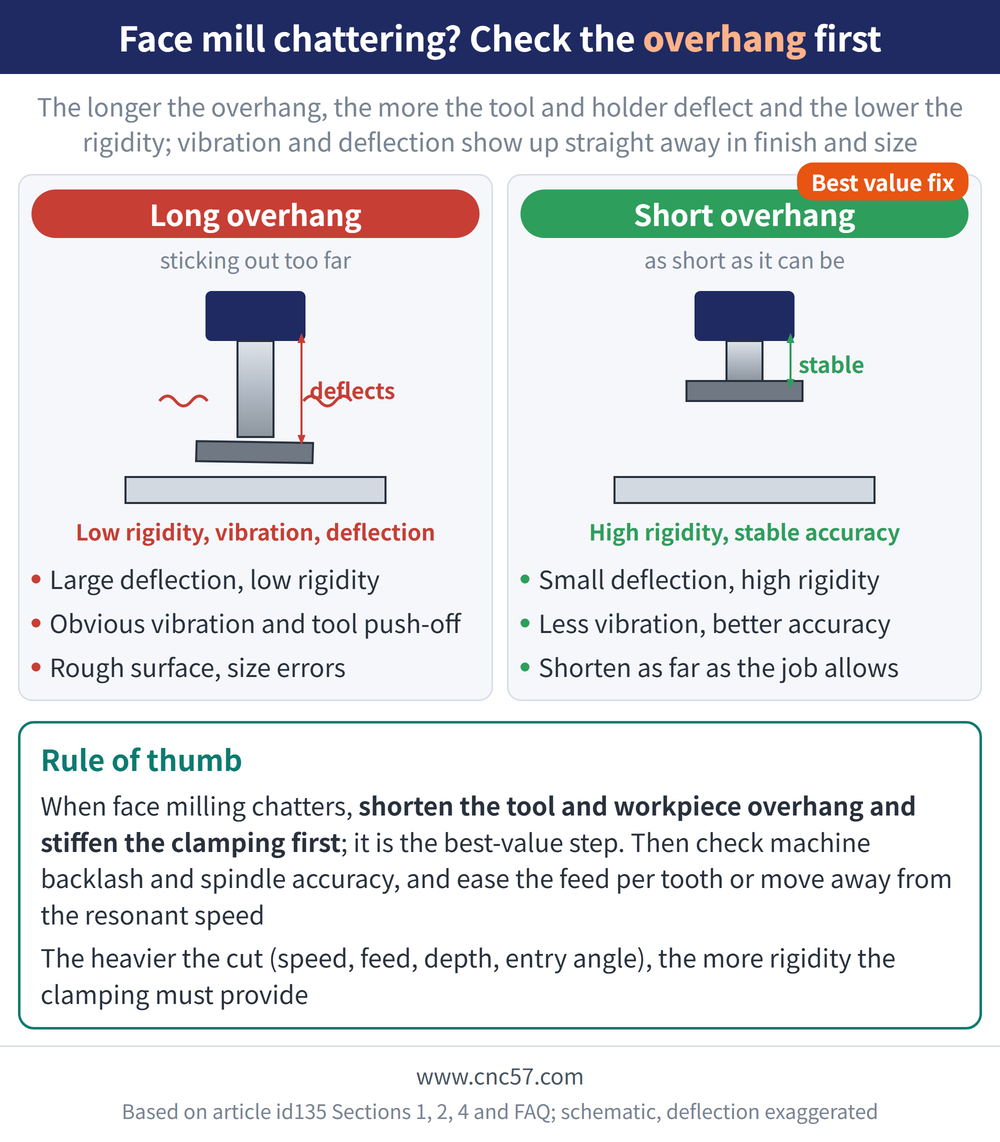
First shorten tool and workpiece overhang and strengthen clamping/workholding — the highest-value step. Then check machine clearance and spindle accuracy, and lower feed per tooth or avoid resonant speeds. Clamping rigidity is usually the biggest variable.
Q: Why does overhang matter so much?
Longer overhang means more deflection and lower rigidity, so vibration and tool push-off grow, showing up as rough surfaces and size error. The rule is "as short as possible" — minimise stick-out within what the job allows.
Q: Coolant when face-milling cast iron?
Cast iron face milling is often dry to avoid thermal cycling that cracks coated inserts in interrupted cuts; steel is usually wet to cool and improve finish. Follow the insert coating and maker's advice — the goal is avoiding thermal shock and packing.
Q: Can't hold flatness — what to do?
Usually the clamp distorts the part or holds it unstably, or the tool is offset. Check clamps sit over supports, avoid clamp force distorting thin parts, and correct cutter runout; if needed split into rough and finish, easing clamp force for a light finishing pass.
For the full reading guide on this topic, see Vibration and Chatter: A Complete Reading Guide.