SI Unit Conversion Guide: Pressure, Force, Energy & Power
The SI system is the core standard for consistent measurement in engineering, mechanics and CNC machining, covering pressure, force, torque, stress, energy and power conversions. Converting between Pa, MPa, kgf, atm, J and W directly affects design calculations and machining parameters. This guide summarises common unit correspondences and conversions to help engineers handle cross-system conversion and avoid errors.
1. What the SI System Is
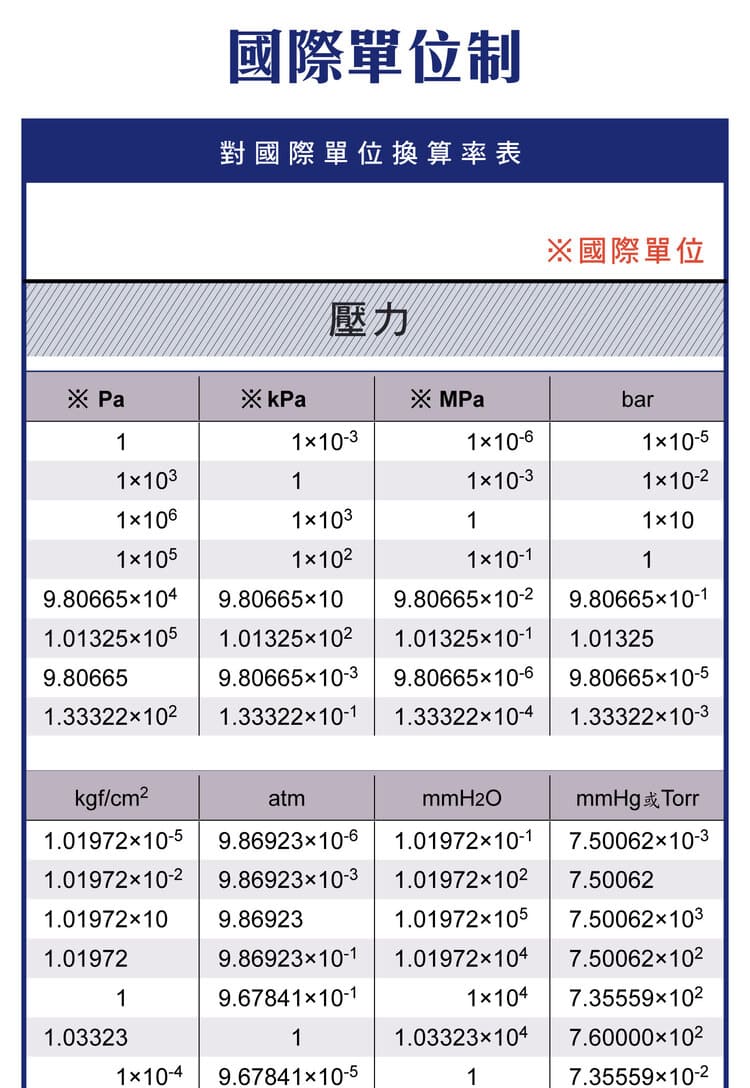
SI is the global measurement standard, widely used in mechanical design, CNC machining, engineering calculation and science. Core units include length (m), mass (kg), time (s), force (N) and pressure (Pa).
2. Pressure Units
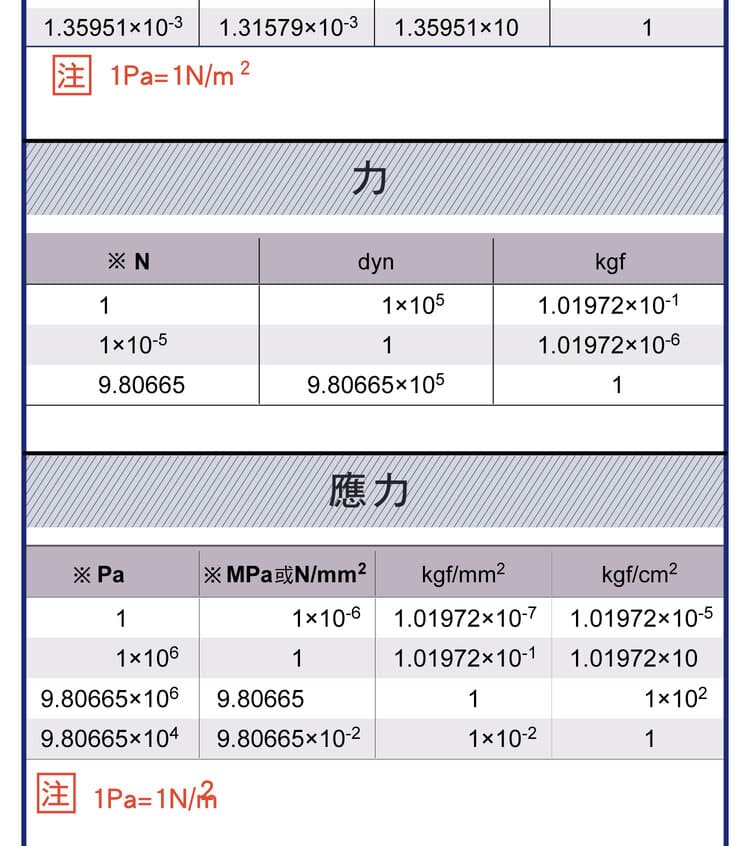
| Relationship | Value |
|---|---|
| 1 MPa | = 10⁶ Pa |
| 1 bar | = 10⁵ Pa |
| 1 atm | = 1.01325 bar |
| 1 kgf/cm² | = 9.80665 × 10⁴ Pa |
| 1 mmHg (Torr) | ≈ 133.322 Pa |
| 1 kPa | = 10³ Pa = 0.1 N/cm² |
| 1 mmH₂O | = 9.80665 Pa |
The three used most on the floor: 1 kgf/cm² ≈ 0.0981 MPa (the old scale on air and hydraulic gauges); 1 bar = 0.1 MPa (common on European equipment); 1 atm = 760 mmHg (the basis for vacuum conversions). bar and kgf/cm² differ by only 1.97% (1 bar = 1.01972 kgf/cm²); treating them as equal is fine for everyday air settings, but not in a specification or a pressure acceptance test. For the many ways vacuum level is written and how to calculate holding force, see How Hard Does a Vacuum Chuck Hold.
3. Force and Torque Units
| Relationship | Value |
|---|---|
| 1 N | = 10⁵ dyn |
| 1 kgf | = 9.80665 N |
| 1 kgf·m (torque) | = 9.80665 N·m |
This matters in mechanical load and clamping-force calculations. Older machine nameplates and specifications often give torque in kgf·m; multiply by 9.80665 to get N·m.
4. Stress Units
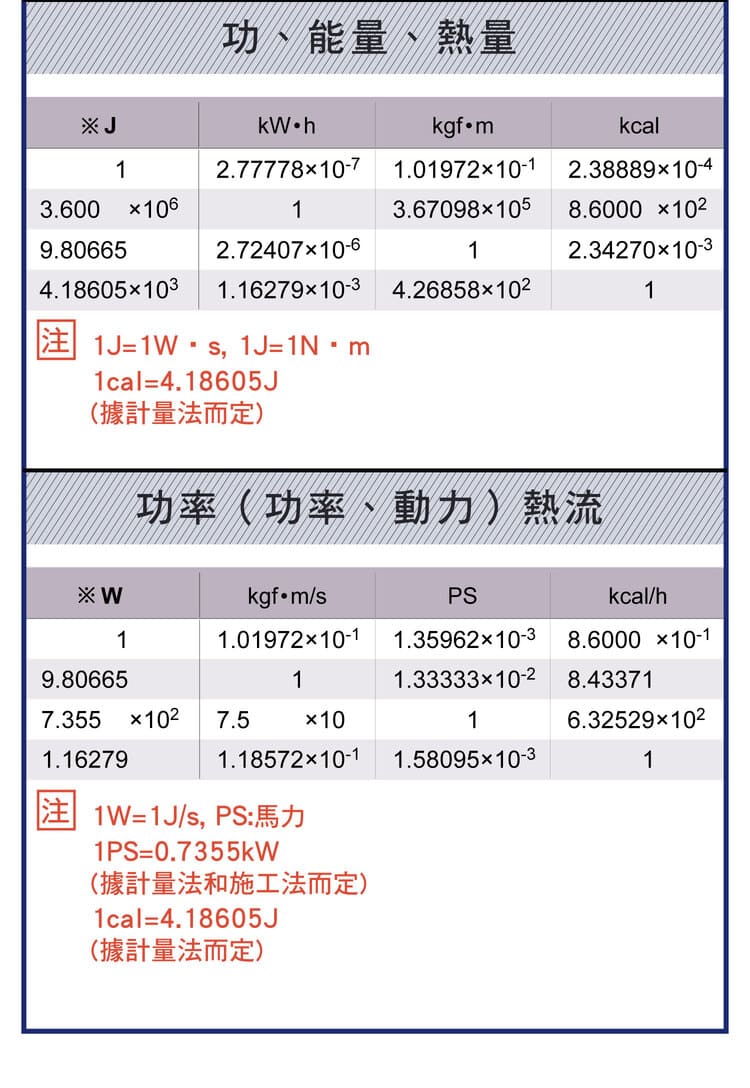
| Relationship | Value |
|---|---|
| 1 MPa | = 1 N/mm² |
| 1 kgf/mm² | = 9.80665 MPa |
Common in material strength and tool life analysis. 1 MPa = 1 N/mm² is the most-used engineering shortcut.
5. Energy and Work Units
| Relationship | Value |
|---|---|
| 1 J | = 1 N·m |
| 1 kcal | ≈ 4186 J (≈ 4.186 kJ) |
| 1 kW·h | = 3.6 × 10⁶ J |
6. Power Units
| Relationship | Value |
|---|---|
| 1 kW | = 1000 W |
| 1 PS (metric hp) | ≈ 735.5 W |
| 1 kgf·m/s | = 9.80665 × 10⁻³ kW |
Machining capacity is often given in kW or PS to gauge spindle/motor output.
Power from torque: P (kW) = T (kgf·m) × n (min⁻¹) ÷ 974. When a nameplate gives only kgf·m and speed, this converts it to the kW used in catalogues.
7. Practical Conversion Tips
Three keys: (1) use SI units consistently, never mixing kgf and N; (2) mind the prefixes — k (kilo) = 10³, M (mega) = 10⁶; (3) the common shortcut MPa ≈ N/mm². For the kgf/mm² ↔ MPa link in hardness, see the Hardness Conversion Chart.
FAQ
Q: How many kgf/cm² is 1 MPa?
1 MPa = 10⁶ Pa and 1 kgf/cm² = 9.80665 × 10⁴ Pa, so 1 MPa ≈ 10.2 kgf/cm². Engineers often approximate "1 MPa ≈ 10 kgf/cm²" for quick estimates.
Q: Why can MPa be treated as N/mm²?
Because 1 Pa = 1 N/m² and 1 mm² = 10⁻⁶ m², it follows that 1 N/mm² = 10⁶ Pa = 1 MPa. So strength in MPa and N/mm² has identical numbers and is directly interchangeable.
Q: How many newtons is 1 kgf?
1 kgf = 9.80665 N (standard gravity 9.80665 m/s²). Estimates often use "1 kgf ≈ 9.8 N" or roughly 10 N. Always convert to N for clamping-force and load calculations.
Q: How many watts is 1 PS?
1 PS (metric horsepower) ≈ 735.5 W ≈ 0.7355 kW. Note PS (metric) differs slightly from imperial hp (≈745.7 W); confirm which is used when quoting spindle/motor power.
Published: 2026-03-25 | Last updated: 2026-10-17