Thread Designation Chart: ISO, ANSI & JIS Codes
This guide compiles a full thread-designation chart covering ISO, metric, US (UNC, UNF, NPT, etc.) and Japanese (JIS) thread systems, mapped to their uses and standards (ISO, ANSI, JIS). A unified set of thread codes lets you quickly identify thread type, application and design basis — useful for CNC machining, engineering design and cross-standard comparison, a key reference for the machinery and hardware industries.
The table below lists common JIS (Japanese Industrial Standards) thread designations, thread types and the corresponding JIS standards.
| Thread Designation | Thread Type | Related Standard (JIS) |
|---|---|---|
| M | Metric coarse (standard) thread | JIS B 0205-1 to 0205-4 |
| S | Miniature thread | JIS B 0201 |
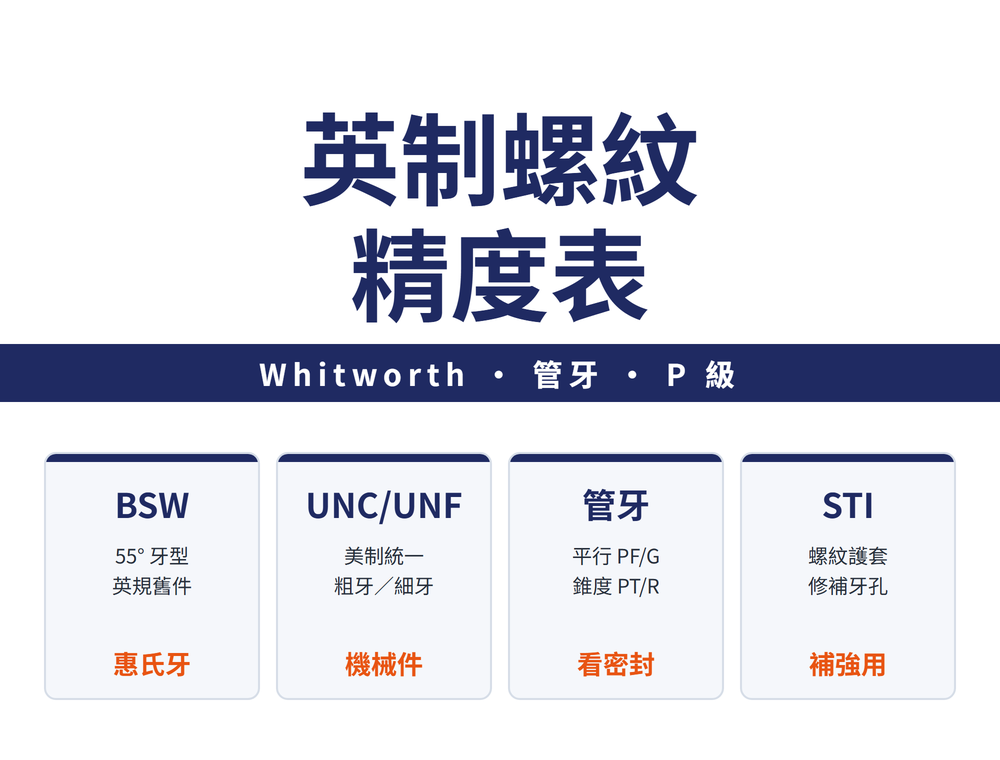
| UNC | Unified coarse (standard) thread | JIS B 0206 |
| UNF | Unified fine thread | JIS B 0208 |
| Tr | Metric trapezoidal thread | JIS B 0216 |
| R | Taper pipe thread | JIS B 0203 (main text) |
| Rc | Taper internal pipe thread | JIS B 0203 (main text) |
| Rp | Parallel internal thread for taper pipe threads | JIS B 0203 (main text) |
| G | Parallel pipe thread (for joining mechanical equipment) | JIS B 0202 (main text) |
| PF | Parallel pipe thread not specified in ISO (withdrawal year to be stated at the next revision) | JIS B 0202 (annex) |
| PT | Taper pipe thread not specified in ISO (withdrawal year to be stated at the next revision) | JIS B 0203 (annex) |
| PS | Taper pipe thread not specified in ISO (withdrawal year to be stated at the next revision) | JIS B 0203 (annex) |
| CTC | Thin-wall steel conduit thread | JIS C 8305 |
| CTG | Thick-wall steel conduit thread | JIS C 8305 |
| BC | Bicycle thread | JIS B 0225 |
| SM | Sewing-machine thread | JIS B 0226 (withdrawn 2001.02.20) |
| E | Lamp-bulb thread | JIS C 7709 |
| V | Automobile tyre-valve thread | JIS D 4207 |
| CTV | Bicycle tyre-valve thread | JIS D 9422 |
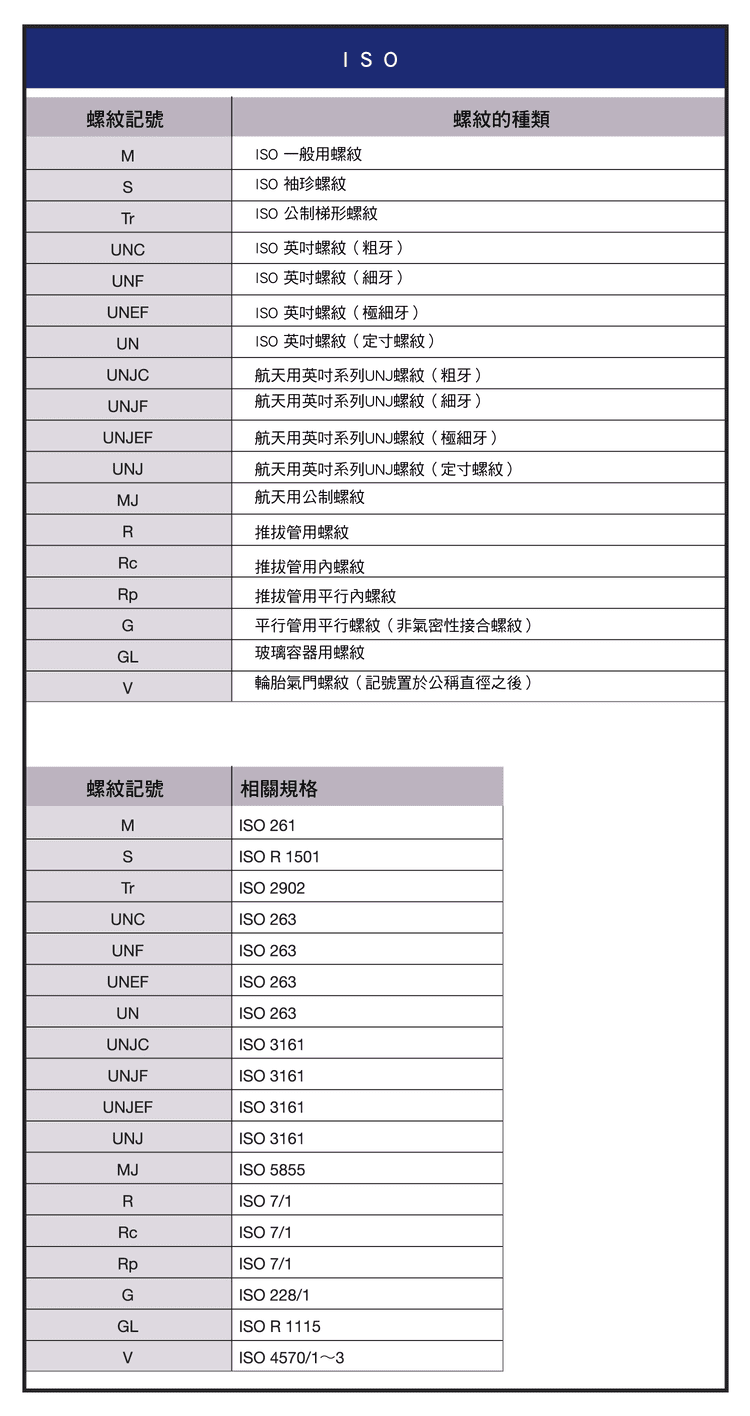
1. ISO Thread Codes
| Code | Meaning |
|---|---|
| M | General metric thread |
| Tr / S | Metric trapezoidal / ISO miniature (small) thread (ISO 1501) |
| UNC / UNF / UNEF | Imperial coarse / fine / extra-fine series |
| UN / UNJ / MJ | Unified / aerospace high-strength / aerospace metric |
| R / Rc / Rp / G | Taper external / taper internal / parallel internal / parallel pipe |
| GL / V | Glass-container thread / tyre-valve thread |
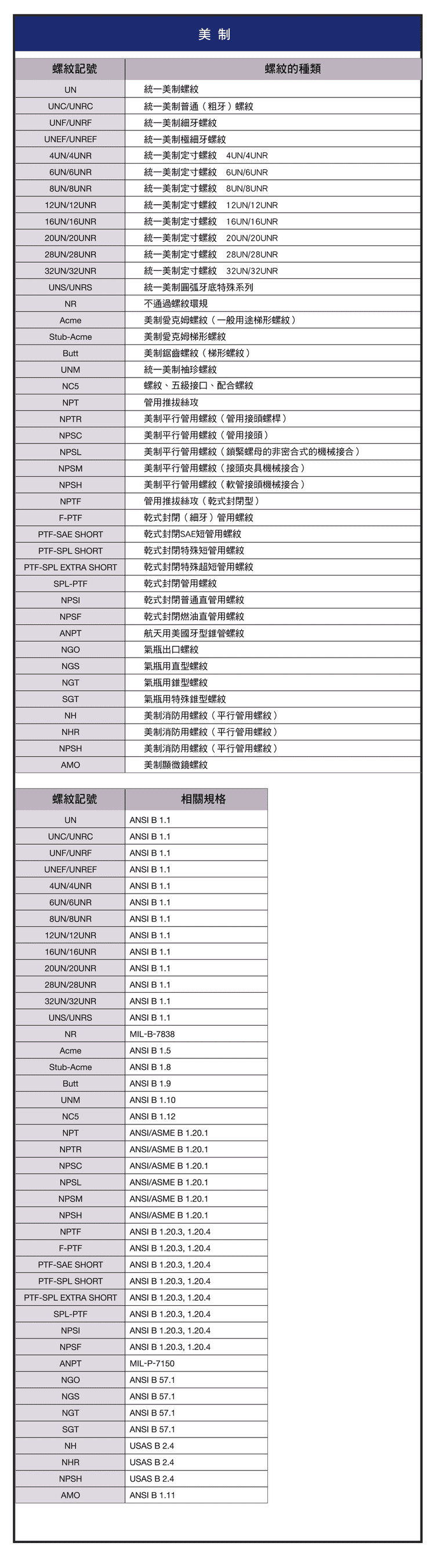
2. US Thread Codes (ANSI)
| Code | Meaning |
|---|---|
| UN / UNC / UNF / UNEF | Unified / coarse / fine / extra-fine |
| 4UN / 8UN / 12UN / 16UN | Constant-pitch (fixed TPI) series |
| Acme / Stub-Acme / Buttress | Trapezoidal (transmission) / stub trapezoidal / sawtooth |
| NPT / NPTF / NPS | Taper pipe (seal) / dry-seal / straight pipe |
| NPSC / NPSM / NPSH / ANPT | Various coupling forms / aerospace pipe thread |
| NGT / NGS | Gas-cylinder threads |
3. Japanese Thread Codes (JIS)
| Code | Meaning |
|---|---|
| M / Tr | Metric thread / trapezoidal thread |
| UNC / UNF | Imperial coarse / fine |
| R / Rc / Rp / G | Pipe threads (taper ext/int, parallel int) / parallel pipe |
| BC / SM / E / V | Bicycle / sewing-machine / lamp / valve thread |
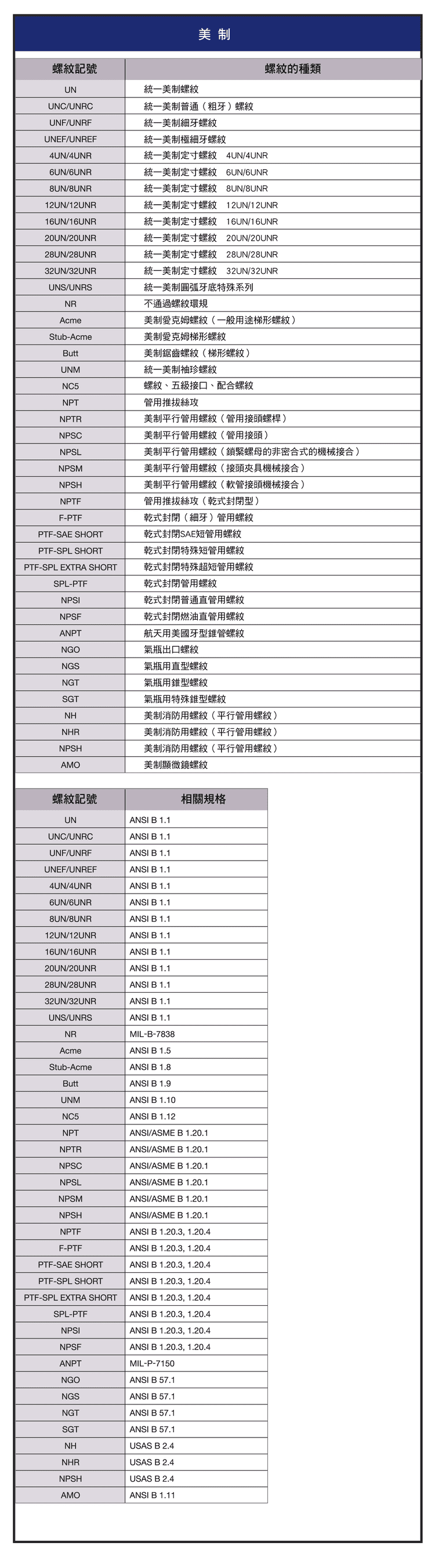
※ Full designation charts above; detailed codes per the original tables.
4. Reading a Thread Designation
A thread is usually marked as "code + size × pitch (or TPI) + tolerance". For example M10×1.5 is metric coarse, 1/4-20 UNC is US coarse, and R1/2 is a taper external pipe thread. Read the code first to identify the system and form, then match size and tolerance.
For forms see the Standard Thread Form Guide; for size and pitch see the Thread Size Chart; for aerospace threads see the UNJ Thread Guide; for pipe threads see the Pipe Tap Guide.
5. Taiwan CNS Thread Designations
The three systems above are international. Taiwan's own CNS (Chinese National Standards) uses a separate set of numbers, and that is the column to match when you read a Taiwanese drawing or quotation:
| CNS No. | Thread | Symbol | Example |
|---|---|---|---|
| 497 | Metric coarse thread | M | M8 |
| 498 | Metric fine thread | M | M8×1 |
| 507 | Metric miniature thread | S | S0.8 |
| 4227 | Wood screw thread | WS | WS4 |
| 3981 | Tapping screw thread | TS | TS3.5 |
| 341 | Bicycle thread | BC | BC¾″、BC2.6 |
| 494 | Whitworth parallel pipe thread | R | R½″ |
| 495 | Whitworth pipe thread (taper external) | R | R |
| 495 | Whitworth pipe thread (parallel internal) | R | R¼″ |
| 511 | Metric trapezoidal thread | Tr | Tr40×7 |
| 4225 | Metric short trapezoidal thread | Tr.s | Tr-s48×8 |
| 515 | Metric buttress thread | Bu | Bu40×7 |
| 510 | Edison thread | E | E27 |
| 4228 | Glass container external thread | GL | GL125×5 |
📌 CNS 495 covers two forms, a taper external thread and a parallel internal thread, both written with the symbol R; the size and the drawing note tell them apart. Unified threads (UNC / UNF / UNEF), ACME and most round (Rd) threads have no CNS number in this chart, so look them up in the US system in section 2.
6. Reading a Metric Thread Tolerance Class
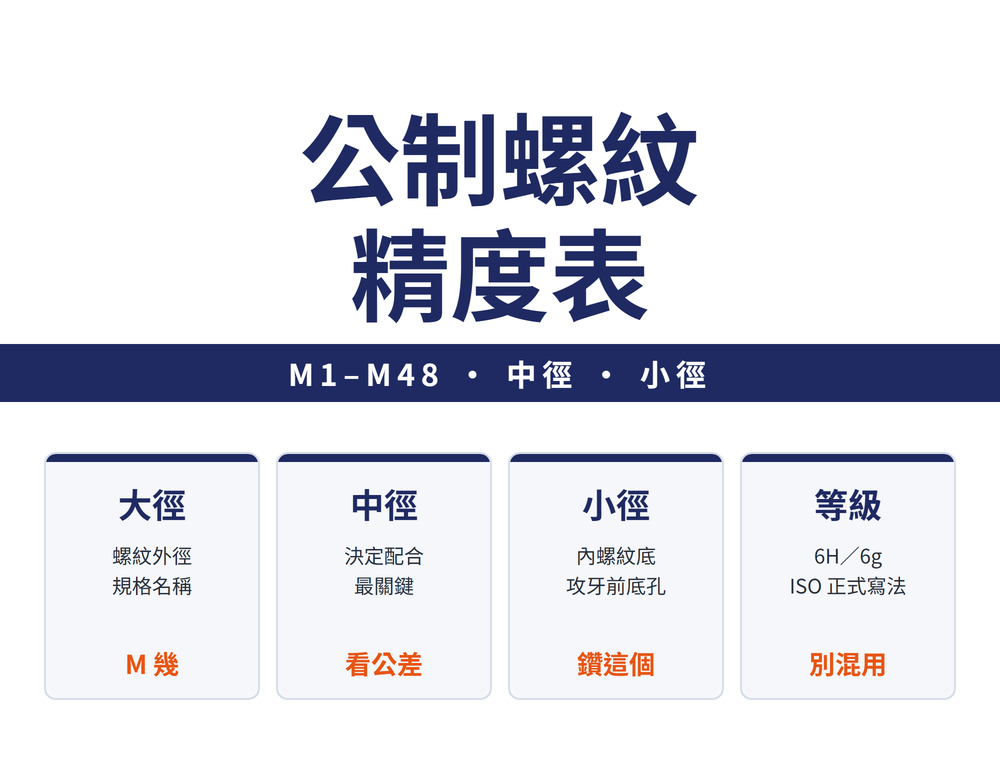
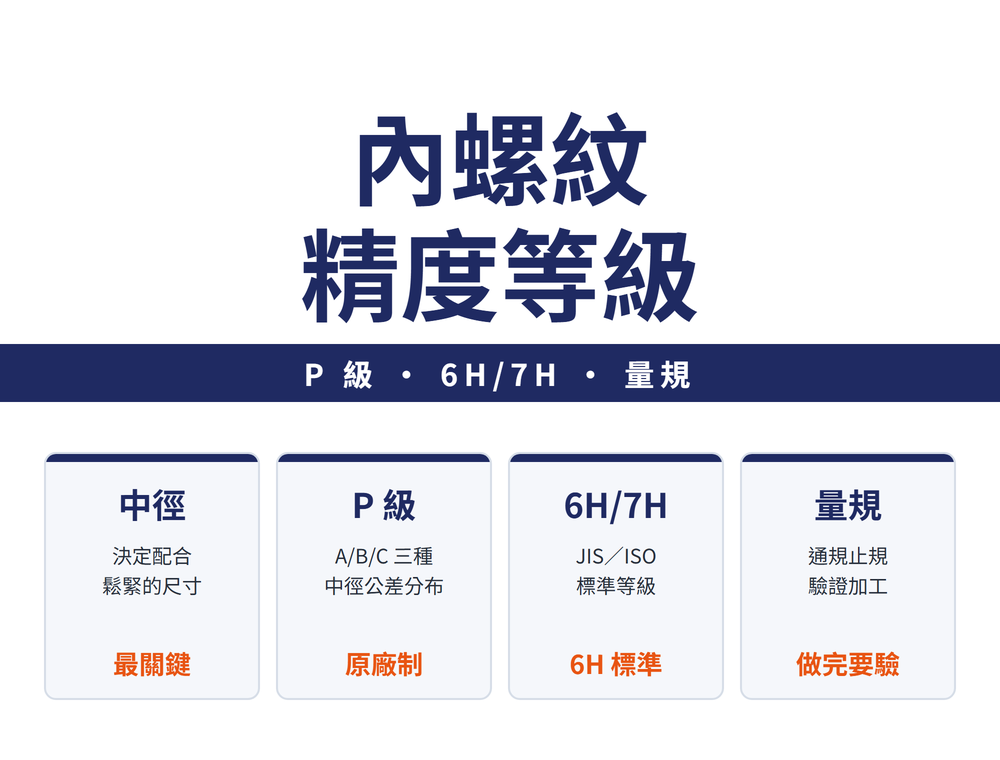
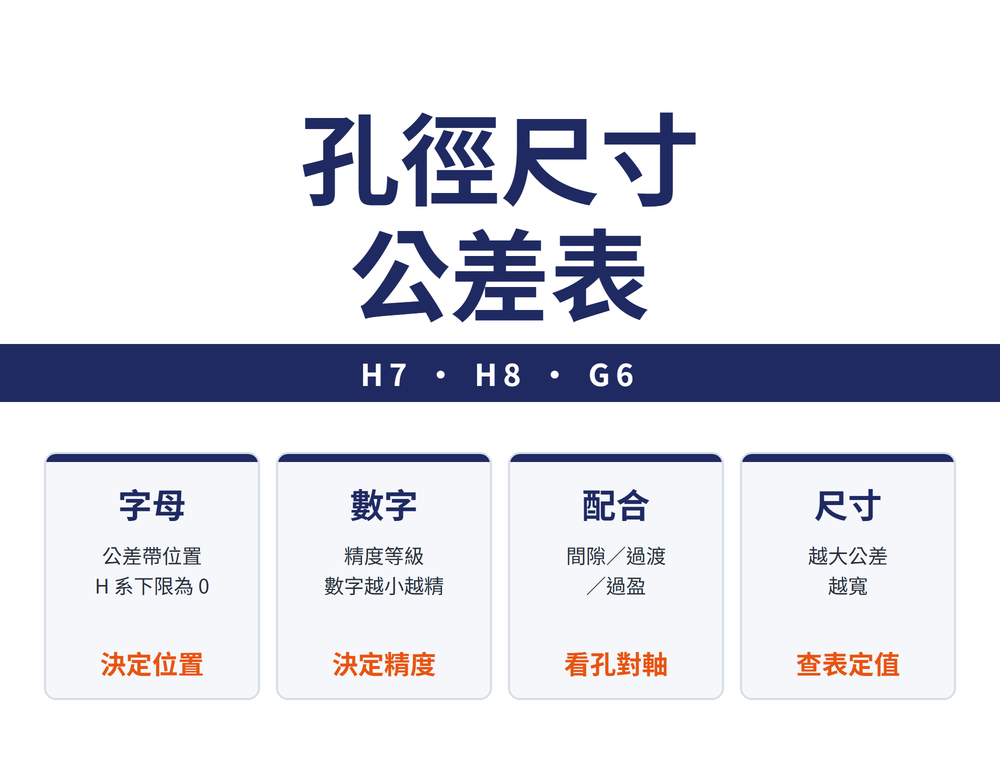
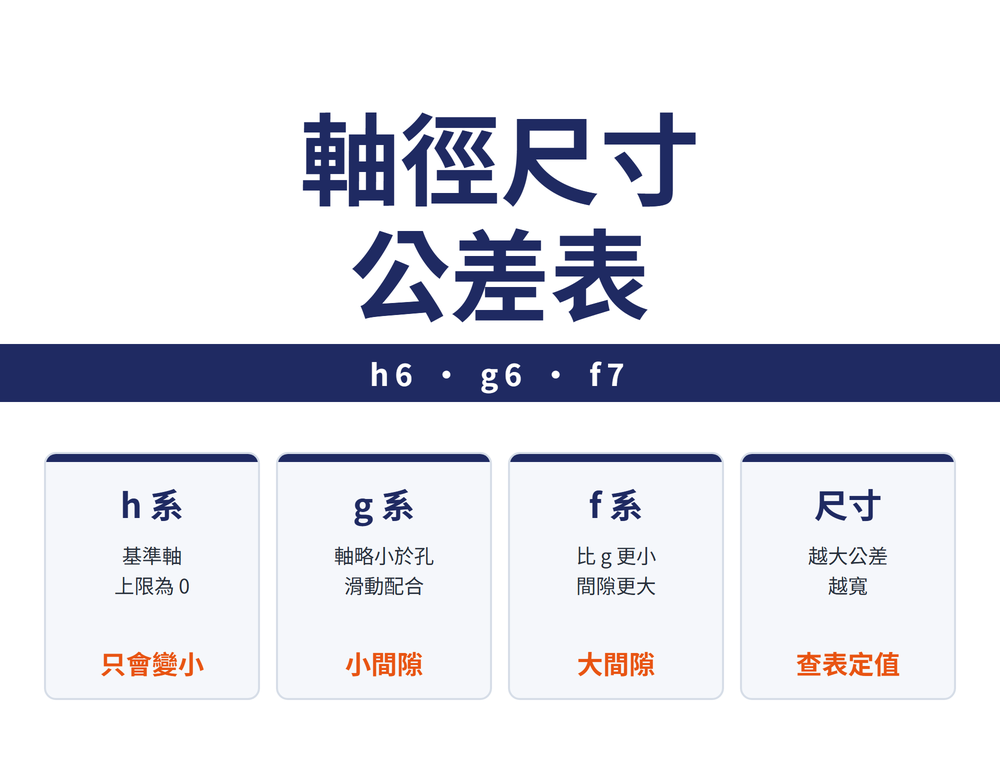
A metric thread tolerance class has two parts: a grade and a deviation position, written together as, for example, 6H. Grades run from 3 to 9, and the smaller the number, the tighter the tolerance. The letter gives the position: upper case for internal threads (G, H), lower case for external threads (e, g, h).
| Class | Internal / external |
|---|---|
| Coarse | 7H / 8g |
| Medium | 6H / 6g |
| Fine | 5H / 4g |
📌 When the pitch-diameter and major-diameter tolerances are the same, the class is written once; write both only when they differ (for example M36-5g6g). Medium, 6H / 6g, is the usual choice for general machine parts.
FAQ
Q: What's the difference between R, Rc, Rp and G?
R is a taper external pipe thread, Rc taper internal, Rp parallel internal, and G parallel pipe. Taper threads seal by flank interference; parallel pipe threads use a gasket or O-ring. Match external/internal and taper/parallel as a pair.
Q: How do UNJ and MJ differ from UN and M?
UNJ (imperial) and MJ (metric) are aerospace high-strength threads with a larger root radius that lowers stress concentration and boosts fatigue strength, used in aerospace and high-load parts. Standard UN and M threads are not interchangeable with them.
Q: NPT vs NPTF?
Both are US taper pipe threads; NPT usually needs sealing tape or compound, while NPTF (dry-seal) has crest/root interference that seals without a sealant, suiting demanding gas/liquid-tight joints.
Q: Is the same size coded the same in ISO, ANSI and JIS?
Some codes are shared (M, UNC, G), but tolerance, constant-pitch series and pipe-thread definitions differ slightly by standard. For cross-border machining or purchasing, always state the standard (ISO/ANSI/JIS/DIN/BS) to avoid confusion.
Published: 2026-07-23 | Last updated: 2026-09-24
For the full reading guide on this topic, see Thread Machining: A Complete Reading Guide.