Face Milling Formulas: Cutting Speed, Feed, Time & Power
Face-milling efficiency and quality depend on the relationship between cutting speed (vc), feed per tooth (fz), feed rate (vf), machining time (Tc) and required power (Pc). Standard formulas quickly establish optimal parameters, avoiding tool wear and low efficiency while ensuring stability and cost control — the core calculations of CNC milling.
1. Core Face-Milling Parameters
Six core parameters interlock: cutting speed vc, spindle speed n, feed per tooth fz, feed rate vf, machining time Tc and cutting power Pc. Mastering the formulas raises efficiency, lowers wear and controls quality.
2. Speed, Spindle and Feed Formulas
| Item | Formula | Parameters |
|---|---|---|
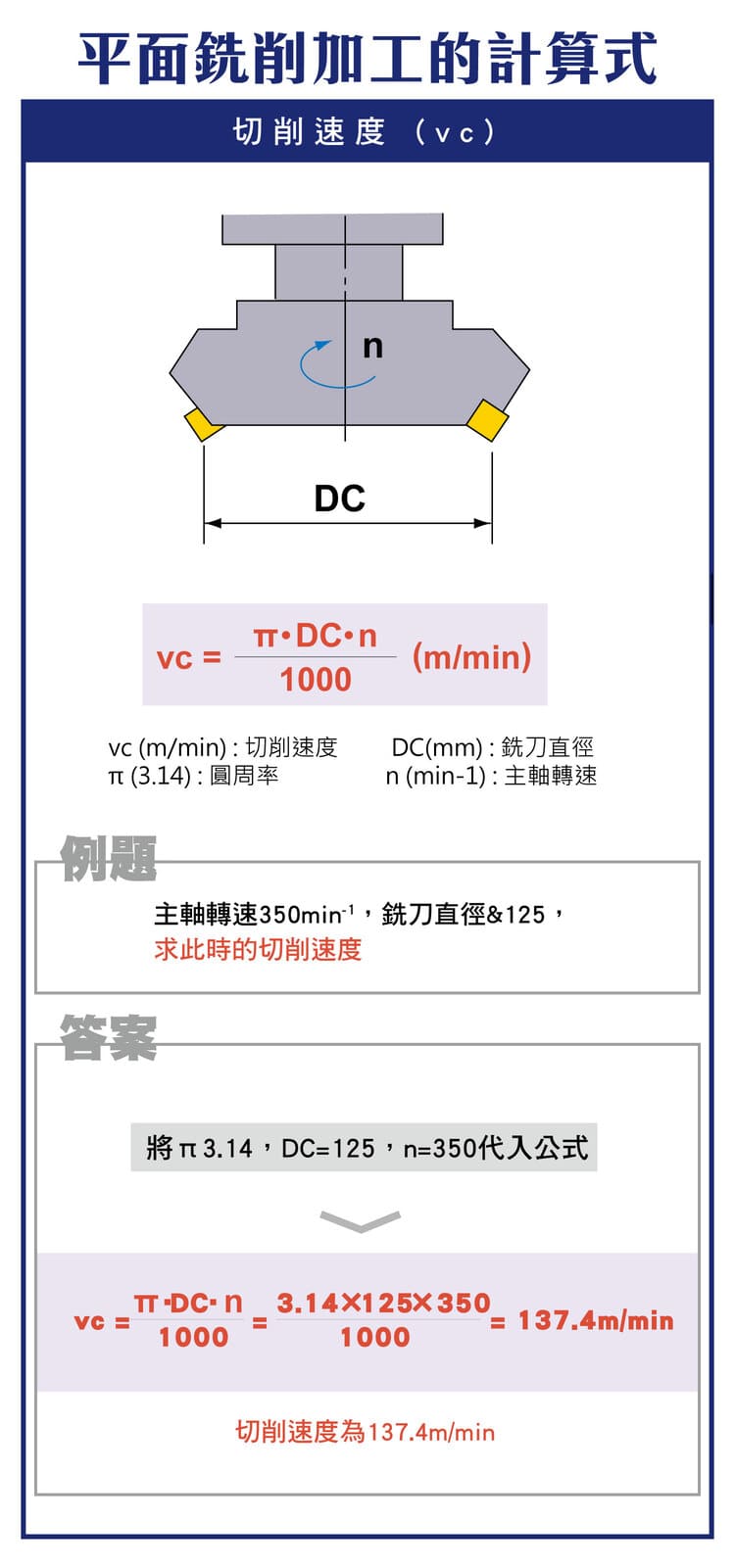
| Cutting speed vc | vc = (π × DC × n) / 1000 | DC tool dia, n spindle speed |
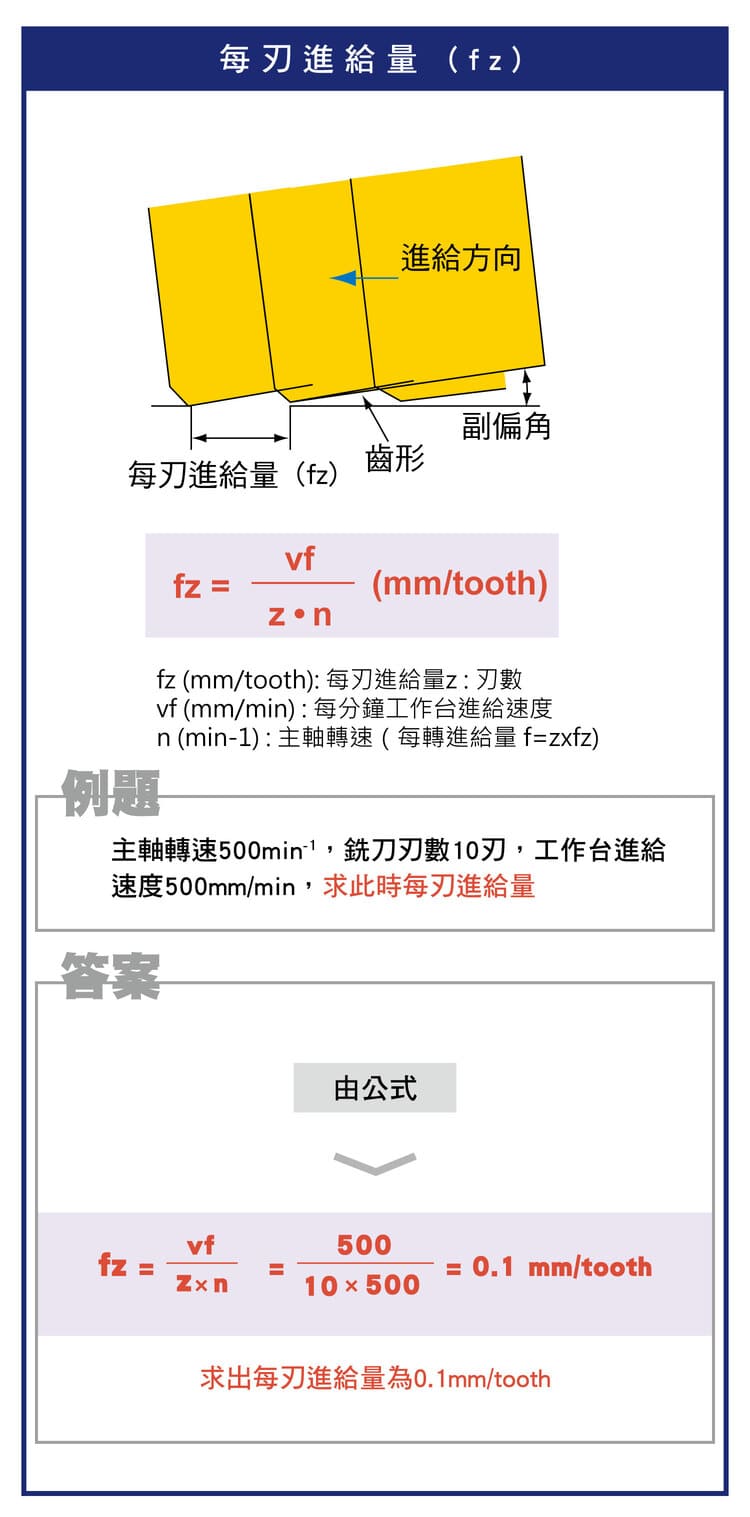
| Feed per tooth fz | fz = vf / (z × n) | vf feed rate, z flutes |
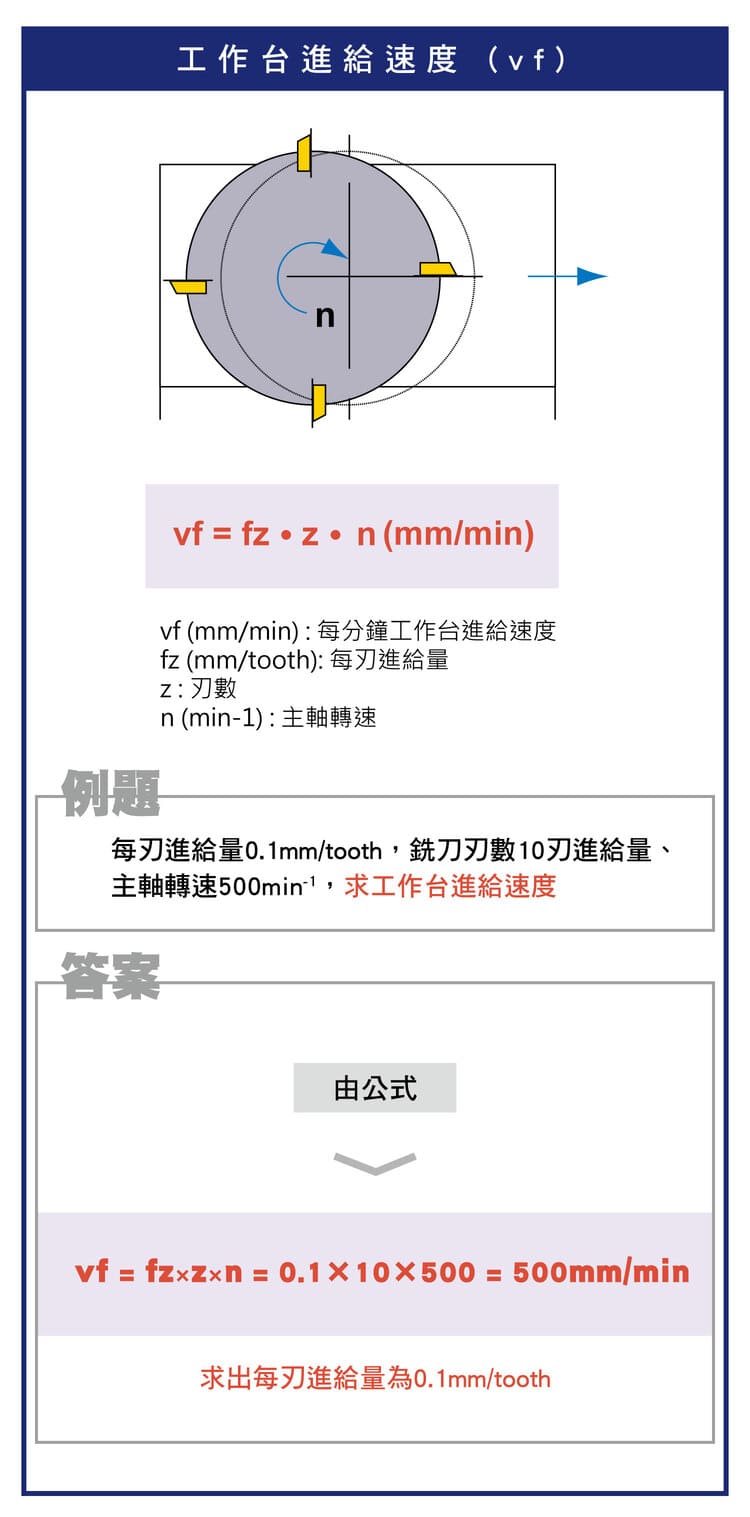
| Feed rate vf | vf = fz × z × n | fz, z, n |
Effects: higher vc → more efficiency but more wear; larger fz → higher load, smaller fz → better finish; higher vf → more efficiency, lower vf → better finish.
3. Machining Time and Cutting Power
| Item | Formula | Parameters |
|---|---|---|
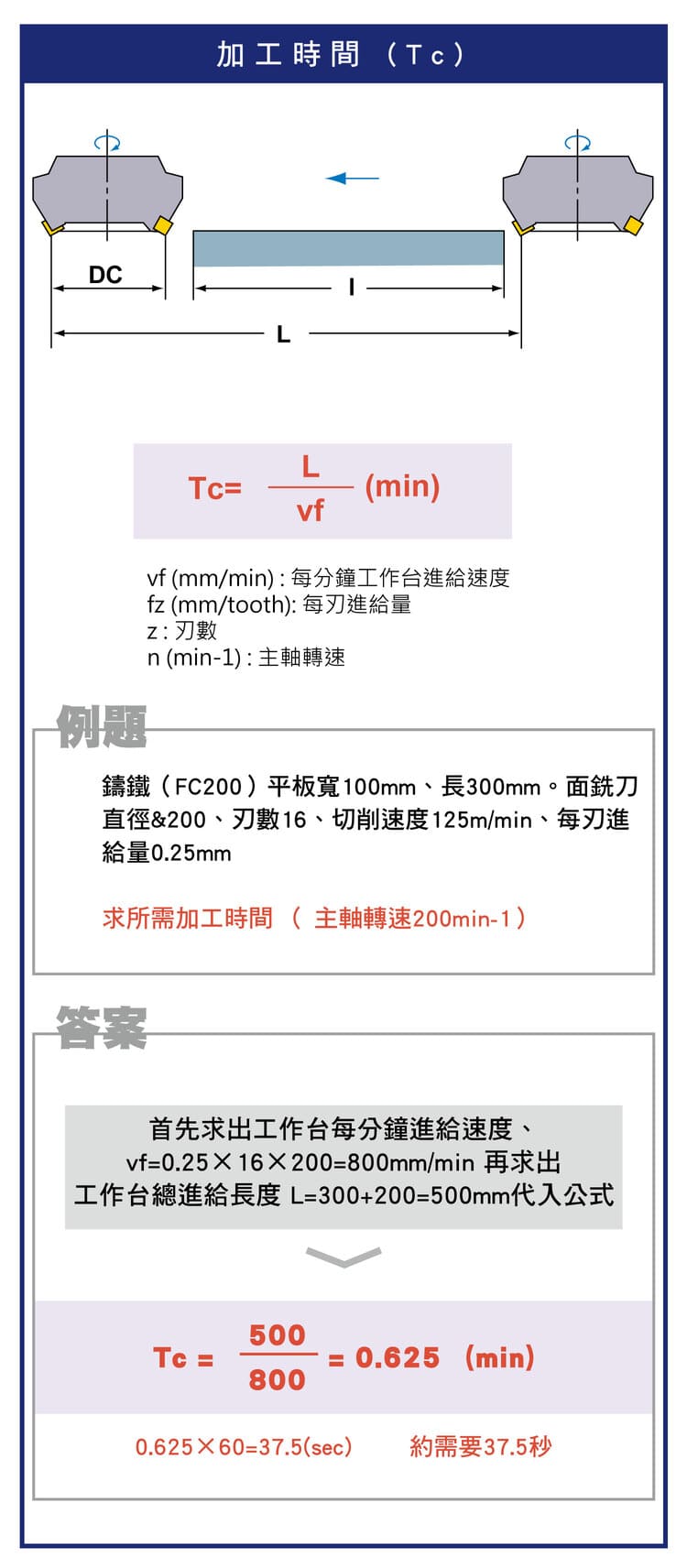
| Machining time Tc | Tc = L / vf | L total length |
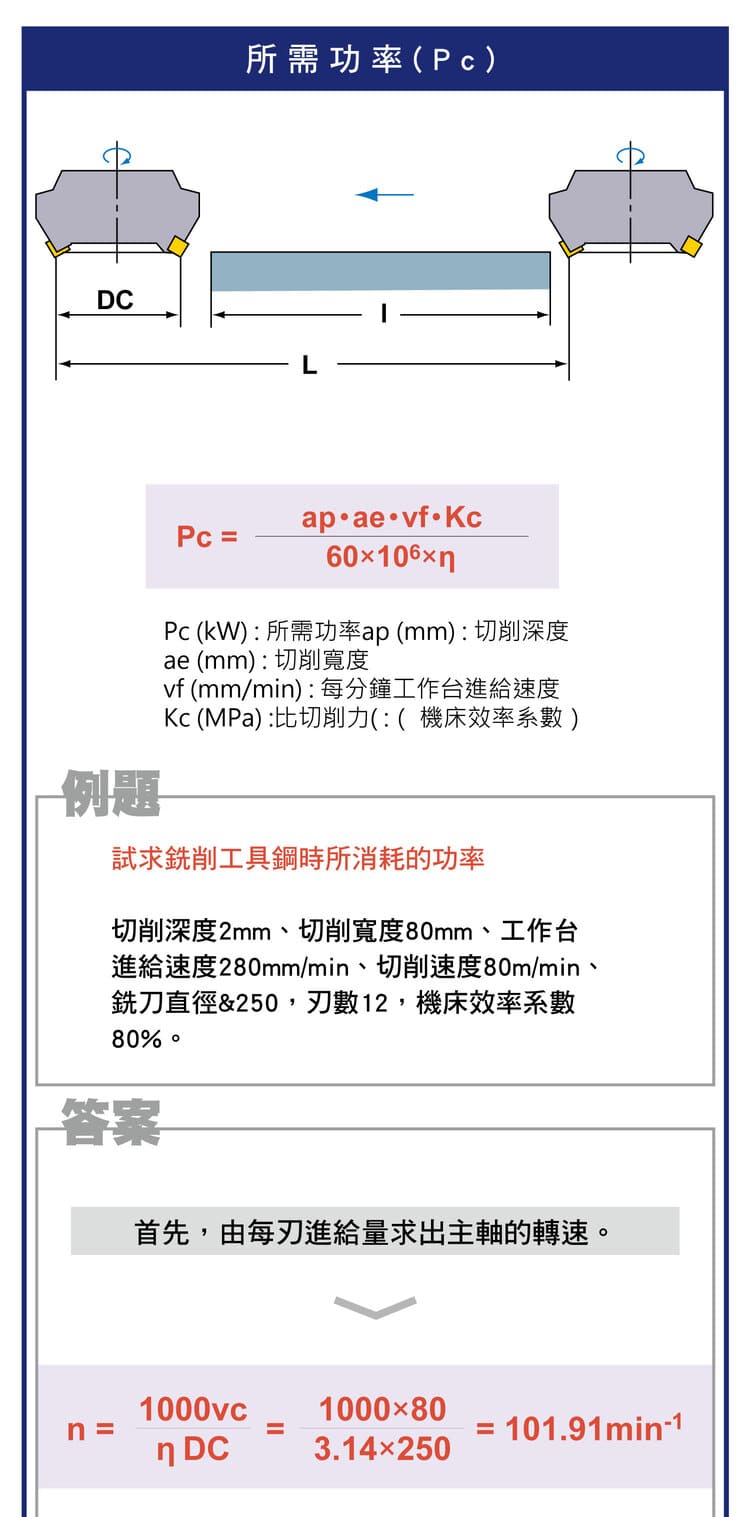
| Cutting power Pc | Pc = (ap × ae × vf × Kc) / (60 × 10⁶ × η) | ap depth, ae width, Kc specific force, η efficiency |
Tc is used for cycle-time and cost; Pc to avoid overload and pick suitable equipment.
4. Material and Specific Cutting Force (Kc)
| Material | Specific force Kc (relative) |
|---|---|
| Steel | High |
| Cast iron | Medium |
| Aluminium | Low |
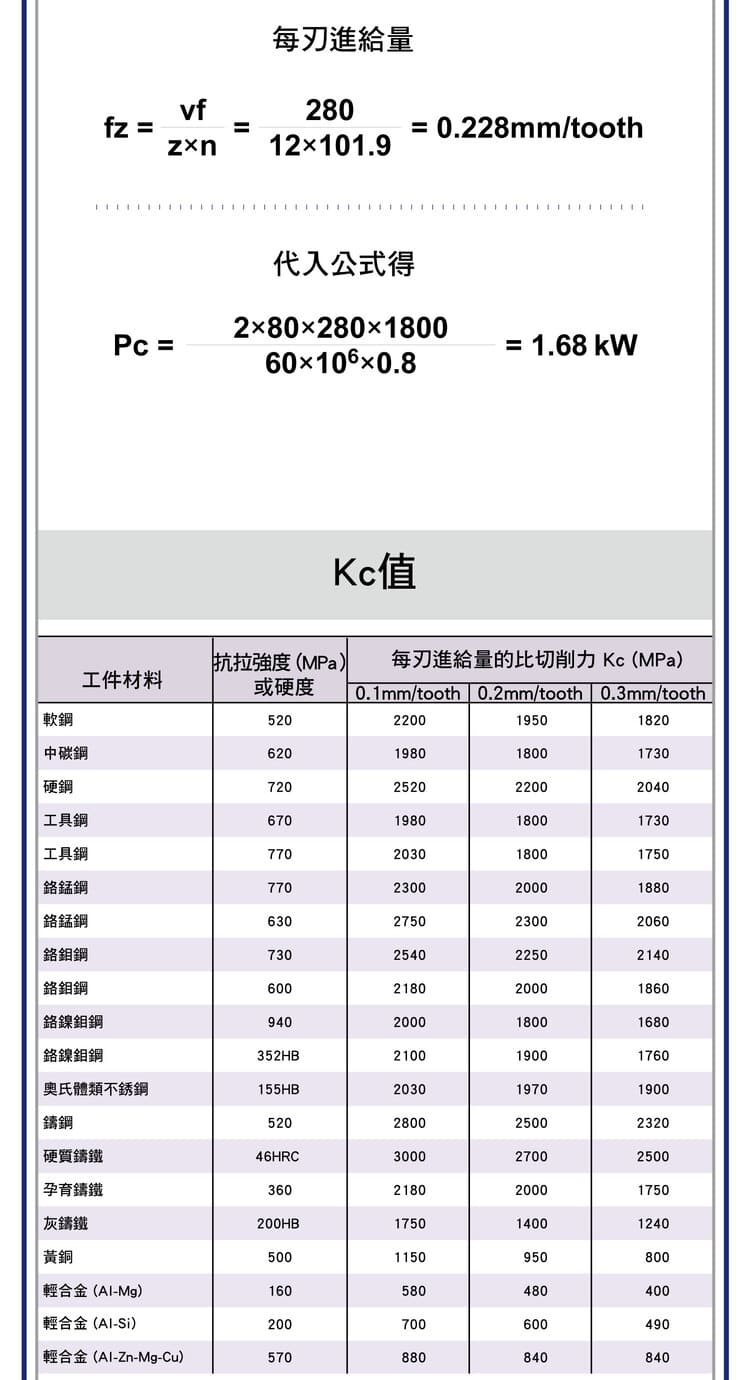
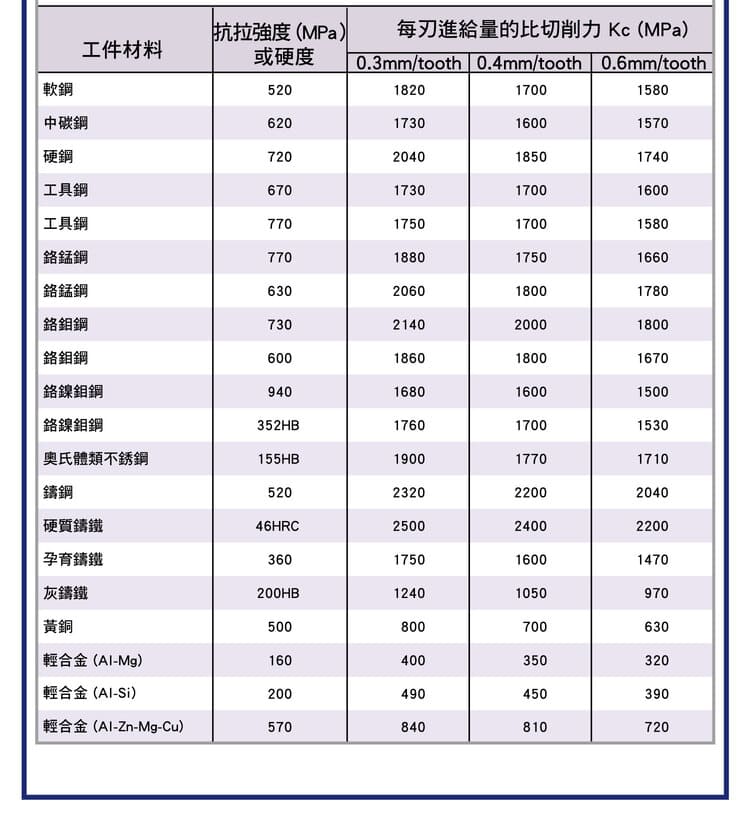
Different materials need different cutting force, directly affecting Pc and condition choice.
5. Parameter Relationships and Optimisation
Links: vc sets n, fz sets vf, vf sets Tc, Kc sets Pc. Logic: for efficiency raise vc, vf; for accuracy lower fz; for safety control Pc. Balance all three; never push one alone.
6. Common Problems and Fixes
| Problem | Cause | Fix |
|---|---|---|
| Fast tool wear | vc too high, fz too large | Lower speed, adjust feed |
| Poor surface finish | fz too large, vibration | Lower feed per tooth |
| Machine overload | Pc too high | Reduce depth or feed |
| Low efficiency | vf too low | Raise feed rate |
7. Optimisation Strategy and Priorities
Tool setup: pick a suitable diameter and flute count; parameters: balance vc and fz; equipment: ensure enough spindle power. Master speed, feed and power to raise efficiency, extend tool life and stabilise quality. Use exact values from the tool maker and material. For finish see the Face Milling Surface Finish Guide; for tool choice see the Face Milling Tool Selection Guide.
FAQ
Q: How do I convert vc to spindle speed n?
From vc = (π × DC × n)/1000, solve n = (vc × 1000)/(π × DC). DC is tool diameter (mm), vc in m/min. Pick vc by material first, then compute the speed.
Q: How do vf and fz relate?
vf = fz × z × n (z flutes, n speed). fz is feed per tooth per rev, setting finish and load; vf is the actual table speed, setting efficiency and time.
Q: What is Pc used for?
Pc confirms whether spindle power is enough and avoids overload. If computed Pc nears or exceeds machine power, reduce depth ap, width ae or feed vf. Specific force Kc varies by material — steel is highest.
Q: How to trade off efficiency vs finish?
For efficiency raise vc, vf; for finish lower fz. In practice keep Pc safe first, then balance to the part — rough passes favour efficiency, finish passes favour low fz and stability; two passes is usually best.
For the full reading guides on this topic, see Surface Finish: A Complete Reading Guide and Machining Calculation Reading Guide.