Imperial Thread Tolerance Chart|Whitworth, Pipe & P-Class
The imperial thread tolerance chart covers Whitworth (BSW), Unified (UNC/UNF), pipe threads (PF/PT/G/Pg) and STI, controlling major, pitch and minor diameters and their tolerance ranges. Using P-class (P1–P4) or µm tolerances secures thread-fit accuracy and interchangeability. Machining, pipe sealing, automotive and electrical-conduit systems each need the right standard and grade to balance machining stability and assembly quality.
1. What the Chart Is For
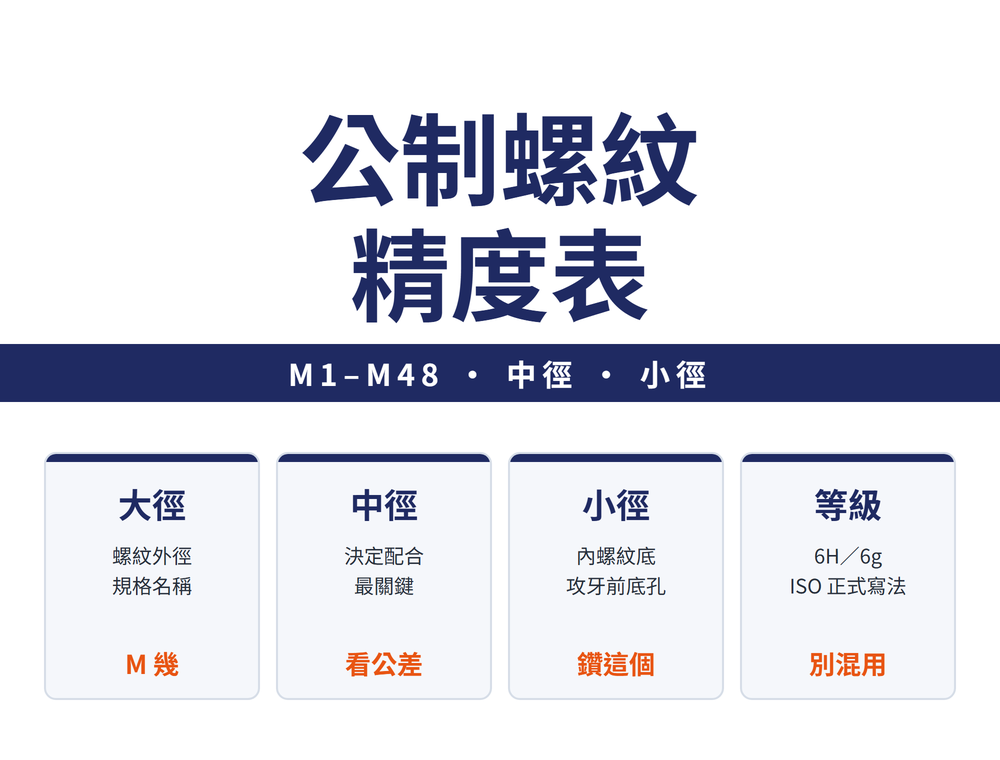
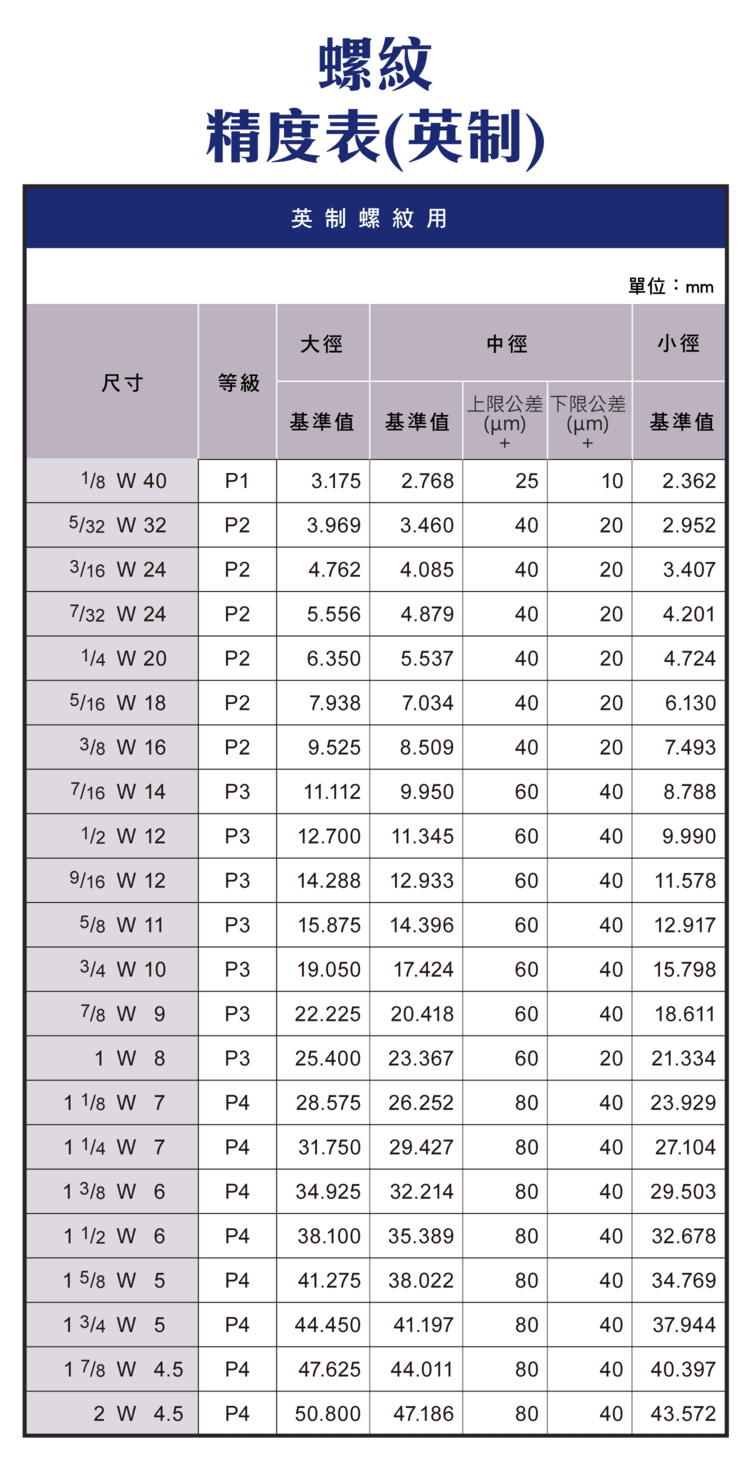
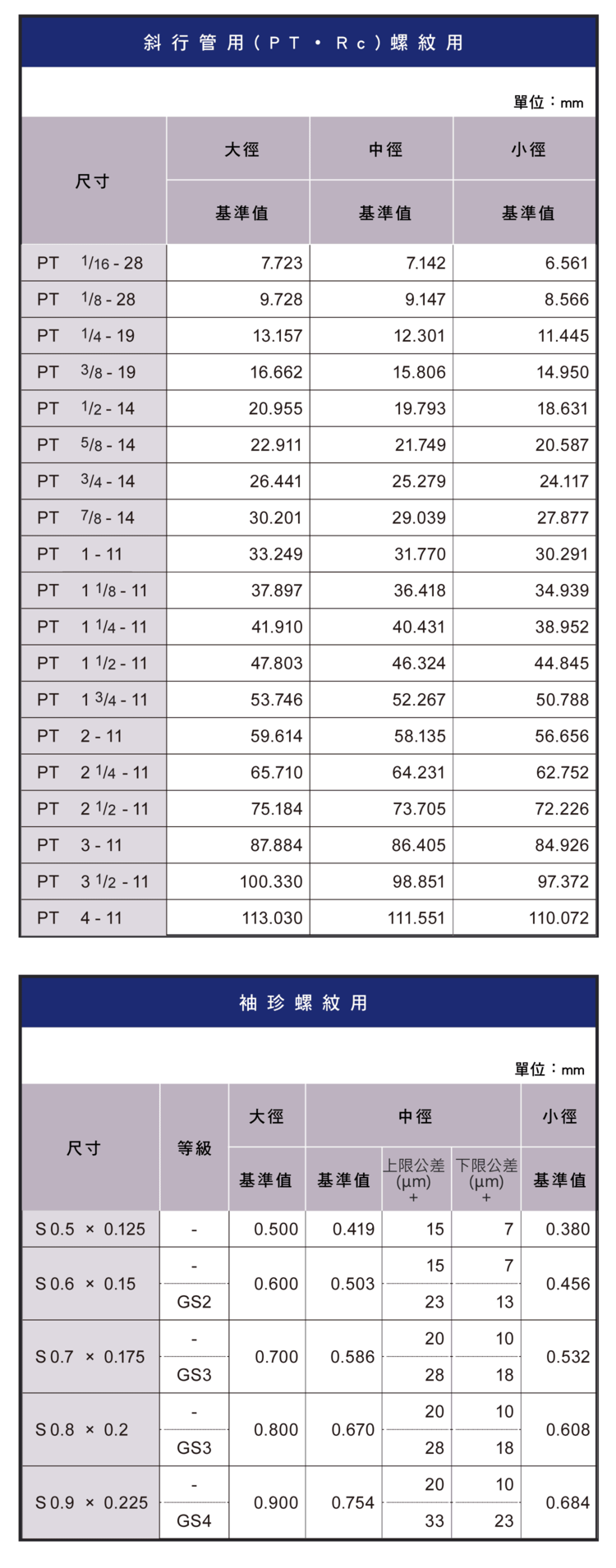
The imperial thread chart controls thread sizes (major/pitch/minor), defines tolerance ranges (µm) and secures part interchangeability, widely used in CNC machining, assembly, pipe sealing, and the electrical and automotive industries. The pitch diameter is the most critical size for fit accuracy and tightness.
2. Common Imperial / Pipe Thread Standards
| Standard | Form / angle | Main use |
|---|---|---|
| BSW (Whitworth) | 55° rounded | Traditional British standard; legacy machinery |
| UNC / UNF (Unified) | 60° V | US coarse/fine; general machinery |
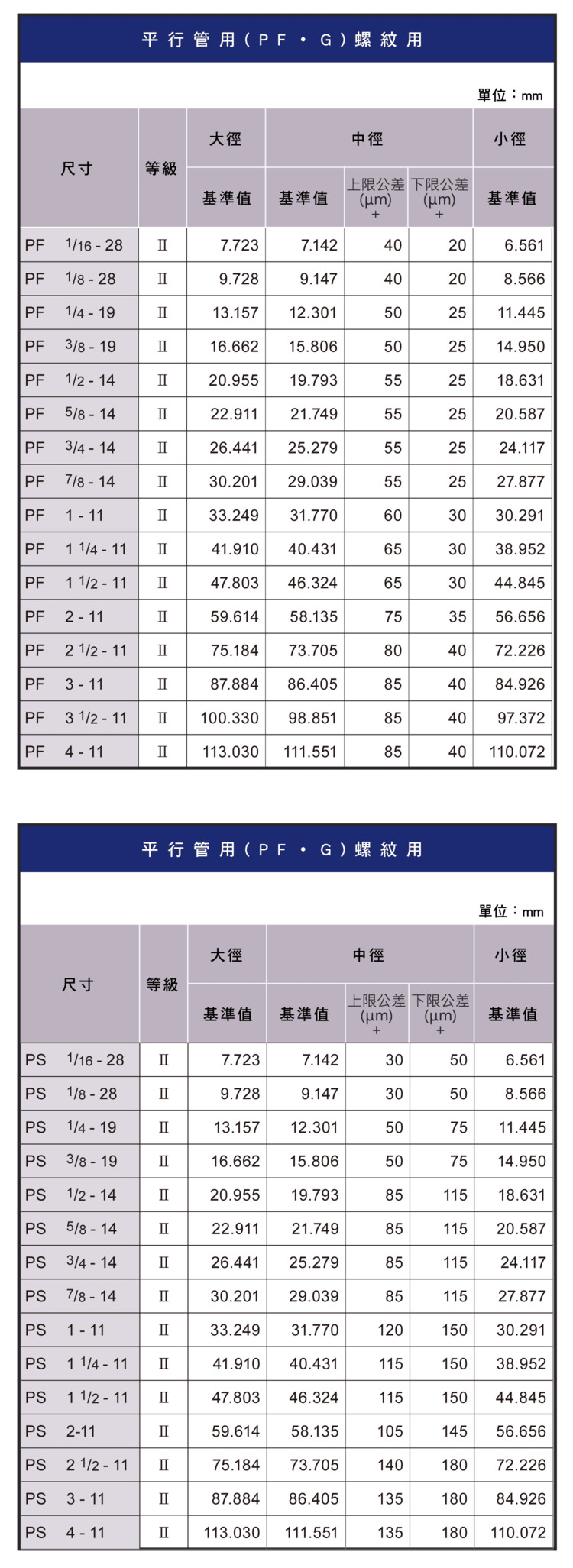
| PF / G (parallel pipe) | 55° pipe (parallel) | Pipe connection and sealing (parallel) |
| PT / R (taper pipe) | 55° pipe (taper) | Pipe sealing (taper, interference seal) |
| Pg | Electrical conduit thread | Conduit and fittings |
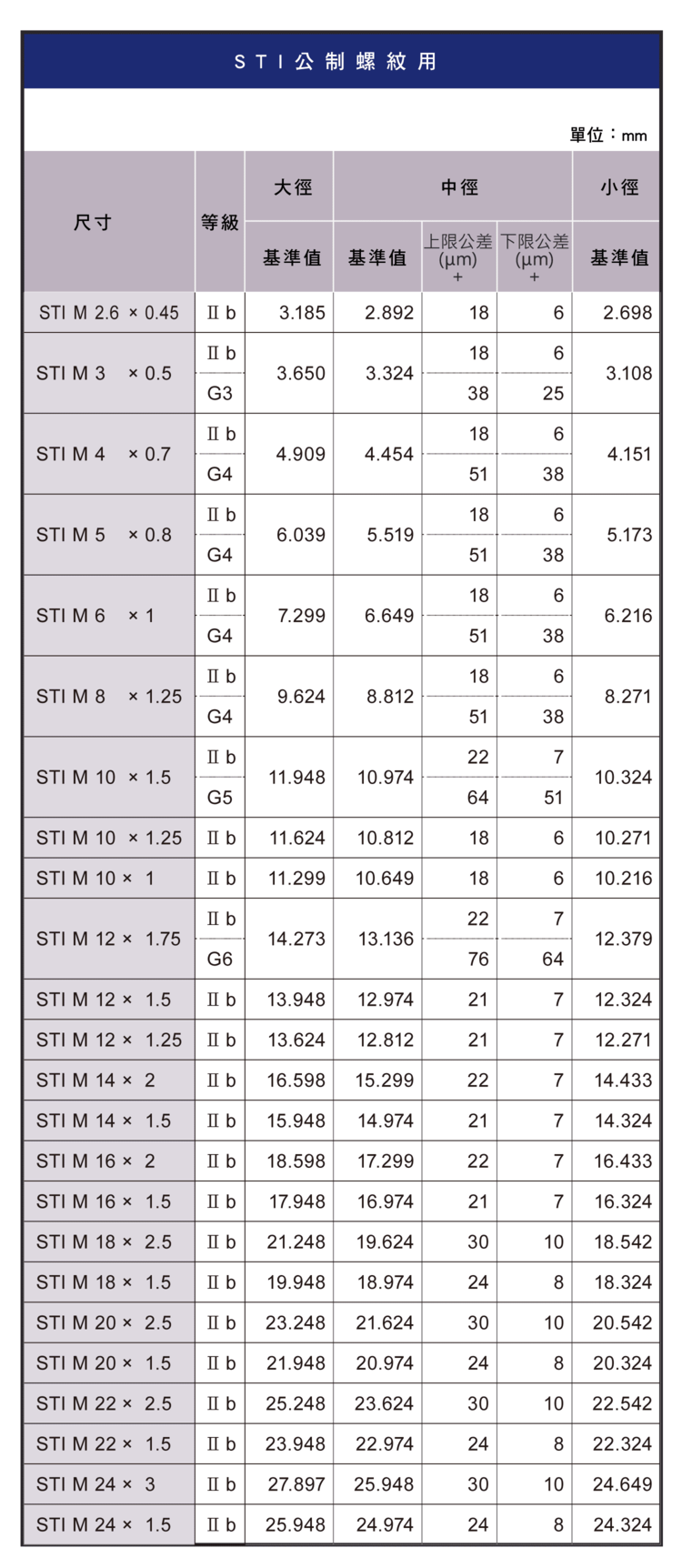
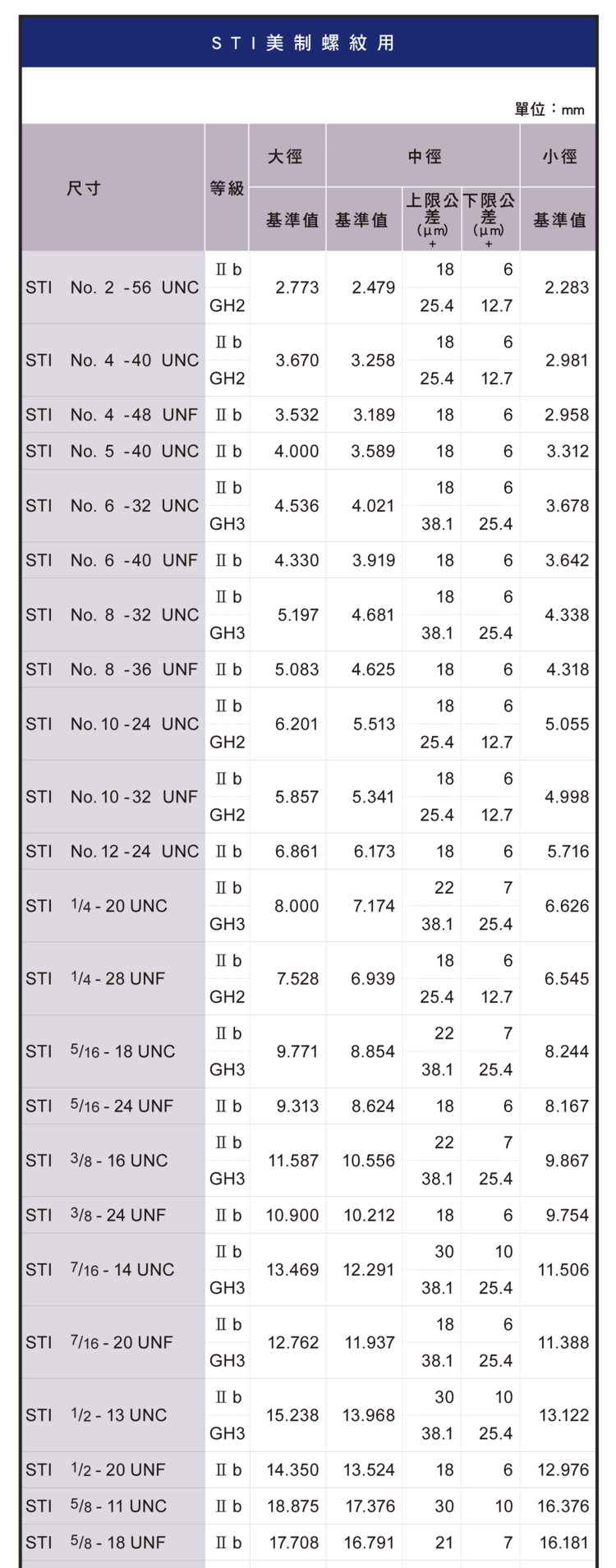
| STI | Insert thread (oversize internal) | Thread inserts; repair or reinforce holes |
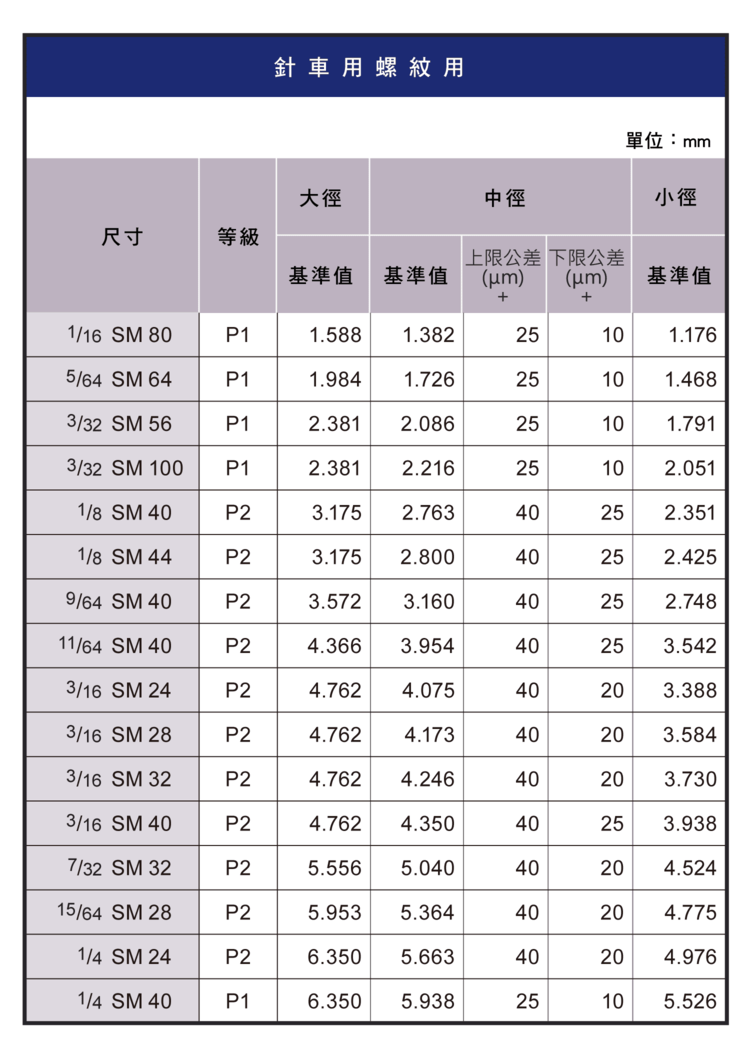
※ For each standard's full major/pitch/minor diameters and tolerances, refer to the original chart images below.
3. The Three Diameters
| Diameter | Description |
|---|---|
| Major | Largest thread diameter |
| Pitch | Most critical size for fit |
| Minor | Root diameter; close to the pilot-hole size |
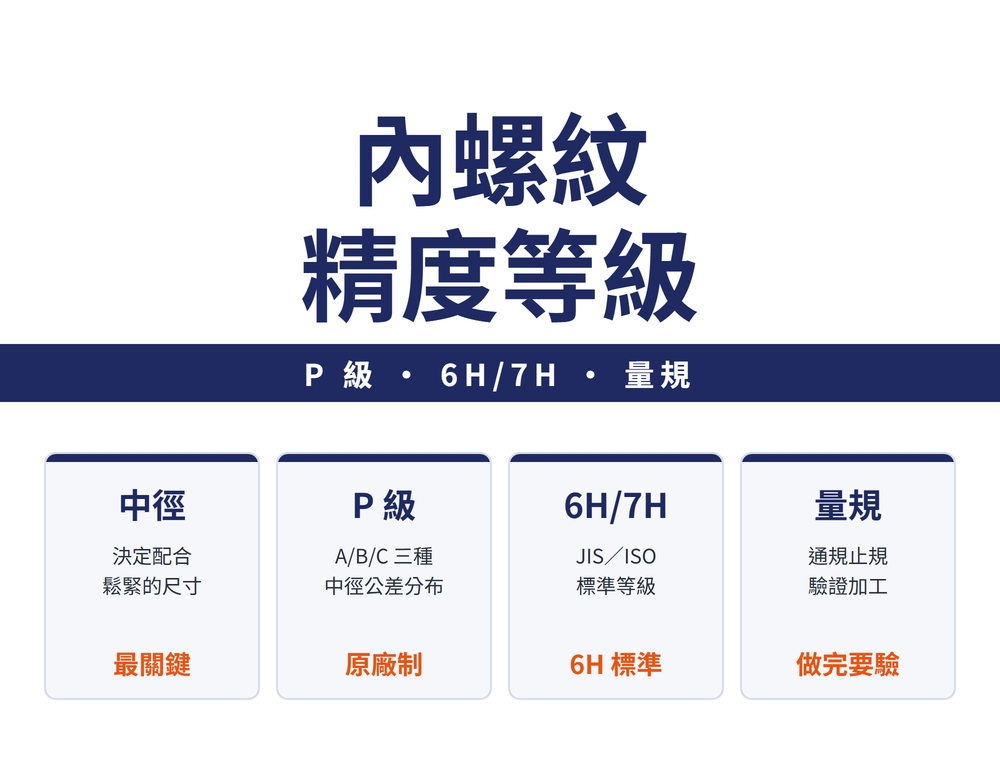
4. P-Class Precision Grades
| Grade | Precision |
|---|---|
| P1 | High precision (smallest tolerance) |
| P2 | Standard precision |
| P3 | Medium tolerance |
| P4 | Wider tolerance |
Trend: higher grade (P4) = larger tolerance; lower grade (P1) = higher precision. Choose by fit tightness and inspection standard.
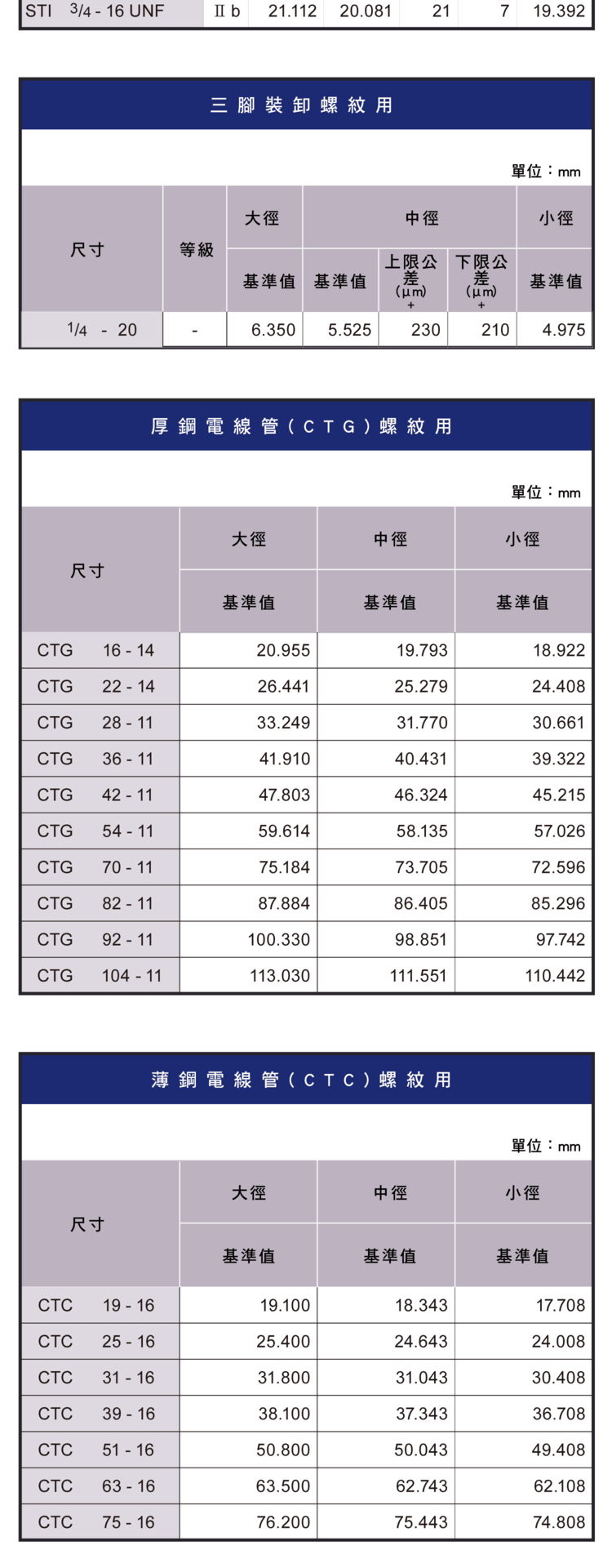
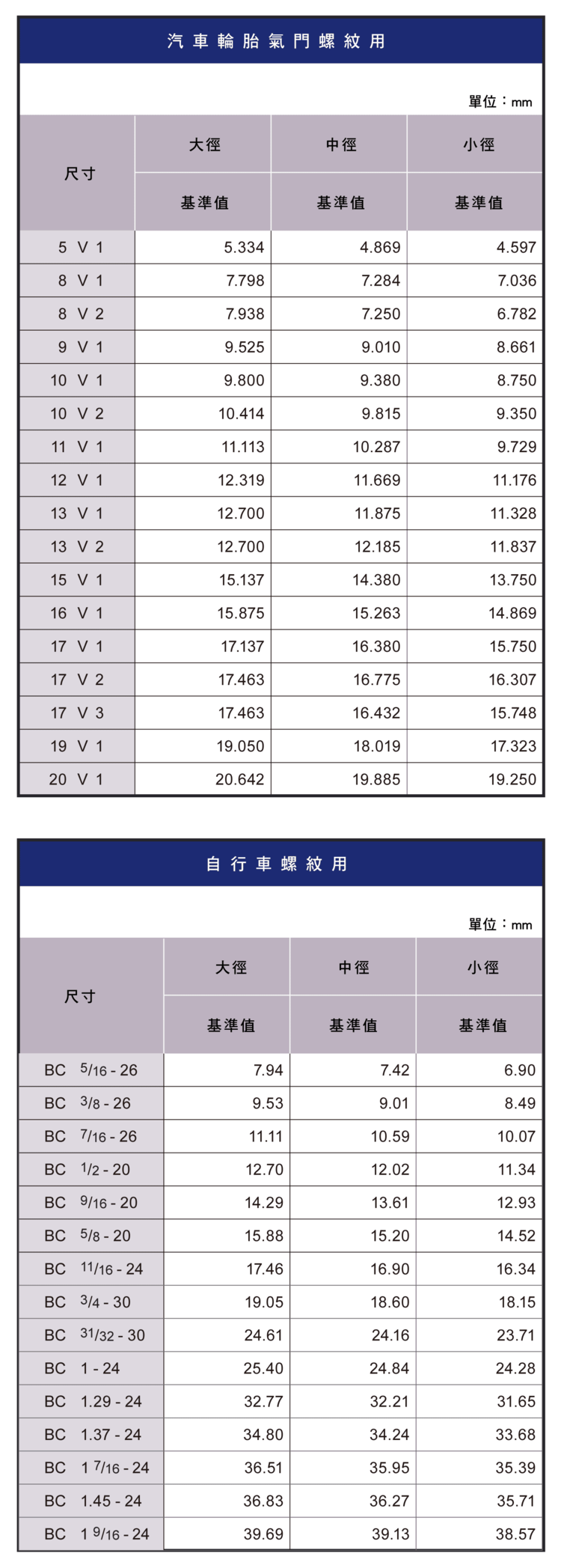
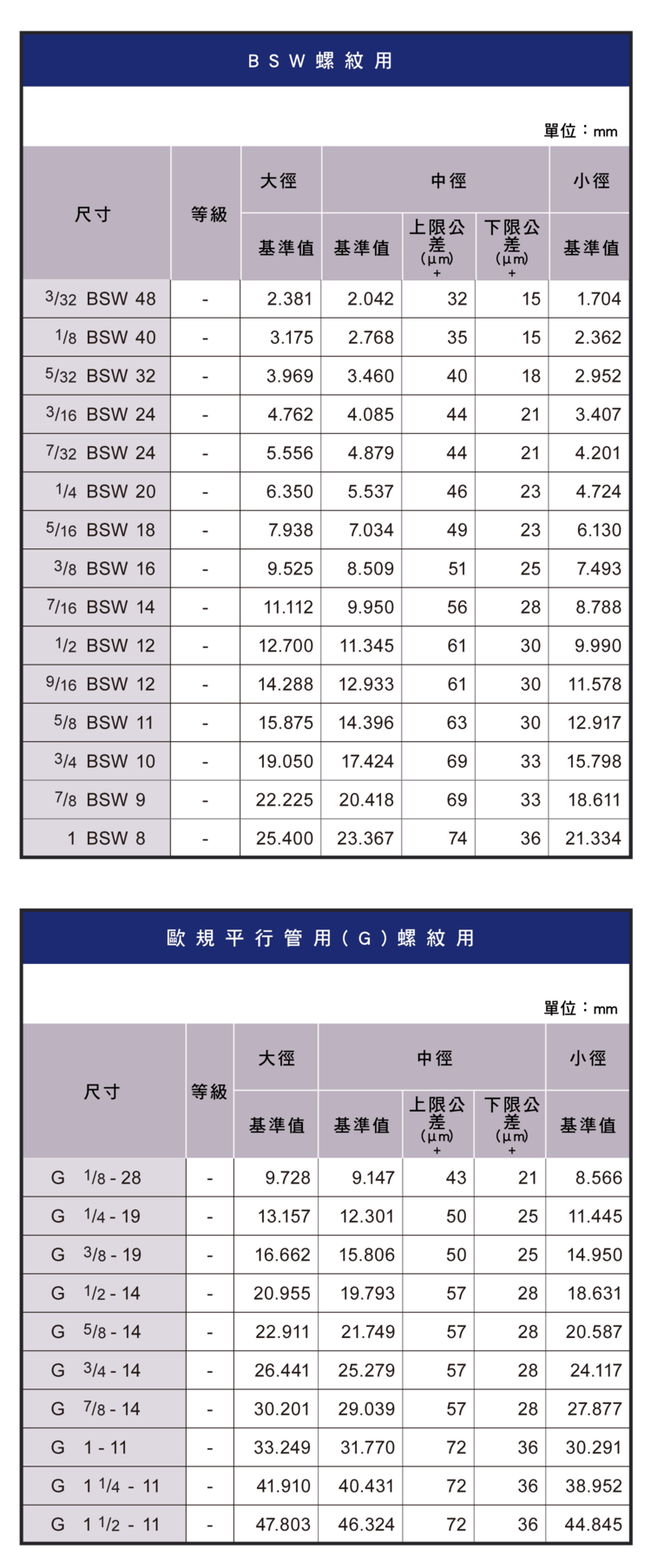
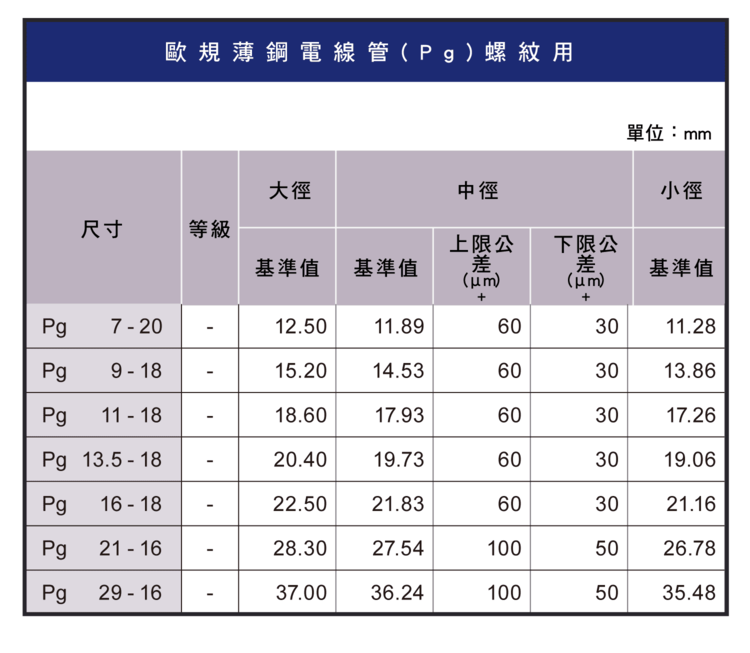
※ Full size and tolerance charts per standard above; values per the original tables.
5. Selection Tips
General machinery and structural parts mostly use UNC/UNF; pipe sealing chooses parallel (PF/G) or taper (PT/R); conduit systems use Pg; hole repair or reinforcement uses STI inserts. Pilot holes still follow each standard's minor diameter and pitch.
For metric and unified standards see the Metric Thread Tolerance Chart and Unified Thread Tolerance Chart; for pipe taps see the Pipe Tap Guide; for internal-thread tolerance see the Tap Thread Tolerance Guide.
FAQ
Q: BSW (Whitworth) vs UNC?
BSW is the British Whitworth standard with a 55° angle and rounded crest/root; UNC is the US unified thread with a 60° V form. Their forms and sizes differ and are not interchangeable — confirm the standard before use or inspection.
Q: Parallel (PF/G) or taper (PT/R) pipe thread?
Parallel pipe threads (PF/G) seal with a gasket or O-ring, good for removable fittings; taper pipe threads (PT/R) self-seal by flank interference, usually with sealing tape, for gas/liquid-tight piping.
Q: How to read P1–P4?
P-class is a precision grading: lower grade (P1) means smaller tolerance and higher precision; higher grade (P4) means larger tolerance. Choose by fit tightness and inspection standard.
Q: What is an STI thread?
STI is an oversize internal thread for fitting thread inserts, used to repair stripped holes or reinforce threads in soft materials like aluminium and magnesium. Its pilot hole differs from a standard thread and follows the STI spec.
For the full reading guide on this topic, see Thread Machining: A Complete Reading Guide.