CVD Insert Coating Chart: ISO Classes & Brand Cross-Reference
CVD insert coating is the core technology for heavy and high-wear cutting, widely used on steel, stainless steel and cast iron. By cross-referencing ISO classes (P, M, K, S) and major-brand grades, you can quickly find substitute inserts and optimize efficiency. This guide covers the CVD insert cross-reference and selection logic to improve tool life and stability. For the ISO workpiece groups, see ISO Workpiece Material Classification.
What Is CVD Insert Coating?
CVD (Chemical Vapor Deposition) is a high-temperature deposition process with a thicker coating; key features and uses below.
| Item | Detail |
|---|---|
| Coating traits | Thick coating (high wear resistance), high heat resistance, good for continuous cutting |
| Common use | Turning; steel and cast-iron machining |
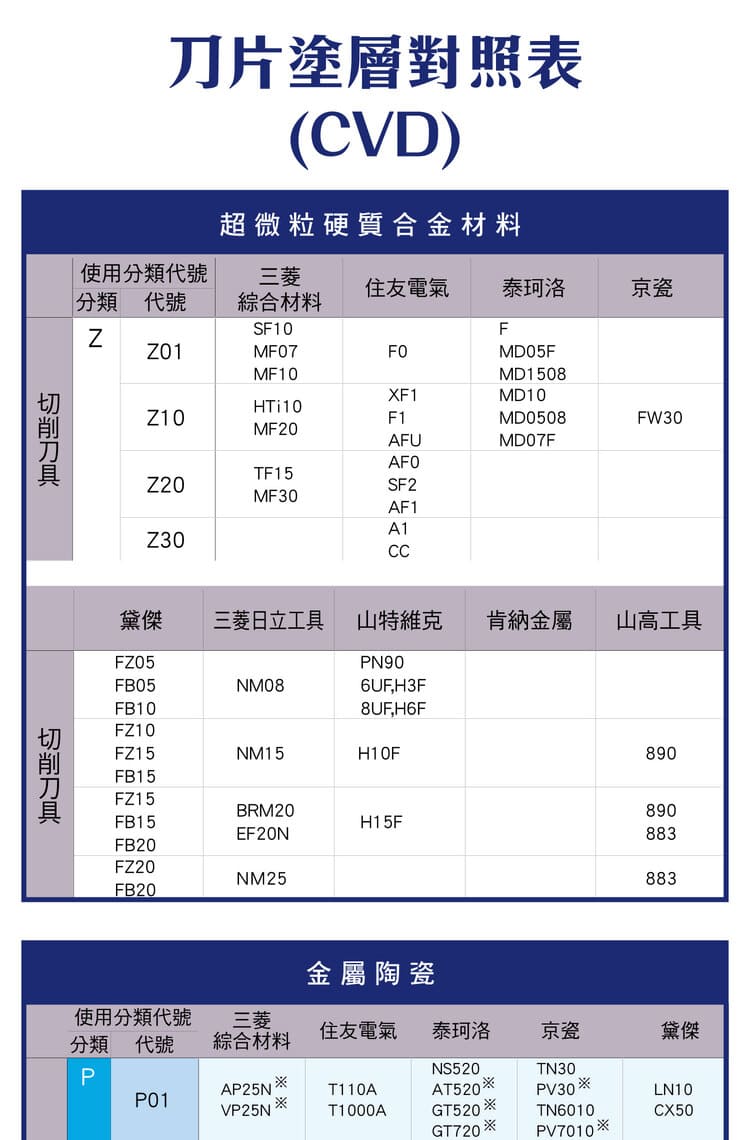
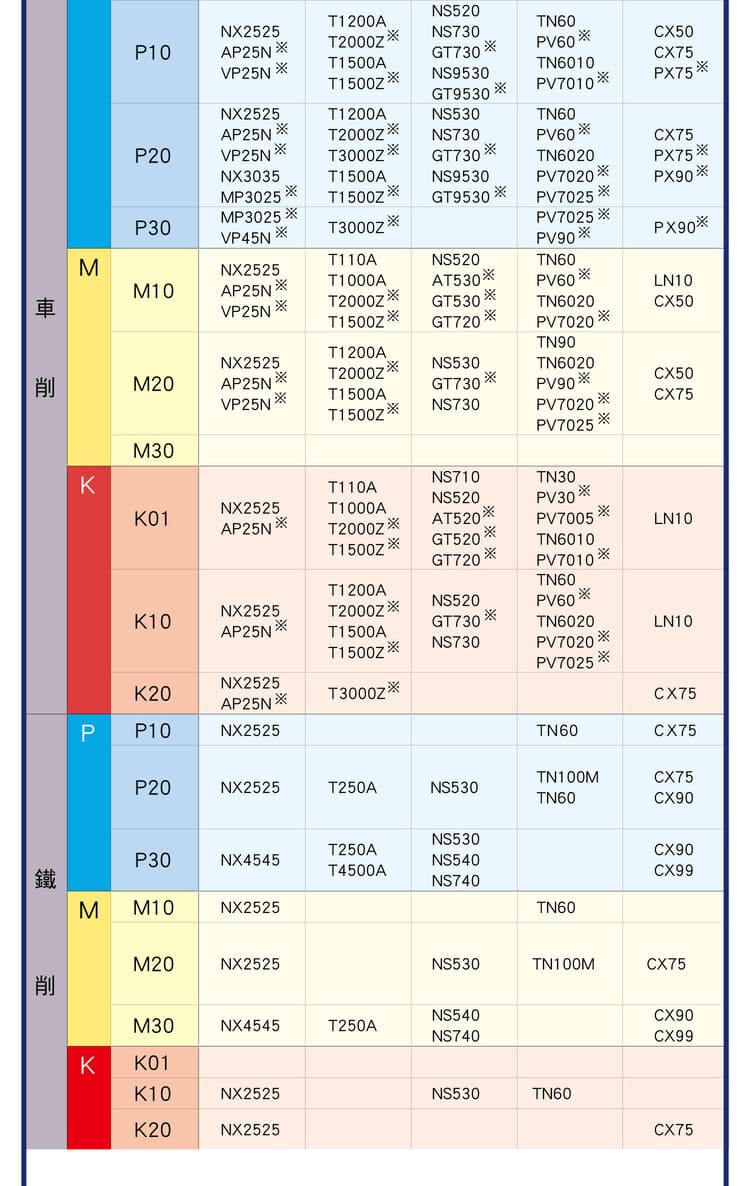
ISO Classes and Brand-Grade Cross-Reference
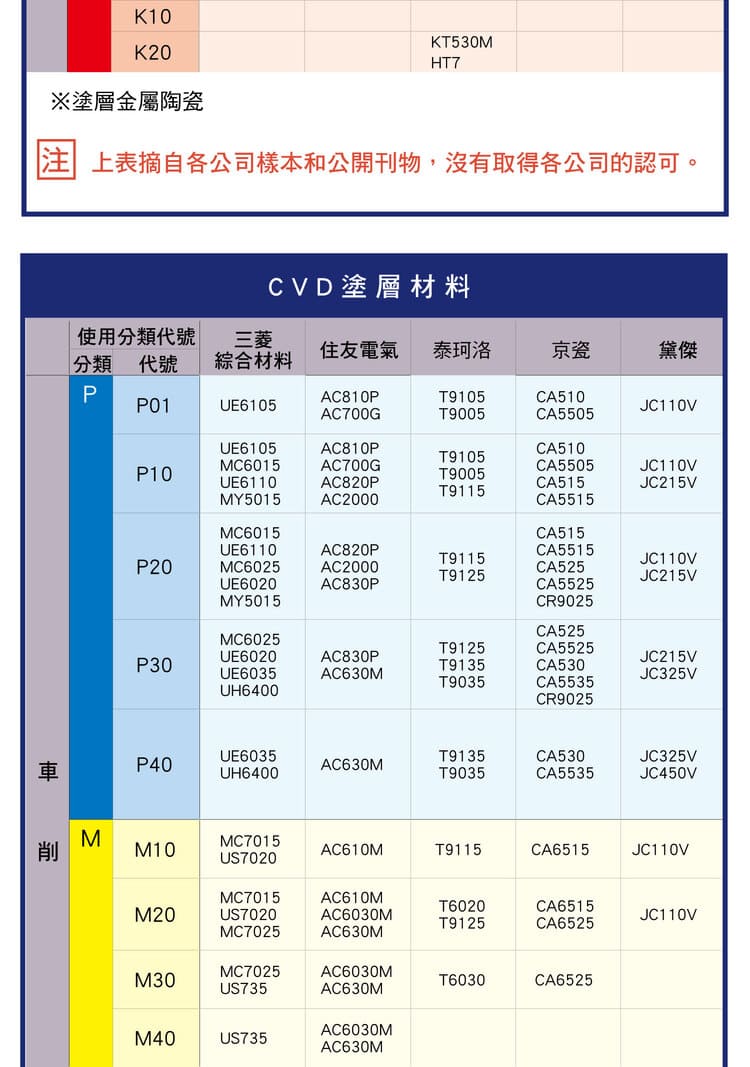
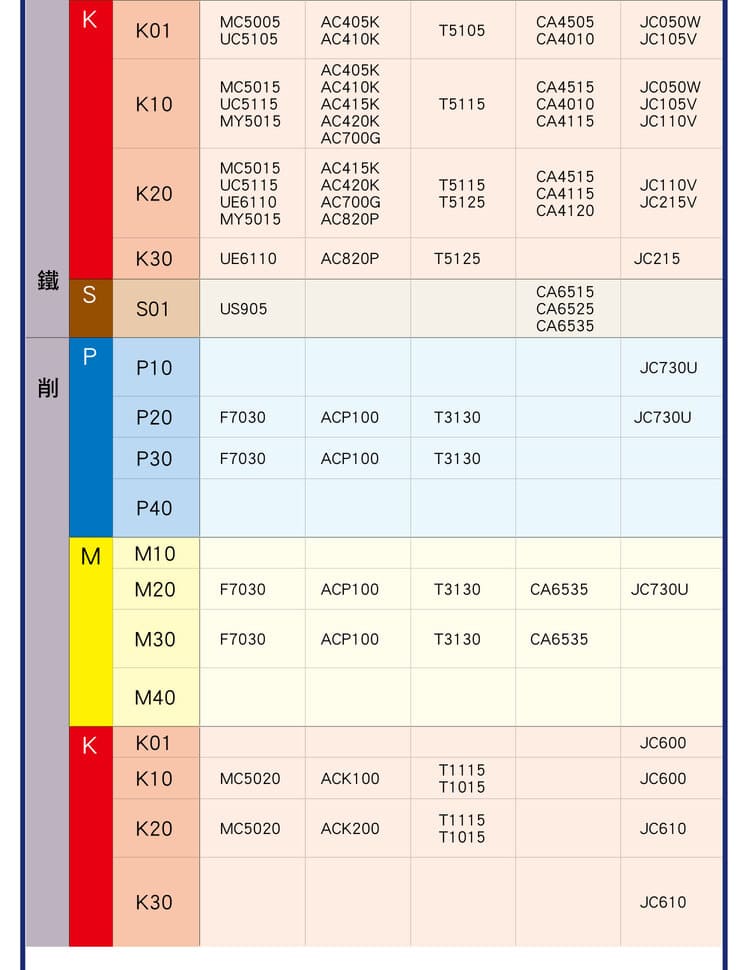
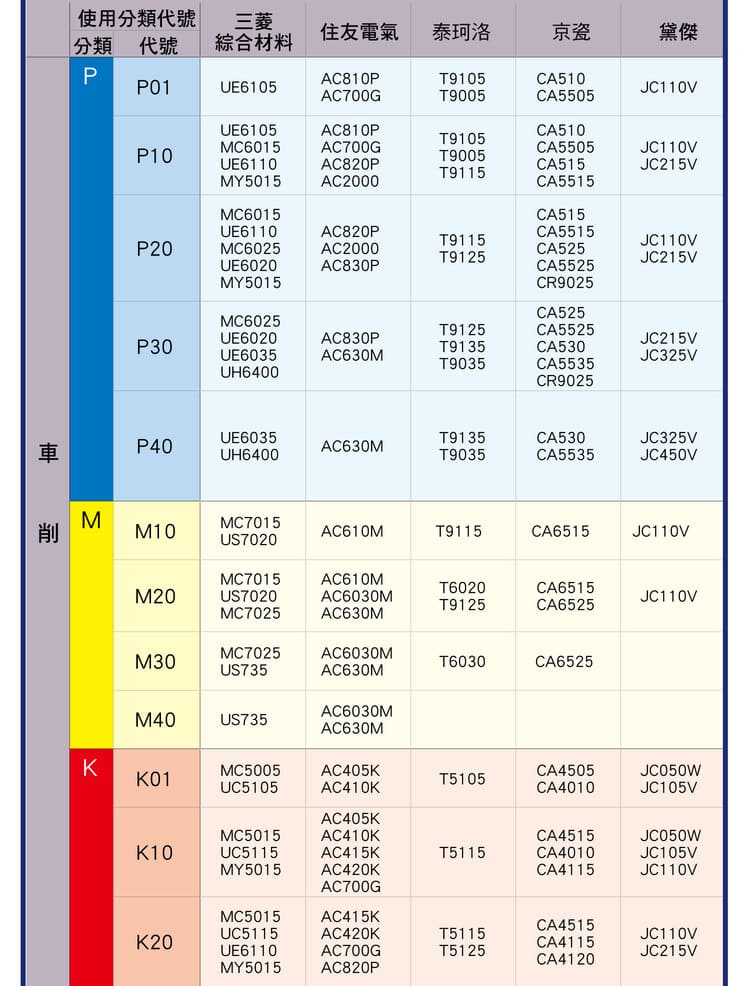
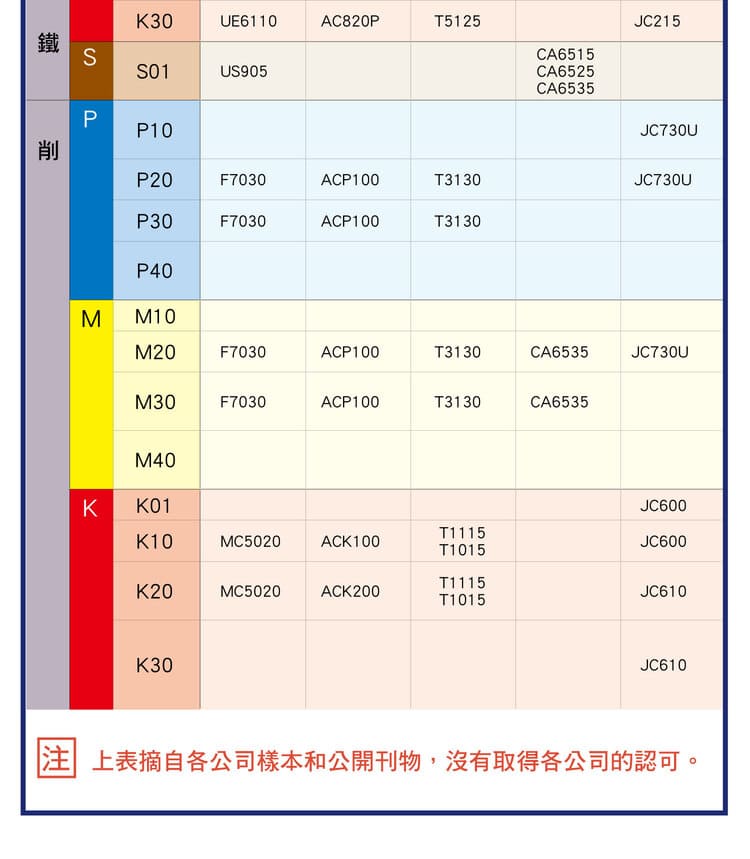
Grades by ISO group; within a group you can find equivalent substitutes.
| ISO group | Material / trait | Example grades by brand |
|---|---|---|
| P | Carbon / alloy steel | Mitsubishi UE6105, MC6015, UE6020; Sumitomo AC810P, AC820P, AC830P; Kyocera CA510, CA515, CA525; Daijet JC110V, JC215V |
| M | Stainless (gummy, work-hardening) | Mitsubishi MC7015, MC7025; Sumitomo AC610M, AC6030M; Kyocera CA6515, CA6525 |
| K | Cast iron (high wear demand) | Mitsubishi MC5005, MC5015; Sumitomo AC405K, AC420K; Kyocera CA4515, CA4115 |
| S | Heat-resistant superalloys | Mitsubishi US905; Kyocera CA6515, CA6535 |
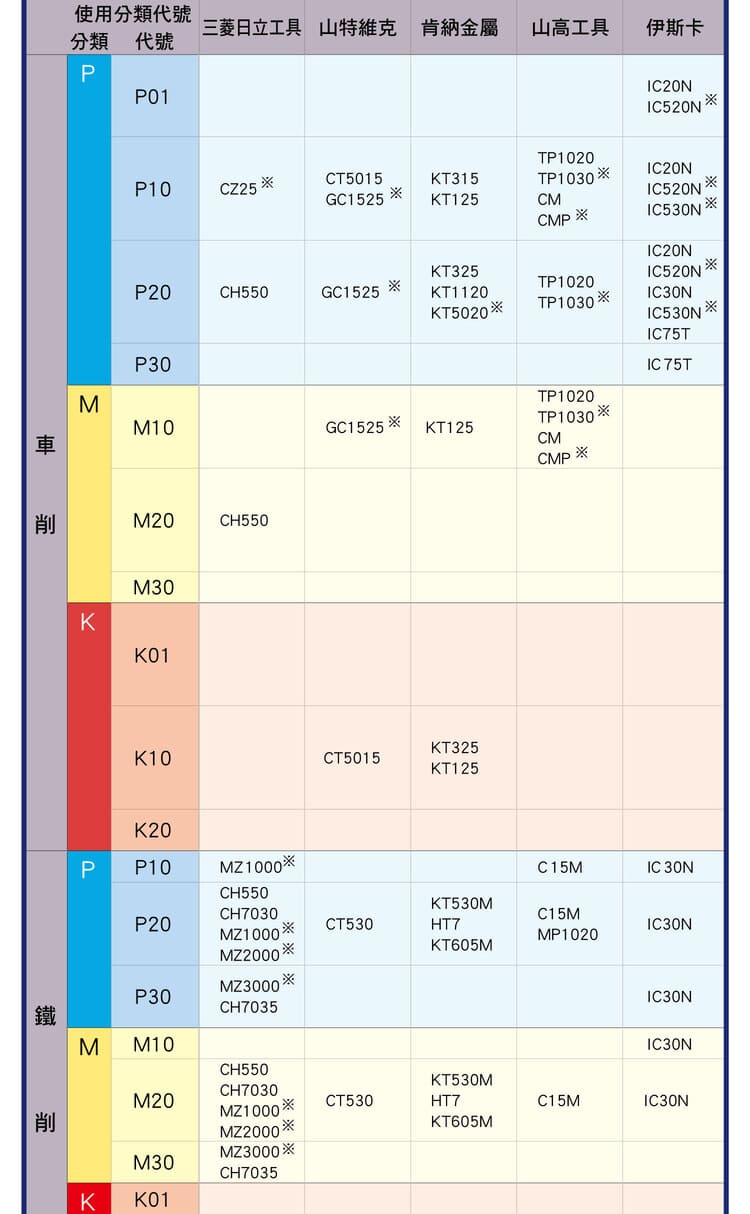
Brands Covered
The chart consolidates major tool brands; the same ISO class points to substitutes with similar application and performance.
| Brand | Origin |
|---|---|
| Mitsubishi Materials | Japan |
| Sumitomo | Japan |
| Tungaloy | Japan |
| Kyocera | Japan |
| Daijet | Japan |
| ISCAR | Israel |
Turning vs. Milling Inserts
| Type | Mainstream coating | Emphasis |
|---|---|---|
| Turning insert | Mostly CVD | Wear resistance & stability |
| Milling insert | Tends to PVD | Impact resistance |
Milling / interrupted cutting mostly uses PVD—see PVD Insert Coating Chart; the ISO and brand overview is in Carbide Insert Coating Chart.
Advantages of CVD Coating
| Advantage | Detail |
|---|---|
| High wear resistance | Suits long cutting runs |
| High heat resistance | Withstands high-temperature machining |
| Stable machining | Good for continuous cutting |
CVD Insert Selection
| Scenario | Recommended grade |
|---|---|
| Heavy cutting | P20–P40 |
| Medium-speed | P10–P20 |
| Cast iron | K10–K30 |
| Stainless | M10–M30 |
Three-step tool selection: Step 1 identify material (steel→P, stainless→M, cast iron→K); Step 2 assess conditions (roughing→high wear, finishing→balanced); Step 3 pick grade (match equivalent inserts across brands). Set actual parameters by machine and material hardness—see End Mill Cutting Conditions Guide.
※ Grades are examples compiled from the source for same-ISO-group substitution reference only; verify exact equivalents and applicability against each brand's catalog.
FAQ
What is the difference between CVD and PVD coating?
CVD is high-temperature with a thicker coating—better wear and heat resistance for turning, continuous and heavy cutting; PVD is low-temperature with a thinner, tougher coating resisting chipping, for milling, interrupted cutting and finishing.
What machining suits CVD inserts?
Turning and continuous/heavy cutting of steel and cast iron—the thick coating gives high wear and heat resistance for long, high-temperature runs.
How do I find an equivalent substitute insert?
Determine the ISO group by workpiece (steel P, stainless M, cast iron K, superalloy S), then match brand grades within the same group to find substitutes with similar application and performance. Always confirm against the maker's catalog.
Which grade for heavy cutting?
Heavy cutting favors P20–P40 (tougher, impact resistant); medium-speed P10–P20; cast iron K10–K30; stainless M10–M30.
For the full reading guide on this topic, see Insert Selection: A Complete Reading Guide.
This article is part of Tool Materials and Coatings: The Complete Guide - Separate Substrate From Coating, Then Work Back From the Workpiece; that guide shows how the whole topic fits together.