Face Milling Surface Finish: Wiper Inserts, Runout & Feed
Face-milling surface finish is driven mainly by wiper inserts, cutter runout accuracy and feed. A wiper insert re-cuts the machined face to improve finish; controlling runout and feed lowers roughness and extends tool life. The three keys — vibration control, tool setup and feed setting — are core to face-milling surface accuracy.
1. Factors Affecting Surface Finish
| Factor | Note |
|---|---|
| Tool geometry | Wiper edge / insert type set residual height |
| Vibration | More vibration → rougher, chipping |
| Feed | Larger feed → higher roughness |
| Tool setup | Wiper, flute count, mounting stability |
Core goals: lower roughness, higher finish, stable quality.
2. Wiper Inserts
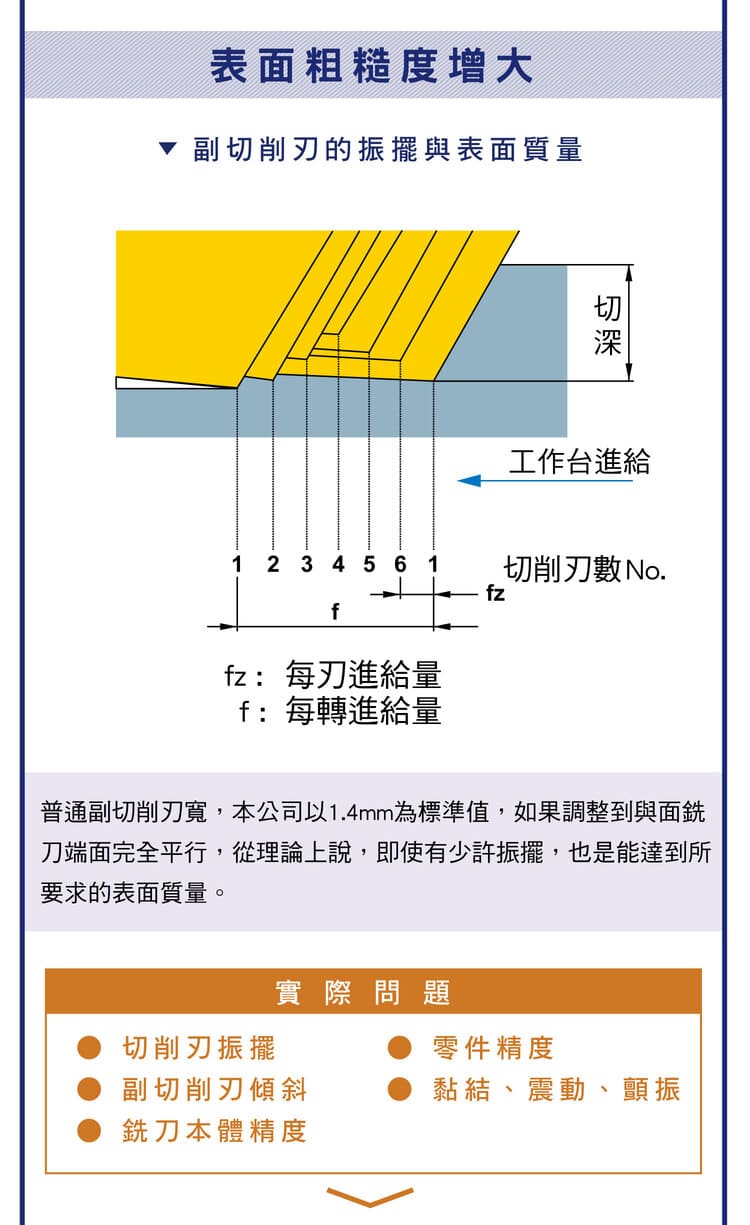
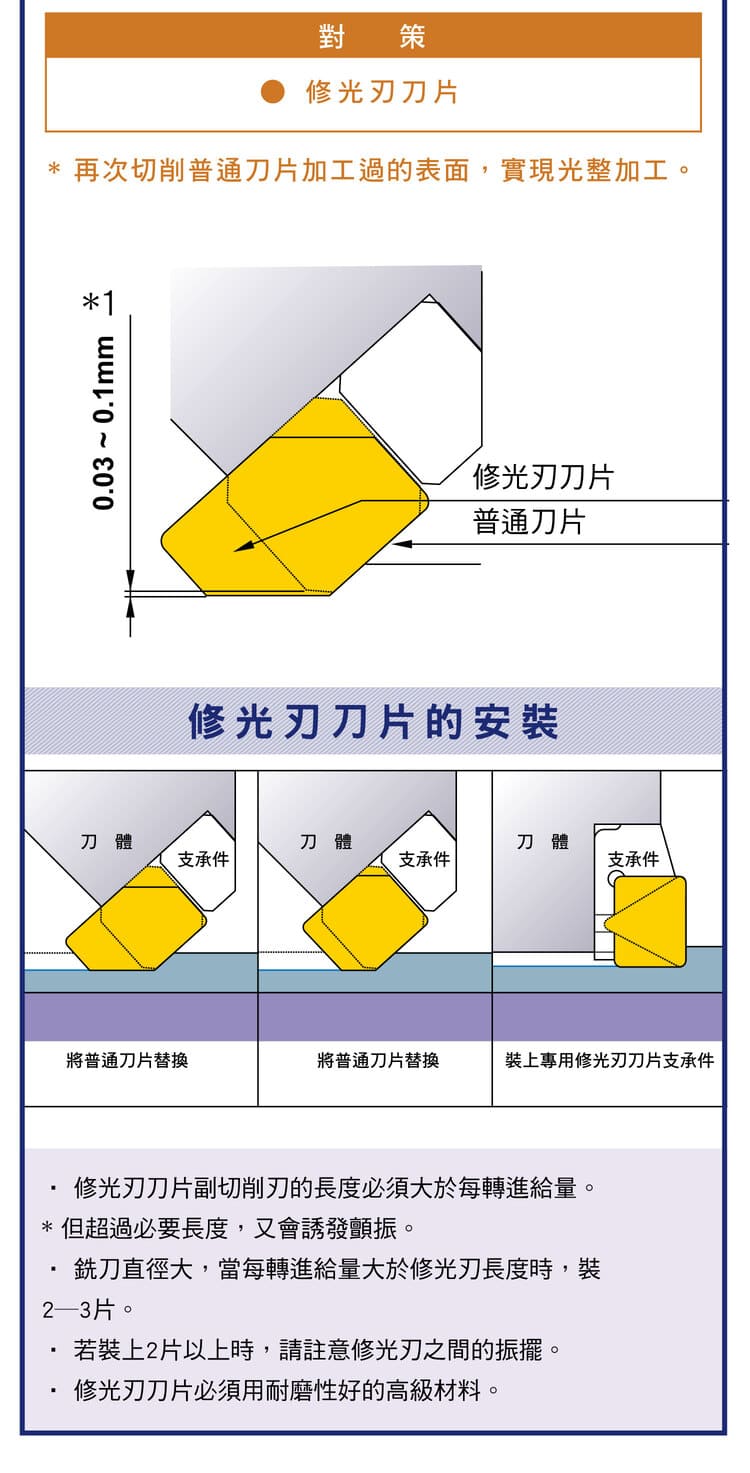
A wiper insert re-finishes the machined surface for a smoother result. Wiper length is about 0.03–0.1 mm. Keys:
The wiper length must be greater than the feed to cover the tool marks.;Too long invites vibration — balance it.;A large cutter can carry 2–3 wiper inserts.。
Mainly for finishing and high surface-quality needs.
3. Wiper Mounting
Two ways: replace one standard insert, or fit a dedicated seat. The key is a stable tool and avoiding interference/vibration between multiple inserts.
4. Cutter Runout Accuracy
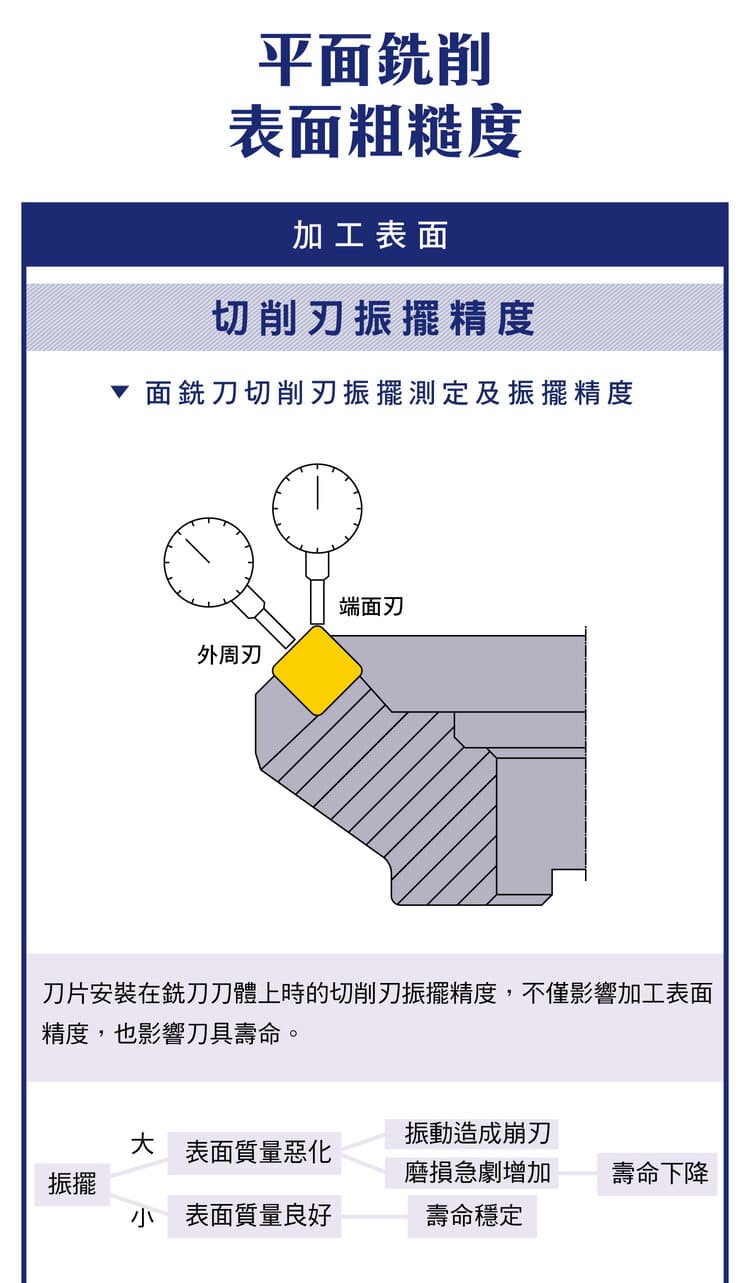
Runout is the wobble of the inserts as they rotate. High runout → uneven cutting, poor finish, shorter life; low runout → good finish, stable life. Control by improving tool/holder accuracy, correct mounting and a clean taper.
5. Vibration vs Surface Quality
Heavy vibration causes chipping, more wear and higher roughness; low vibration gives a smooth surface and longer life. Reduce vibration with more machine rigidity, less tool overhang and correct clamping.
6. Feed vs Roughness
| Parameter | Meaning | Effect |
|---|---|---|
| fz | Feed per tooth | Larger → higher residual height, rougher |
| f | Feed per rev | Sets tool-mark spacing |
Strategy: lower feed on finishing and pair with a wiper for a smooth surface without losing much efficiency. For cutting-parameter formulas see the Face Milling Formula Guide.
7. Effect of the Wiper (Secondary) Edge
The wiper (secondary) edge width affects finish — standard is about 1.4 mm. Kept parallel to the machined face, it flattens tool marks and raises finish; this is how wiper inserts improve the surface. For roughness formulas see the Milling Surface Roughness Formula.
8. Optimisation Strategy
Tool setup: use a wiper; conditions: control feed; machine: raise rigidity and cut vibration. Master runout accuracy, wiper design and feed control to improve finish, extend tool life and reduce defects.
FAQ
Q: Why does a wiper insert improve the surface?
A wiper has a longer edge parallel to the surface that re-flattens the marks left by the main edges. As long as the wiper length exceeds the feed, it covers the marks for a smooth finish — even at higher feed.
Q: Why does runout affect roughness?
Runout means the insert cutting radii differ, so only the most proud edge actually cuts — giving uneven load, larger residual height, a rougher surface and faster wear. Better holder/spindle accuracy and correct mounting reduce it.
Q: Lower the feed or use a wiper?
Use both. Lowering feed alone costs efficiency; pairing a wiper keeps a smooth surface at higher feed, balancing efficiency and quality. Finishing often uses "moderate feed + wiper".
Q: How many wipers on a large face mill?
A large cutter body can take 2–3 wipers to spread the finishing and stay stable. But too many or too long invites vibration, so tune with speed and feed and keep all inserts at equal height.
For the full reading guides on this topic, see Surface Finish: A Complete Reading Guide, Insert Selection: A Complete Reading Guide and Vibration and Chatter: A Complete Reading Guide.