
Drill Chip Formation Guide | Types of Chips and Machining Optimization
This article is part of Drill Bits: The Complete Guide - Start From Depth-to-Diameter, Then Pick the Drill and Set the Conditions; that guide shows how the whole topic fits together.
The shape of the chips produced while drilling is the first-hand signal of your cutting conditions and process stability. Common forms include conical spiral, fan, long continuous, Z-shaped, needle, powder and transitional-break chips — each reflecting feed rate, material ductility and chip evacuation. Ideal chips break cleanly and evacuate well; long or clogging chips can cause instability, loss of hole accuracy and even tool breakage. Reading the chip lets you adjust parameters and optimize drilling fast.
1. Why Chips Matter
Chips play a key role in drilling: they determine whether evacuation is smooth, whether the hole clogs, and they directly affect tool life and stability. When chips cannot clear, the result is tool breakage, hole-wall scoring and reduced accuracy. Watching the chip is the fastest shop-floor diagnostic.
2. Identifying Common Chip Forms
| Form | Characteristics | Evacuation | Typical cause / use |
|---|---|---|---|
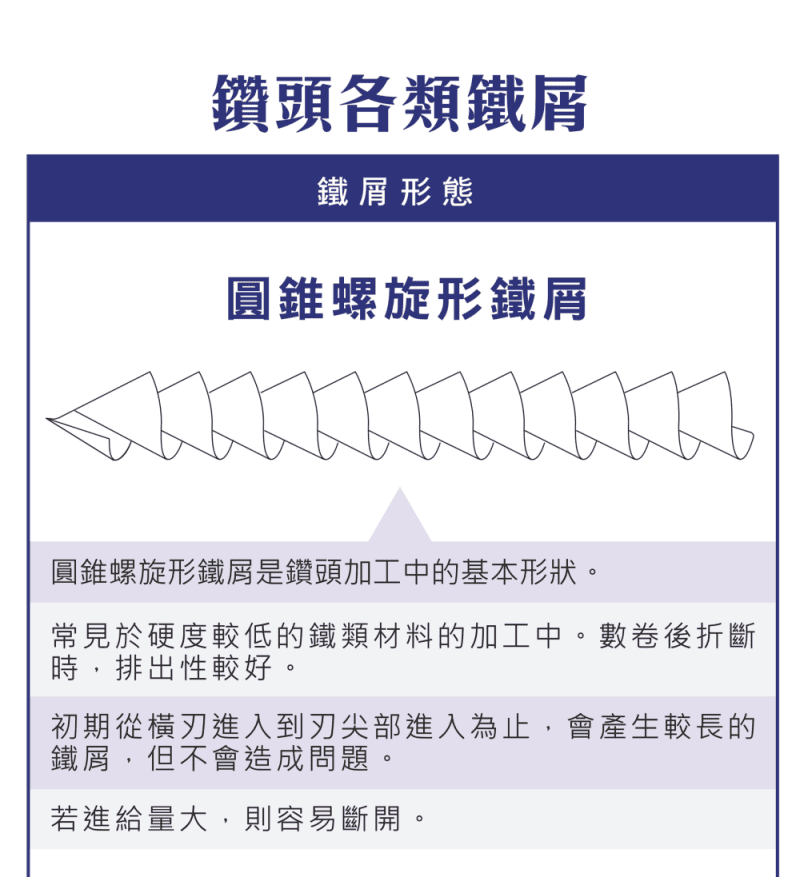
| Conical spiral (ideal) | Curls then breaks; continuous spiral | Smooth, easy to control | Moderate feed, ductile material, stable cut |
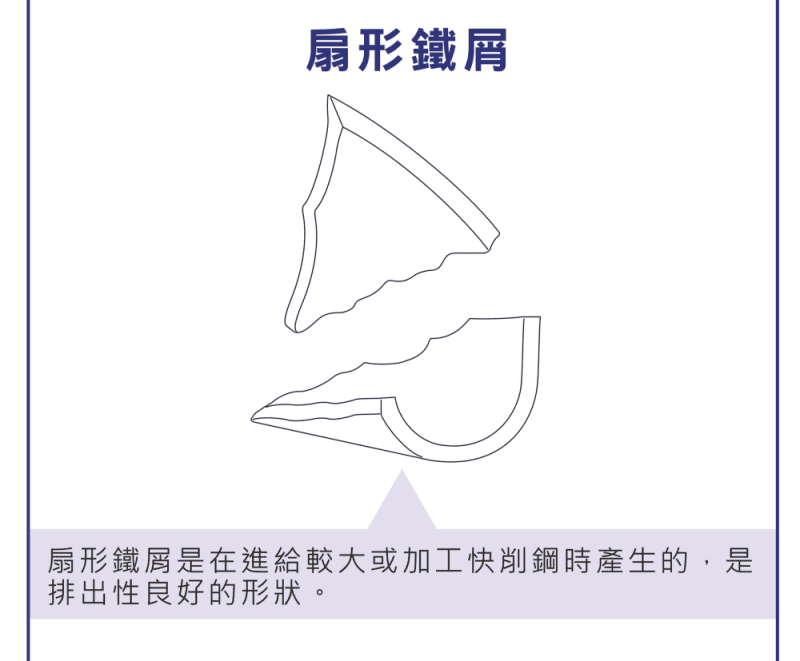
| Fan | Fan-shaped; break controlled by wall & flute | Efficient, high stability | Higher feed, free-cutting steel, high-feed work |
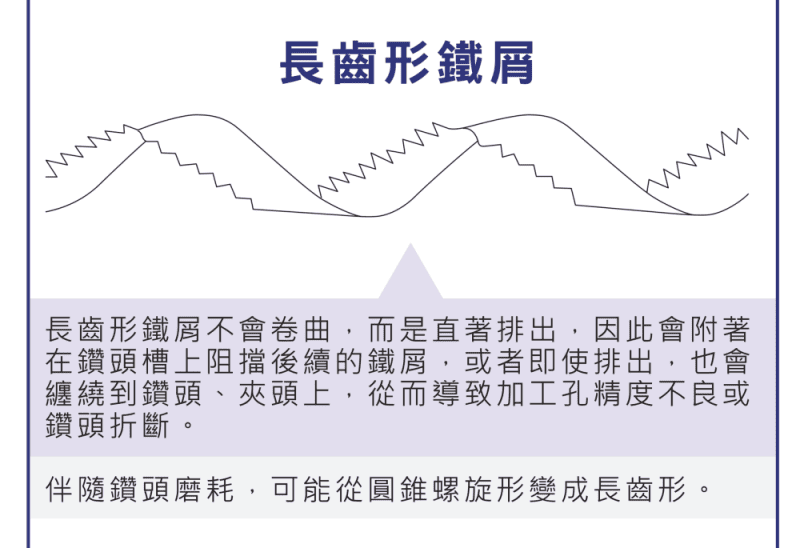
| Long continuous (poor) | Does not break; continuous strand | Wraps the tool, unstable | Insufficient feed; avoid high speed |
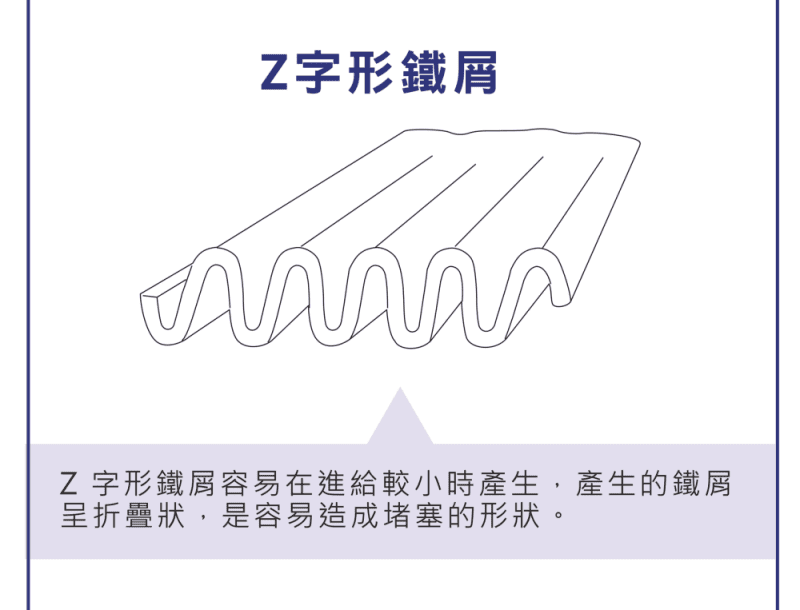
| Z-shaped | Wavy, folded | Piles up in flute, clogs | Feed too low |
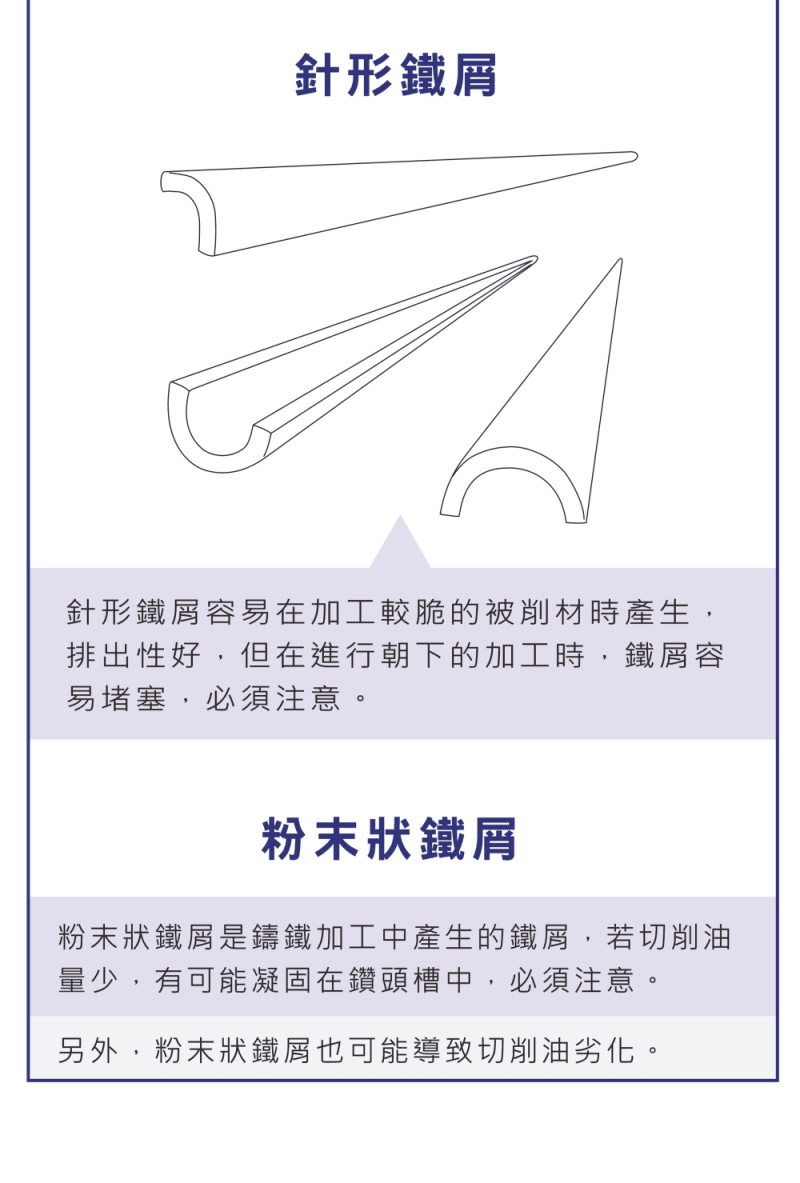
| Needle | Thin, pointed, breaks easily | Clears well but piles up in downward work | Brittle materials |
| Powder | Fine powder | Clogs flutes, degrades coolant | Cast iron & brittle materials |
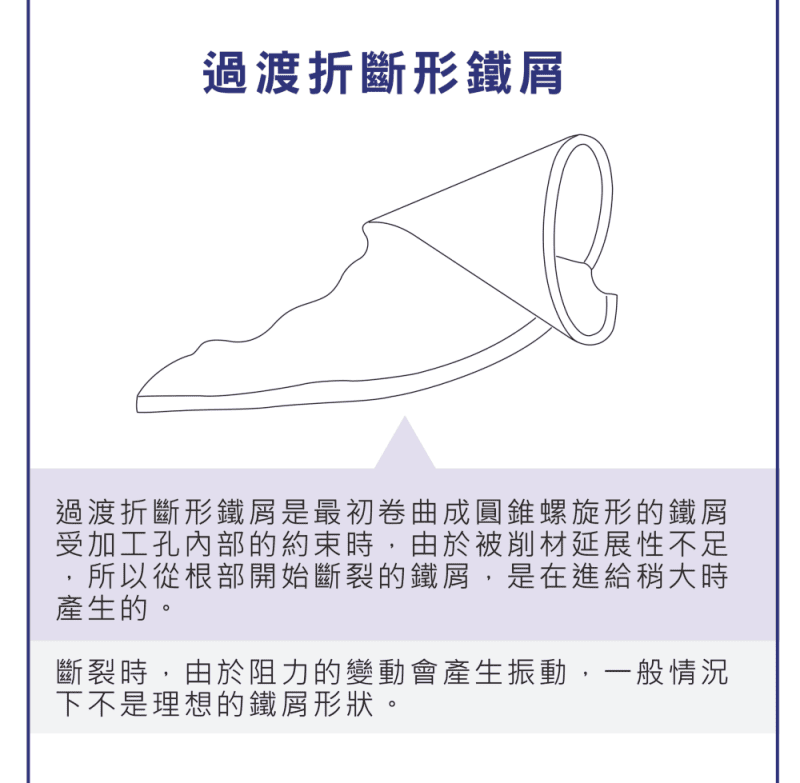
| Transitional break | Breaks during formation; fluctuating force | Clears well but can cause vibration | Medium / low-plasticity materials |
3. Chip Form vs Cutting Conditions
Feed rate, material ductility and cutting speed are the three main drivers of chip form. Feed has the most direct effect:
| Feed condition | Resulting chip | Reading |
|---|---|---|
| Feed too low | Long / Z-shaped | Chip won't break — raise feed |
| Moderate feed | Spiral break | Normal cut, good evacuation |
| Feed too high | Thick chip | High cutting force — watch the load |
※ For specific speeds and feeds by material and tool, use the method in the Drilling Parameters Guide rather than copying values directly.
4. What Chip Problems Cause
| Problem | Consequence |
|---|---|
| Poor evacuation | Hole clogging, rising cutting resistance |
| Chip wrapping | Hole-wall scoring, loss of accuracy |
| Heat & friction build-up | Accelerated wear, even tool breakage |
5. Chip Control and Optimization
To get controllable, easily evacuated chips: raise feed appropriately to promote chip breaking; adjust the point angle to improve chip flow; choose suitable drill geometry; and use internal (through-tool) coolant to lift evacuation efficiency. The ideal chip is one that breaks under control, does not wrap the tool, and clears easily.
6. Shop-Floor Judgment
| Chip observed | What to do |
|---|---|
| Long / Z-shaped | Feed too low — raise feed moderately |
| Powder | Usually material-driven (e.g. cast iron) — improve evacuation & filtration |
| Spiral break | Normal — keep current conditions |
FAQ
Q: Which chip form is ideal?
The conical spiral (spiral-break) chip is ideal: it curls and breaks, evacuates smoothly and is easy to control — typically seen with moderate feed on ductile material in a stable cut.
Q: What does a long continuous chip mean?
It usually means feed is too low, so the chip does not break and forms a continuous strand that wraps the tool and blocks evacuation. Raise the feed moderately to break the chip.
Q: What should I watch for with powder chips?
Powder chips are common in brittle materials like cast iron; they clog flutes and degrade the coolant. Strengthen evacuation, filtration and cleaning, and watch tool wear.
Q: How can I make chips evacuate more easily?
Raise feed to promote breaking, adjust the point angle to improve flow, select suitable drill geometry, and use internal (through-tool) coolant to flush chips — that combination is the most effective.
For the full reading guide on this topic, see Chip Control: A Complete Reading Guide.
Published: 2026-03-19 | Last updated: 2026-07-25









