End Mill Types and Features Explained
The shape of an end mill directly determines how it cuts and the resulting quality. Types such as the square (general), tapered, roughing, ball nose, corner-radius and heavy-cutting end mill suit roughing, finishing and surface machining respectively, while the bottom-edge design decides whether plunge cutting is possible. This article explains the construction and features of each type—the foundation of tool selection. (To choose a tool directly by machining method, see the End Mill Selection Guide.)
End Mill Shape Classification Overview
End mills are divided into several types by peripheral edge and cutting structure, each suited to different machining needs. The table below summarizes the features and applications of common types; each is then described in the following sections.
| Type | Main Features | Applications |
|---|---|---|
| Square (General) End Mill | The most versatile, general-purpose type | Roughing, semi-finishing, finishing; slotting, side milling, step machining |
| Tapered End Mill | Tapered cutting section | Angle and slope machining, draft angles, molds and insert sections |
| Roughing End Mill | Wavy edge, chip splitting, low cutting force | High-feed roughing (not for finishing) |
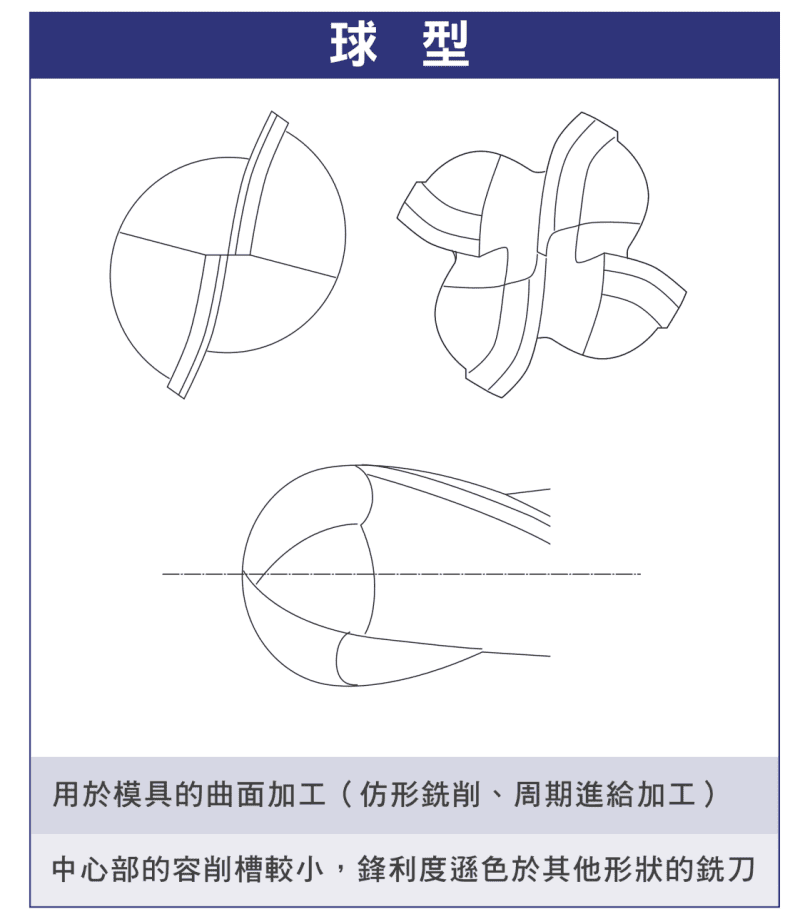
| Ball Nose End Mill | Ball tip, good surface quality, lower efficiency | 3D surfaces and mold machining, profile and contour milling |
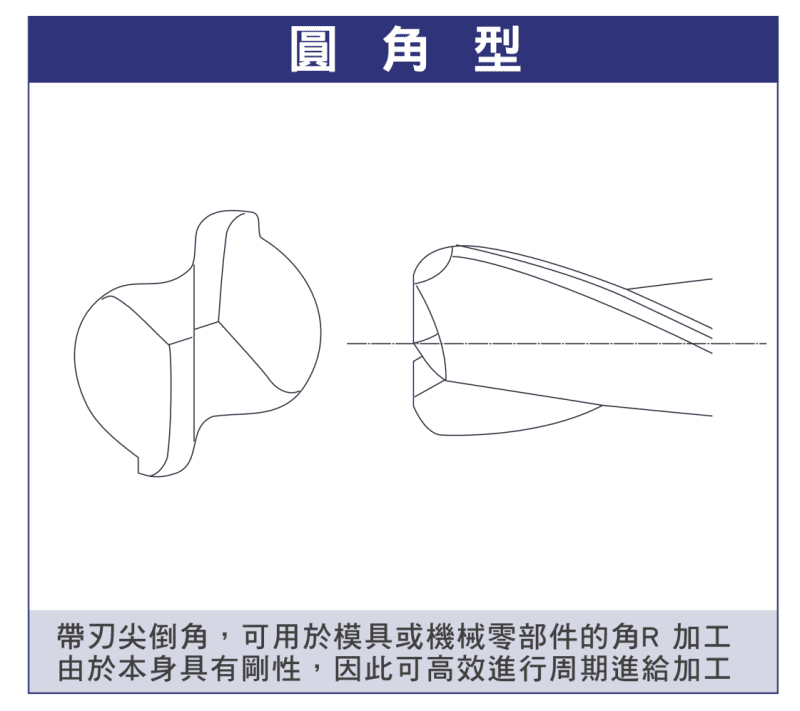
| Corner-Radius End Mill | R-shaped tip, reinforced edge | Corner R machining, periodic-feed machining |
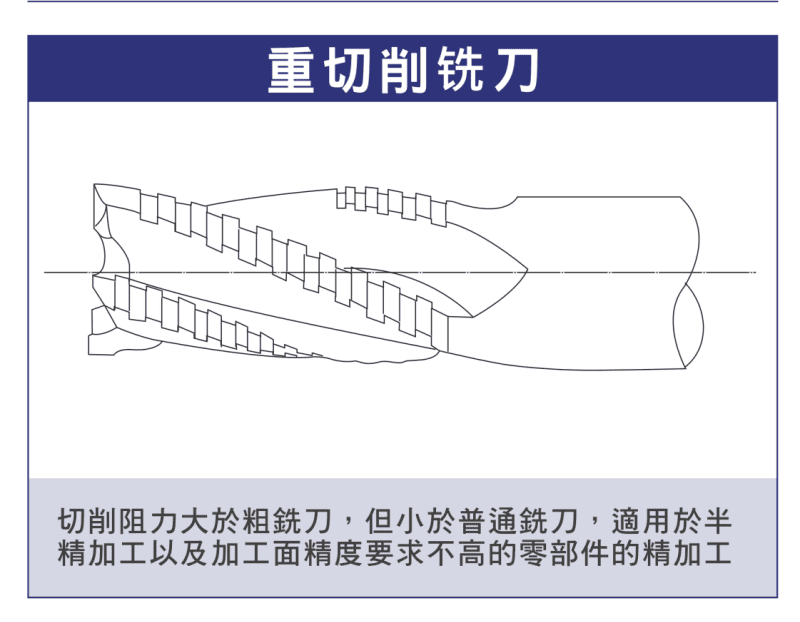
| Heavy-Cutting End Mill | Cutting force between roughing and general end mills | Semi-finishing, finishing of low-accuracy parts |
Square (General) End Mill
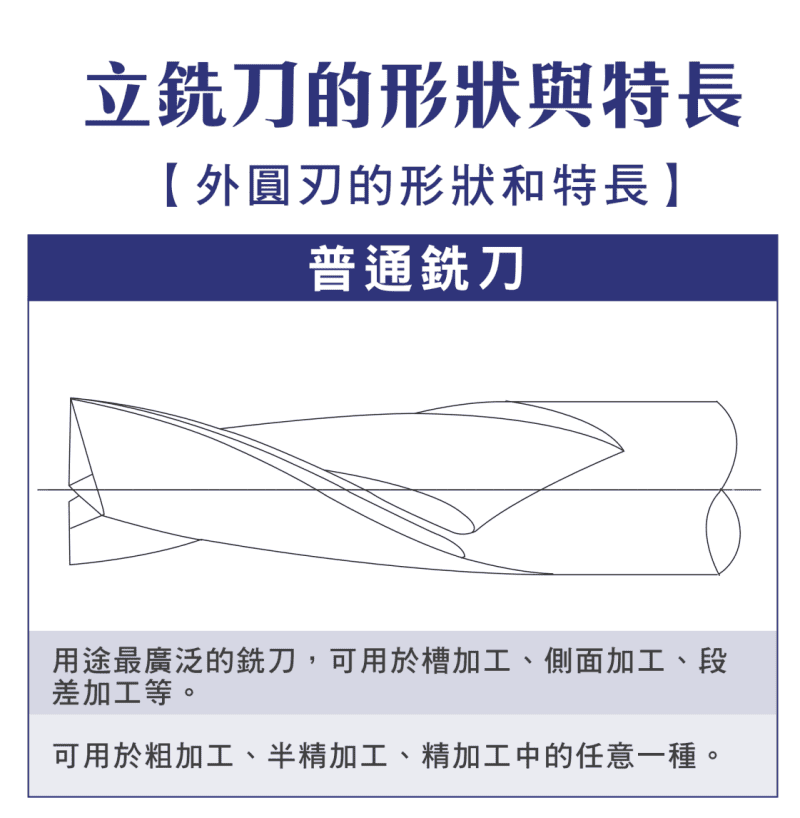
The most versatile, general-purpose type. Suitable for roughing, semi-finishing and finishing, and for slotting, side milling and step machining.
Tapered End Mill
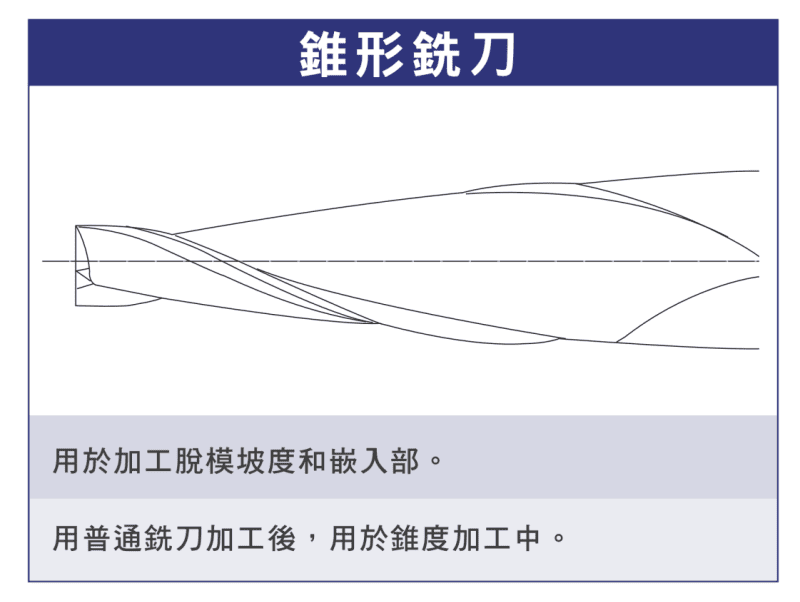
Mainly for angle and slope machining—draft angles, molds and insert sections; often used after a general end mill for taper work.
Roughing End Mill
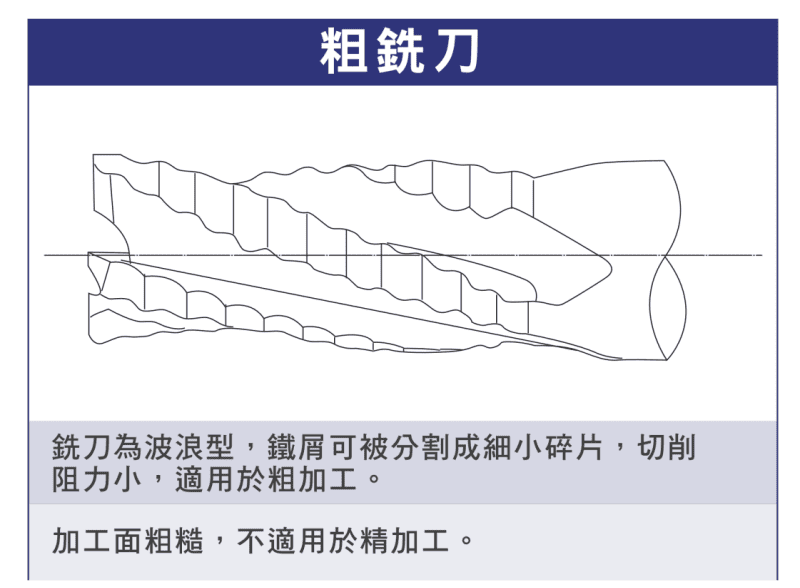
Features a wavy edge that splits chips into small pieces with low cutting force, ideal for high-feed roughing; the trade-off is a rougher surface, so it is not for finishing.
Ball Nose End Mill
Used for 3D surfaces and mold machining, enabling profile and contour milling with good surface quality; cutting efficiency is lower and the center has a smaller flute and is less sharp than other types.
Corner-Radius End Mill
The edge carries an R (radius), machining corner R on molds or parts and, thanks to the reinforced tip, offering higher strength and durability for efficient periodic-feed machining.
Heavy-Cutting End Mill
Sits between the roughing and general end mill: its cutting force is greater than a roughing end mill but lower than a general one, suiting semi-finishing and the finishing of parts with lower accuracy requirements.
Bottom-Edge Design & Machining Limitations
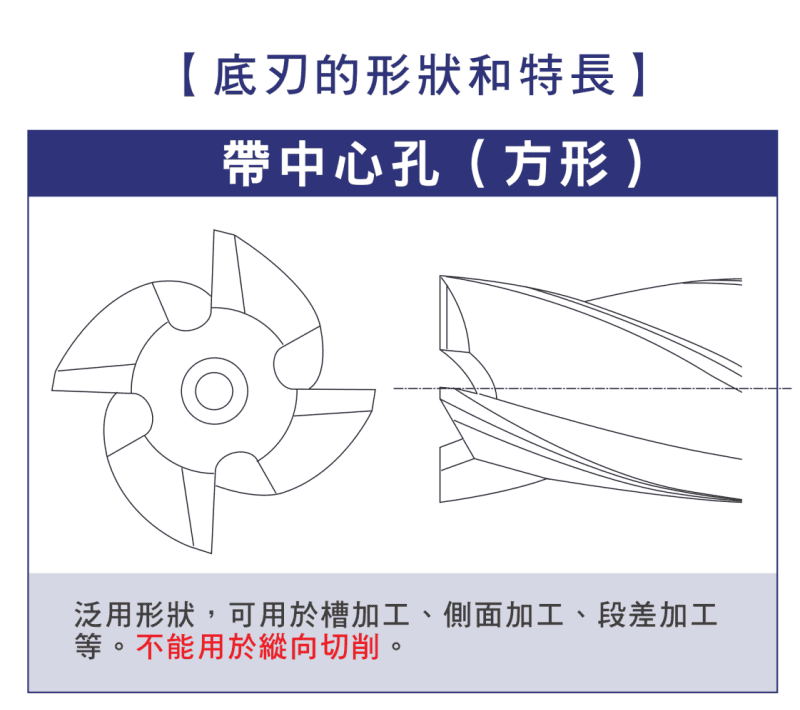
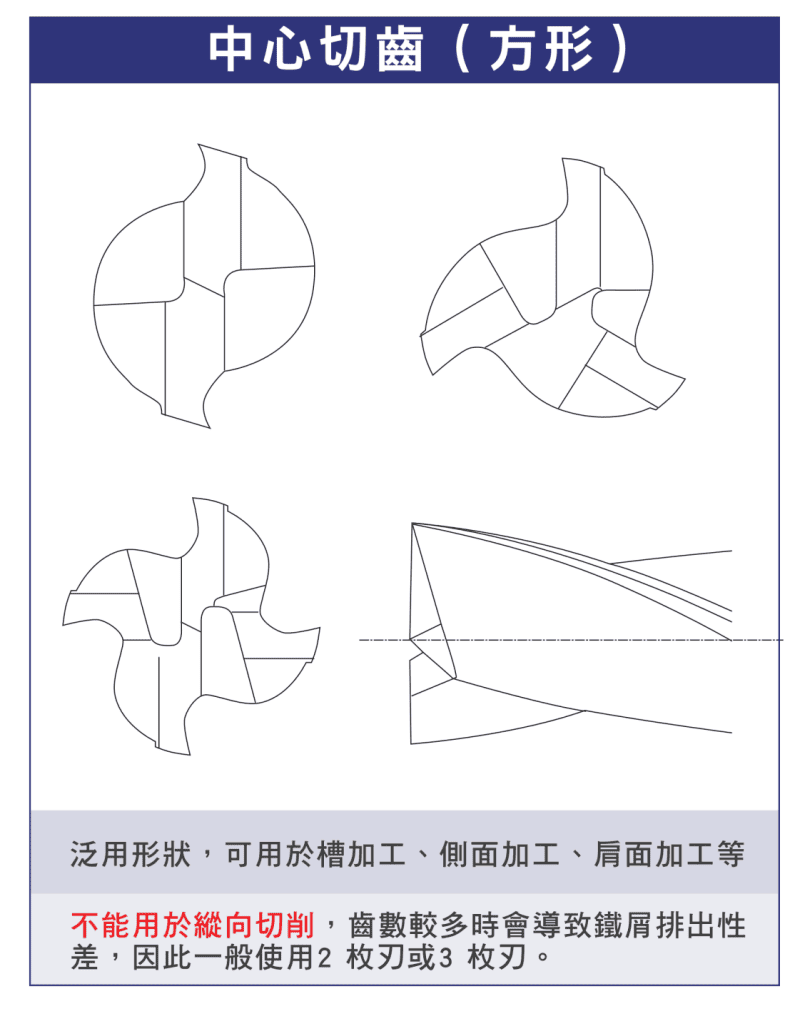
The bottom-edge shape determines whether the tool can cut vertically. The two common designs are shown below:
| Bottom-Edge Design | Applications | Limitation |
|---|---|---|
| With center hole (square) | A general shape for slotting, side milling and step machining | Cannot be used for vertical (plunge) cutting |
| Center-cutting (square) | Usable for slotting, side and shoulder machining | Chip evacuation drops when there are too many flutes |
How to Choose the Right End Mill
A quick match by machining stage is shown below:
| Machining Stage / Need | Recommended Type |
|---|---|
| Roughing | Roughing or heavy-cutting end mill |
| Finishing | General or corner-radius end mill |
| Surface machining | Ball nose end mill |
| Mold machining | Tapered + ball nose end mill combined |
To choose a cutter by machining method (slotting / side milling / deep milling / surfaces / counterboring), see the End Mill Selection Guide.
Frequently Asked Questions (FAQ)
What are the common end mill types?
Square (general), tapered, roughing, ball nose, corner-radius and heavy-cutting end mills, plus center-hole and center-cutting bottom-edge designs—each suited to different machining needs.
What's the difference between a roughing and a heavy-cutting end mill?
A roughing end mill has a wavy edge with low cutting force for high-feed roughing but leaves a rougher surface; a heavy-cutting end mill has cutting force between a roughing and a general end mill, suiting semi-finishing.
What is a ball nose end mill good for?
3D surface and mold machining—profile and contour milling—with good surface quality, though efficiency is lower and the center is less sharp.
Which end mill should I use for which machining?
Roughing → roughing or heavy-cutting; finishing → general or corner-radius; surfaces → ball nose; molds → tapered plus ball nose. To choose by machining method, see the End Mill Selection Guide. See Effective Diameter for Ball Nose and Bull Nose Tools for details.
This article is part of End Mills: The Complete Guide - Know the Cutter, Choose It, Set the Conditions; Toolpaths Are Another Line; that guide shows how the whole topic fits together.