
Factors Affecting Drill Tool Life: Heat, Feed & Cooling
Drill life depends on cutting conditions, cutting heat and material properties. There is a critical balance between feed and cutting speed — too high or too low shortens life. Cutting heat concentrates at the point and spreads to chips, tool and workpiece; if it can't escape, tool hardness drops and wear accelerates. This guide analyzes the core factors behind drill life and the cooling strategy to extend tool life stably.
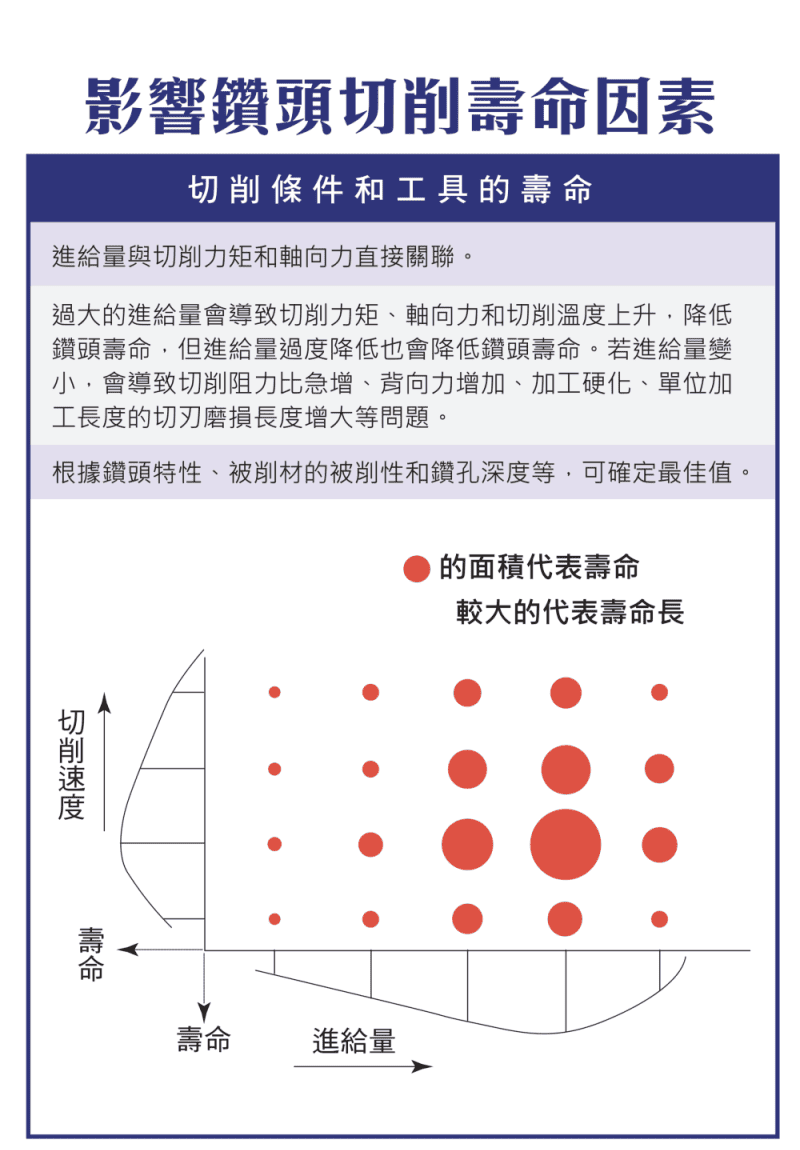
1. Core Factors
Drill life depends mainly on cutting speed, feed, cutting heat and material properties, which interact with one another.
2. Feed vs Tool Life
| Feed | Effect |
|---|---|
| Too high | Cutting force and temperature rise, faster wear |
| Too low | More friction and work-hardening, also harms the tool |
| Conclusion | Both shorten life; an optimal feed range exists |
For optimal feed and parameter setting, see the Drilling Parameters Guide.
3. Cutting Speed vs Life
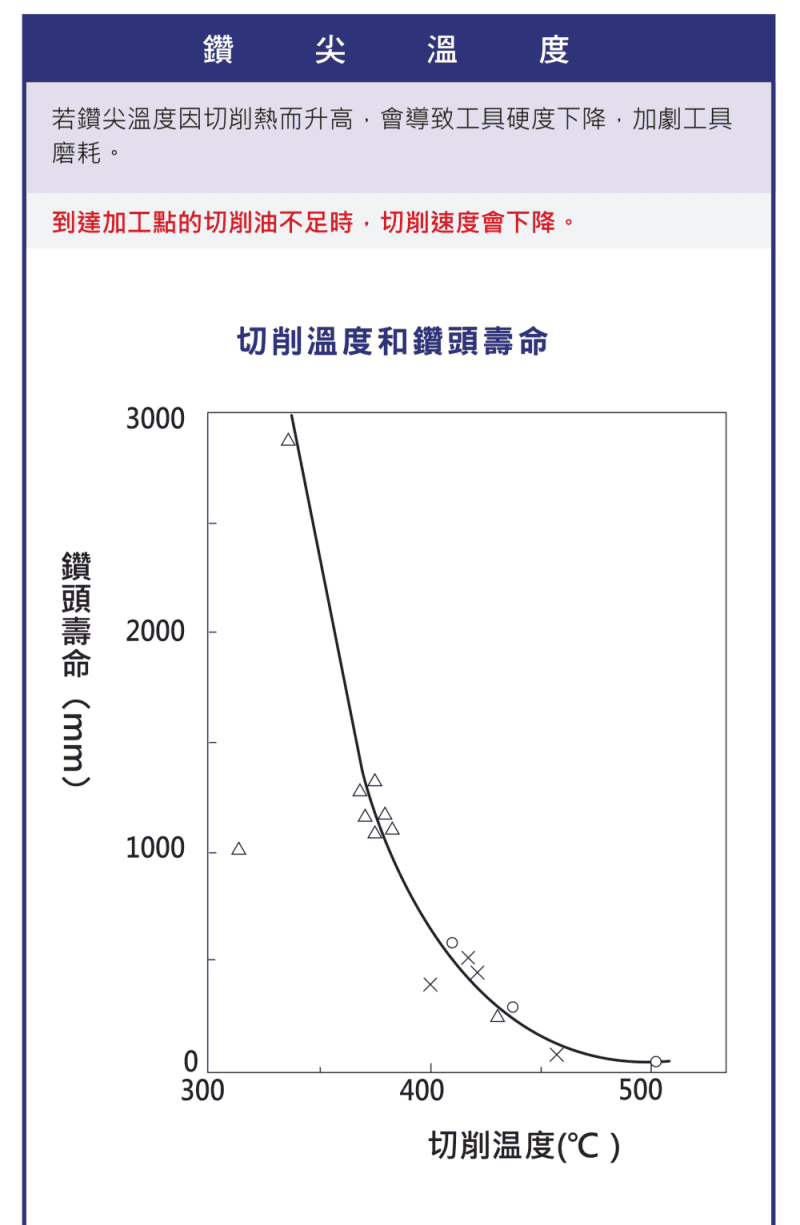
Higher cutting speed raises cutting temperature; too high a temperature lowers tool hardness. Adjust by material: stainless such as SUS304 needs lower speed, while carbon steel allows medium speed.
4. Heat Distribution and Effect
| Item | Description |
|---|---|
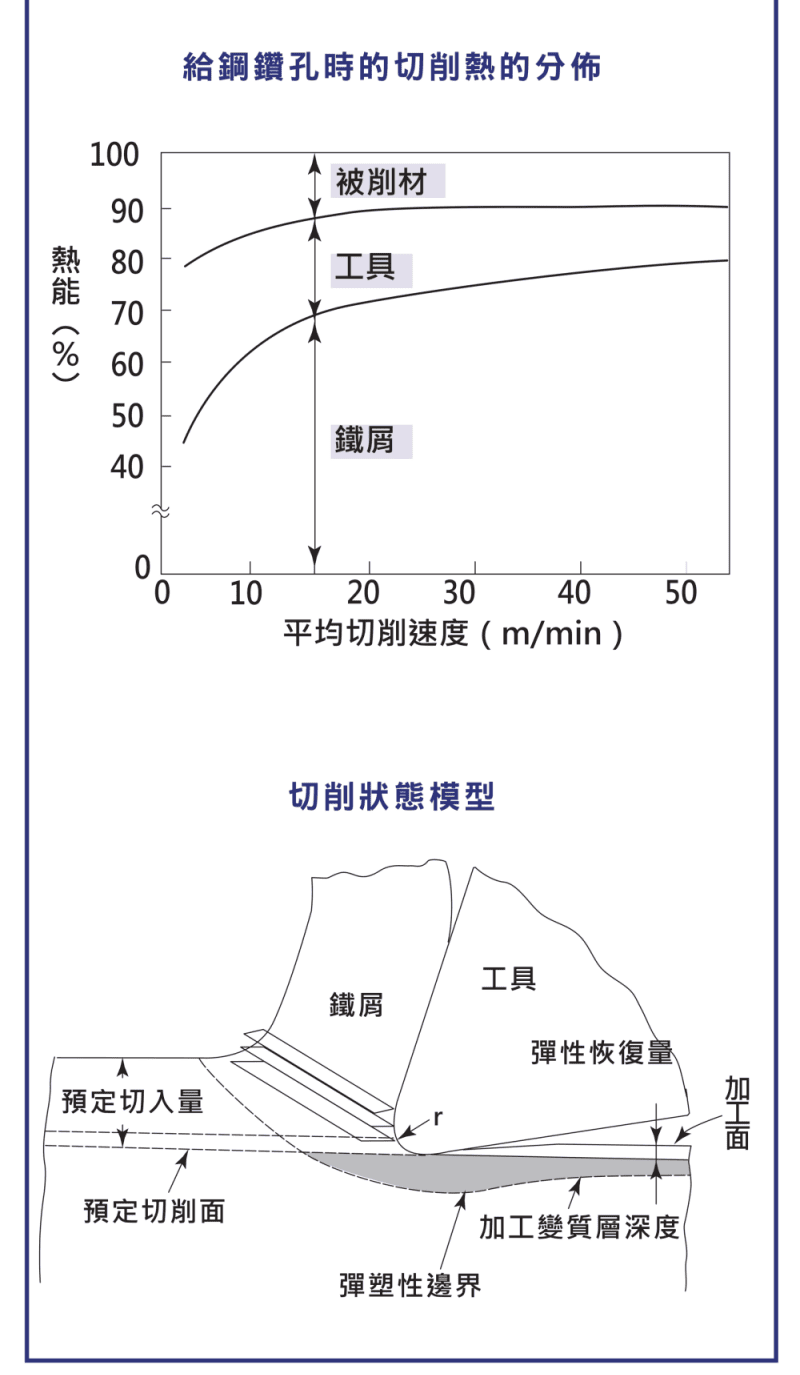
| Heat spread | Into chips, tool and workpiece |
| Smoother evacuation | Faster heat removal, lower tool temperature |
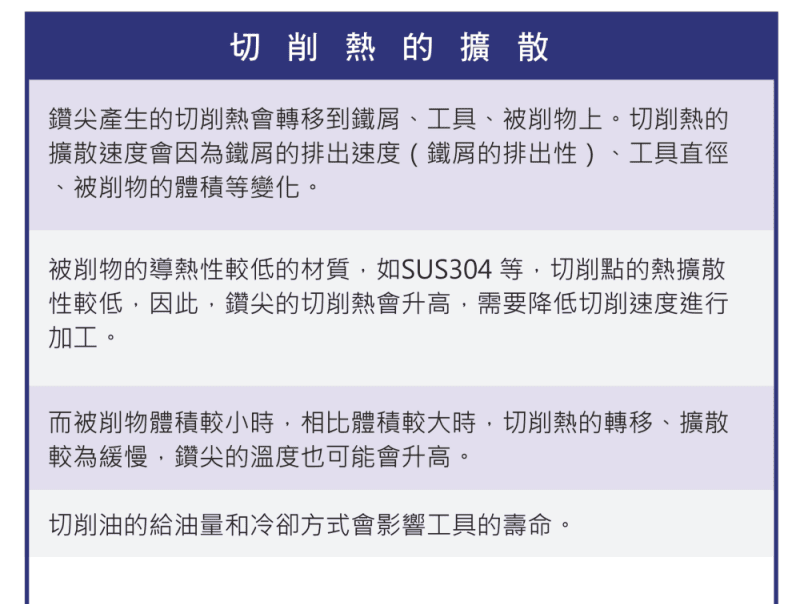
| Low-conductivity material | Heat concentrates, higher tool load |
5. Material and Machining Conditions
| Category | Factor and result |
|---|---|
| Material | Thermal conductivity and machinability affect heat and wear |
| Conditions | Small workpieces dissipate poorly; deep holes build up heat |
6. Cooling and Lubrication
Coolant supply and delivery method directly affect tool temperature. Ample, well-directed cooling (especially internal) lowers temperature, extends tool life and improves evacuation.
7. Temperature vs Hardness
| Phenomenon | Result |
|---|---|
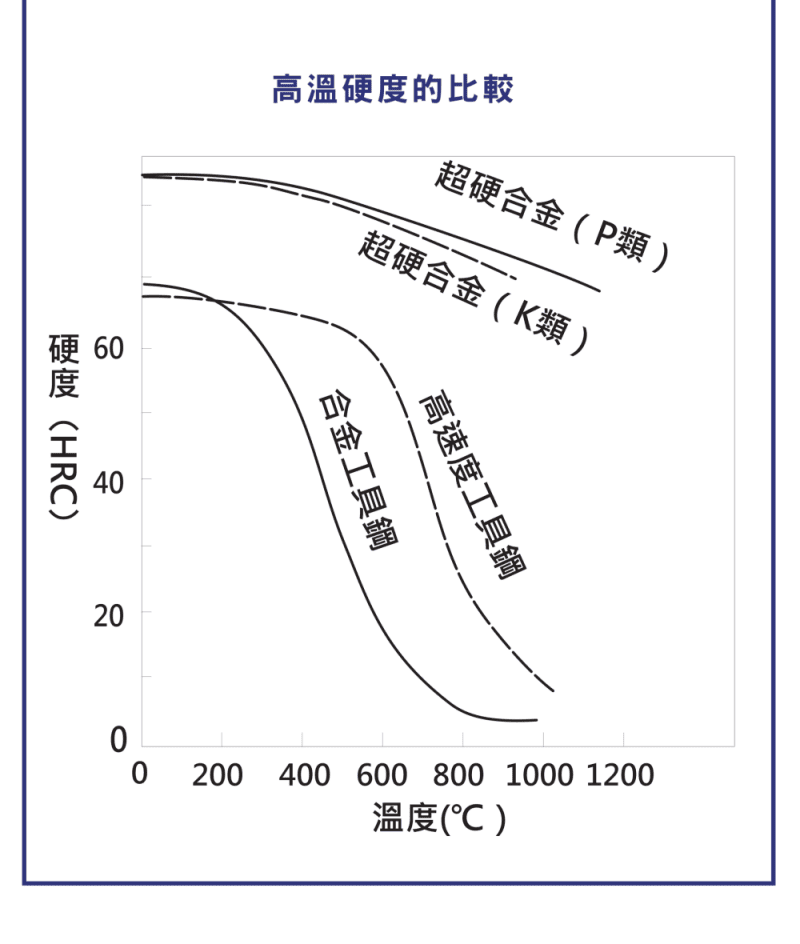
| Rising temperature | Tool hardness drops → wear accelerates |
| Tungsten carbide | Good heat resistance, more stable at high temp |
| HSS | More affected by high temperature |
8. Optimization Strategy
Control feed and speed, improve evacuation, use proper cooling and choose heat-resistant tools — the key combination to extend drill life. For wear identification and countermeasures, see the Drill Wear Analysis.
FAQ
Q: Does lower feed always mean longer tool life?
No. Too low a feed increases friction and work-hardening, which harms the tool; too high raises force and temperature. Life is best within a suitable feed range.
Q: Why are deep holes hard on drills?
Deep holes evacuate poorly and heat can't escape, so it builds up in the hole and tool, lowering hardness and accelerating wear. Internal coolant and proper pecking help.
Q: Which resists heat better, carbide or HSS?
Tungsten carbide holds hardness better at high temperature; HSS is more affected. For high speed or difficult materials, carbide with a coating is usually chosen.
Q: How much does cooling method matter for life?
A lot. Ample cooling that reaches the cutting zone (especially internal) noticeably lowers temperature and improves evacuation, extending tool life.
For the full reading guide on this topic, see Tool Life and Wear: A Complete Reading Guide.
This article is part of Drill Bits: The Complete Guide - Start From Depth-to-Diameter, Then Pick the Drill and Set the Conditions; that guide shows how the whole topic fits together.
Published: 2026-03-19 | Last updated: 2026-07-25









