Special Tap Drill Chart: STI, Pipe & BSW
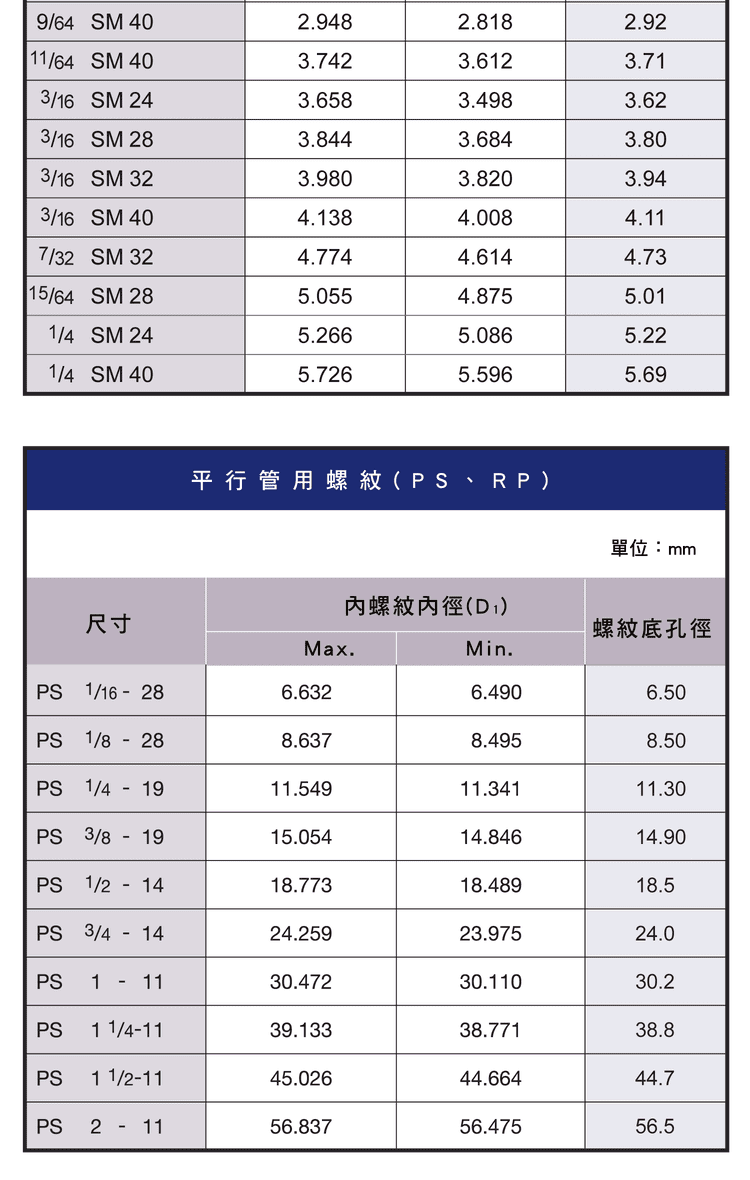
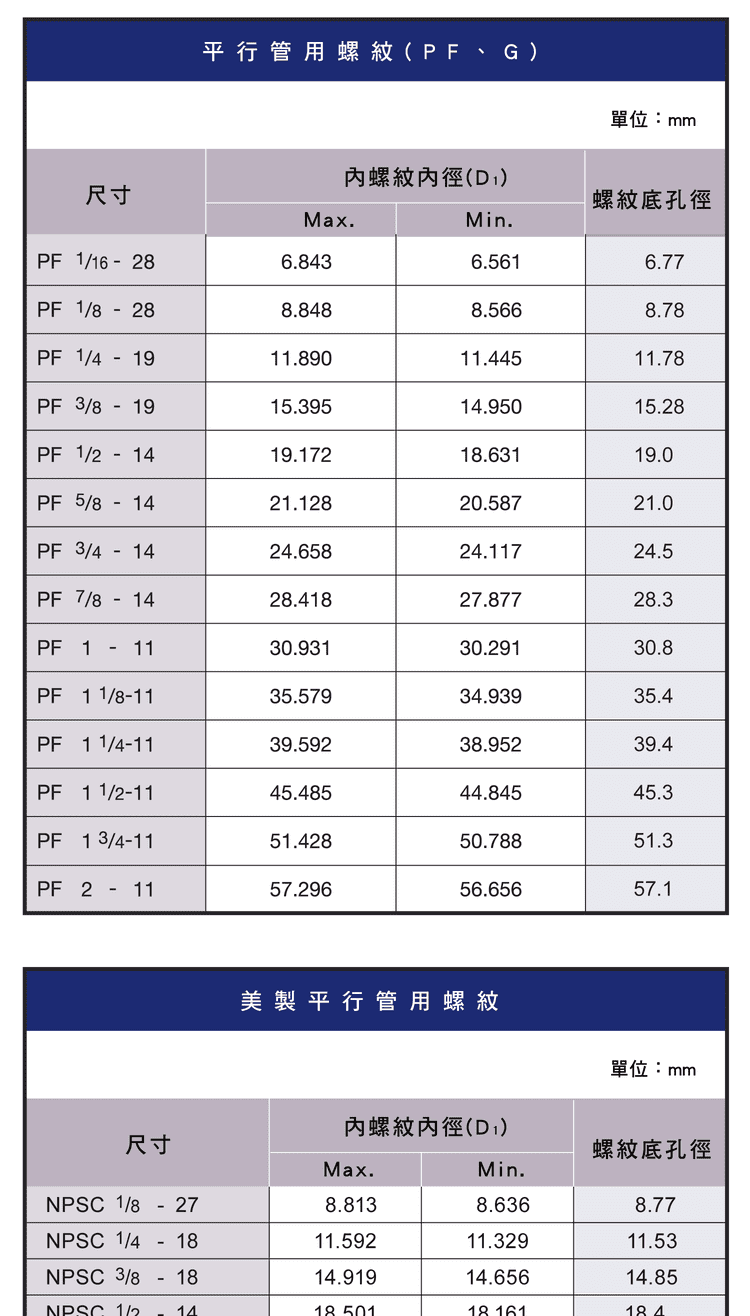
This guide compiles tap-drill (pilot-hole) charts for non-standard and special threads — thread inserts (STI), Unified (UNC/UNF), Whitworth (BSW), parallel pipe (PS/PF/G) and taper pipe (NPT/NPTF). It covers internal minor diameter (D1) max/min, recommended pilot holes, plus tapping notes and the engagement concept, for CNC machining, thread repair and pipe-seal design to improve accuracy and stability.
1. Key Points by Special Thread
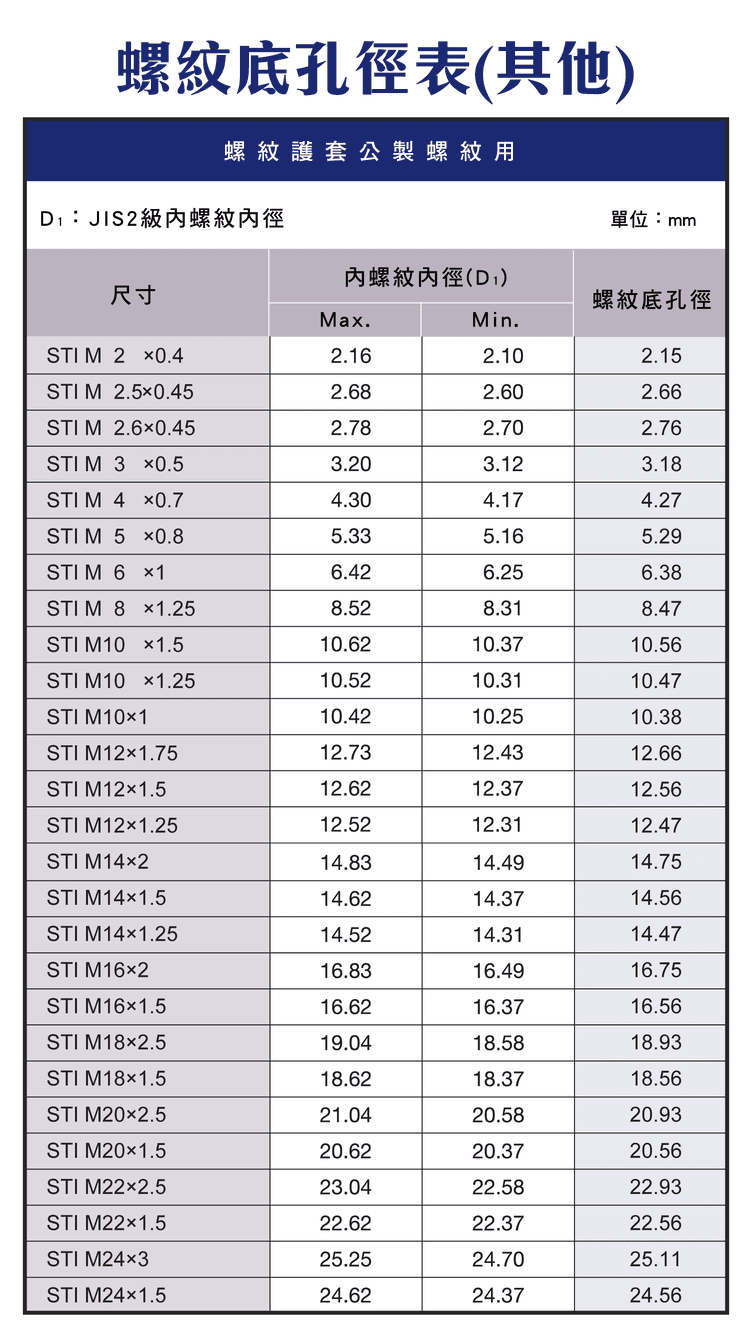
| Thread type | Pilot-hole point and use |
|---|---|
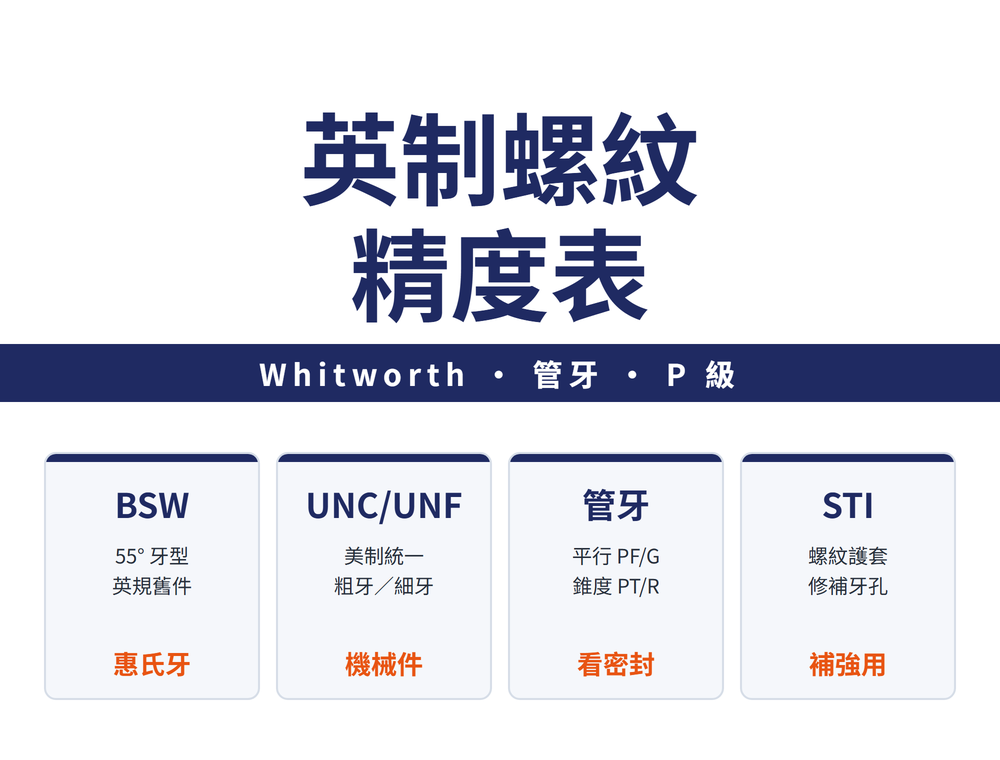
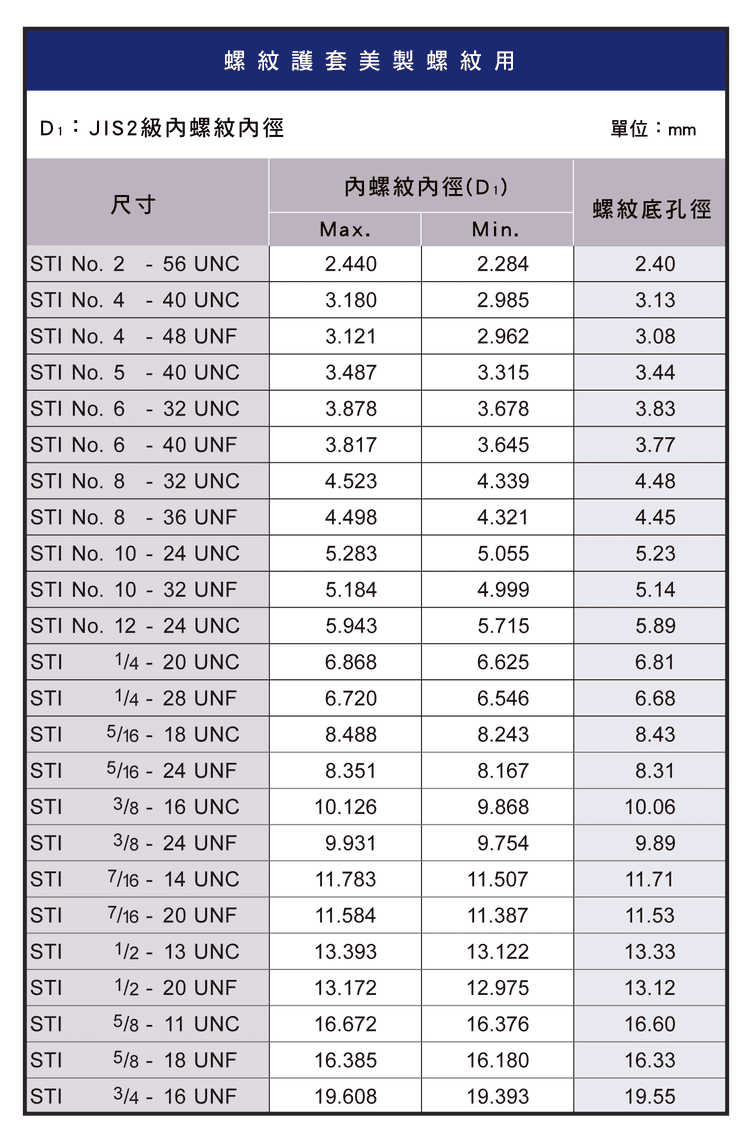
| STI (thread insert) | Needs a larger hole than a normal thread and a dedicated STI tap; for aerospace and reinforcing aluminium, repairing stripped holes |
| Unified UNC / UNF | UNC easier to machine; UNF usually a smaller hole — see the Unified tap-drill chart |
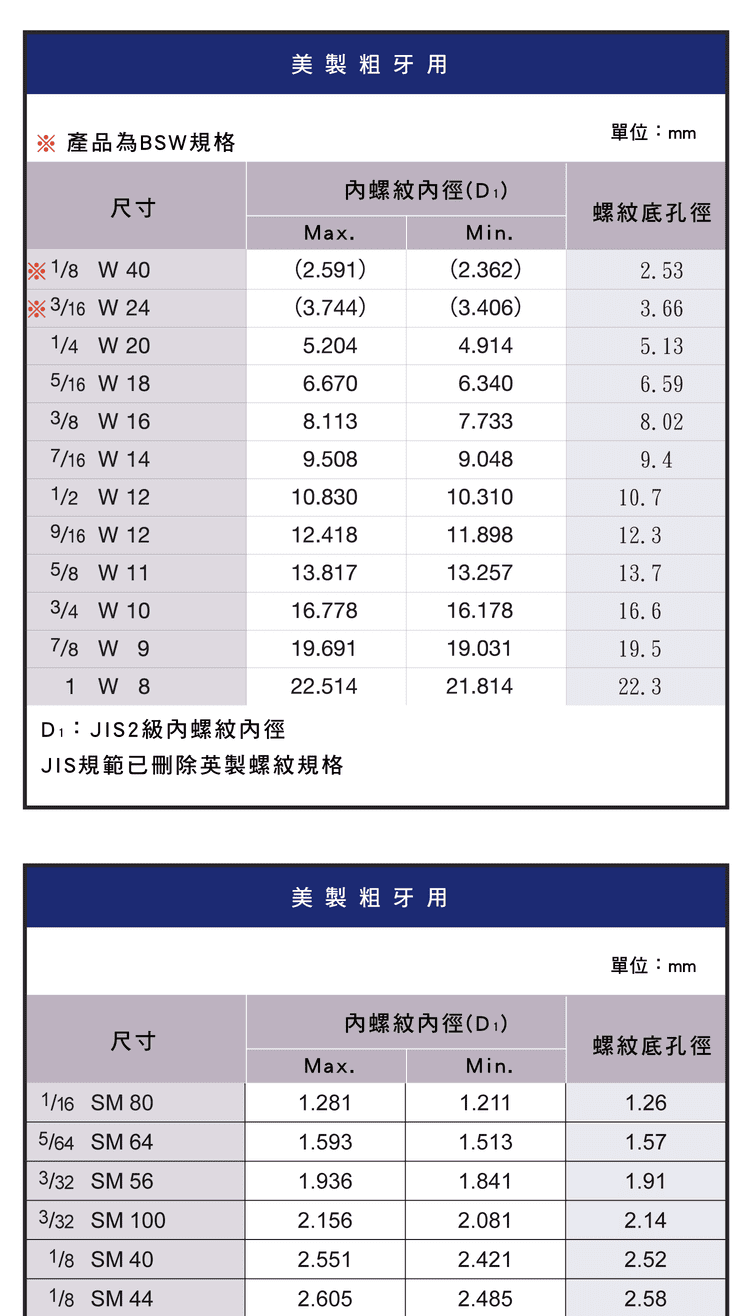
| Whitworth (BSW) | 55° form (vs US 60°); for legacy-equipment repair and British-standard machinery |
| Parallel pipe PS / PF / G | No sealing by itself, needs a gasket/seal; hole follows the parallel pipe spec |
| Taper pipe NPT / NPTF | Taper seals by flank interference, NPTF is dry-seal; hole follows the taper pipe spec and taper |
2. Common Selection Principle
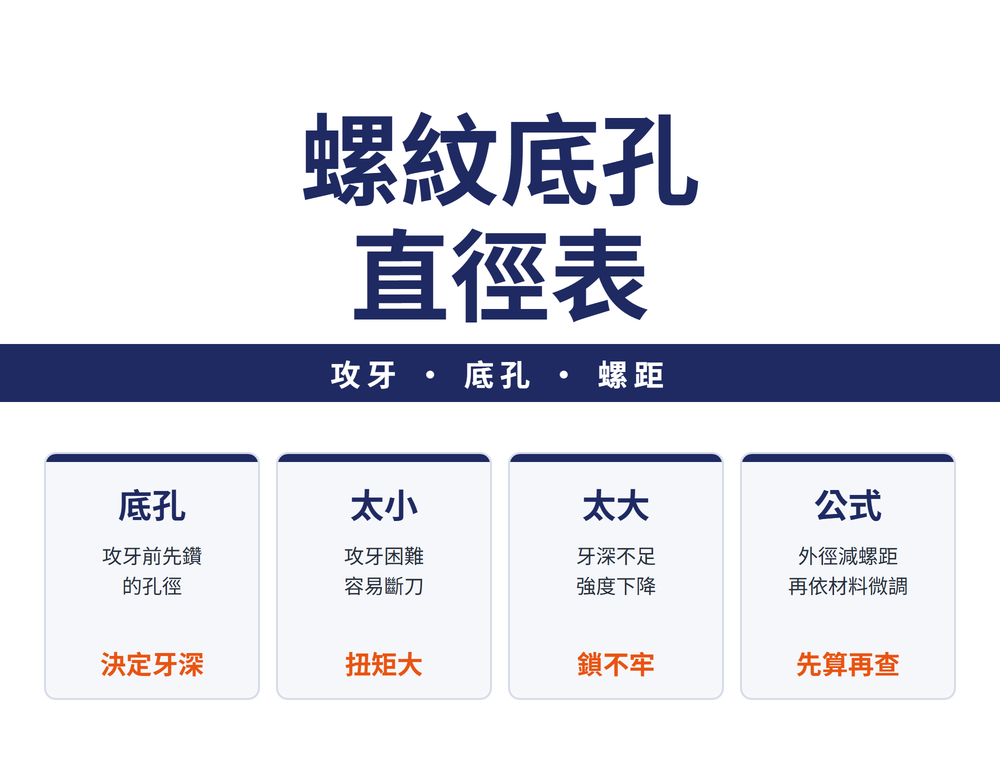
For any thread, the tap-drill size is close to the internal minor diameter: smaller → high strength but high torque and breakage risk; larger → smooth tapping but lower strength. In practice aim for ~60–75% engagement, adjust by material (steel/aluminium/stainless), and use cutting fluid and the right tap. Pipe threads also need taper and sealing considerations.
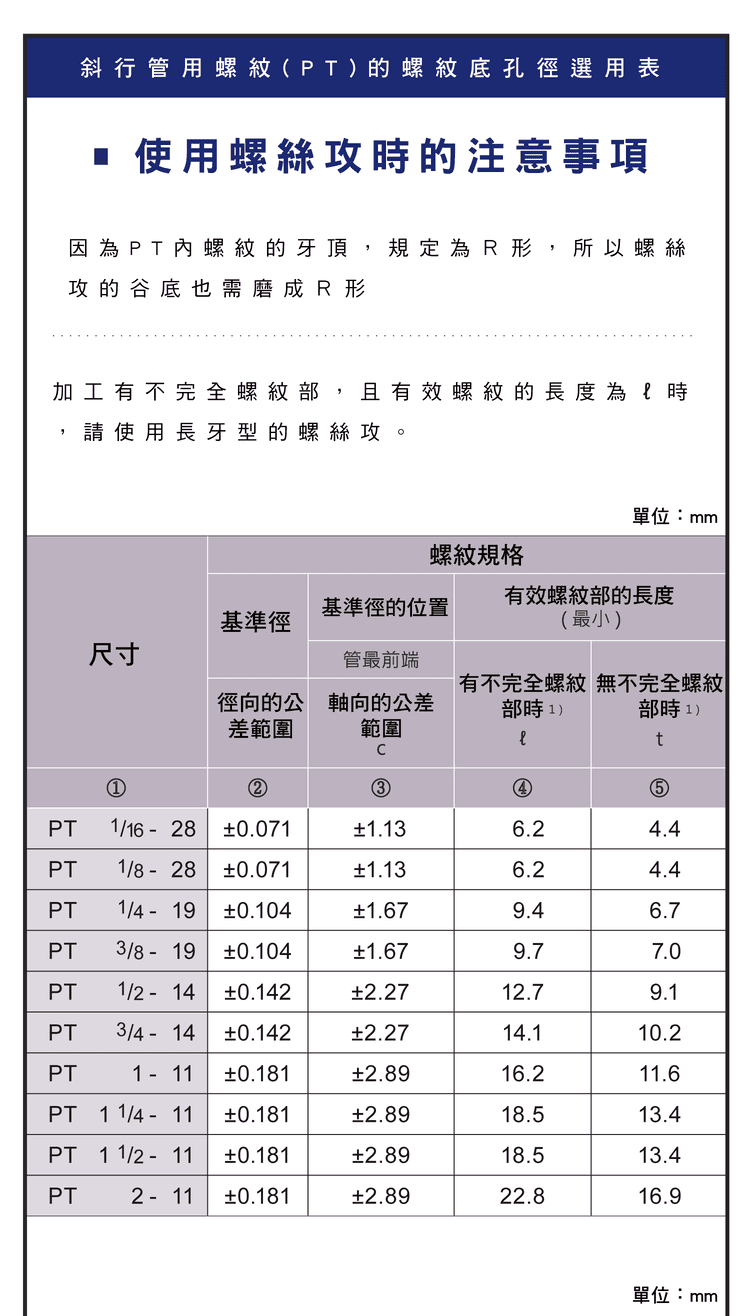
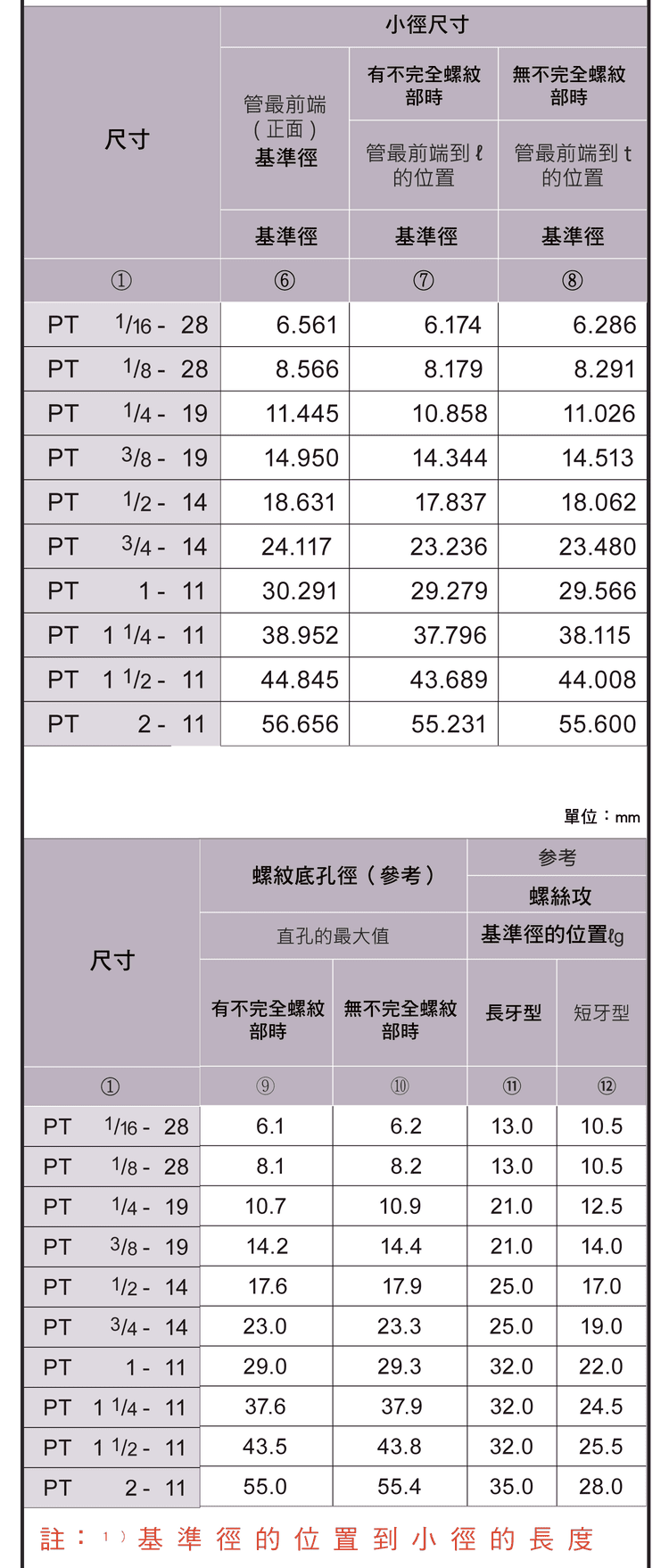
PT Taper Pipe Thread — Tap Drill Size and Tapping Depth
| Size | Tap drill — with incomplete thread (⑧) | Tap drill — without incomplete thread (⑨) | Gauge-plane position ℓg — long thread (⑩) | Gauge-plane position ℓg — short thread (⑪) |
|---|---|---|---|---|
| PT 1/16 - 28 | 6.1 | 6.2 | 13.0 | 10.5 |
| PT 1/8 - 28 | 8.1 | 8.2 | 13.0 | 10.5 |
| PT 1/4 - 19 | 10.7 | 10.9 | 21.0 | 12.5 |
| PT 3/8 - 19 | 14.2 | 14.4 | 21.0 | 14.0 |
| PT 1/2 - 14 | 17.6 | 17.9 | 25.0 | 17.0 |
| PT 3/4 - 14 | 23.0 | 23.3 | 25.0 | 19.0 |
| PT 1 - 11 | 29.0 | 29.3 | 32.0 | 22.0 |
| PT 1 1/4 - 11 | 37.6 | 37.9 | 32.0 | 24.5 |
| PT 1 1/2 - 11 | 43.5 | 43.8 | 32.0 | 25.5 |
| PT 2 - 11 | 55.0 | 55.4 | 35.0 | 28.0 |
※ Unit: mm. Columns ⑧⑨ are the maximum straight-hole values (tap drill size, reference); ⑩⑪ are the gauge-plane position ℓg. Values are transcribed cell by cell from the chart above, with no conversion or interpolation; for actual machining follow the tap manufacturer's specification.
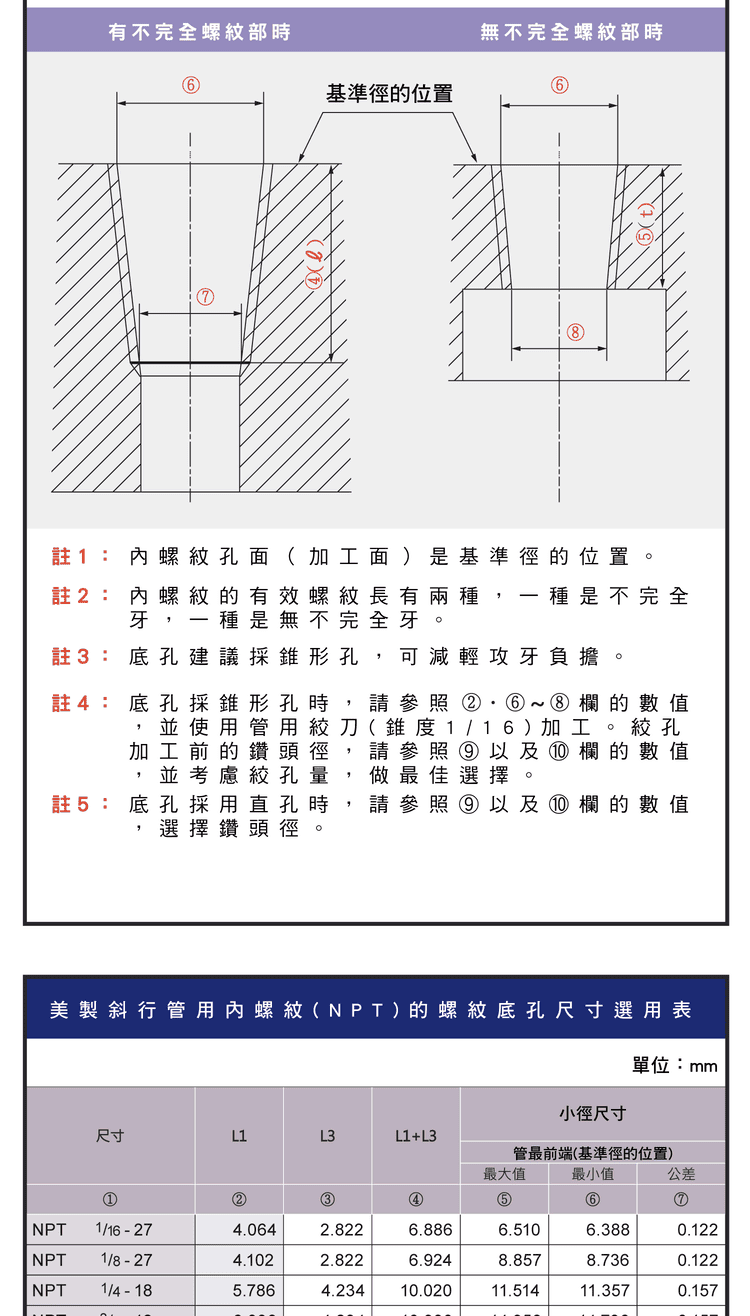
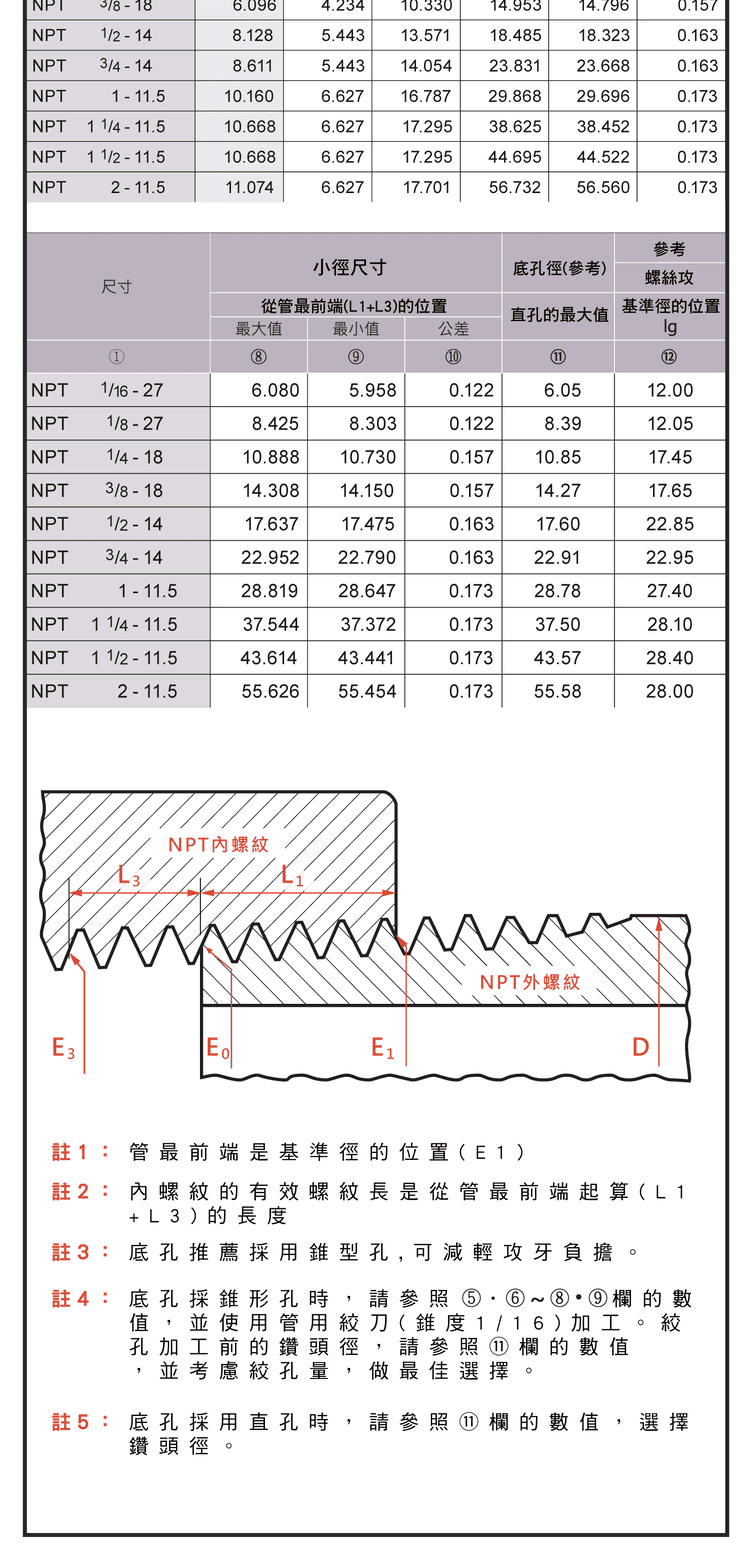
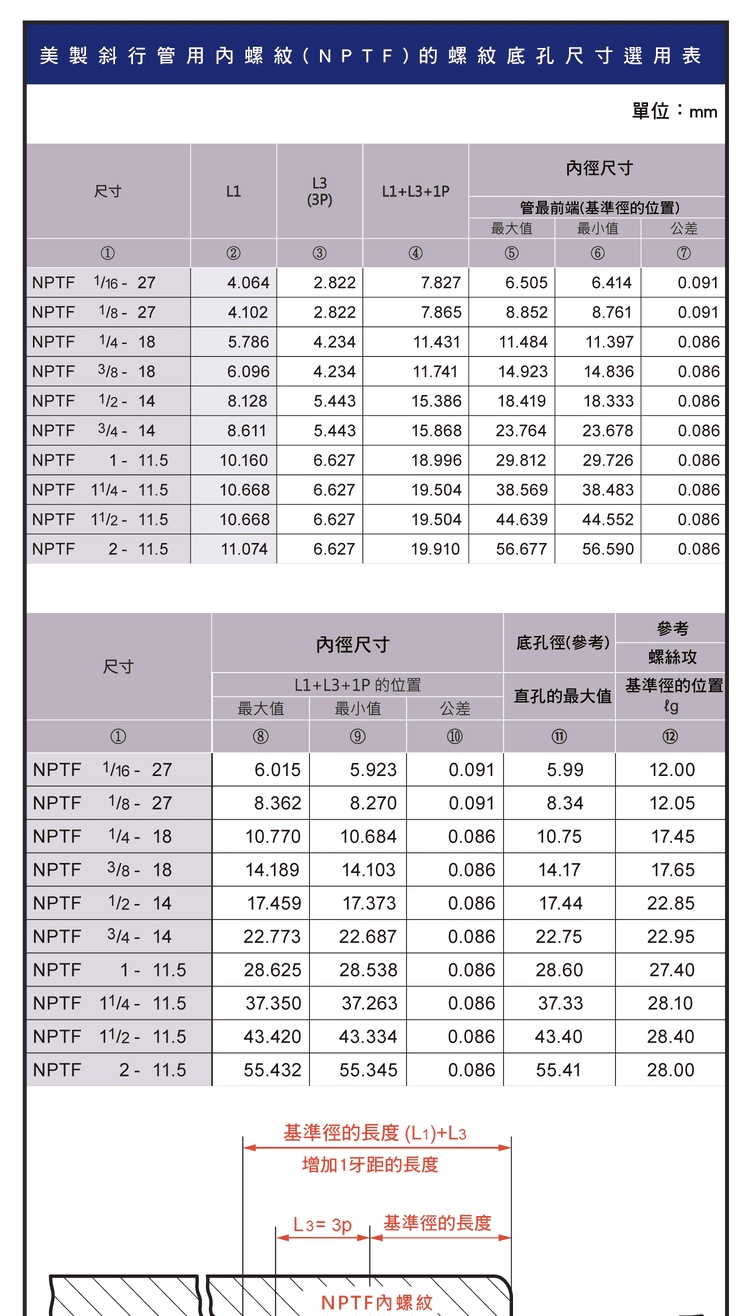
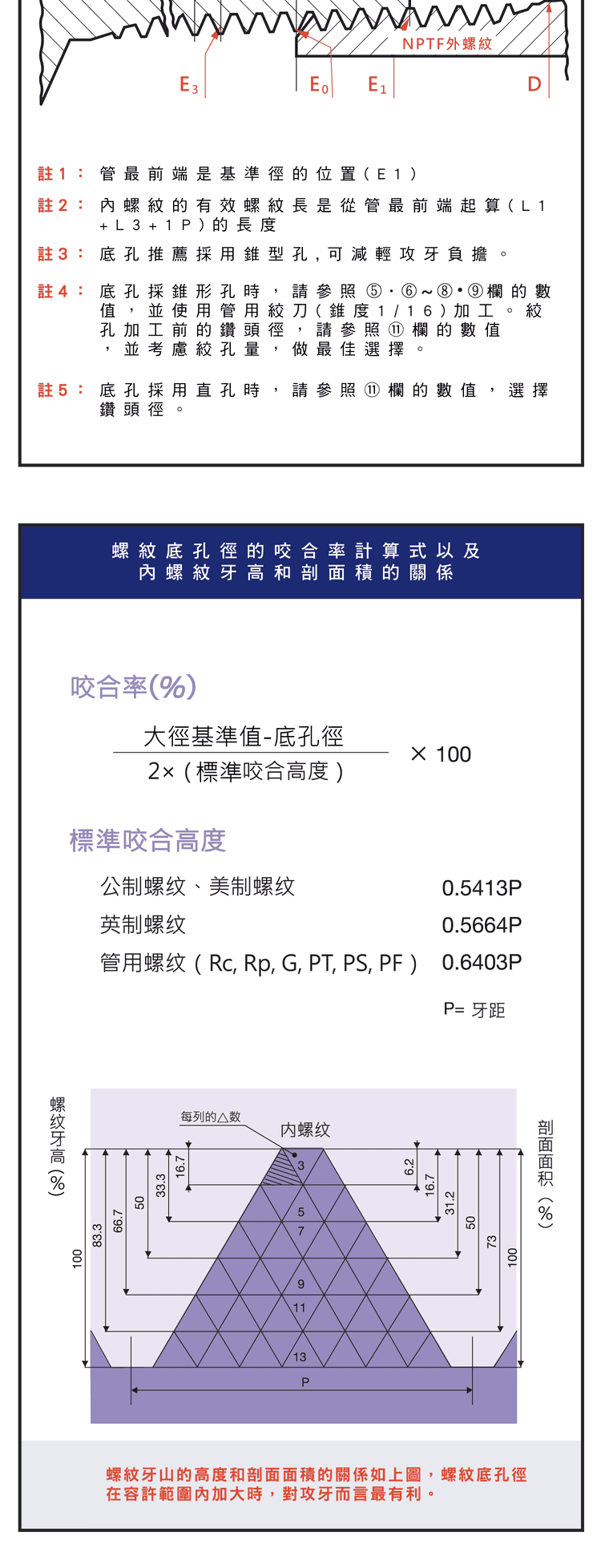
※ Full STI/Unified/Whitworth/pipe tap-drill charts above; values per the original tables.
3. Selection Tips
Use STI for repairing or reinforcing holes (larger hole, dedicated tap); BSW for British-standard legacy parts; for piping choose parallel (PS/PF/G, gasket seal) or taper (NPT/NPTF, interference/dry seal). Confirm the thread standard and form before tapping, then match tap drill and engagement.
For imperial/pipe standards see the Imperial Thread Tolerance Chart; for pipe taps see the Pipe Tap Guide; for metric and unified pilot holes see the Metric and Unified tap-drill charts.
FAQ
Q: Why is the STI insert hole larger?
STI is an oversize internal thread — you tap a larger internal thread to fit the insert, so the pilot hole is enlarged accordingly and must use a dedicated STI tap, not a standard-tap pilot hole.
Q: Can BSW and Unified holes be used interchangeably?
Not advised. BSW is 55° and Unified 60°, with different forms and sizes, so the holes differ. Use BSW specs for British-standard machinery — don't apply Unified data directly.
Q: How do parallel and taper pipe holes differ?
Parallel pipe (PS/PF/G) has a fixed hole and seals with a gasket; taper pipe (NPT/NPTF) requires the tapping depth and hole to match the taper spec. Their holes and tapping methods differ, so use the actual pipe-thread chart.
Q: Does 60–75% engagement apply to special threads too?
Standard V-form special sizes (like BSW, UN) can follow the 60–75% engagement principle; but STI and pipe threads have their own pilot-hole standards, so use the dedicated charts rather than only estimating from engagement.
For the full reading guides on this topic, see Thread Machining: A Complete Reading Guide and Hole Accuracy: A Complete Reading Guide.
Published: 2026-03-24 | Last updated: 2026-10-31