
Tap Thread and Accuracy Relationship: Pitch Dia, Tolerance & Gauges
Internal-thread accuracy depends on the tap's precision grade and gauge control, with the pitch diameter as the key parameter for fit quality. Different tap grades (P2, P3, P4) directly affect internal-thread size, tolerance and final fit. Choosing the right tap and gauge avoids oversize, improves accuracy and ensures the part meets inspection standards and assembly needs.
1. Tap and Internal Thread
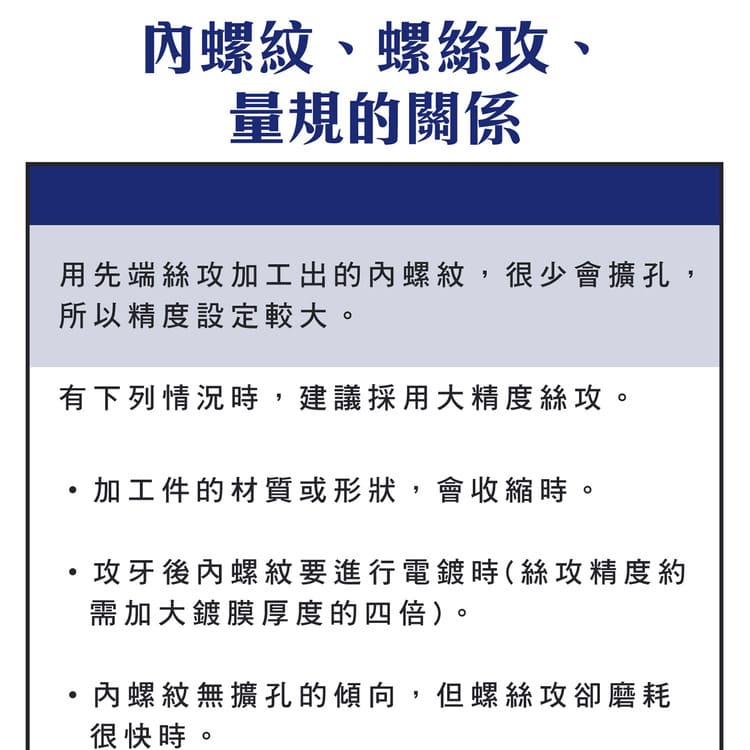
Internal-thread size is set mainly by the tap; three elements form a complete machining-and-inspection system:
| Element | Role |
|---|---|
| Tap accuracy | Sets thread size |
| Pitch diameter | Sets fit tightness |
| Gauge | Verifies quality |
2. Why Pitch Diameter Matters
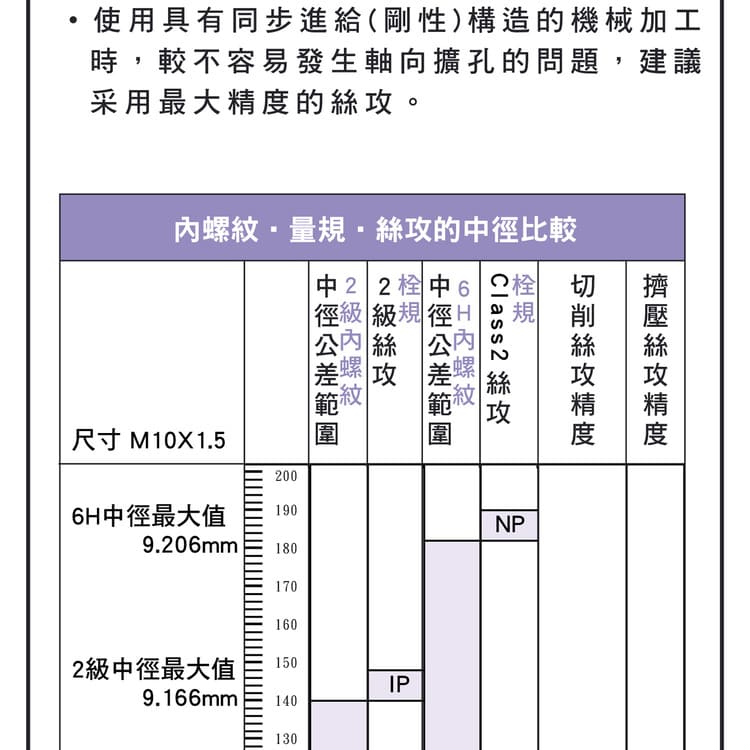
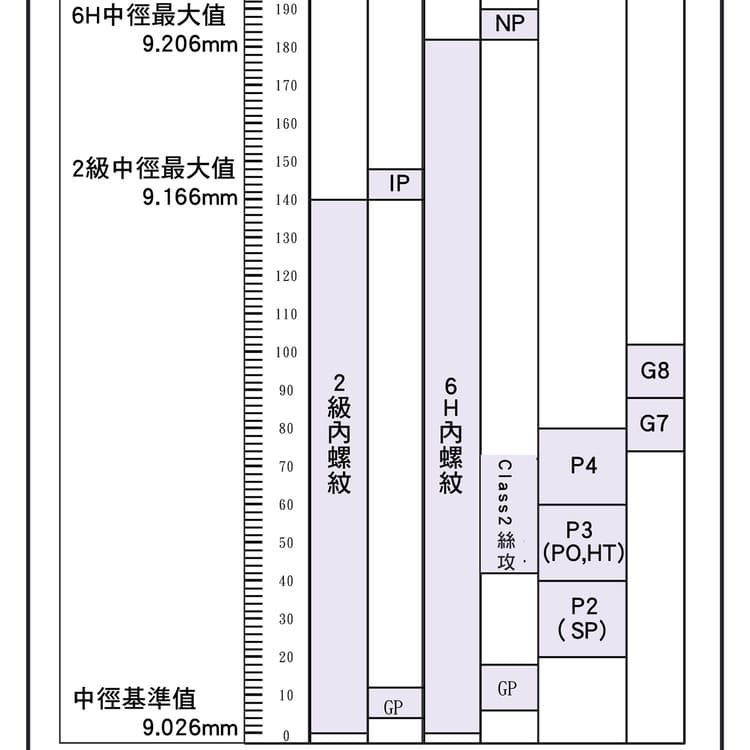
Pitch diameter is the most critical thread size: it sets fit accuracy, locking quality and clearance/interference. For M10×1.5, the 6H internal thread has a maximum pitch diameter of about 9.206 mm and the class-2 internal thread about 9.166 mm (see the chart below); the two belong to different grade systems with different upper limits, so check which one the drawing specifies before inspection.
3. Tap Precision Grades
| Grade | Traits and use |
|---|---|
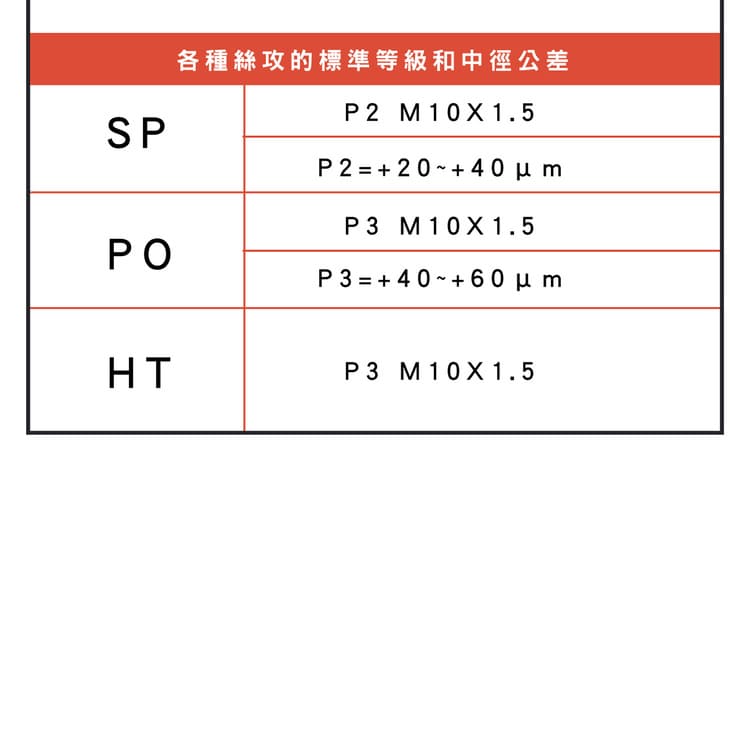
| P2 | Band closest to basic size; smaller thread, tighter fit |
| P3 | One step up; larger thread |
| P4 | Another step up; looser fit |
A higher number moves the tolerance band up and cuts a larger thread; the band width is set by the type (by diameter and pitch), not by the number. full tolerance bands are in the Tap Thread Tolerance Guide.
4. Gauges and Inspection
| Gauge | Function |
|---|---|
| Go | Enters freely — pitch dia at/above lower limit |
| No-Go | Should not enter — pitch dia within upper limit |
Go passes and No-Go stops means the pitch dia is within tolerance and to standard.
5. Effect of Machining Conditions
Accuracy is affected by material shrinkage (post-machining distortion), surface treatment (e.g. plating), tool wear and machine rigidity. When material shrinks, plating follows, tools wear fast or a rigid machine is used, switch to an oversize tap (one or two grades up) and leave a compensation allowance; for plating, the oversize is about four times the plating thickness (maker’s recommendation).
6. Cutting vs Forming Accuracy
Cutting taps give stable accuracy; forming taps give a better surface but the size must be re-evaluated (plastic forming). Class 2 / 6H map to different standards — confirm when selecting.
7. Accuracy and Tolerance Example
For M10×1.5: basic pitch dia about 9.026 mm, max about 9.206 mm. Different tap grades fall in different pitch-dia tolerance bands; with the right gauge you ensure a correct fit — neither too loose nor too tight.
For grades (P-class/JIS/ISO) see the Tap Thread Tolerance Guide; for metric tolerance see the Metric Thread Tolerance Chart; for plating see the Internal Thread Plating Guide; for oversize see the Internal Thread Oversize Causes.
FAQ
Q: What mainly determines internal-thread accuracy?
Mainly the tap's precision grade and pitch diameter, verified by gauges. The tap sets size, pitch dia sets fit, and the gauge confirms it's within tolerance — a complete machining-and-inspection system.
Q: Why is pitch diameter so critical?
It sets fit tightness, locking quality and clearance/interference — the most critical size. Inspection uses Go/No-Go gauges on the pitch dia, not just the major or minor diameter.
Q: When to use an oversize (higher-grade) tap?
When material shrinks, plating follows, tools wear fast or a rigid machine is used — go one or two grades up (oversize) and allow compensation so the finished part stays within tolerance; for plating, the oversize is about four times the plating thickness (maker’s recommendation).
Q: Go passes but No-Go also enters — meaning?
It means the pitch dia is oversize — the thread is too loose and fails, often from tap wear, a loose grade or hole enlargement. Check the tap and conditions; switch to a tighter grade or a new tap.
For the full reading guide on this topic, see Thread Machining: A Complete Reading Guide.
Published: 2026-03-23 | Last updated: 2026-10-31









