
Internal Thread Oversize Causes: Feed, Runout & Tap Selection
If the tapped thread will not pass the gauge, do not change taps first. This guide helps you decide which one to act on: too much feed, unstable feed, the wrong tap, or runout between spindle and pilot hole. Each leaves a different mark on the thread form, so you can read the form, tell them apart, and fix the right one.
1. What Oversize Is
Oversize means the tapped thread bore is too large, the form is deformed and it fails the gauge (NG) — resulting in loose threads, failed fit and unstable quality.
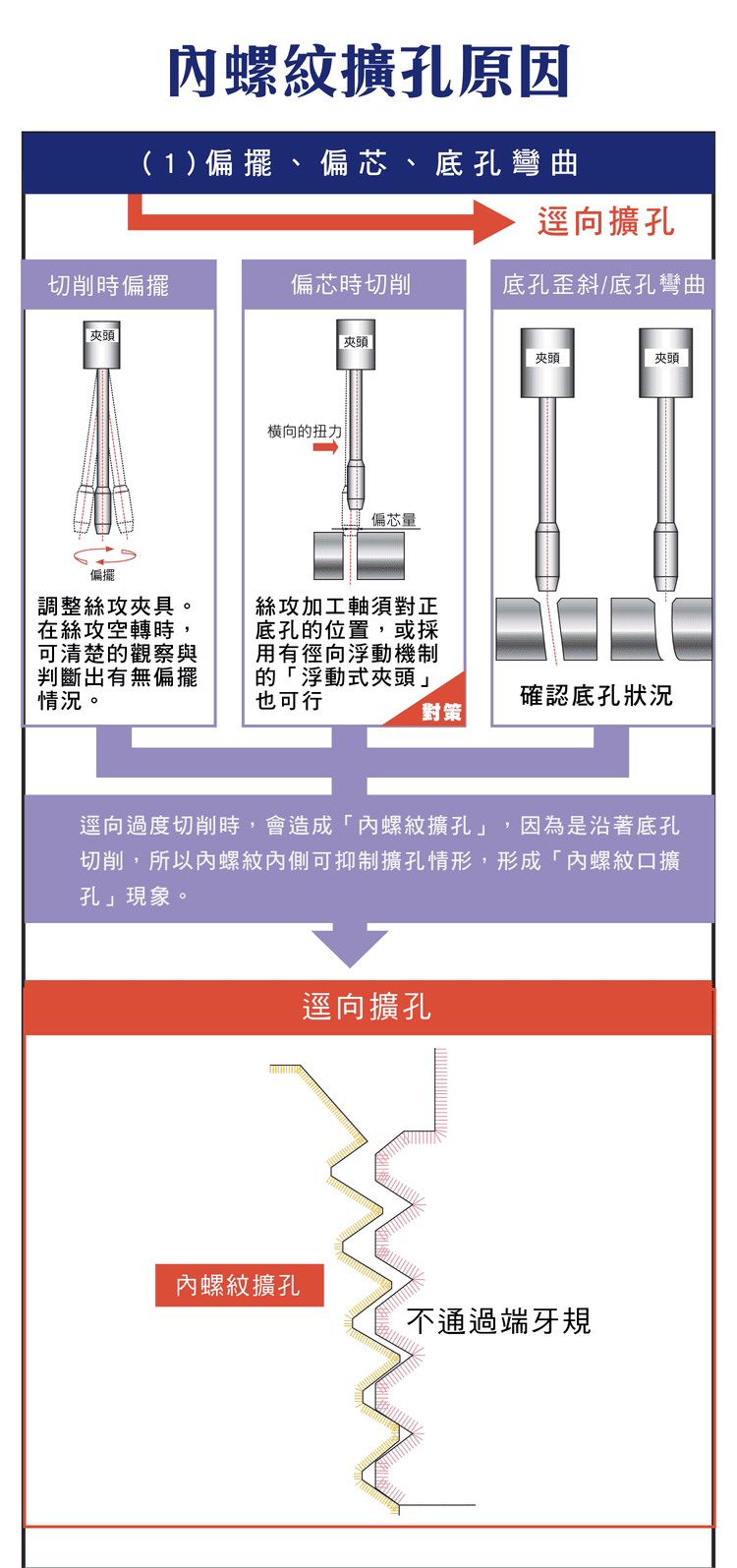
2. Over-Feed Causes Oversize
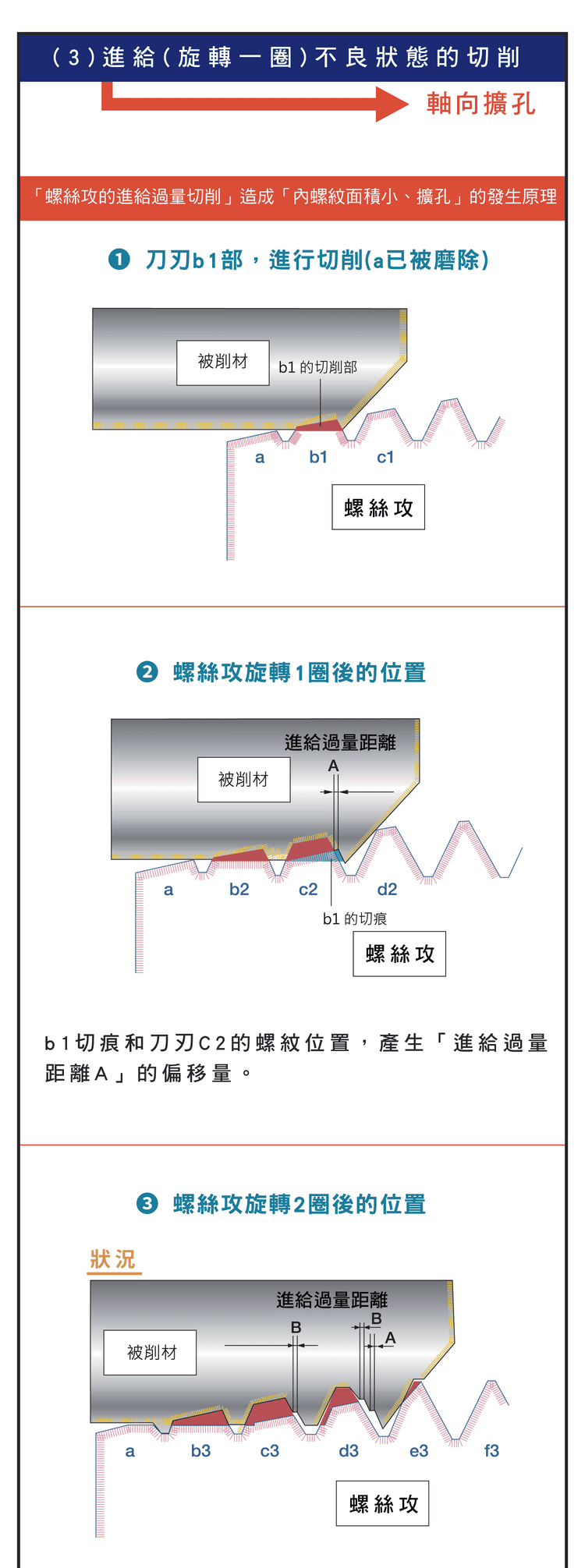
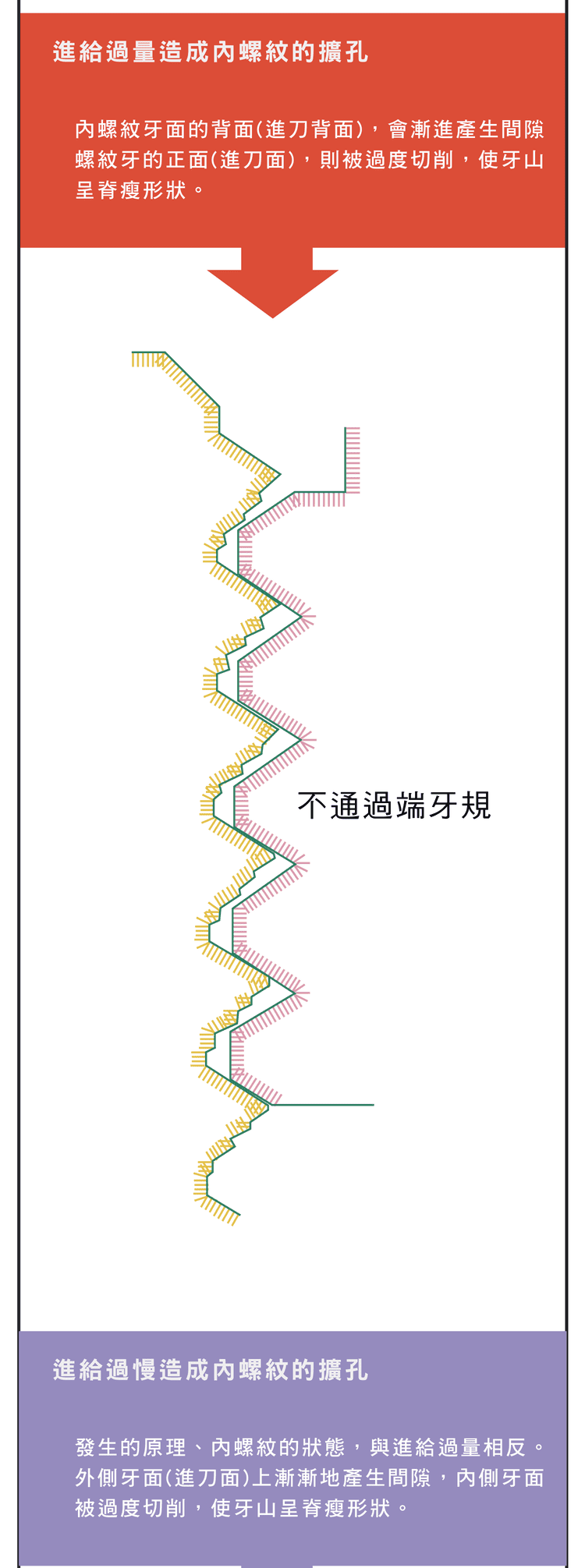
When feed per revolution exceeds the pitch, the flank is overcut, the crest thins and the bore enlarges; the inner flank is weakened, the outer side gaps and the form drifts — failing the gauge with lower thread strength.
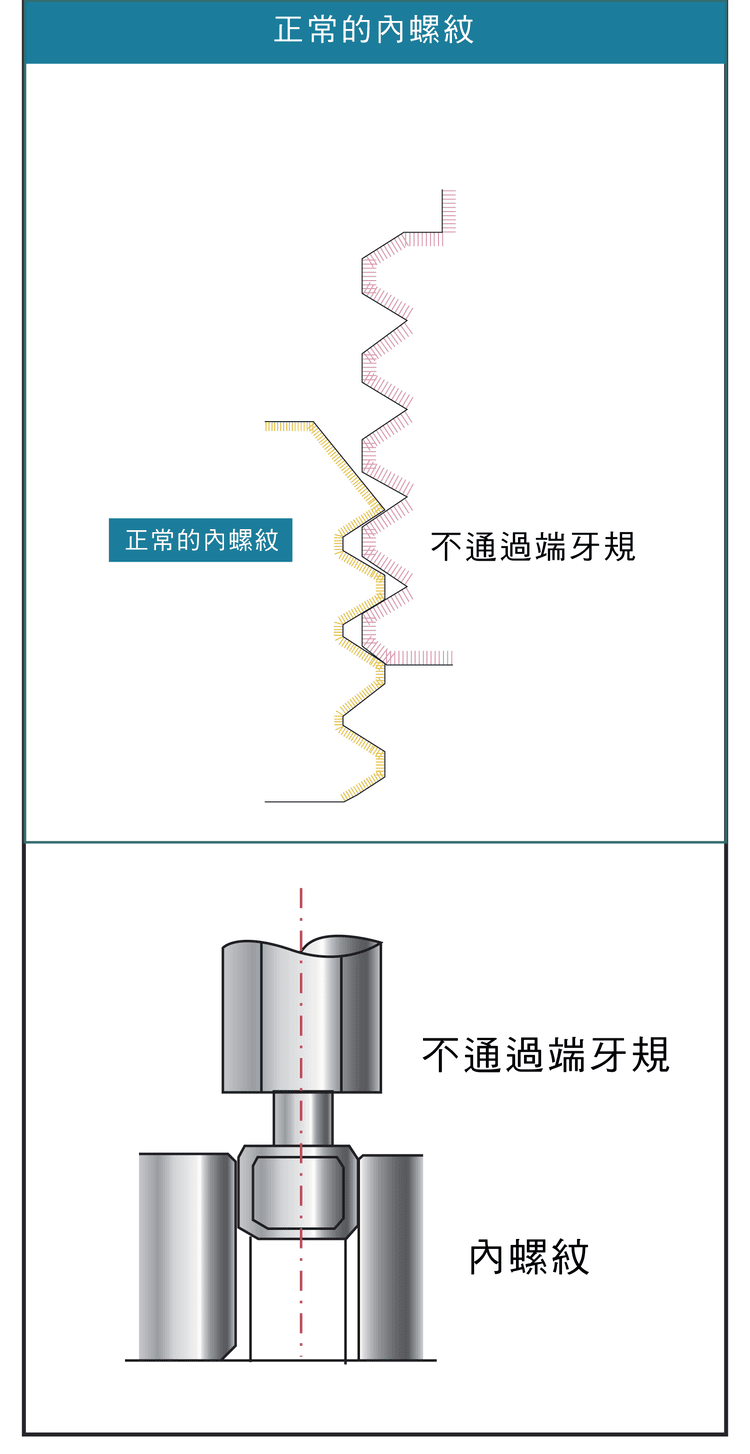
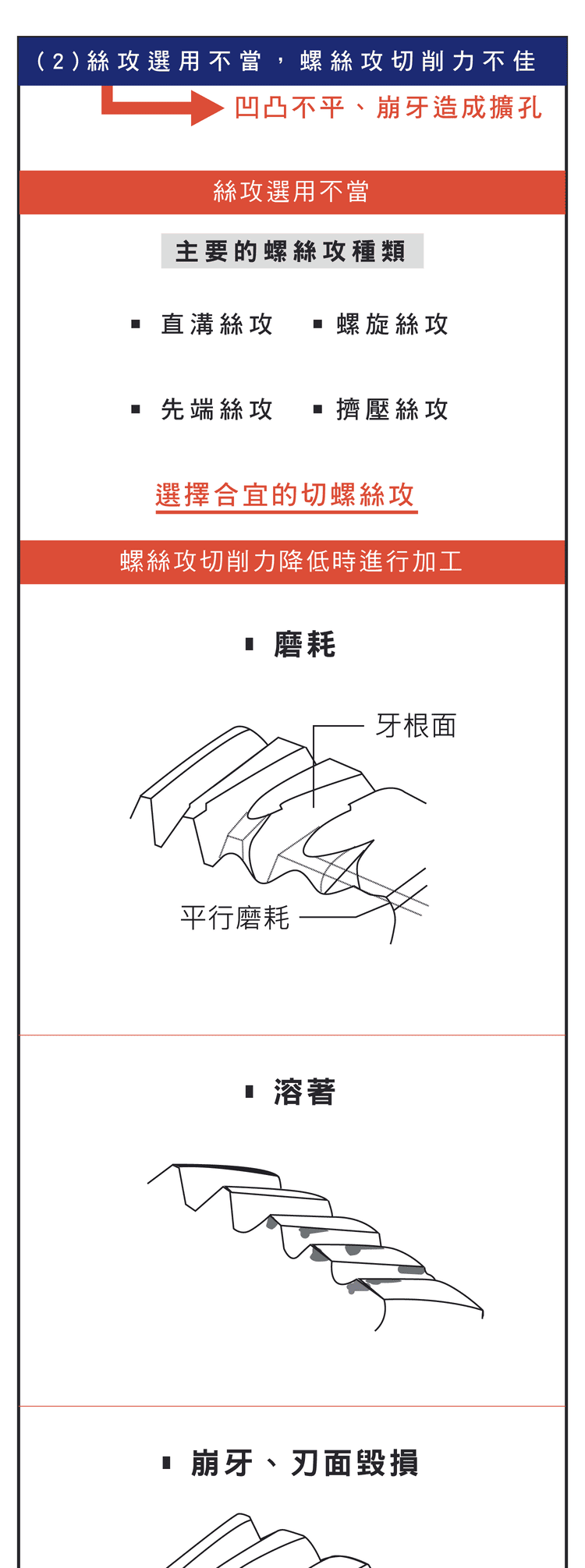
3. Under-Feed Causes Oversize
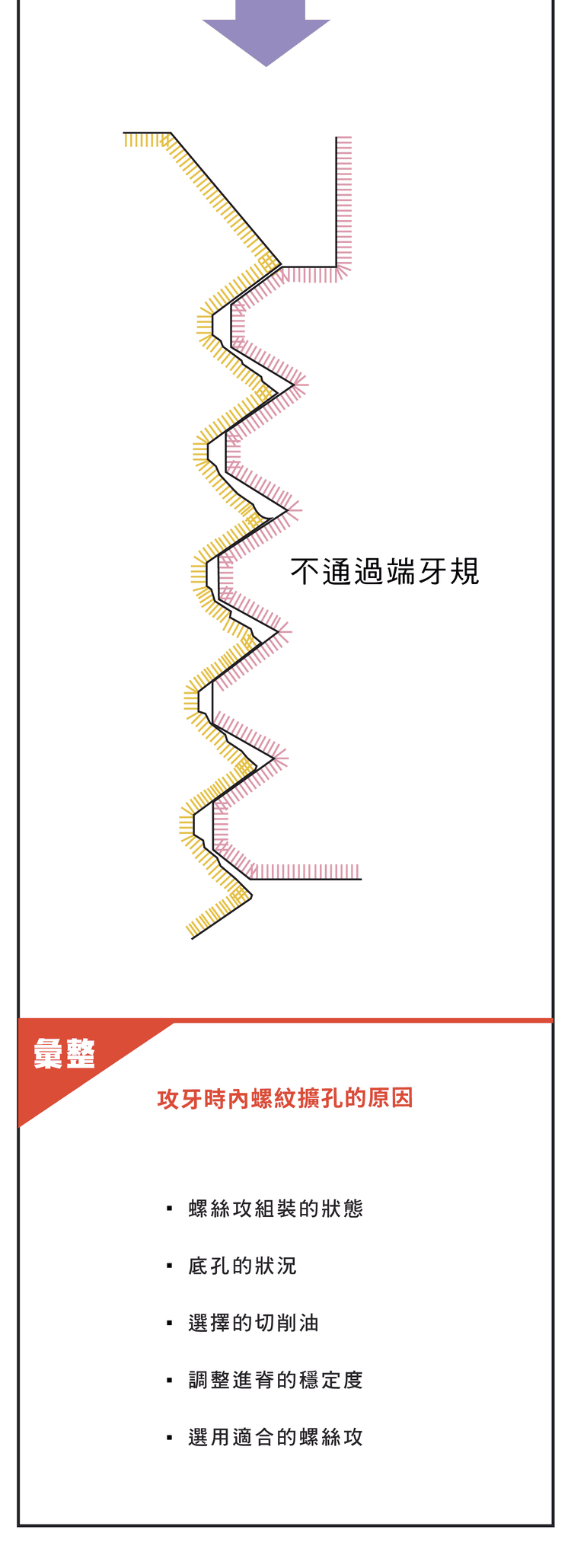
When feed per revolution is less than the pitch, the outer flank gaps and the inner flank is overcut, giving an asymmetric form and uneven cutting. The fix is rigid tapping (feed = pitch) or a floating holder to compensate the lead, keeping feed synced to pitch.
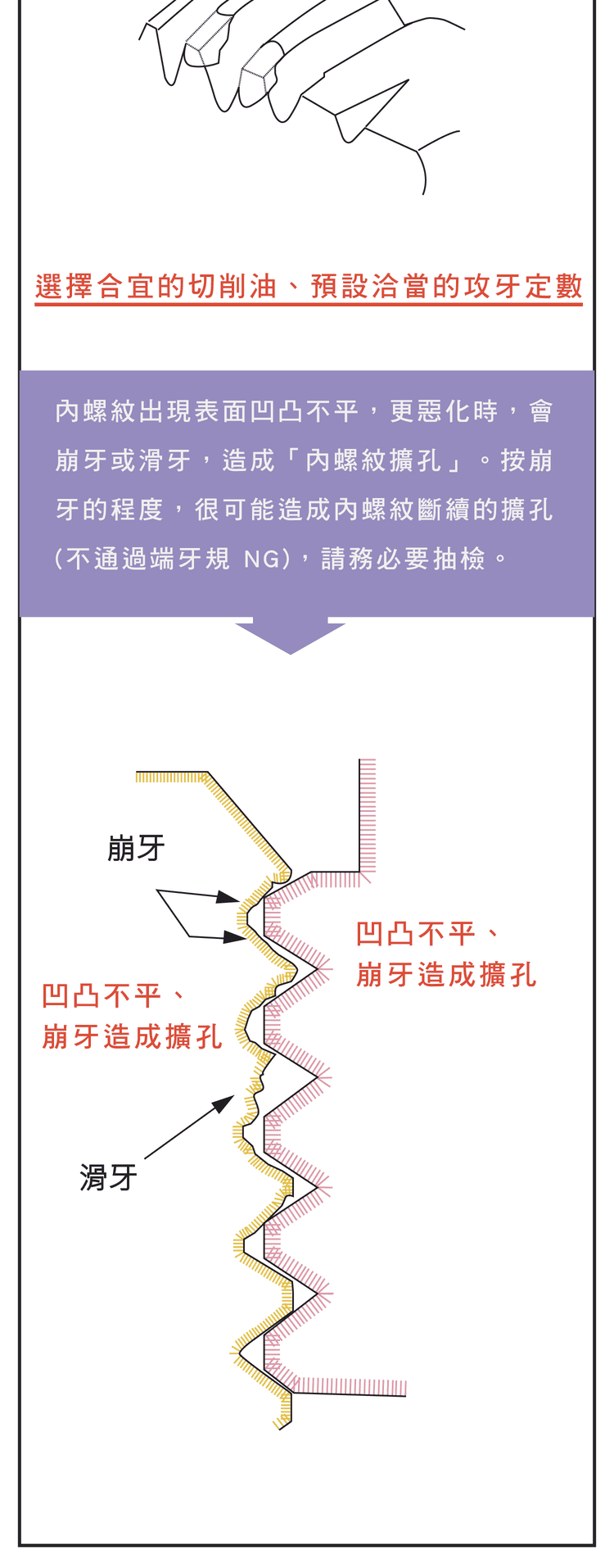
4. Runout and Hole Problems
| Source | Effect and fix |
|---|---|
| Runout (bad holder, spindle eccentricity) | Uneven cut, off-center oversize → concentricity, change holder, check spindle |
| Skewed/bent hole | Bore-direction oversize, wrong form → correct position and hole quality |
5. Wrong Tap Selection
A wrong cutting type or material mismatch (straight/spiral/spiral-point/forming) gives uneven resistance, faster wear and a broken form, causing oversize. Match the tap to hole and material: spiral-point for through, spiral-flute for blind, forming for ductile materials.
6. Tool Wear Causes Oversize
Flank wear and edge dulling lower cutting force and can't form the correct thread; welding (built-up edge) makes material stick and cutting unstable; tooth chipping leaves an incomplete form. All cause oversize — change the tool in time, improve lubrication and stabilize conditions.
7. Countermeasures Summary
The core is feed-to-pitch sync: use rigid tapping or a floating holder; ensure concentricity and correct hole skew; match the tap to hole and material; change the tool in time and improve lubrication. Most oversize traces to feed sync, runout, tap selection and wear.
For general fixes see the Thread Machining Solutions; for chipping/undersize see the Tapping Troubleshooting Guide; for accuracy/gauges see the Tap Thread Tolerance Guide; for holders see the Tapping Setup Guide.
FAQ
Q: Most common cause of oversize?
Usually feed not synced to pitch (over-feed thins the crest and enlarges the bore), runout (holder/spindle eccentricity) and tool wear. Rigid tapping or a floating holder, good concentricity and timely tool change usually fix it.
Q: Do both over- and under-feed cause oversize?
Yes. Over-feed overcuts flanks, thins the crest and enlarges the bore; under-feed gives an asymmetric form and uneven cut. Both come from feed not synced to pitch — the key is rigid tapping or a floating holder.
Q: Why does runout cause oversize?
Runout (bad holder or spindle eccentricity) makes the tap rotate off-center, cutting unevenly and enlarging the thread off-center. Ensure concentricity, change the holder and check spindle accuracy; a skewed hole also enlarges along the bore.
Q: Can the wrong tap cause oversize?
Yes. A wrong cutting type or material mismatch gives uneven resistance, faster wear and a broken form, causing oversize. Match the tap to hole and material (spiral-point for through, spiral-flute for blind, forming for ductile) to avoid it.
For the full reading guides on this topic, see Thread Machining: A Complete Reading Guide, Tool Life and Wear: A Complete Reading Guide and Hole Accuracy: A Complete Reading Guide.
Published: 2026-03-24 | Last updated: 2026-07-25









