
Threading Die Blank Diameter Guide (Cutting Type): External Thread Sizes
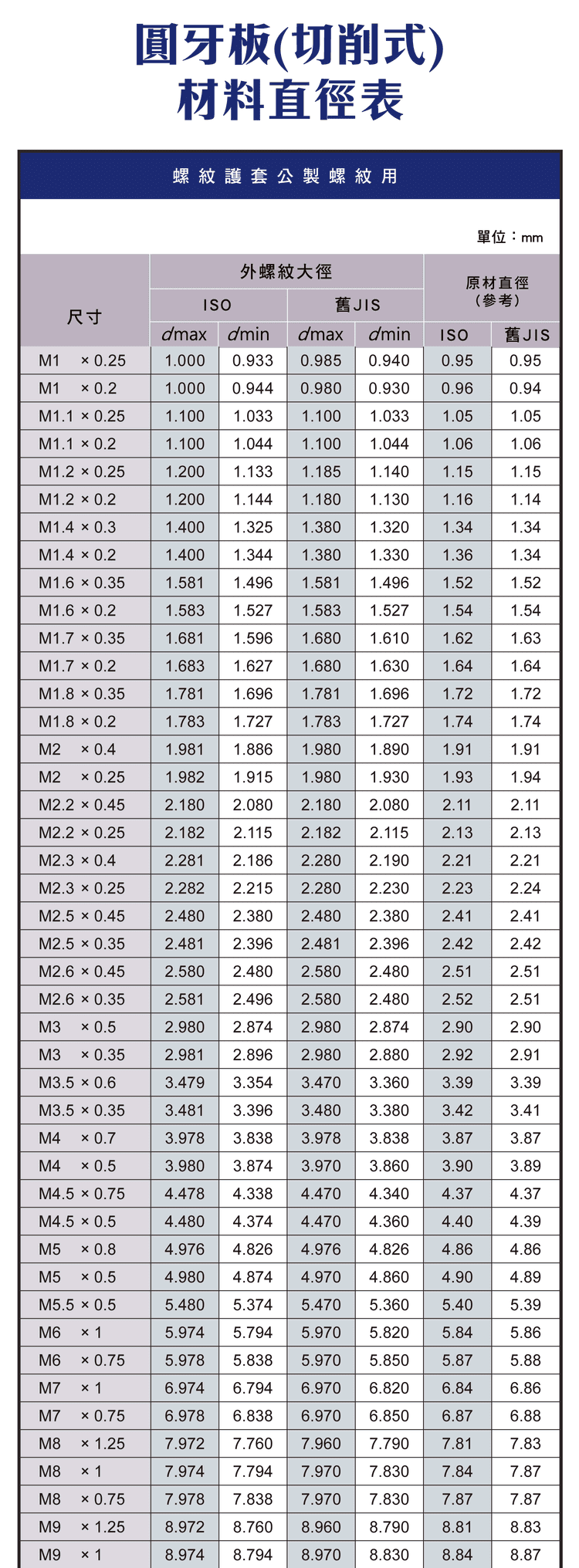
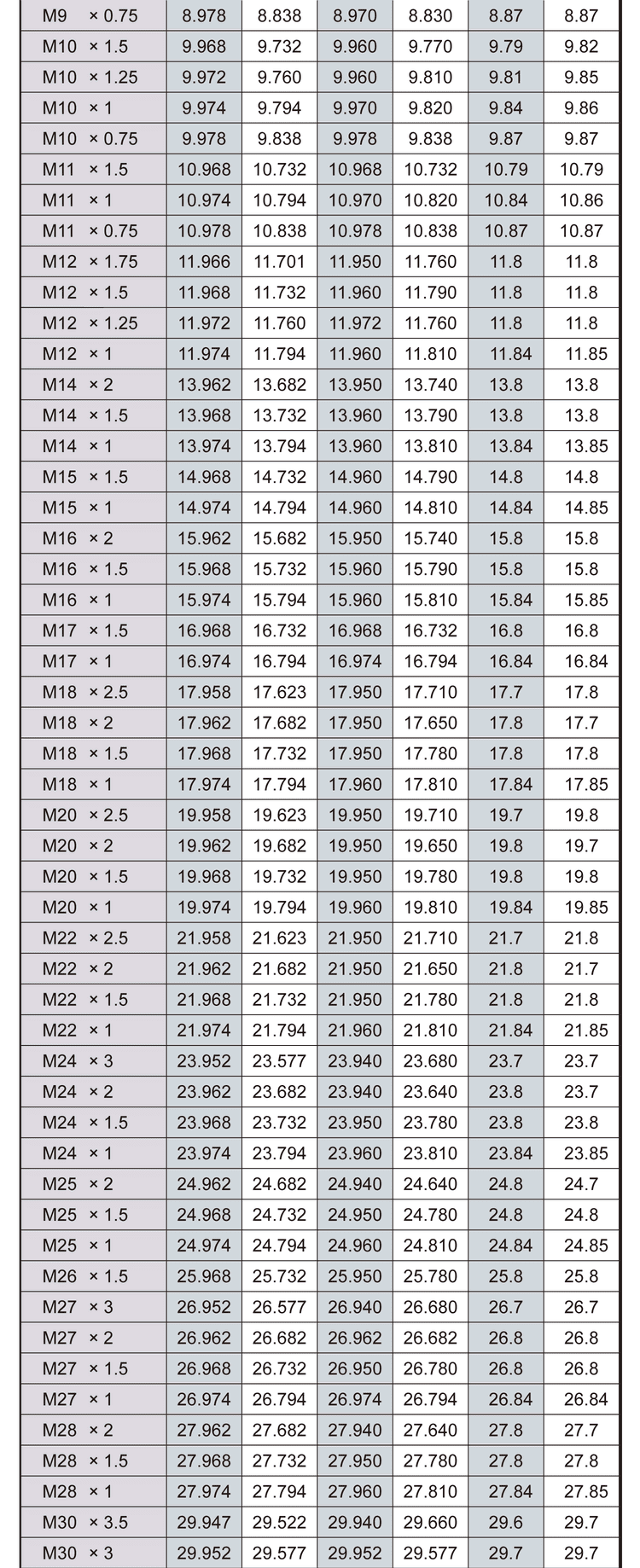
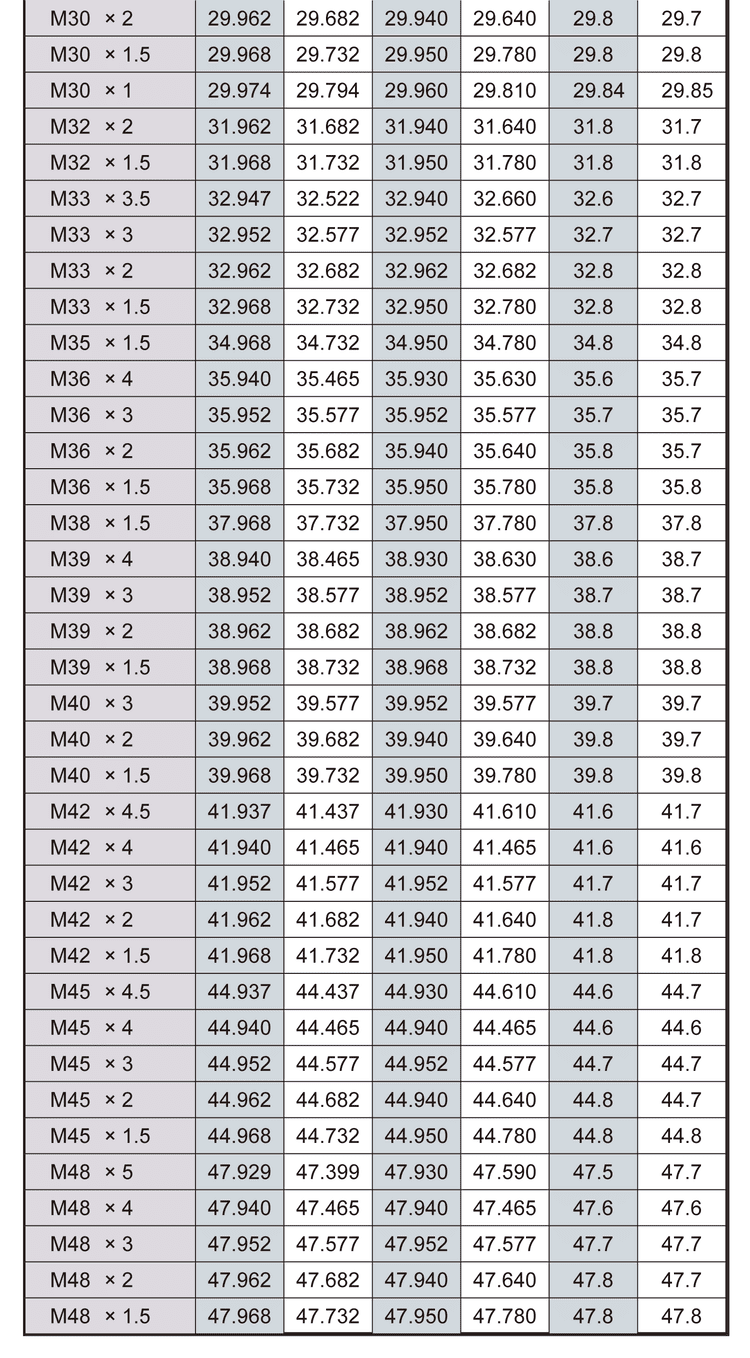
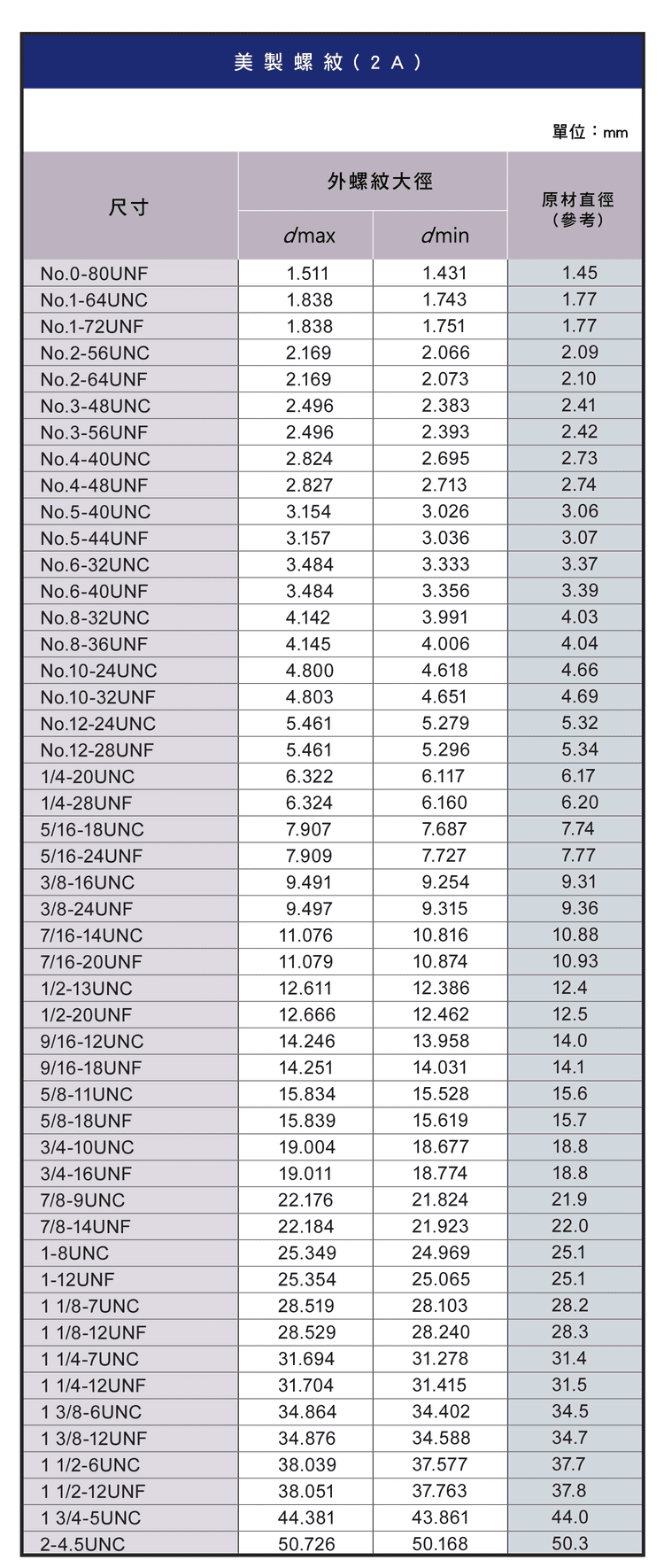
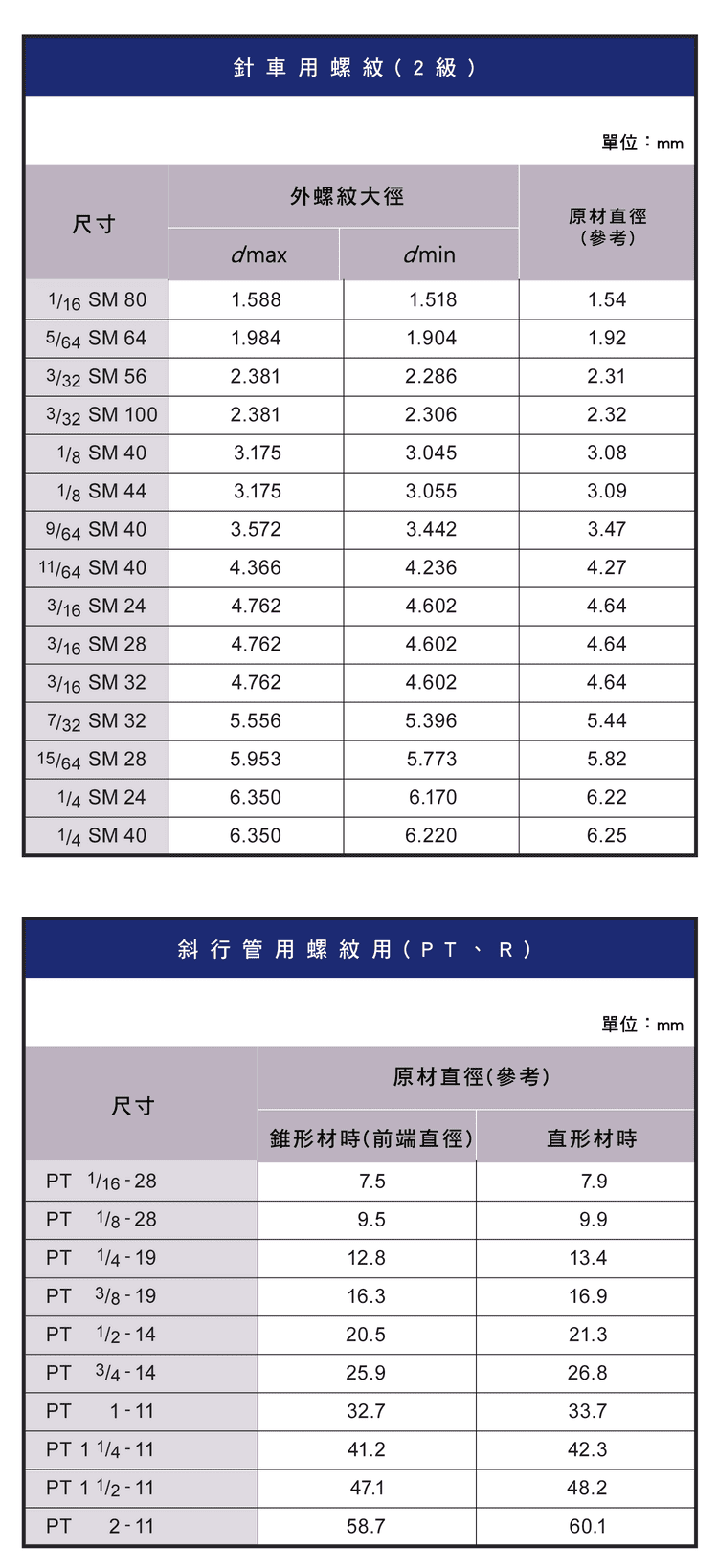
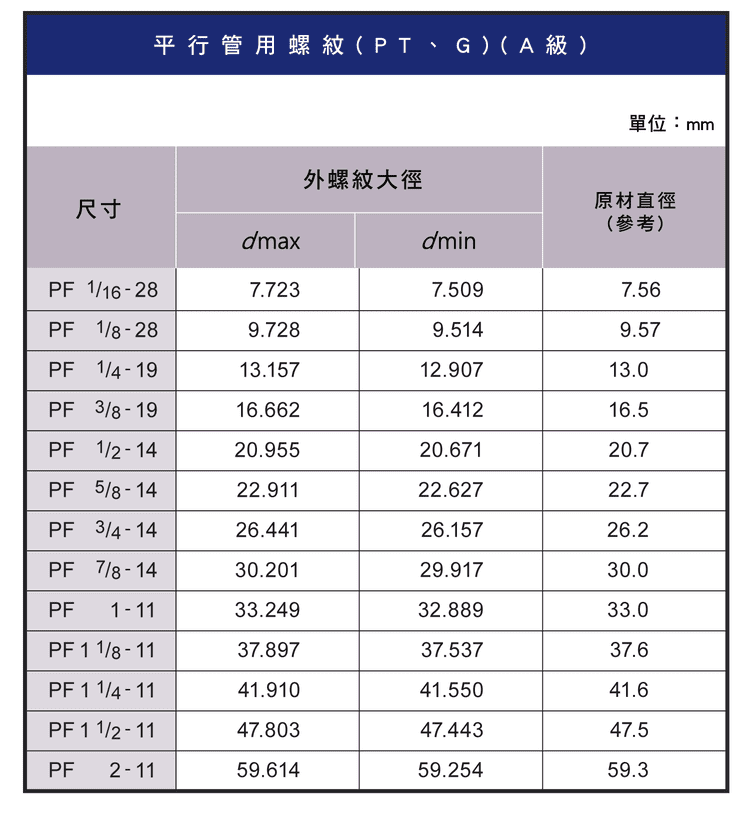
This guide covers blank (stock) diameter selection for cutting-type threading dies, across ISO, metric, old JIS, inch UN and pipe threads (PT, G, R), giving external-thread dmax/dmin and stock-diameter guidance. Precise blank-diameter control ensures thread accuracy, avoids overcut or shallow form, and improves cutting stability — a key basis for external-thread quality control.
1. Why Blank Diameter Matters
In external threading, the stock diameter directly drives form completeness, OD accuracy, load stability and tool life. Too large a diameter causes overcut and form distortion; too small leaves insufficient thread height.
| Stock diameter | Effect |
|---|---|
| Too large | Overcut and form distortion |
| Too small | Insufficient thread height |
| Moderate | Complete form, accurate size, stable cutting |
2. External Thread Sizes (dmax / dmin)
dmax is the OD upper limit affecting fit accuracy; dmin is the OD lower limit avoiding a shallow form. The stock diameter should sit within the dmin–dmax range, ideally near the middle.
| Size | Meaning |
|---|---|
| dmax (max OD) | OD upper limit, affects fit accuracy |
| dmin (min OD) | OD lower limit, avoids shallow form |
3. Blank Diameter by Standard
Selection principles by standard:
| Standard | Range / traits | Blank diameter |
|---|---|---|
| Metric (ISO / old JIS) | M1–M48; ISO and old JIS differ slightly | Precision near dmax, general mid-value, high-speed slightly smaller |
| Inch (UN / UNC / UNF) | Inch-based, common in machinery and auto parts | Match No. sizes to inches; diameter affects fit class |
| Parallel pipe (G / PF) | Sealing fit is the focus | Stock diameter must be stably controlled |
| Taper pipe (PT / R) | Consider taper; front vs straight diameter | Leave deformation allowance to avoid poor sealing |
Actual dmax/dmin and stock diameters follow the die maker's chart and the relevant standard.
4. Cutting-Type Die Application Points
A cutting-type round die suits small-to-medium batches with high accuracy, stable thread sizes and many materials. Notes: coolant choice matters greatly, and tool wear must be checked regularly.
| Aspect | Point |
|---|---|
| Suited to | Small-to-medium batches, high accuracy |
| Advantages | Stable thread size, works on many materials |
| Notes | Coolant choice is critical; check tool wear regularly |
5. Practical Selection
Blank diameter rules: general steel takes the mid-value, soft materials slightly larger, hard materials slightly smaller; then adjust by conditions.
| Case | Blank diameter |
|---|---|
| General steel | Mid-value |
| Soft material | Slightly larger |
| Hard material | Slightly smaller |
| High-speed | Smaller diameter |
| High accuracy | Near dmax |
| Long life | Balanced choice |
For rolling-type (chipless forming) blank diameter, see the Threading Die Blank Diameter Guide (Rolling Type); for external-thread cutting parameters, see the External Thread Machining Guide.
FAQ
Q: Should the blank be near dmax or dmin?
The blank should sit between dmin and dmax, ideally near the middle. Precision parts can go near dmax for fit accuracy; high-speed work goes slightly smaller to reduce load. Actual values follow the die maker's chart.
Q: What if the blank is too large or too small?
Too large causes overcut, form distortion and high load; too small leaves insufficient material, low thread height and incomplete form. Both hurt fit and strength, so keep within the sensible range.
Q: How do I adjust blank diameter by material?
General steel takes the mid-value; soft materials go slightly larger (they deform easily); hard materials go slightly smaller to reduce load. In cutting-type work, coolant choice and tool-wear checks greatly affect quality.
Q: What to watch for taper pipe thread blanks?
Taper pipe threads (PT / R) need taper consideration, with a front diameter and a straight diameter, and a deformation allowance to avoid poor sealing. Parallel pipe threads (G / PF) focus on sealing fit with a stably controlled blank diameter.
For the full reading guide on this topic, see Thread Machining: A Complete Reading Guide.
Published: 2026-03-24 | Last updated: 2026-07-25









