CNC Thread Cutting Depth Guide: Pass Strategy & Depth Distribution
In thread cutting, the depth and pass count strongly affect quality, tool life and stability. Constant-volume (V1=V2) or constant-depth (X1=X2) strategies each affect load and chatter differently. Distributing depth sensibly and keeping a small last cut (about 0.05–0.10 mm) lowers vibration and improves surface accuracy; pairing the right infeed method (e.g. modified flank) and conditions further extends tool life and efficiency.
1. Core Concepts of Thread Cutting Depth
In CNC threading, cut depth (ap) sets each pass's load, pass count (n) affects stability and efficiency, and the depth distribution drives tool life and surface quality. The goal is balance between efficiency and stability.
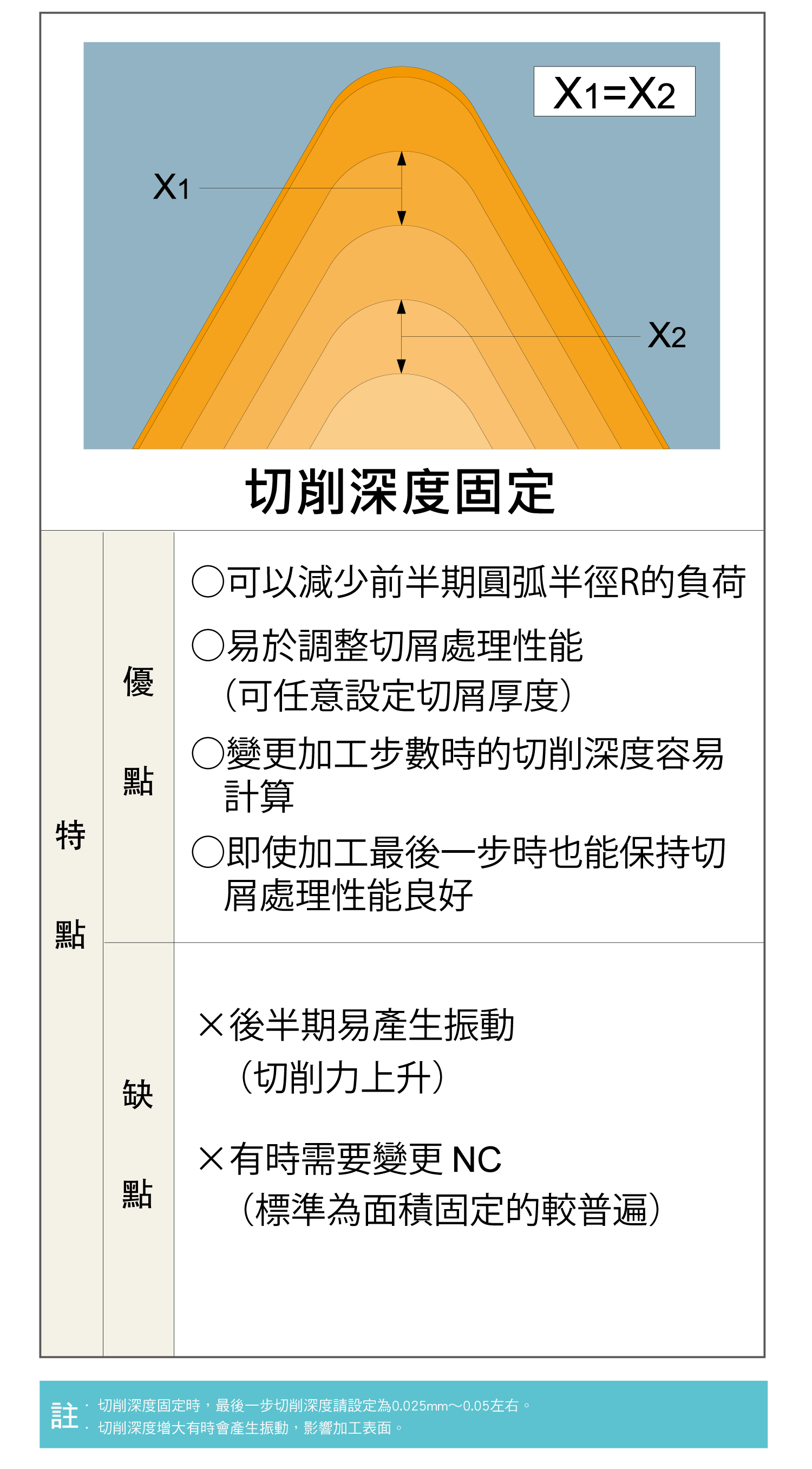
2. Two Main Strategies
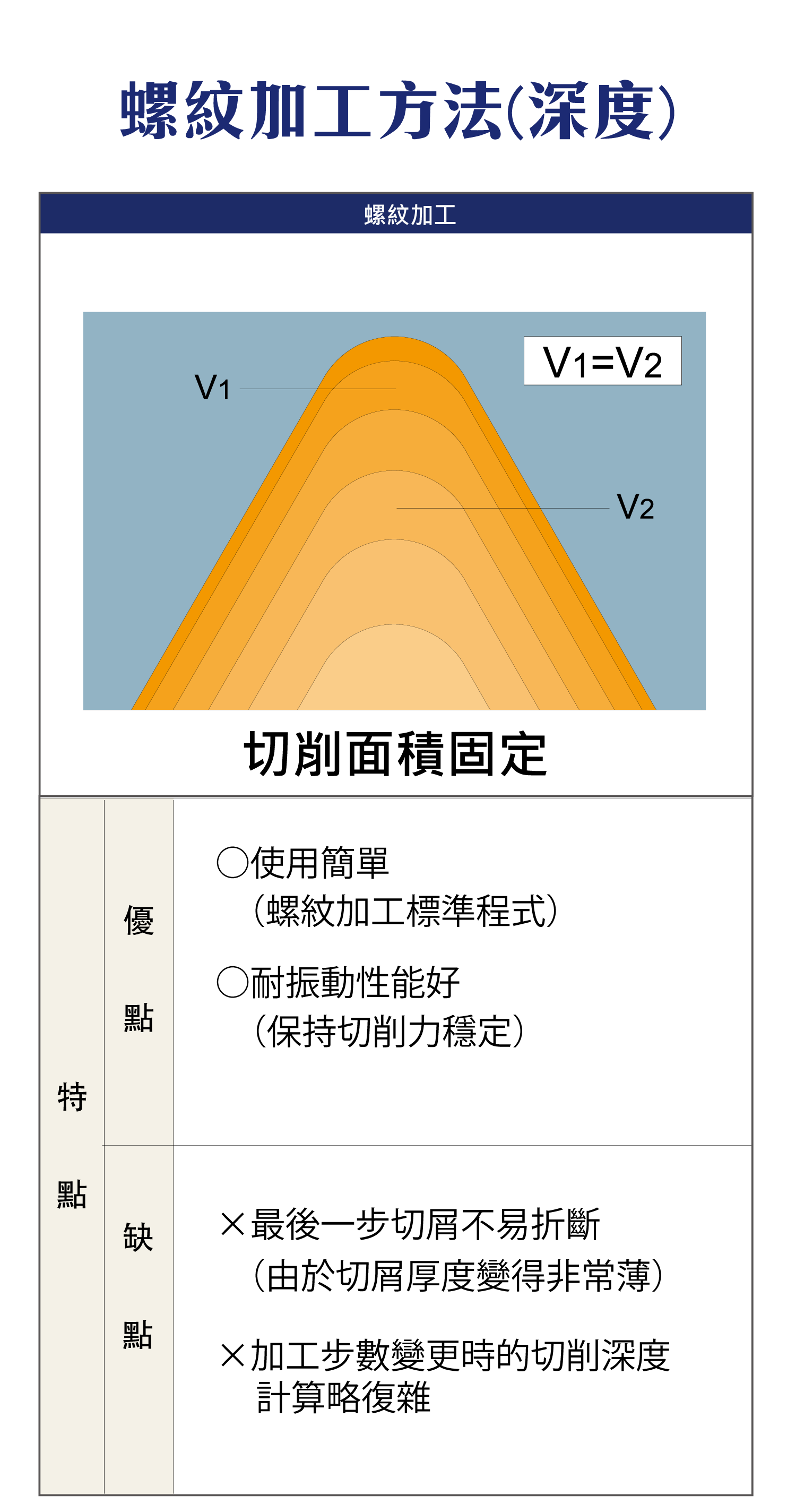
Constant-volume and constant-depth are the two common depth-distribution strategies, each with trade-offs:
| Strategy | Trait | Pros | Cons |
|---|---|---|---|
| Constant volume (V1 = V2) | Same removal per pass, even load | Stable tool load, less local wear, longer life | More complex to compute and program |
| Constant depth (X1 = X2) | Fixed depth per pass | Simple program, easy to set | Higher early load, prone to vibration and wear |
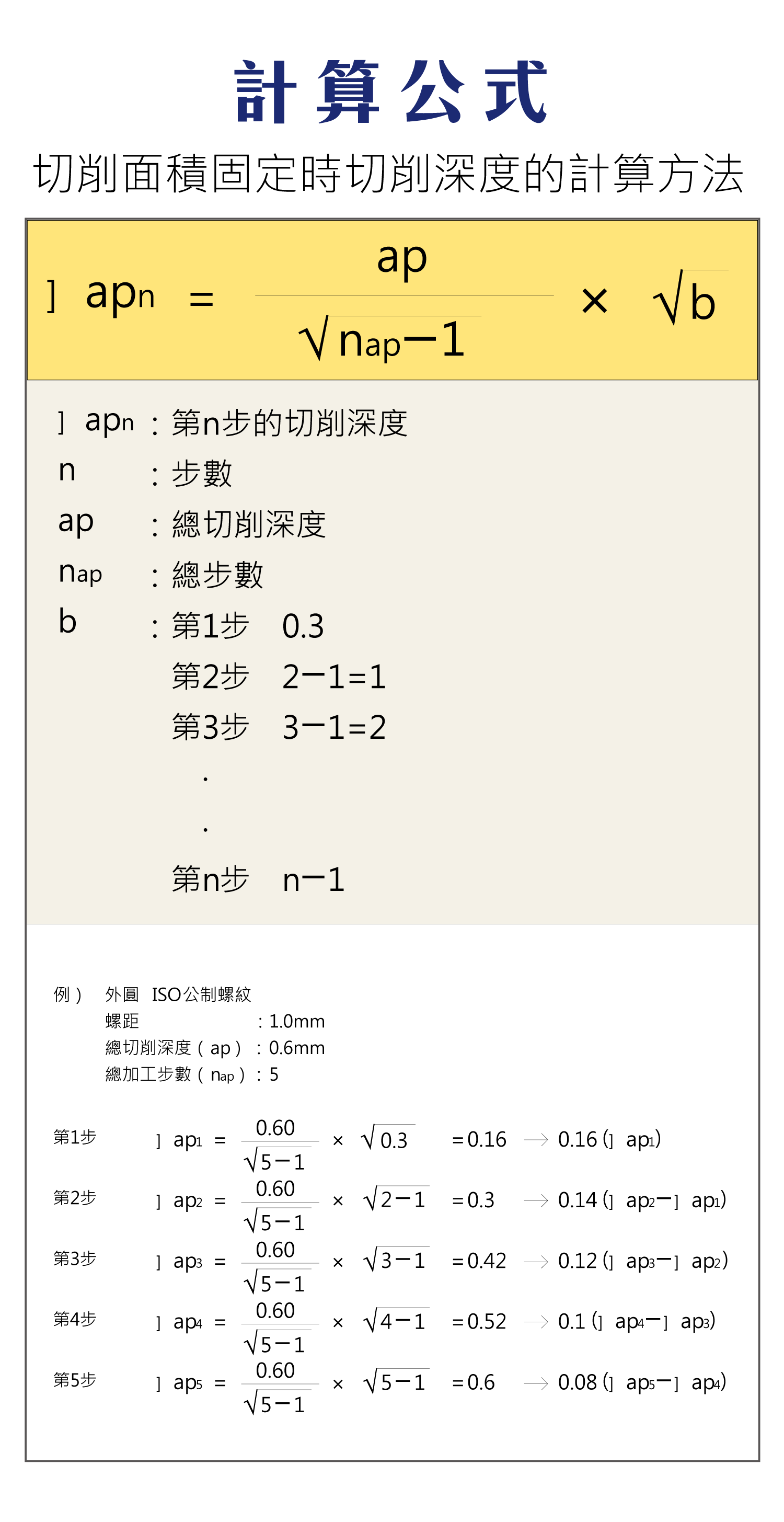
3. Cut Depth Calculation
Depth can be distributed by the formula below, used to build a degressive (deep-to-shallow) strategy:
apₙ = ap / √(n_ap − 1) × √b
| Parameter | Meaning |
|---|---|
| apₙ | Depth of the nth pass |
| ap | Total depth |
| n | Pass number |
| n_ap | Total passes |
| b | Correction factor |

4. Key Recommendations
The last pass depth should be about 0.05–0.10 mm to lower vibration and improve surface accuracy. Too large a depth causes chatter, worse surface roughness and shorter tool life.
| Item | Advice / effect |
|---|---|
| Last pass depth | About 0.05–0.10 mm |
| Depth too large | Chatter, worse finish, shorter tool life |
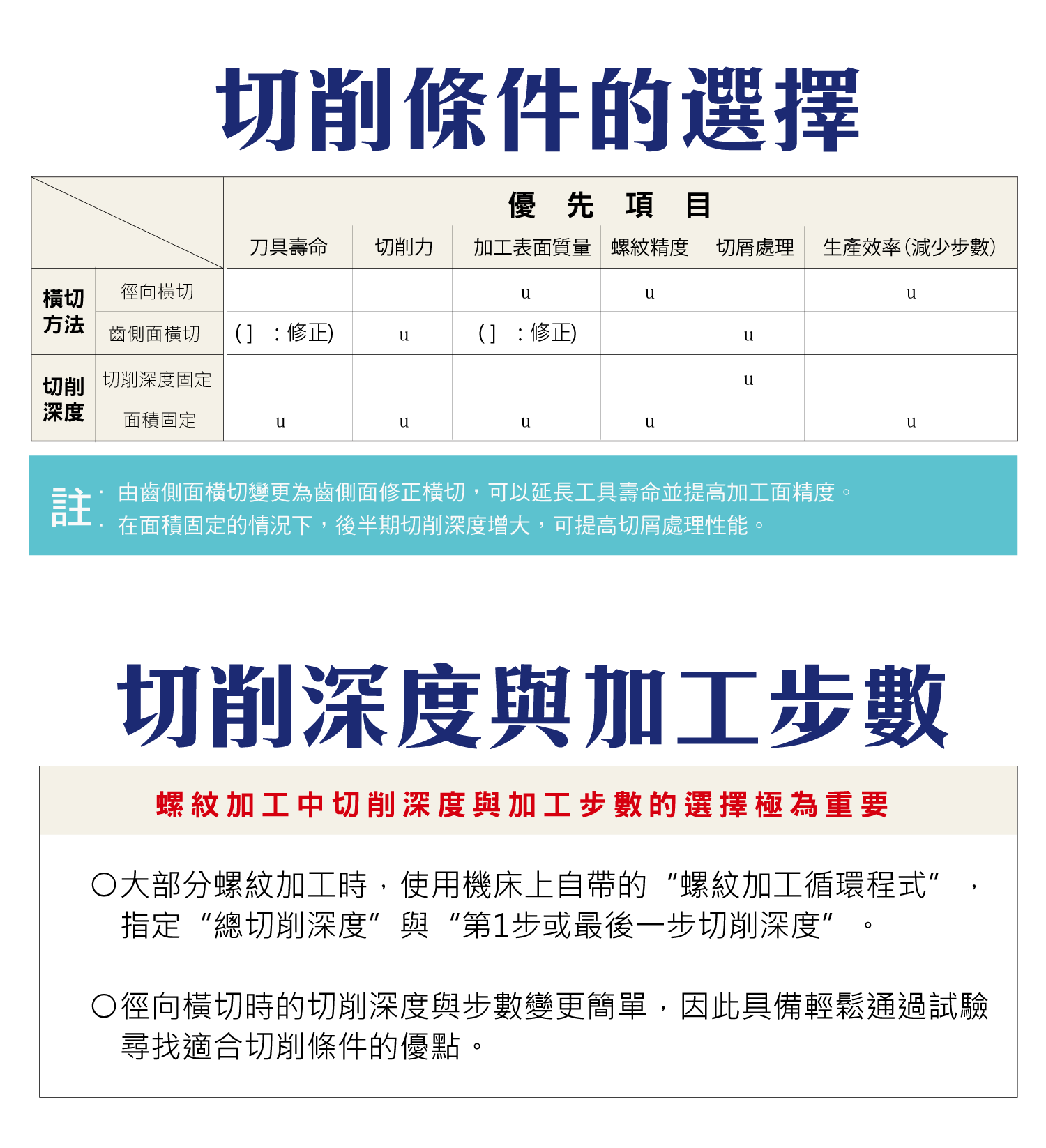
5. Infeed Methods
Common infeed methods are radial infeed, flank cutting and modified flank infeed. The modified flank infeed is recommended: it lowers cutting force, reduces vibration, improves surface quality and extends tool life.
| Method | Note |
|---|---|
| Radial infeed | Radial feed; both flanks loaded at once |
| Flank cutting | Feed along the flank; single-side load |
| Modified flank infeed ★recommended | Lower force, less vibration, better surface, longer tool life |

6. Cutting Condition Strategy
Adjust the strategy by goal:
| Goal | Suggested strategy |
|---|---|
| Extend tool life | Use constant-volume cutting |
| Suppress vibration | Reduce cut depth |
| Improve evacuation | Increase later-pass depth |
| Improve surface | Reduce the last cut |
| Improve efficiency | Reduce pass count |
7. Improvement Priorities
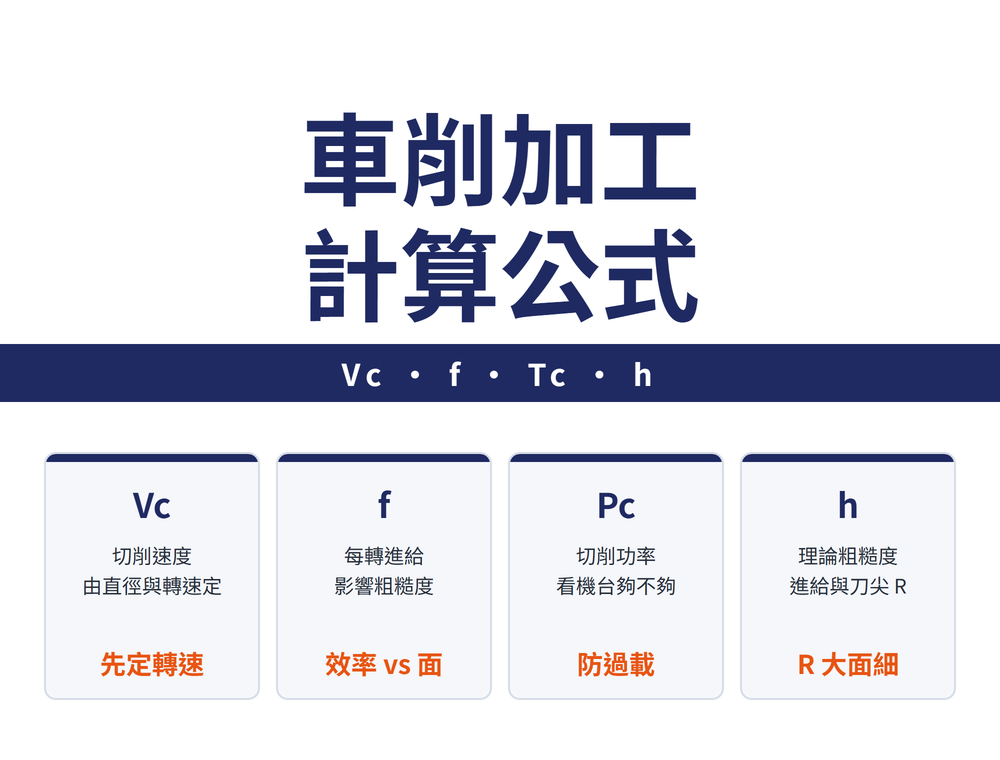
Overall, threading can be improved in five ways: distribute load evenly to extend tool life, reduce per-pass depth to suppress vibration, adjust the strategy to improve chips, use a small finish cut to raise surface accuracy, and optimize the pass count for efficiency. Calculate actual speed and feed from your material and machine — see the Turning Machining Formulas; for external/internal thread parameters, see the External Thread Machining Guide and Internal Thread Machining Guide.
For the full reading guide on this topic, see Turning Toolpaths: The Complete Guide.
FAQ
Q: Constant-volume or constant-depth cutting?
Constant-volume (V1=V2) keeps removal even, so the tool is loaded steadily with longer life, but it's more complex to compute and program; constant-depth (X1=X2) is simple to set but has high early load and vibration. Choose constant-volume for tool life and stability, constant-depth for programming simplicity.
Q: How deep should the last pass be?
About 0.05–0.10 mm. Too large causes chatter, worse roughness and shorter tool life; a small finish pass effectively lowers vibration and improves thread form and surface accuracy.
Q: Why is modified flank infeed better?
Radial infeed loads both flanks at once, concentrating force and heat; modified flank infeed cuts mainly along one side with a small correction, lowering force, reducing vibration, improving surface and extending tool life — a common recommendation for thread turning.
Q: How do I reduce threading vibration?
Vibration usually comes from too deep a single pass or uneven load. Reduce per-pass depth, use constant-volume cutting to even the load, switch to modified flank infeed, and raise machine and clamping rigidity. Keeping a 0.05–0.10 mm finish pass also helps.
Last updated: 2026-07-24
For the full reading guides on this topic, see Thread Machining: A Complete Reading Guide, Tool Life and Wear: A Complete Reading Guide and Vibration and Chatter: A Complete Reading Guide.