Thread Infeed Methods Explained: Radial vs Flank Infeed & Wiper Edge
The infeed method in threading directly affects cutting-force distribution, stability and final surface quality. Common methods include radial infeed, single-flank infeed and alternating (modified) flank infeed, which differ markedly in tool load and wear mode. Whether the insert has a wiper edge also affects accuracy and roughness. Choosing the right infeed strategy and geometry lowers vibration, extends tool life and improves CNC threading efficiency.
1. Why the Infeed Method Matters
In CNC threading, the infeed method sets the cutting-force direction, tool load distribution, stability and surface quality — one of the keys to successful threading.
2. Right vs Left-Hand Infeed Direction
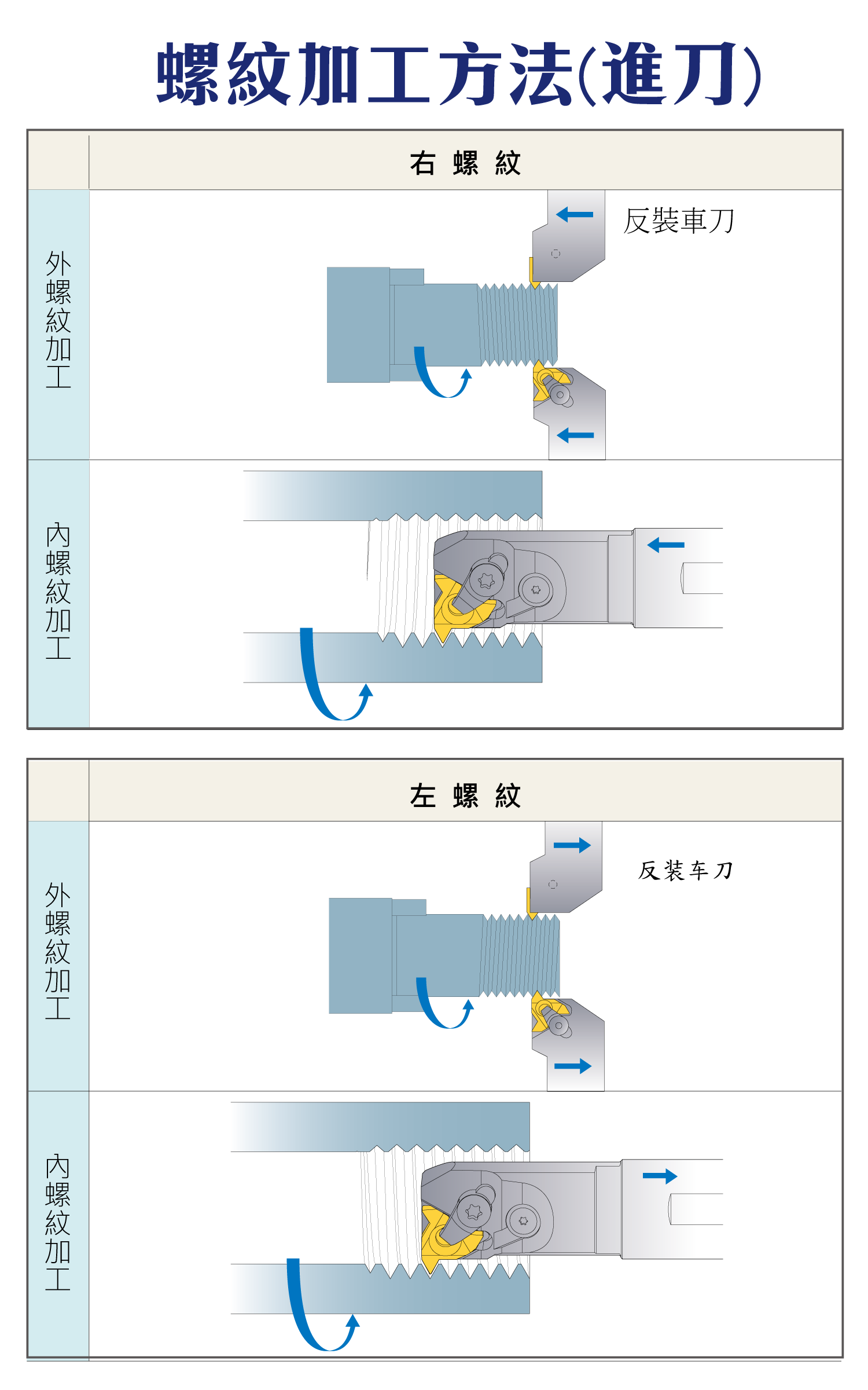
The infeed direction must match the thread hand; a wrong direction causes tool damage, failure to form or machining failure.
| Hand | Spindle | Infeed direction |
|---|---|---|
| Right-hand | Spindle clockwise | Tool feeds right to left |
| Left-hand | Spindle counter-clockwise | Tool feeds left to right |
3. Three Infeed Methods Compared
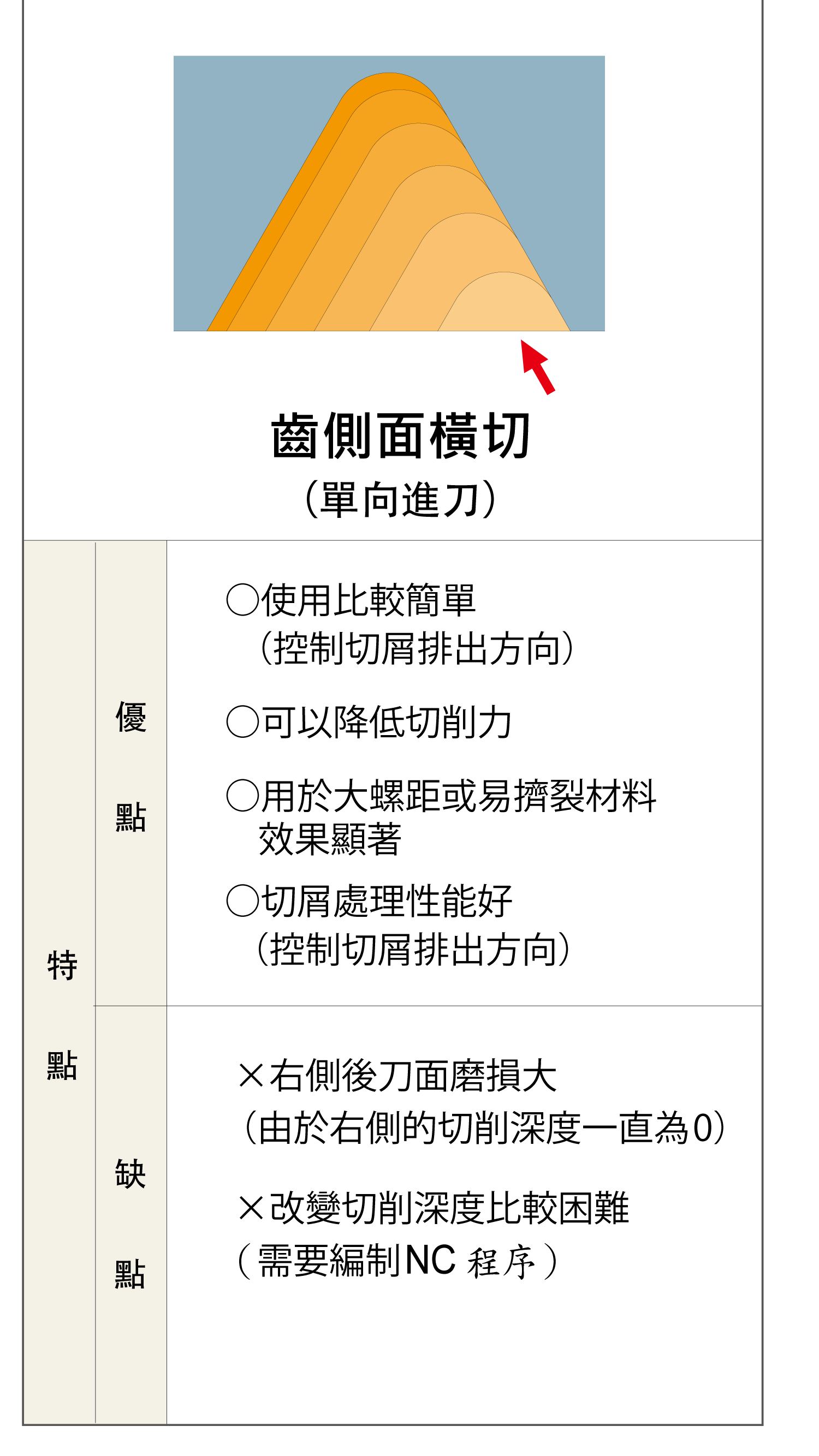
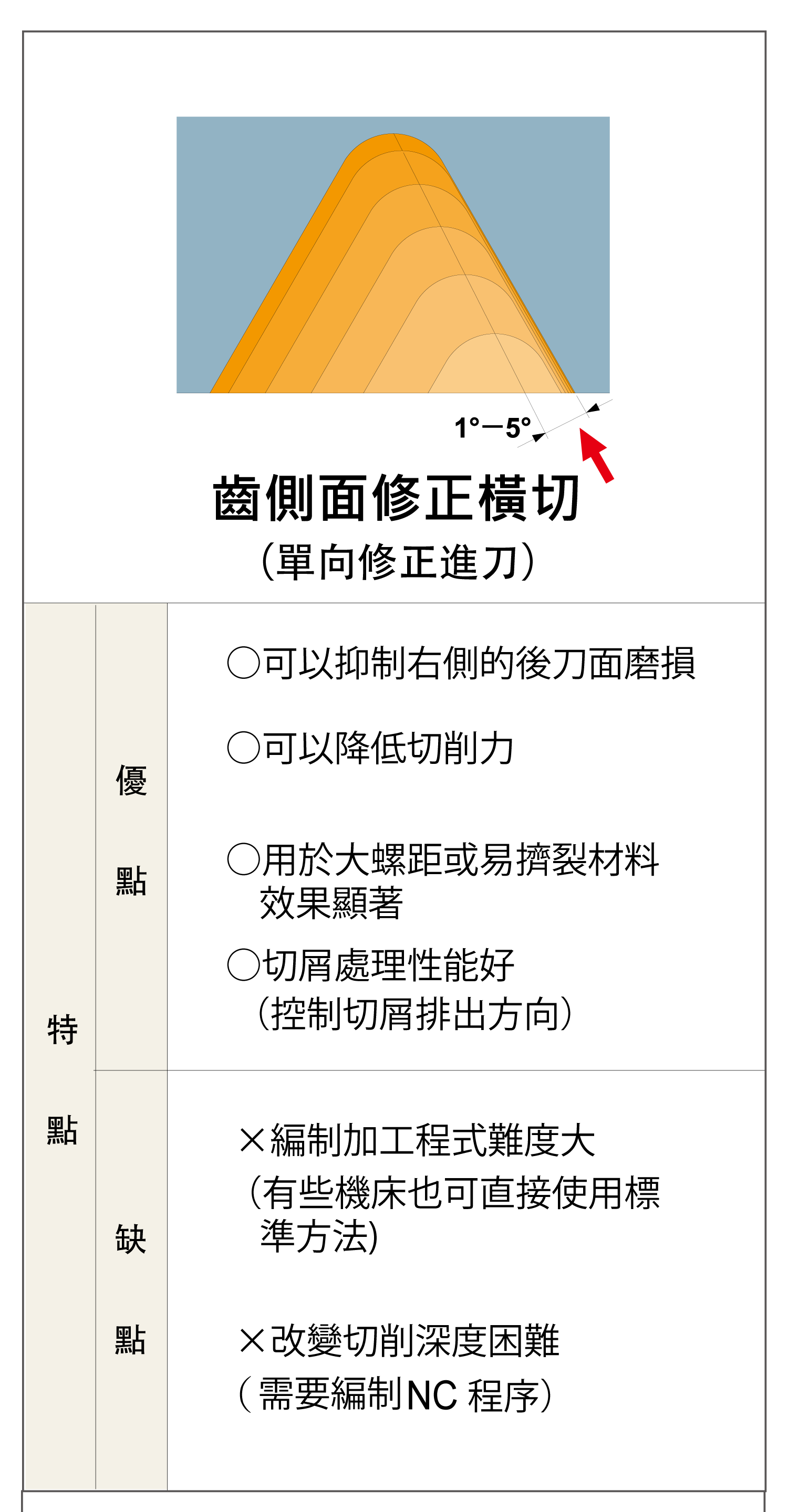
Radial, single-flank and alternating-flank infeed are the three main strategies, differing in force, stability and accuracy:
| Method | Trait | Pros | Cons |
|---|---|---|---|
| Radial infeed | Tool enters perpendicular; both flanks cut at once | Simple to program, general threads | High force, vibration-prone, faster wear |
| Single-flank infeed | Cuts one flank only | Lower force, more stable, longer tool life | Poorer accuracy on the other flank |
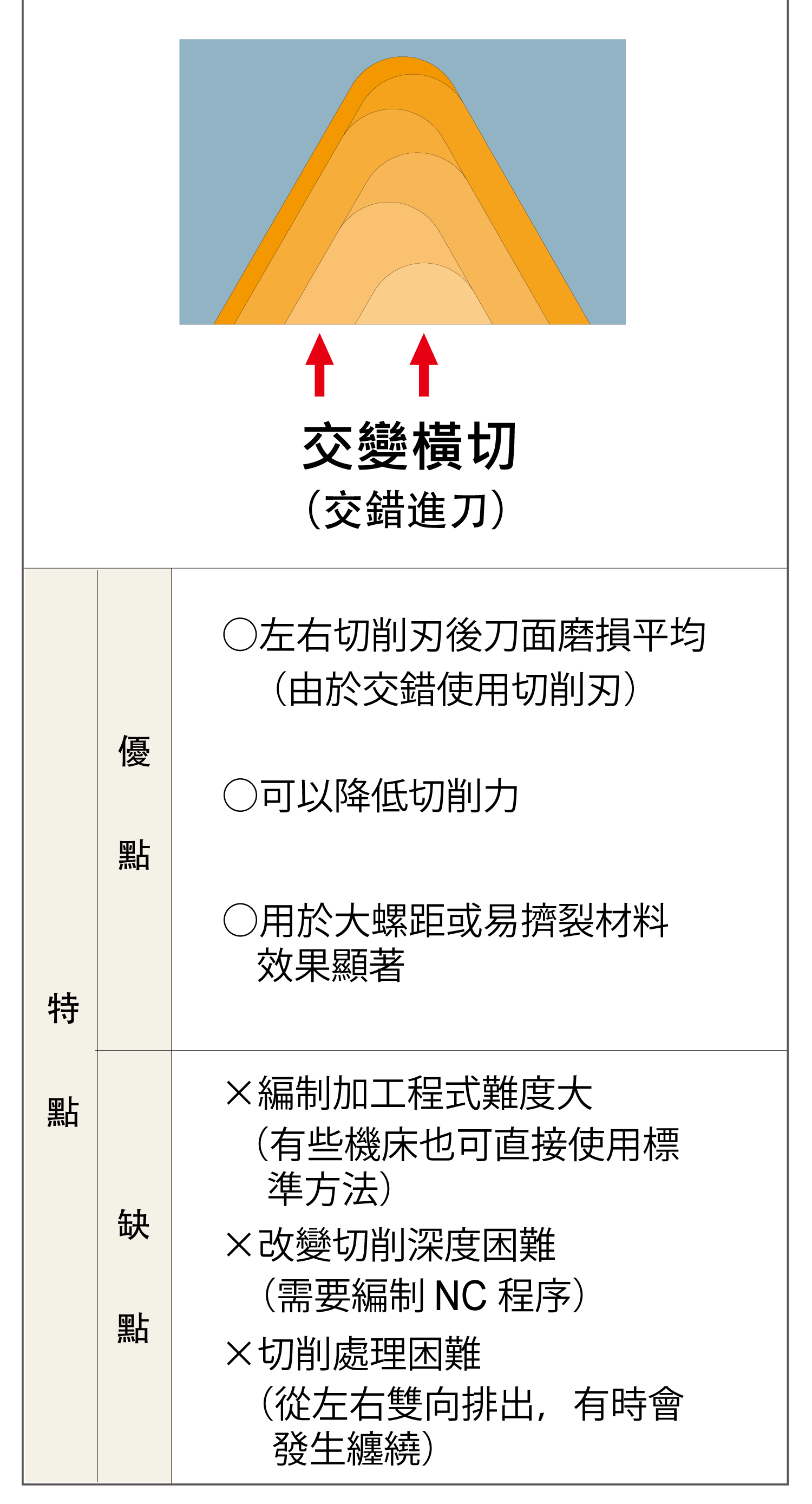
| Alternating flank (modified) | Cuts flanks alternately | Balanced force, best surface, even wear | More complex program |
4. Wiper Edge Effect
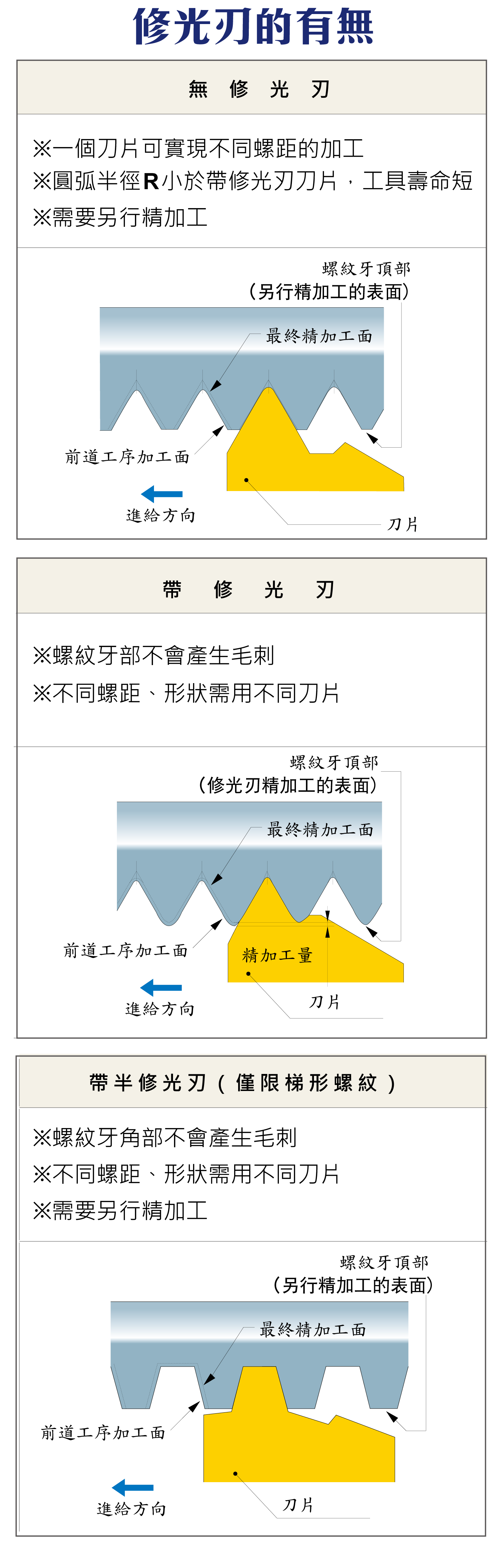
Whether the insert has a wiper edge affects surface finish and the need for extra finishing:
| Wiper | Trait |
|---|---|
| No wiper | Rougher surface, needs extra finishing |
| With wiper | Better finish, less finishing needed |
| Semi-wiper (trapezoidal) | For specific threads, balances cutting and accuracy |
5. Strategy by Goal
Choose the infeed strategy by goal:
| Goal | Advice |
|---|---|
| Extend tool life | Use flank / alternating infeed |
| Suppress vibration | Reduce radial infeed, switch to flank |
| Improve surface accuracy | Use a wiper insert, alternating infeed |
| Improve efficiency | Fewer passes, stable cutting strategy |
6. Pros/Cons Summary
| Method | Pros | Cons |
|---|---|---|
| Radial infeed | Simple | High force |
| Flank infeed | Stable | One-sided accuracy |
| Alternating infeed | Best quality | Complex program |
7. Choosing an Infeed Method by Pitch and Spindle Speed
Which of the three infeed methods to use can be judged from thread pitch and spindle speed (source: KB-PATH-015):
| Situation | Suggested method |
|---|---|
| Pitch < 1.5 mm, or higher spindle speed | Radial infeed |
| Large pitch, lower accuracy needs, or lower spindle speed | Single-flank infeed |
| Trapezoidal thread, higher accuracy needs | Alternating flank infeed |
For high-precision, large-pitch threads, the two methods can be combined: rough with single-flank infeed, then finish both flanks with radial infeed — but the starting point for roughing and finishing must be the same, or the thread will be out of phase.
8. Causes of Dig-In in Thread Turning
Common causes of dig-in specific to thread turning: the tool mounted below centre height or overhanging too far; excessive rake or relief angle pulling the tool into the work; too heavy a feed on radial infeed causing poor chip evacuation; and inadequate coolant or a worn tip on the finish pass. Use radial infeed at higher spindle speeds and switch to flank infeed at lower speeds to reduce dig-in risk. For dig-in causes and fixes in general (non-thread) turning, see How to Prevent Tool Dig-In on a Lathe.
For depth distribution and pass strategy, see the CNC Thread Cutting Depth Guide; for shim/lead-angle selection, see the Thread Lead Angle & Insert Selection Guide; for troubleshooting, see the Thread Machining Troubleshooting Guide.
For the full reading guide on this topic, see Turning Toolpaths: The Complete Guide.
FAQ
Q: Radial vs flank infeed — what's the difference?
Radial infeed enters perpendicular and cuts both flanks at once — simple to program but high force, vibration-prone and fast-wearing; flank infeed cuts one flank only with lower force, more stability and longer life, but poorer accuracy on the other flank. For stability and life, use flank or alternating infeed.
Q: What's the advantage of alternating flank infeed?
Alternating (modified) flank infeed cuts the flanks in turn, giving balanced force, even tool wear and the best surface — the best all-round method; the downside is more complex programming. Use it when top flank quality matters.
Q: Do I need a wiper insert?
A wiper improves finish and reduces extra finishing; without one the surface is rougher and often needs re-finishing. Trapezoidal threads also have a semi-wiper design balancing cutting and accuracy. For high surface demands, use a wiper insert. See Wiper Inserts in Turning: Double the Feed, Better Finish for details.
Q: What if the infeed direction is wrong?
The direction must match the thread hand: right-hand runs spindle clockwise with the tool feeding right-to-left; left-hand runs counter-clockwise, feeding left-to-right. A wrong direction damages the tool, prevents forming and fails the job — confirm the hand before setting up.
Last updated: 2026-07-24
For the full reading guides on this topic, see Thread Machining: A Complete Reading Guide and Tool Life and Wear: A Complete Reading Guide.