
Carbide Tap Guide: Life, Wear & Conditions
Carbide taps offer higher hardness and wear resistance than HSS taps, greatly raising tool life and efficiency, but they demand more machine stability and better conditions. This guide covers usage points, machine and holding requirements, material suitability and cutting-fluid advice, and explains the wear/life difference versus HSS. Choosing the right fluid, controlling vibration and precise concentricity are key to avoiding breakage and raising quality.
1. Carbide Tap vs HSS Tap
| Item | Carbide tap | HSS tap |
|---|---|---|
| Hardness | High | Lower |
| Wear resistance | Greatly improved | Ordinary |
| Toughness | Lower (more brittle) | Better |
| Tool life | Several times longer; good for production | Shorter; good for small batches |
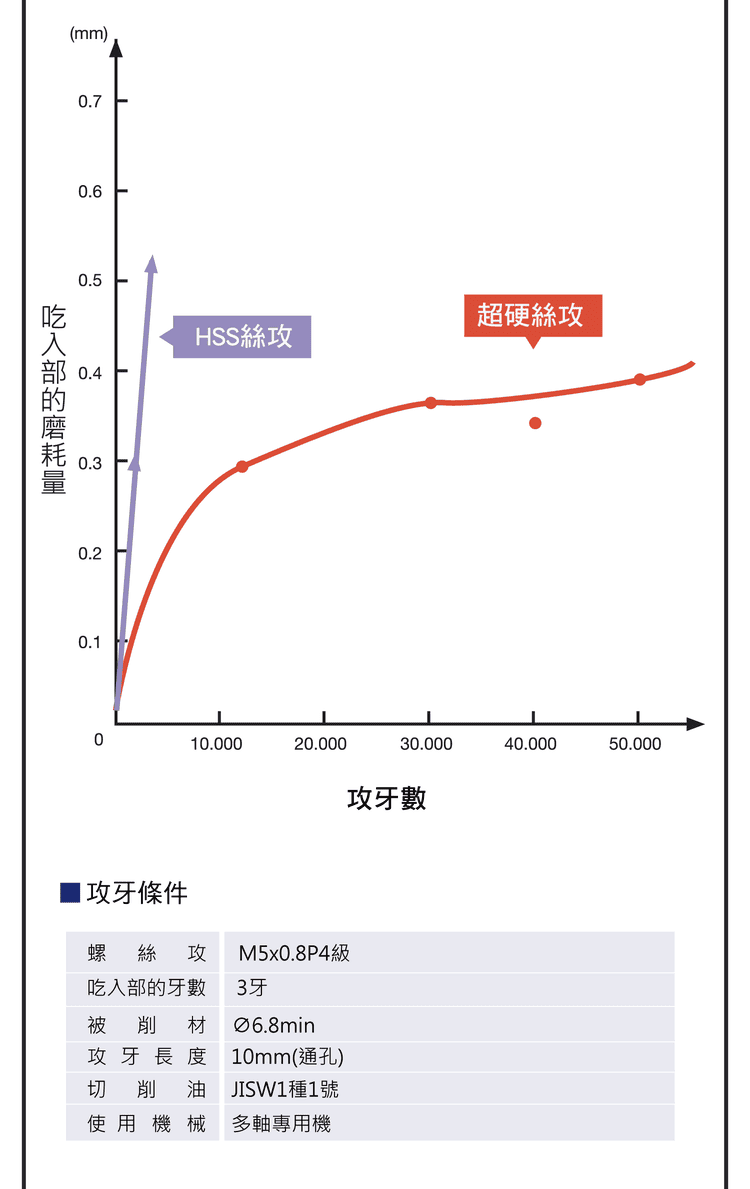
Wear trend: carbide wears faster early then stabilizes, reaching tens of thousands of holes; HSS wear climbs steeply with a clearly shorter life. Choose carbide for long production, HSS for small batches.
2. Usage Points
| Item | Point |
|---|---|
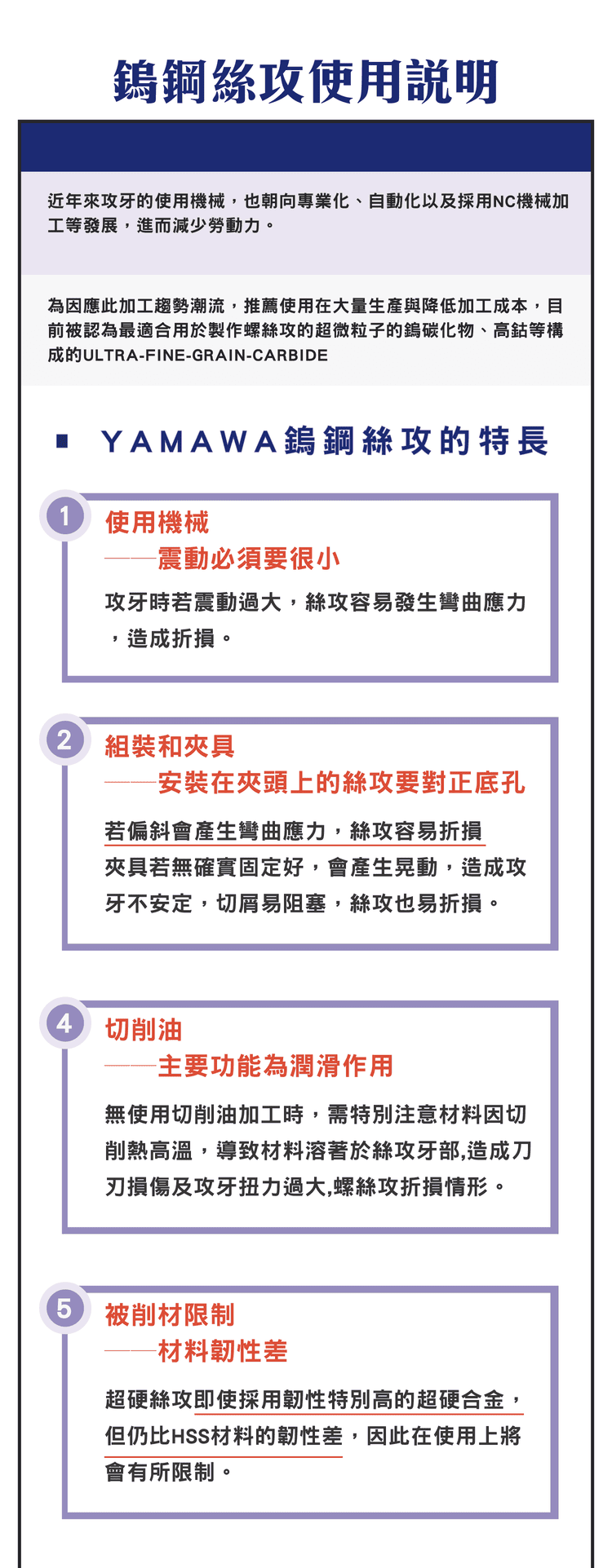
| Machine | Low vibration, high rigidity (CNC, multi-axis); avoid runout and vibration |
| Holding & concentricity | Tap fully concentric with the hole; a firm, gap-free chuck |
| Cutting fluid | Lubrication, cooling, evacuation; without oil, heat/welding rise, torque rises and the tap breaks |
Carbide is low in toughness, so eccentricity breaks it and vibration chips it — concentricity and rigidity are key.
3. Material Suitability
| Suitable | Not advised |
|---|---|
| Cast iron, aluminium alloy and other stable materials | High-toughness materials (e.g. low-carbon steel); unstable setups |
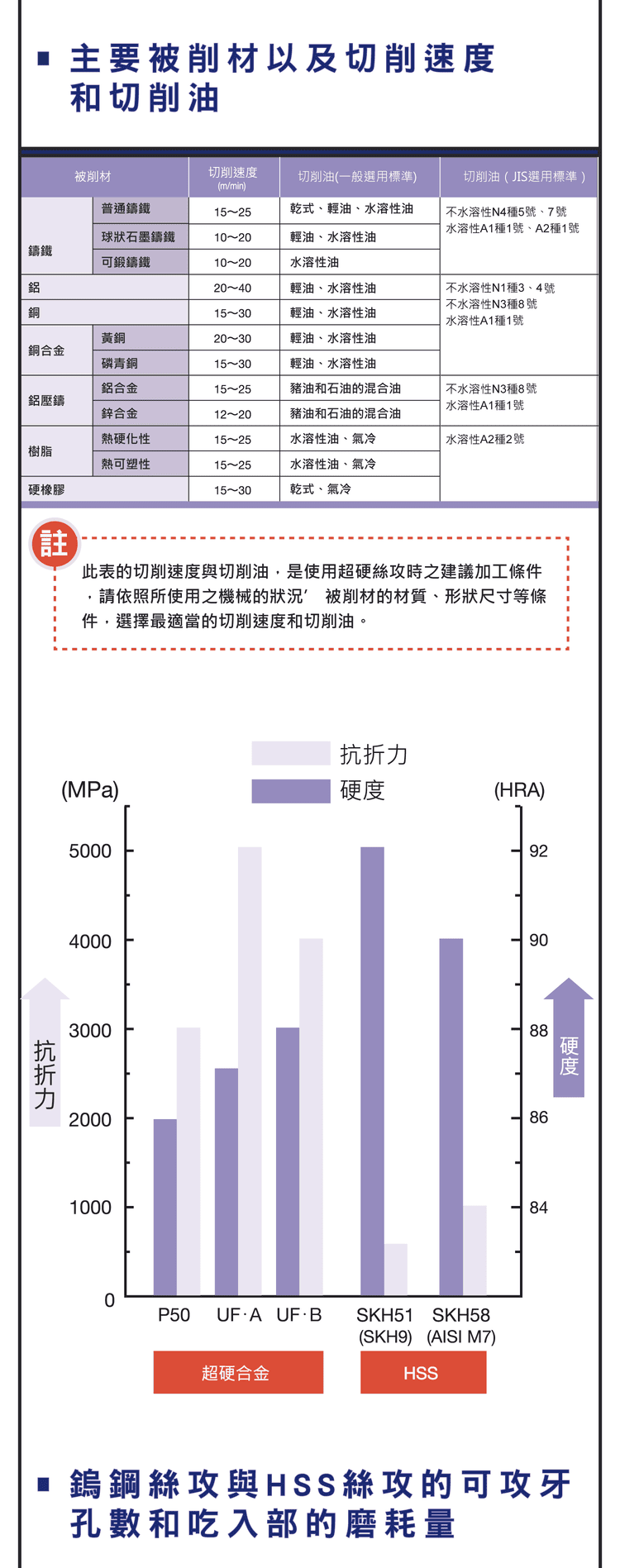
4. Speed and Fluid Advice (Reference)
| Material | Tapping speed (ref.) | Fluid |
|---|---|---|
| Cast iron | about 15–25 m/min | Dry or light oil |
| Aluminium | about 20–40 m/min | Light oil or water-soluble |
| Copper | about 15–30 m/min | Water-soluble oil |
| Aluminium alloy | about 15–25 m/min | Blended oil |
※ Tapping speeds are reference values — adjust to the tool maker's catalog, material and machine; do not apply directly.
For fluid and torque see the Tap Torque Guide; for flute/angle see the Tap Flute Design Guide and Tap Cutting Geometry Guide; for the tool overview see the Thread Tool Chart.
FAQ
Q: Is a carbide tap always better than HSS?
Not always. Carbide is hard, wear-resistant and long-lived, good for long production and stable materials; but it's low in toughness, vibration-sensitive and costly. For small batches, unstable setups or tough materials, HSS is more durable and lower-risk.
Q: Why do carbide taps break easily?
Carbide is low in toughness and brittle, sensitive to eccentricity and vibration. Off-center holding breaks it; vibration chips it. Use a rigid, low-vibration machine, precise concentricity, a firm chuck and ample cutting fluid.
Q: Can I use a carbide tap on low-carbon steel?
Not advised. Low-carbon steel is tough and sticky, and brittle carbide chips or breaks. Use HSS or a suitable coated tap for tough materials; carbide suits stable materials like cast iron and aluminium alloy.
Q: Can carbide taps run dry?
Some materials (e.g. cast iron) allow dry or light oil, but most cases still need fluid for lubrication, cooling and evacuation. Without oil, heat and welding rise and torque climbs to breakage, so choose the fluid by material.
For the full reading guides on this topic, see Thread Machining: A Complete Reading Guide, Tool Life and Wear: A Complete Reading Guide and Vibration and Chatter: A Complete Reading Guide.
Published: 2026-03-24 | Last updated: 2026-07-25









