Tap Torque Guide: Torque Analysis & Machining Parameters
Tapping torque (T) is key to machining stability and tool life, especially for form taps. It changes with material strength, thread size, pitch and effective length. An estimation formula quickly assesses the load, and strategy is adjusted by tap type (straight, spiral, spiral-point, forming). This guide combines the torque formula, curve behaviour and key factors to set conditions precisely.
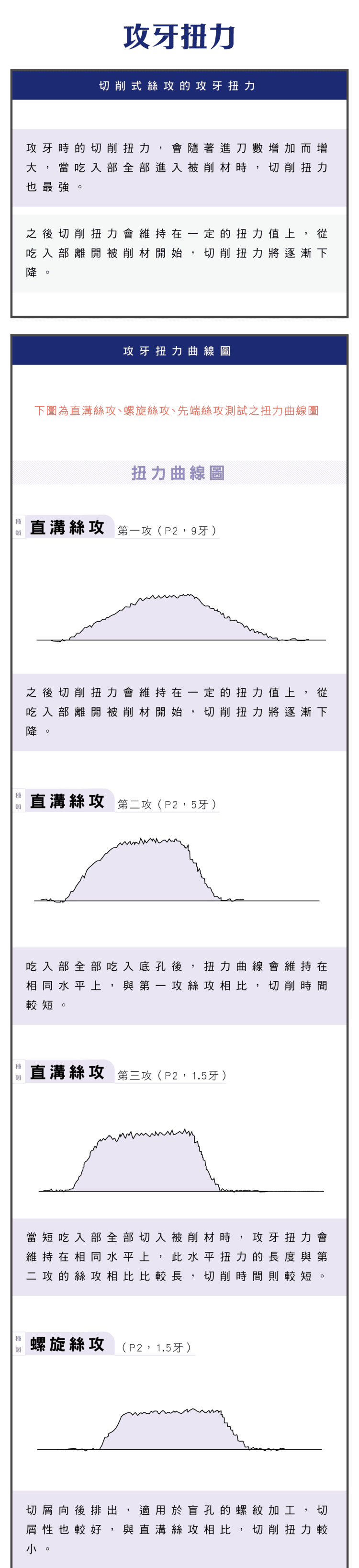
1. Tapping Torque Estimation
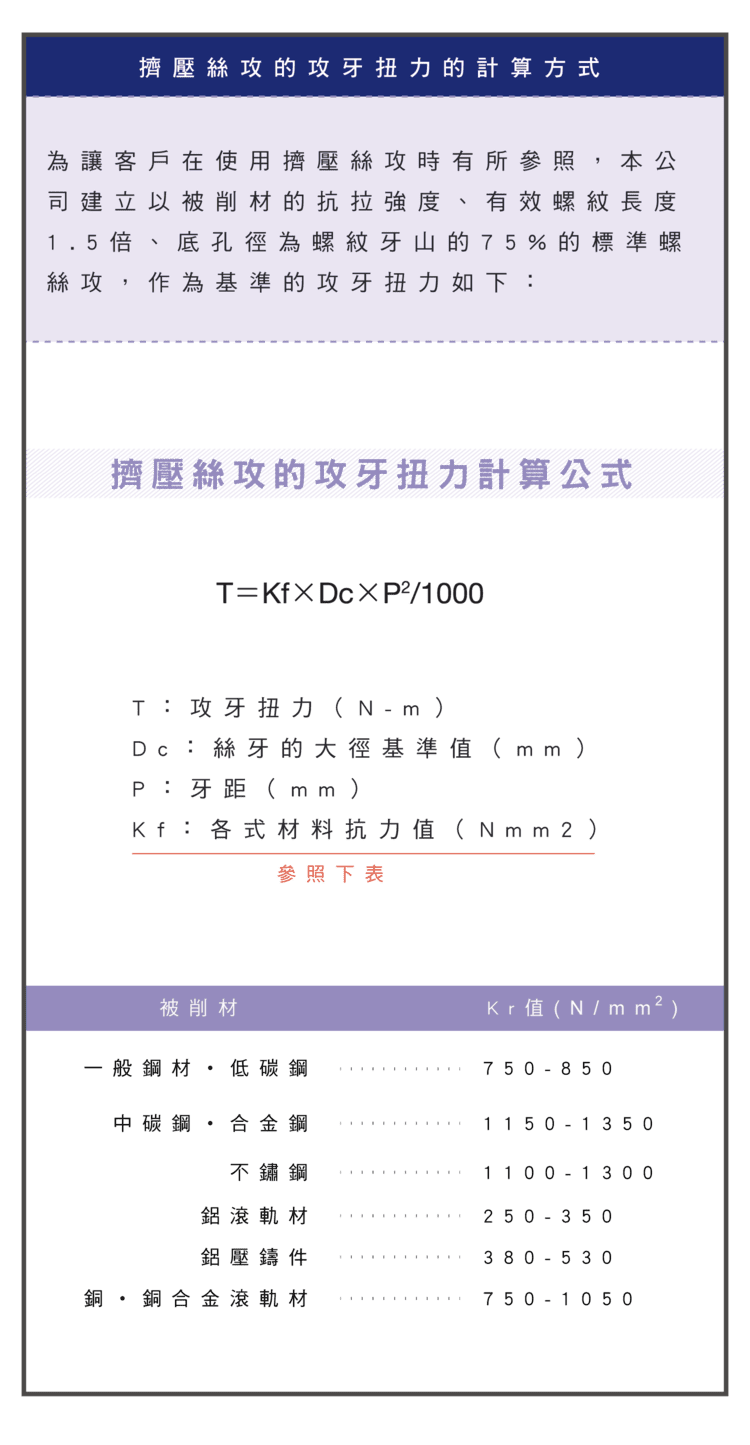
T ≒ coefficient × Dc × P² × Kf (torque rises with diameter, pitch and material resistance)
| Symbol | Meaning |
|---|---|
| T | Tapping torque (N·m) |
| Dc | Thread outer diameter (mm) |
| P | Pitch (mm) |
| Kf | Material resistance coefficient (N/mm²) |
※ This is an estimate for initial setup, load assessment and CNC optimization; use measurement or maker data for actual torque.
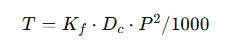
2. Torque Behaviour
| Stage | Torque |
|---|---|
| Entry | Rises as engaged threads increase |
| Full cut | Peaks and holds steady |
| Exit | Falls gradually |
The curve helps judge tool wear and detect abnormalities (a sudden rise often means wear, clogging or a too-small hole).
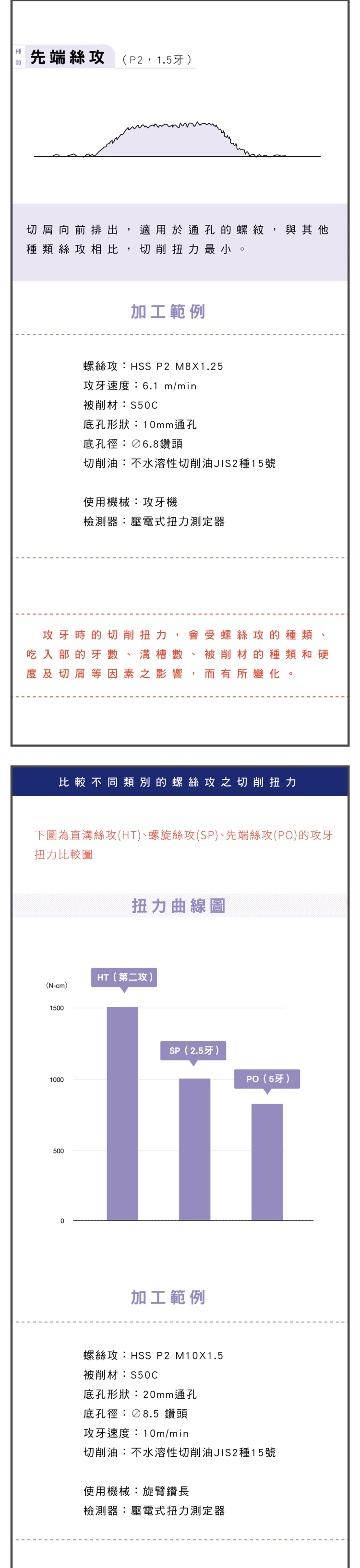
3. Torque by Tap Type
| Tap type | Relative torque (straight = 100) |
|---|---|
| Straight-flute | about 100 |
| Spiral-flute | about 70–75 |
| Spiral-point | about 60–65 |
| Form tap | about 200–300 (2–3× cutting) |
Differences come from chip direction, engaged threads and cutting method; the spiral-point is lowest and the form tap highest.
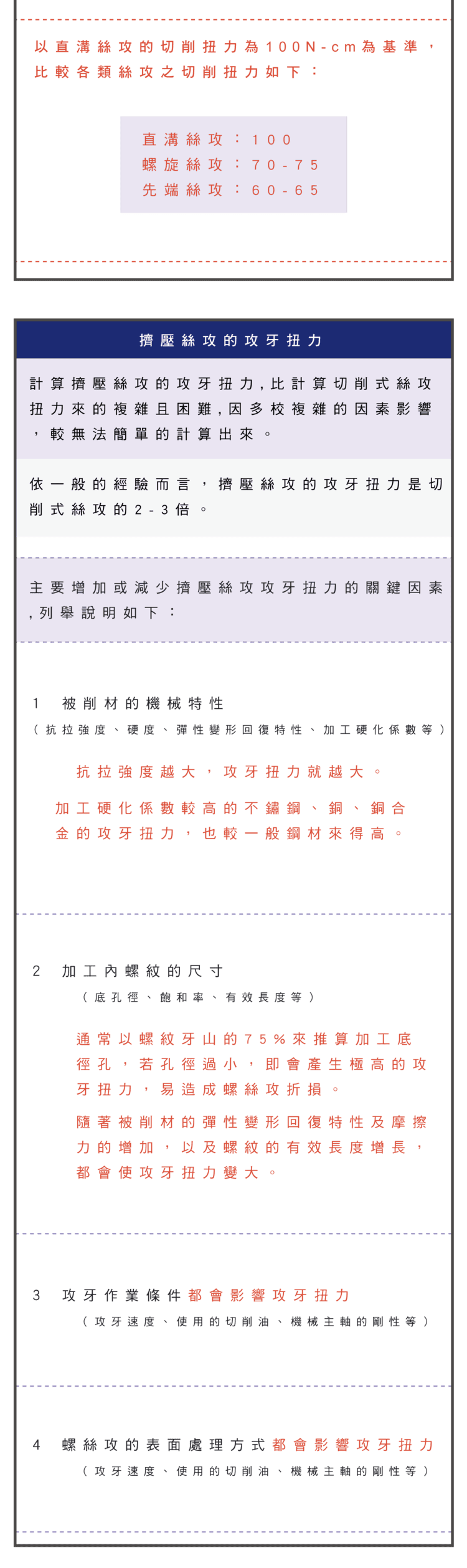
4. Key Factors
| Factor | Effect |
|---|---|
| Material | Higher tensile strength / work-hardening → more torque |
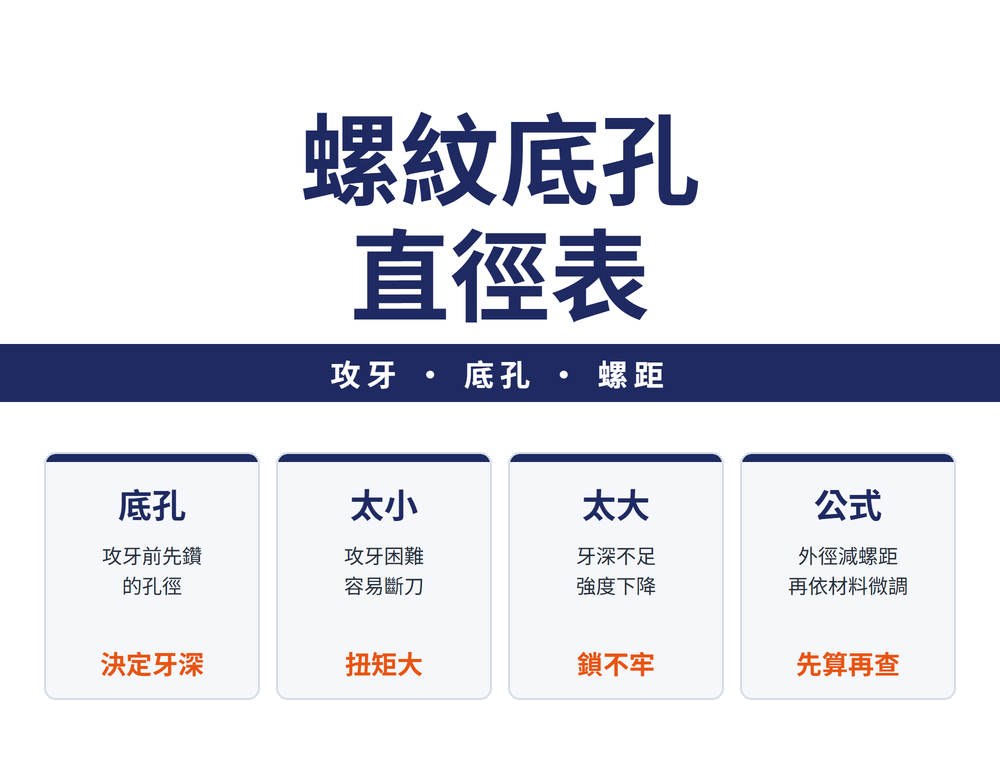
| Hole size | Too small → torque spikes; to cut torque you can deliberately open the hole to about 75% engagement (below the 89–92% of the maker's qualified examples, trading some holding strength for lower torque and less breakage risk) |
| Conditions | Poor lubrication or too-high speed → more friction and torque |
| Tool state | Tool wear → rising torque, a breakage precursor |
5. Lowering Torque and Preventing Breakage
Pick the right tap (spiral-point for through, spiral-flute for blind), enlarge the hole to about 75% engagement (below the 89–92% of the maker's qualified examples, trading some holding strength for lower torque), improve lubrication and evacuation, avoid too-high speed, and change the tool early when torque rises abnormally. Form taps need ductile material, strong lubrication and a rigid machine.
For speed see the Tap Cutting Speed Guide; for spiral-point torque see the Spiral-Point Tap Torque Analysis; for pilot holes see the Metric Tap Drill Chart; for holders see the Tapping Setup Guide.
FAQ
Q: Which variables affect torque most?
Mainly material resistance (Kf), thread diameter (Dc) and pitch (P), plus hole size and engagement. Harder material, larger size and a smaller hole all raise torque.
Q: Why is form-tap torque so high?
Forming pushes material into the thread by plastic flow, giving high resistance — torque about 2–3× cutting, sensitive to lubrication and ductility, needing a rigid machine and ample lubrication.
Q: What does a sudden torque rise mean?
Usually tool wear, chip clogging or a too-small hole — a breakage precursor. Stop and check the tap and evacuation, confirm hole size and lubrication, and change or enlarge as needed.
Q: How to effectively lower tapping torque?
Use a low-torque tap (spiral-point), enlarge the hole to about 75% engagement (below the 89–92% of the maker's qualified examples, purely to cut torque), add cutting fluid, avoid too-high speed and keep the tool sharp. Spiral-point for through and spiral-flute for blind noticeably cut peak torque.
Last updated: 2026-07-24
For the full reading guides on this topic, see Thread Machining: A Complete Reading Guide, Tool Life and Wear: A Complete Reading Guide and Machining Calculation Reading Guide.