Tap Flute Design Guide: Straight, Spiral & Point Flutes
A tap's flute design is central to tapping quality and efficiency, providing chip evacuation, oil delivery, the cutting angle and control of the engaged threads. Different flute forms (straight, spiral, spiral-point) directly affect chip direction and stability, while form taps shape threads by plastic deformation, with oil-groove and no-groove designs. This guide explains each flute type's structure and application to improve efficiency and tool life.
1. Four Core Functions of the Flute
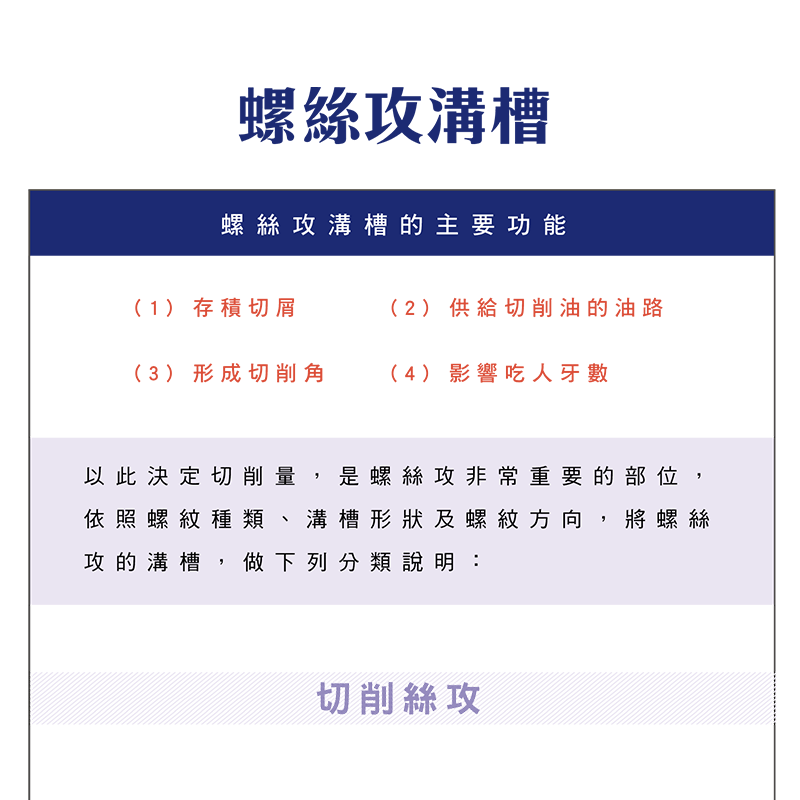
| Function | Description |
|---|---|
| Chip storage | Holds and clears chips, avoiding hole clogging |
| Oil channel | Delivers cutting fluid for lubrication and cooling |
| Forms cutting angle | Builds the cutting geometry (rake, etc.), affecting force |
| Engaged threads | Distributes cutting load, affecting stability |
2. Cutting-Tap Flute Types
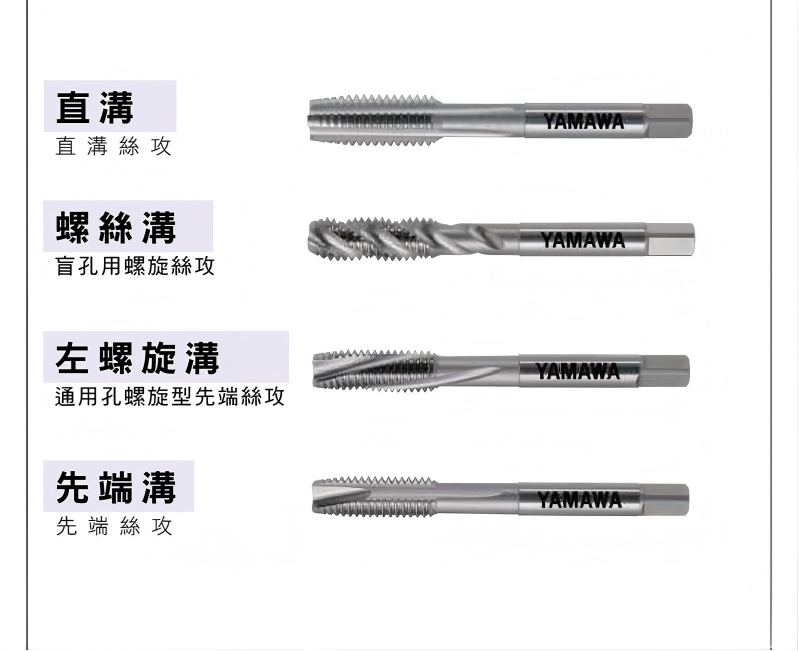
| Flute type | Chip behaviour | Use |
|---|---|---|
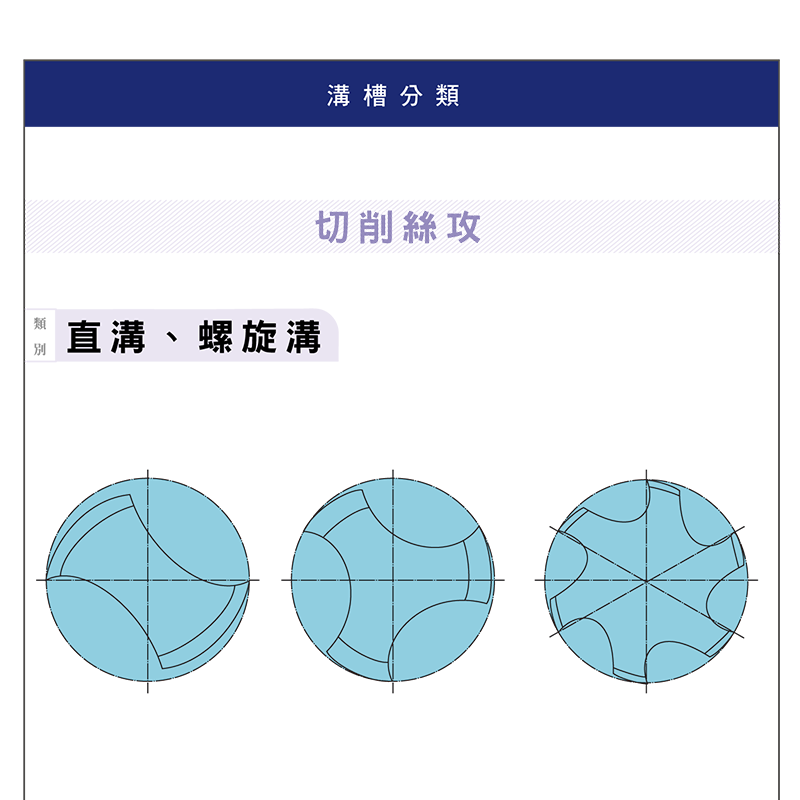
| Straight | Straight flute; works in every hole type and is the most robust design | All hole types, short-chipping materials such as cast iron, harsh conditions; hand or machine tapping |
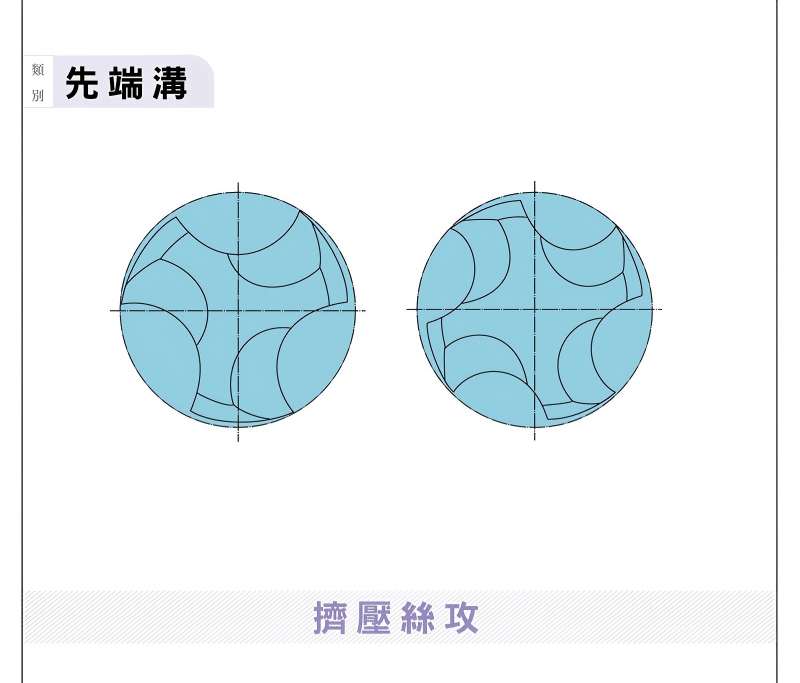
| Spiral flute | Chips lift upward, good evacuation | Blind, deep holes, CNC high-speed |
| Spiral point | Chips pushed forward, less clogging | Through holes, high-efficiency, automation |
| Left-hand spiral flute | Left-hand helix pushes chips forward (toward the bottom of the hole), the same direction as a spiral-point tap | Through holes; not for blind holes (chips would be packed into the bottom) |
3. Form-Tap Flutes (Oil-Groove / No-Groove)
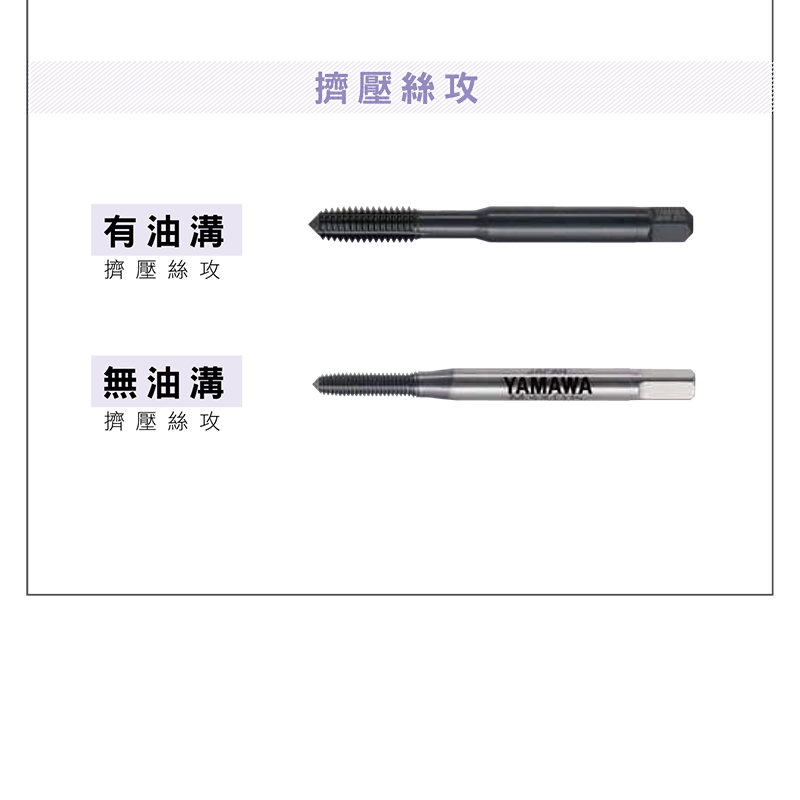
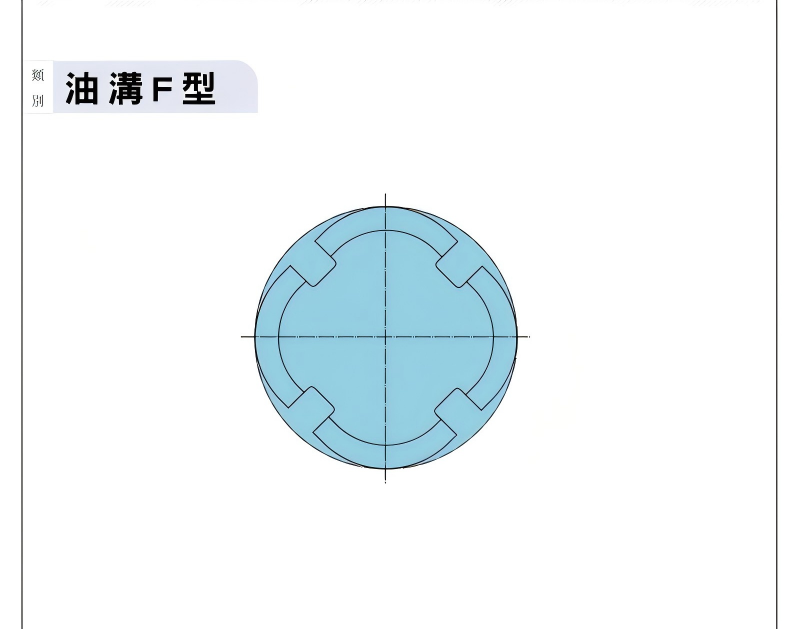
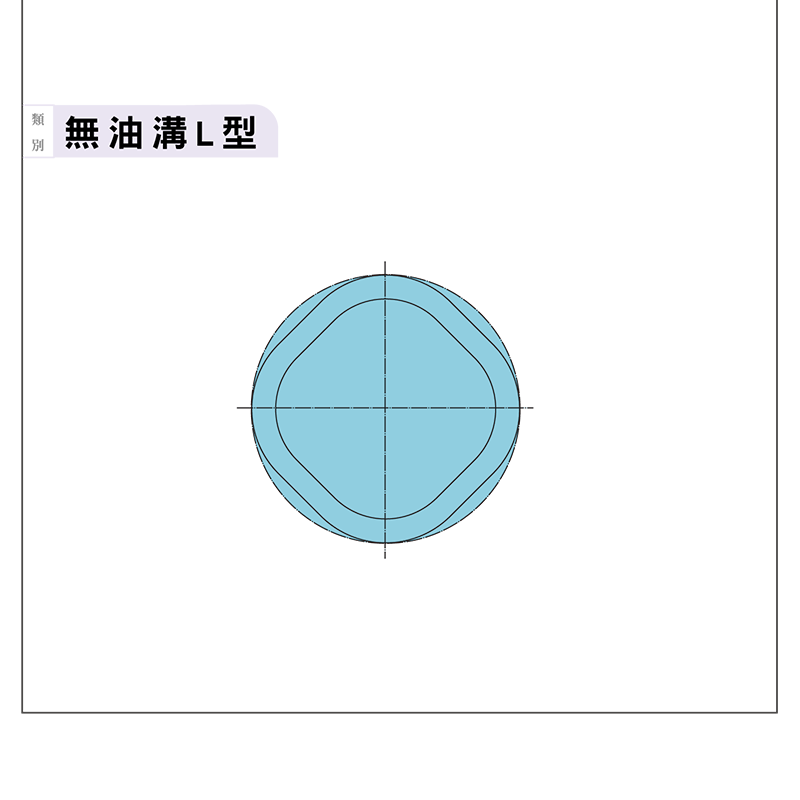
Form taps differ from cutting types, shaping threads by plastic deformation — no chips, high thread strength and good surface. By oil groove they split into:
| Type | Trait |
|---|---|
| With oil groove | Oil grooves aid lubrication/cooling; larger diameters or sticky materials |
| No groove | More rigid; small diameters or when lubrication is ample |
4. Selection Points
The core is hole type and chip direction: through holes use spiral-point (chips forward), blind/deep use spiral-flute (chips up), short or hand tapping use straight; ductile materials needing high-strength threads use forming. The right flute lowers resistance and improves evacuation and tool life.
For spiral-point see the Spiral-Point Tap Guide; for angles see the Tap Cutting Geometry Guide; for forming see the Form Tap Guide; for the tool overview see the Thread Tool Chart.
FAQ
Q: Straight vs spiral vs spiral-point flute?
Straight has no fixed chip direction, good for short holes/hand tapping; spiral lifts chips up for blind/deep holes; spiral-point pushes chips forward for through holes. The core difference is chip direction and suitable hole type.
Q: Is a deeper or wider flute better?
A larger flute gives more chip space but a smaller core and lower rigidity (more breakage); smaller is more rigid but holds fewer chips. Balance evacuation and rigidity by material and hole depth.
Q: Oil-groove or no-groove form tap?
Oil-groove aids lubrication/cooling for larger diameters or sticky materials with high lubrication needs; no-groove is more rigid for small diameters or ample lubrication. Choose by diameter, material and lubrication.
Q: Does flute design relate to engaged threads?
Yes. The flute and chamfer distribute the cut per edge; more engaged threads spread the load with steadier torque but a longer cut. Flute and chamfer must match to balance evacuation and stability.
For the full reading guides on this topic, see Thread Machining: A Complete Reading Guide and Chip Control: A Complete Reading Guide.
Published: 2026-03-23 | Last updated: 2026-10-31