
Center Drill Cutting Parameters: Speed, Feed by Material
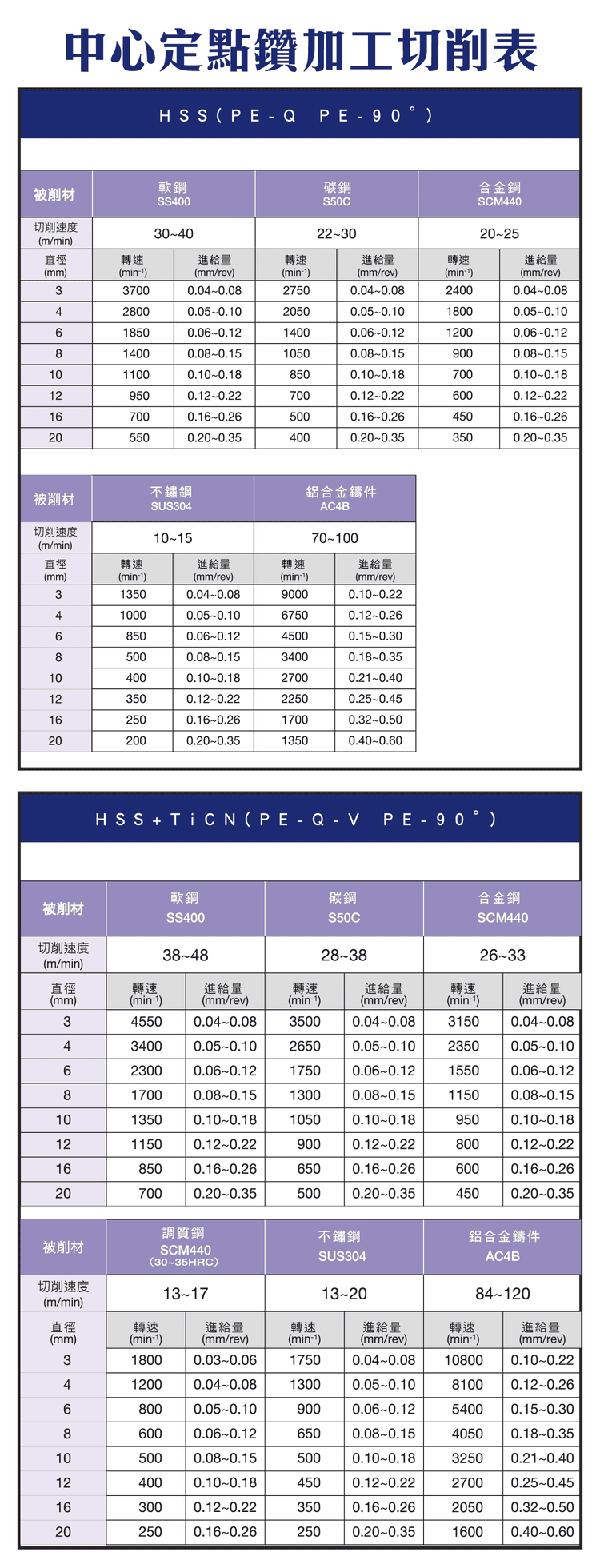
Cutting conditions for center drills and spotting drills cover cutting speed (Vc), rpm and feed across tool grades (HSS, TiCN, TiAlN, carbide) and workpiece materials (carbon steel, stainless, aluminum, etc.). Standardized parameters raise efficiency, lower wear and improve hole-position accuracy. This guide gathers reference conditions and adjustment rules for CNC machining and precision locating. The figures below are indicative — set actual values from the tool catalog and calculation.
1. Three Key Parameters
Center-drill machining controls cutting speed (Vc), spindle speed (RPM) and feed, which directly affect tool life, quality and hole-position accuracy. For rpm conversion and factors, see the Drilling Parameters Guide.
2. Cutting Speed (Vc) Reference (m/min)
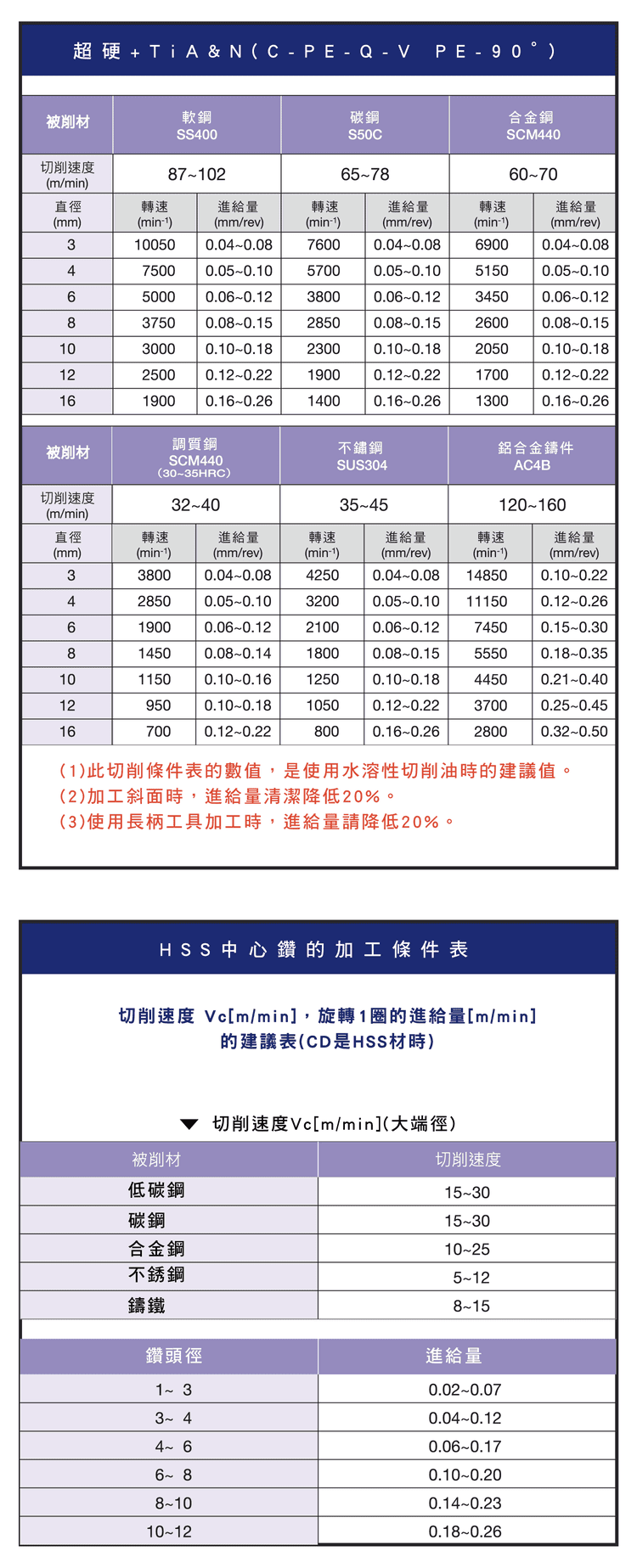
| Material | Carbide center drill | NC spotting drill | HSS center drill |
|---|---|---|---|
| Low-carbon steel | 30–50 | 25–40 | 15–30 |
| Carbon steel | 30–50 | 25–32 | — |
| Alloy steel | 20–40 | 15–25 | 10–25 |
| Stainless steel | 15–25 | 7–12 | 5–12 |
| Cast iron | 30–50 | — | 8–15 |
| Aluminum alloy | — | 60–90 | — |
※ Indicative values (manufacturer reference ranges), not guaranteed; set actual values from the catalog and calculation.
3. Feed Reference (by Diameter, mm/rev)
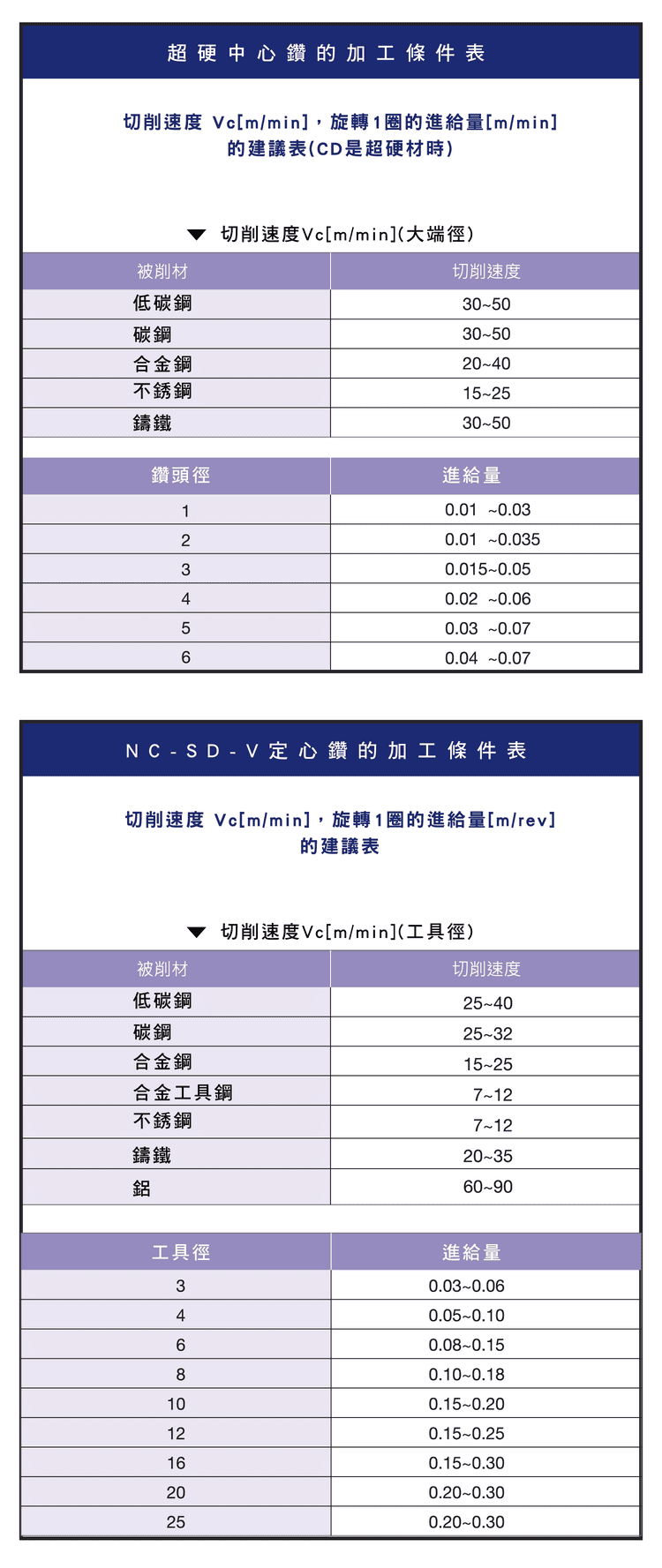
| Tool | Feed reference |
|---|---|
| Carbide center drill | ⌀1: 0.01–0.03, ⌀3: 0.015–0.05, ⌀6: 0.04–0.07 |
| NC spotting drill | ⌀3: 0.03–0.06, ⌀10: 0.15–0.20, ⌀25: 0.20–0.30 |
| HSS center drill | ⌀1–3: 0.02–0.07, ⌀6–8: 0.10–0.20, ⌀10–12: 0.18–0.26 |
4. Hole-Face Chamfer Conditions (Reference)
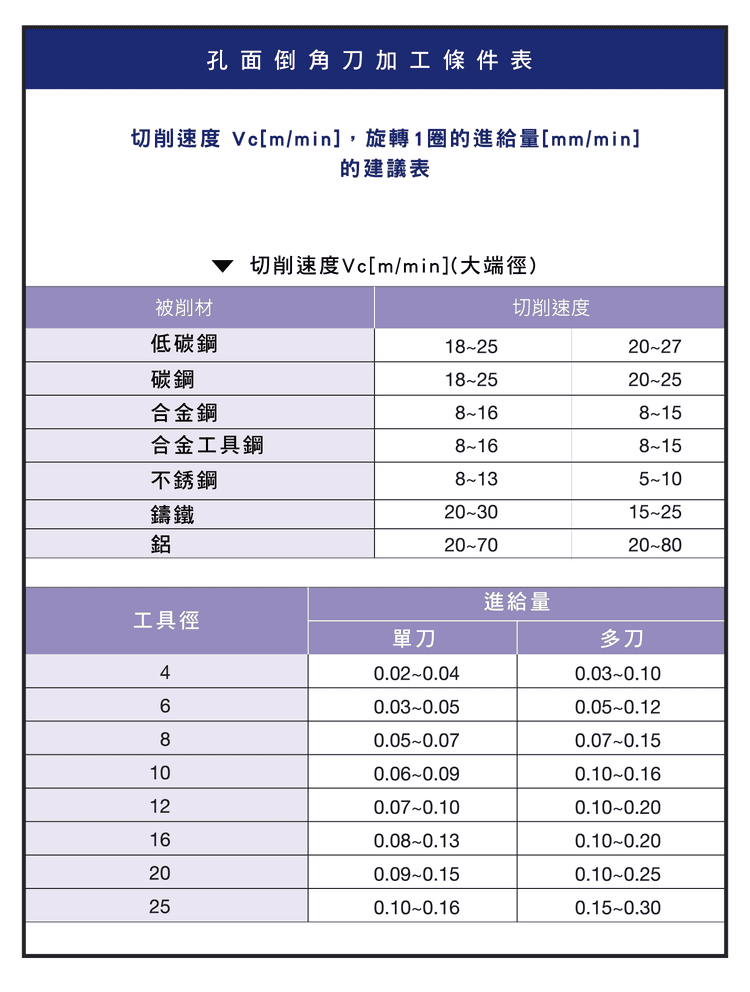
| Material | Vc (m/min) |
|---|---|
| Low-carbon steel | 18–25 |
| Alloy steel | 8–16 |
| Stainless steel | 8–13 |
| Aluminum | 20–70 |
※ Chamfer feed: single-edge ⌀4: 0.02–0.04, ⌀10: 0.06–0.09; multi-edge ⌀4: 0.03–0.10, ⌀10: 0.10–0.16 (reference).
5. Coated Tools (TiCN / TiAlN)
Compared with HSS, coated tools raise cutting speed and wear resistance and extend life. For example, SS400 Vc can reach about 38–48 m/min and aluminum alloy about 84–160 m/min (manufacturer example).
6. Adjustment Tips
| Situation | Recommendation |
|---|---|
| Baseline cooling | Use water-soluble coolant as baseline |
| Inclined face | Lower feed by ~20% |
| Long-shank tool | Lower feed by ~20% |
7. Selection
| Scenario | Recommendation |
|---|---|
| High efficiency | Carbide or coated tools |
| General work | HSS center drill |
| Aluminum alloy | Raise cutting speed |
| Stainless steel | Lower speed, raise lubrication |
For center-hole types (A / B / R), see the Center Drill Guide.
FAQ
Q: How do I pick center-drill cutting speed?
By tool grade and material (indicative): carbide center drills run about 30–50 m/min on carbon steel and 15–25 on stainless; HSS is clearly lower. Set actual values from the catalog and calculation, not the indicative figures.
Q: What decides the feed?
Mainly diameter and tool grade — larger diameter, higher feed. For inclined faces or long-shank tools, drop about 20% to keep stability and locating accuracy.
Q: Are coated center drills worth it?
Yes. TiCN/TiAlN coatings raise speed and wear resistance and extend life, especially for high-efficiency or difficult materials; HSS is fine for general work.
Q: What to watch when centering stainless?
Stainless is gummy and work-hardens, so lower cutting speed and raise lubrication and cooling to avoid built-up edge and work-hardening that wears the tip.
This article is part of Drill Bits: The Complete Guide - Start From Depth-to-Diameter, Then Pick the Drill and Set the Conditions; that guide shows how the whole topic fits together.
Published: 2026-03-23 | Last updated: 2026-10-31









