
Cutting Tap vs Forming Tap (Roll Tap): Principles & Selection
The key difference between cutting and forming taps is the method: a cutting tap severs the grain and makes chips, while a forming tap shapes the thread by plastic deformation with no chips. This gives clear differences in quality, strength, evacuation needs and suitable materials. Choosing the right tap type raises thread strength, stability and productivity — a key point in CNC tapping.
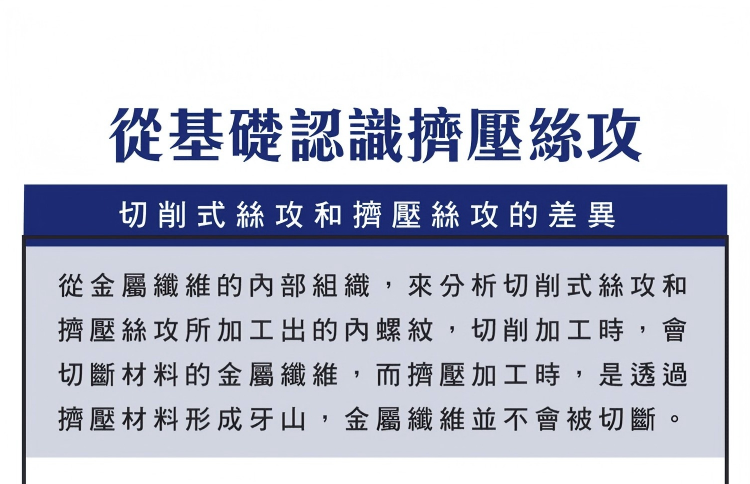
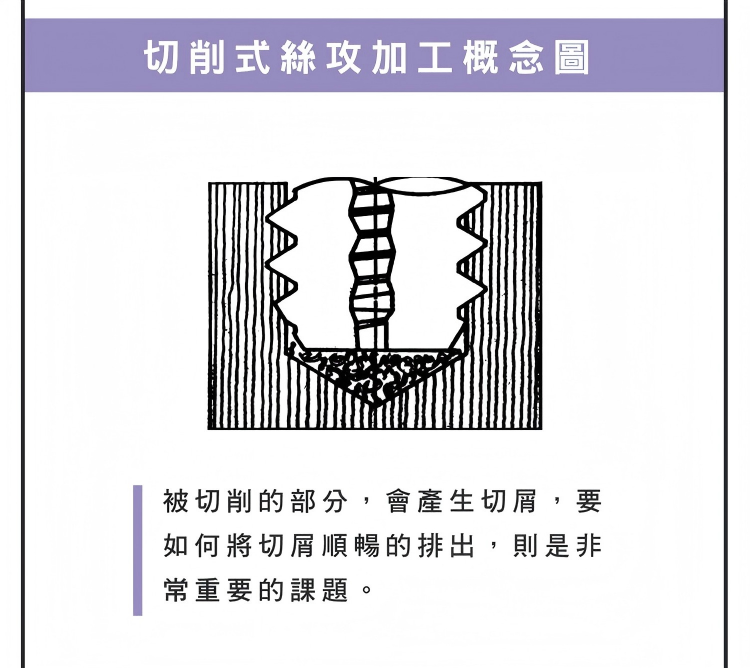
1. Cutting-Tap Principle
A cutting tap cuts material with its edges, severing the grain to form the thread profile. It makes chips, so evacuation must be smooth to avoid pile-up; poor evacuation causes chip jams, torn threads or breakage, and surface quality depends on the cut. It suits most materials, in through or blind holes.
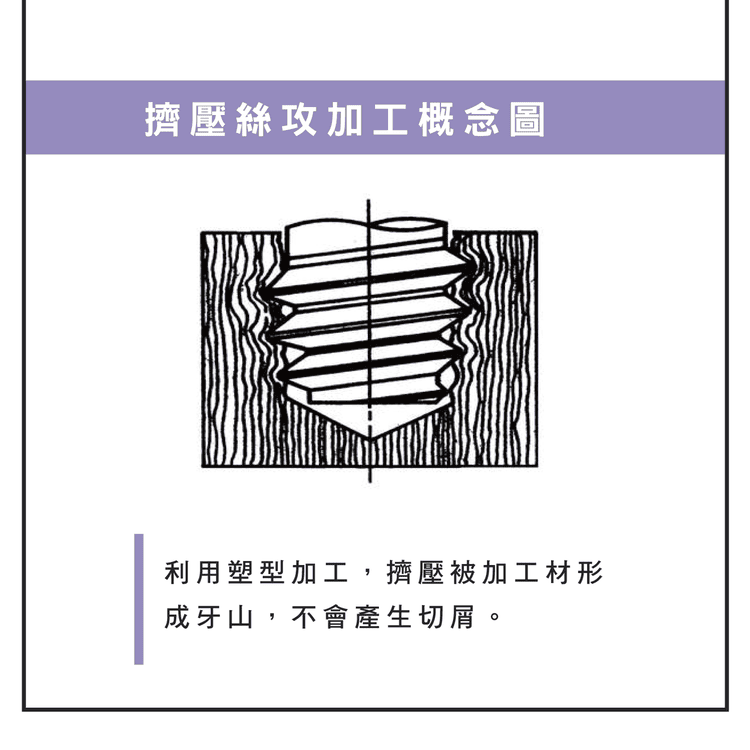
2. Forming-Tap Principle
A forming tap shapes the thread by plastic deformation without severing the grain, giving a more continuous metal structure. No cutting, no chips and no evacuation space needed; threads are stronger with a smooth surface, resist tearing and the tool lasts longer. A form tap is also called a roll tap or thread forming tap in North America.
3. Cutting vs Forming Comparison
| Item | Cutting tap | Forming tap |
|---|---|---|
| Method | Cuts material | Plastic deformation |
| Chips | Yes | No |
| Thread strength | Standard | Higher |
| Evacuation | Required | Not needed |
| Torque | Lower | Higher (about 2–3×) |
| Tool life | Limited by edge wear | Longer |
4. Material Suitability
| Tap type | Materials |
|---|---|
| Cutting tap | Most materials incl. hard; brittle materials (cast iron) too |
| Forming tap | Ductile (aluminium, copper, stainless, low-carbon steel); not brittle (cast iron) |
5. Selection Advice
| Situation | Suggestion |
|---|---|
| Harder material, general work | Use a cutting tap |
| High-strength thread, no-evacuation setting, high-speed production | Use a forming tap (material must be ductile) |
For forming detail see the Form Tap Guide; for spiral-point (through-hole cutting) see the Spiral-Point Tap Guide; for pilot holes see the Metric Tap Drill Chart; for the tool overview see the Thread Tool Chart.
FAQ
Q: What's the biggest difference between cutting and forming?
The method: a cutting tap severs material with edges and makes chips; a forming tap presses the thread by plastic deformation with no chips. So they differ clearly in evacuation needs, thread strength and suitable materials.
Q: Why are formed threads stronger?
Forming keeps the grain continuous (uncut), giving a tighter thread structure — hence higher strength, smoother surface and stable pitch dia. Cutting severs the grain, giving standard strength.
Q: Which for cast iron?
Cast iron is brittle and can't deform plastically, so use a cutting tap. Forming taps only suit ductile materials (aluminium, copper, stainless, low-carbon steel, etc.).
Q: Blind hole needing high strength — which?
If the material is ductile, a forming tap is ideal: no chips to pile at the bottom and high thread strength. If it's hard or brittle, use a cutting tap (a spiral-flute tap for blind holes lifts chips out).
For the full reading guide on this topic, see Thread Machining: A Complete Reading Guide.
Published: 2026-03-24 | Last updated: 2026-10-31









