Spiral Point Tap Guide: Chip Direction & Through Holes
A spiral-point tap (point tap) pushes chips forward and suits through holes. Its angled point has a lead-in cutting action that lowers resistance and raises efficiency. Compared with spiral-flute and straight-flute taps, the spiral-point tap differs clearly in chip direction, stability and suitable hole type — one of the most common, high-efficiency tools in CNC tapping.
1. What a Spiral-Point Tap Is
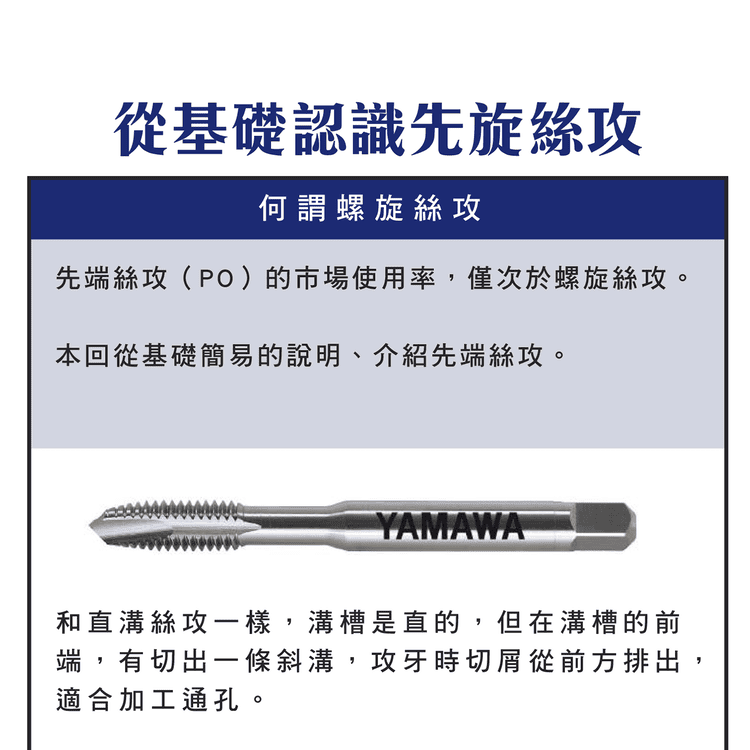
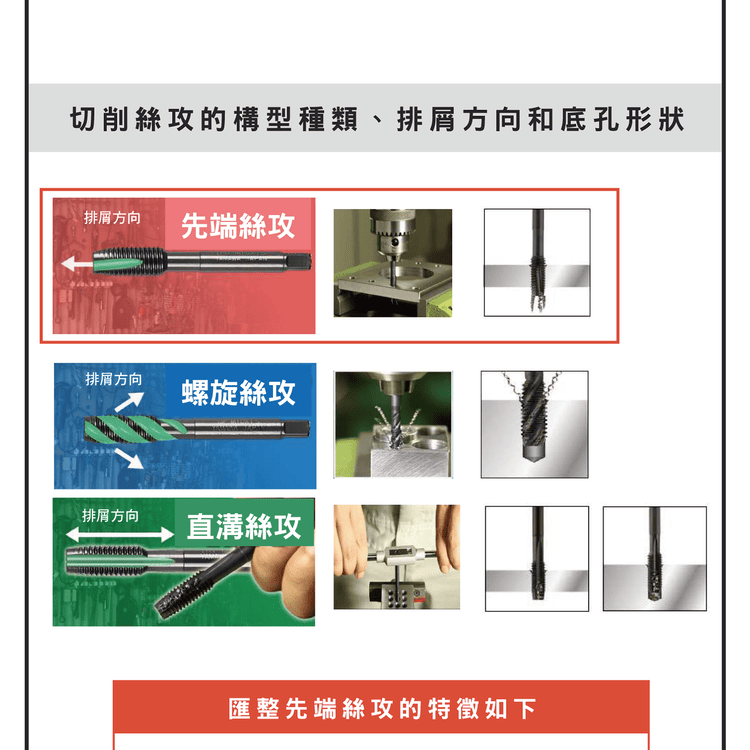
A spiral-point (point) tap is a cutting tap with straight flutes and an angled point; chips are pushed forward in the feed direction. It is mainly used for through-hole tapping and high-efficiency work.
2. Chip Direction and Benefits
Chips exit forward along the feed direction and don't pile up in the hole, lowering clogging risk and improving stability — ideal for continuous, high-speed work.
3. Three Tap Types Compared
| Tap type | Chip direction | Hole type |
|---|---|---|
| Spiral-point | Forward | Through |
| Spiral-flute | Upward | Blind |
| Straight-flute | No fixed direction | General |
4. Characteristics and Limits
| Advantages | Limits |
|---|---|
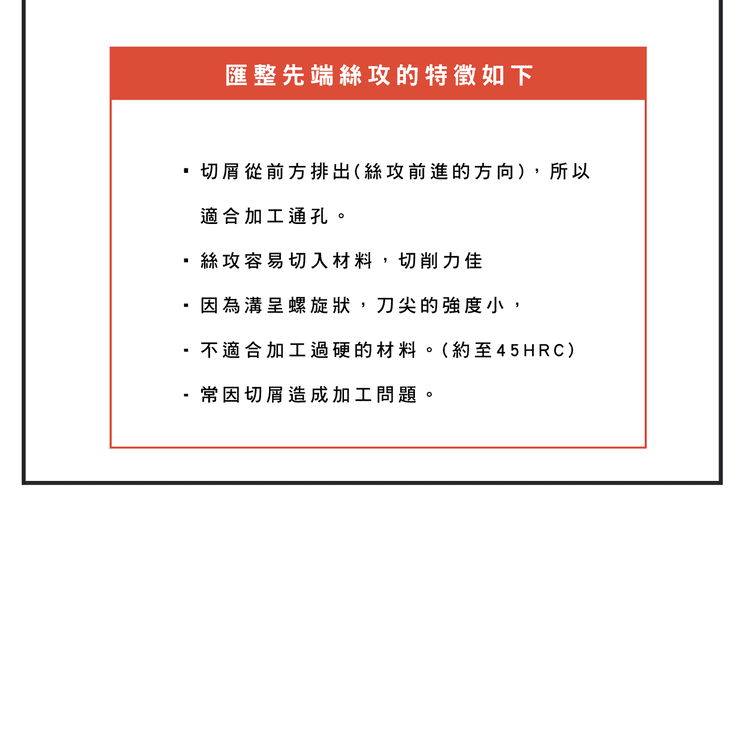
| High transverse strength (shallow straight flute), lowest cutting torque, smooth forward chip flow | Mainly for through holes; in blind holes chips have no exit and pile up, so use a spiral-flute tap instead |
A common issue is chip pile-up causing poor results, so keep chips flowing out smoothly and avoid backflow.
5. Selection Tips
| Condition | Suggestion |
|---|---|
| Through holes | Prefer a spiral-point tap |
| Blind holes | Use a spiral-flute tap |
| Hard materials | Use a special-grade/coated tap |
For torque see the Spiral-Point Tap Torque Analysis; for models see the Spiral-Point Tap Series Guide; for the tool overview see the Thread Tool Chart; for pilot holes see the Metric Tap Drill Chart.
FAQ
Q: Spiral-point vs spiral-flute tap?
A spiral-point tap pushes chips forward and suits through holes; a spiral-flute tap lifts chips upward and suits blind holes. Hole type decides: through → spiral-point, blind → spiral-flute, to avoid chips piling at the hole bottom.
Q: Can a spiral-point tap do blind holes?
Not recommended. It pushes chips forward, but a blind hole has no exit, so chips pile at the bottom and cause jamming or torn threads. Use a spiral-flute tap for blind holes to lift chips out.
Q: Is it suitable for hard materials?
The spiral-point tap has a shallow straight flute and a large core, so its transverse strength is high and it has no specific hardness limit (unlike the spiral-flute tap's ~45HRC). For hard materials, still choose a suitable grade or coated tap and adjust cutting conditions.
Q: Why is it common in mass production?
Because chips exit forward, torque is low and machining is stable — ideal for CNC high-speed and automated through-hole tapping, keeping consistent quality and higher efficiency, so it's one of the most-used taps in production.
Last updated: 2026-07-24
For the full reading guides on this topic, see Thread Machining: A Complete Reading Guide and Chip Control: A Complete Reading Guide.