
Drill Point Geometry Guide: Point Types, Thinning and Selection
A drill's cutting performance and hole quality depend on its geometry and point design. Different point shapes — conical, flat, three-facet, spiral-point and various thinning forms — affect cutting force, chip evacuation and positioning accuracy. Choosing the right shape improves accuracy, extends tool life and lowers defect rates. For the effect of each geometric parameter, see Drill Geometry and Function.
Structure and Cutting Characteristics
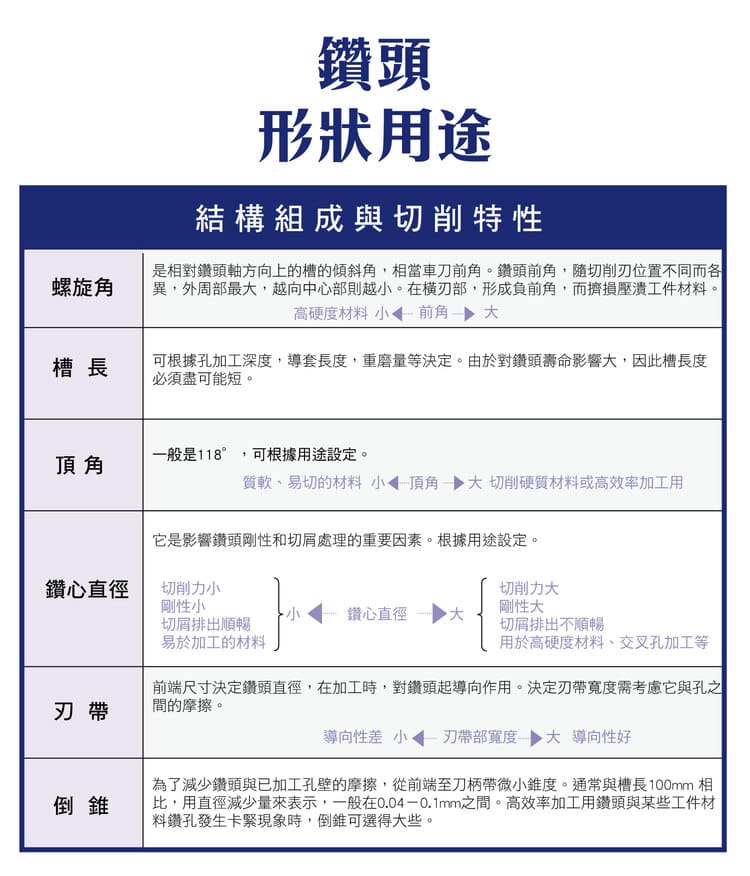
For how to balance helix angle, point angle and web diameter, see Drill Geometry and Function; the table below covers only the three features that article does not.
| Parameter | Effect on cutting |
|---|---|
| Flute length | Set by hole depth, guide-bush length and regrind allowance; longer means lower rigidity and shorter life, so keep it as short as the job allows |
| Margin | Affects guiding and hole accuracy |
| Back taper | Reduces wall friction, improves stability |
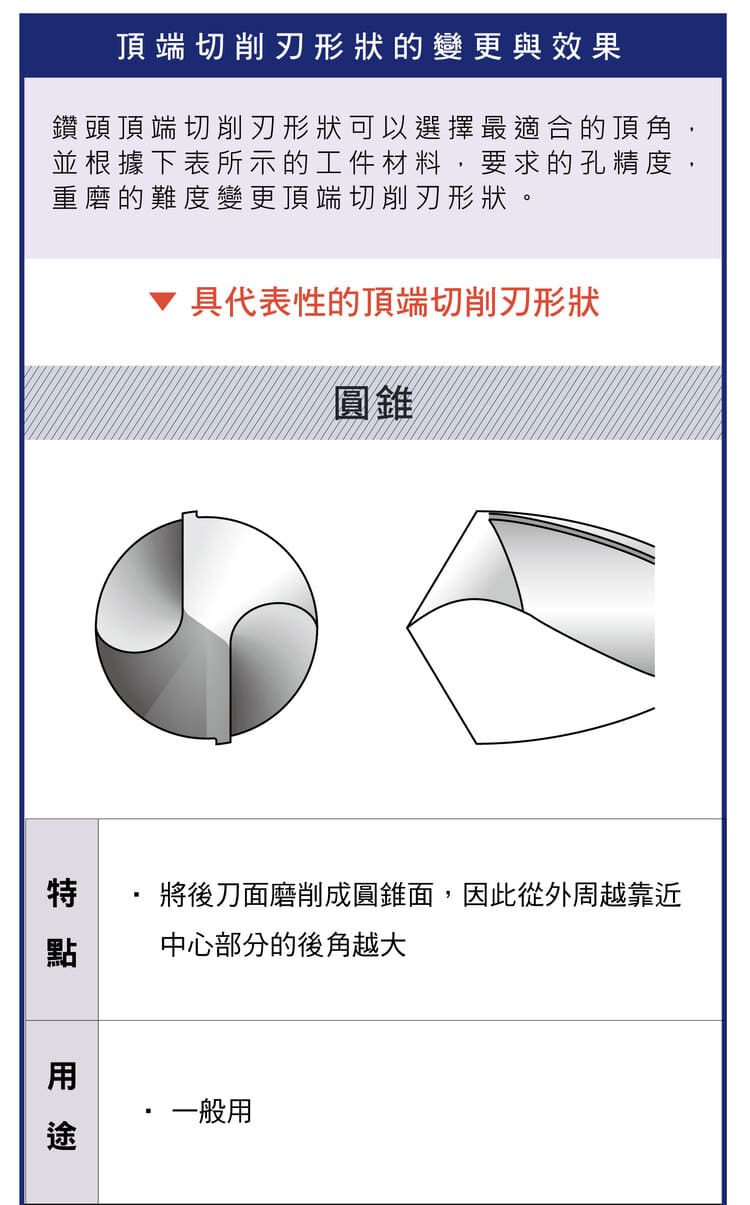
Point Shape Types
| Type | Features | Use |
|---|---|---|
| Flat | No chisel-edge portion; good centering, minimal hole oversize; needs a special grinder | Drilling that demands high hole and positioning accuracy |
| Three-facet | Ground with three flat facets | High-precision drilling |
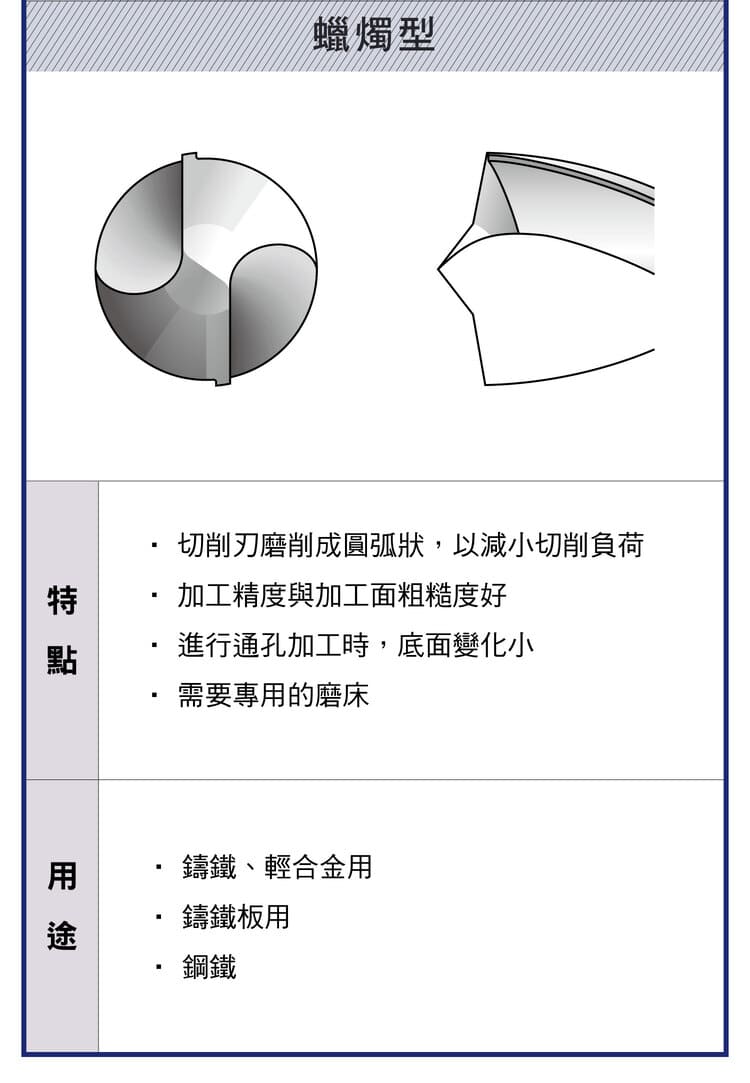
| Spiral point | S-shaped chisel edge, smoother cutting | Cast iron, light alloys |
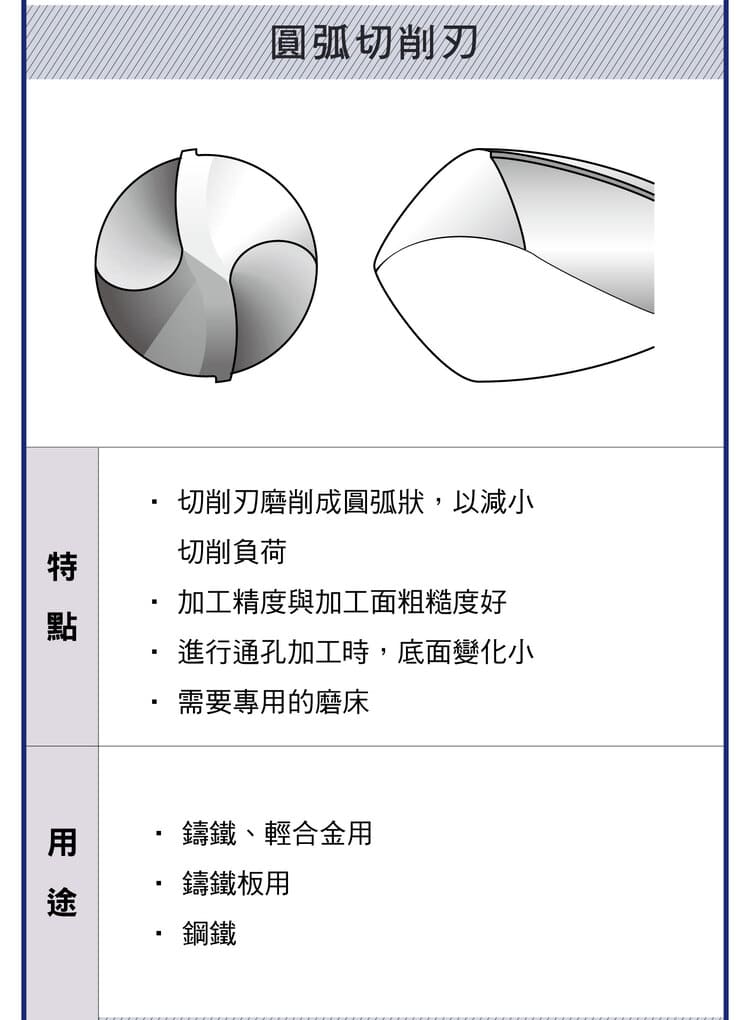
| Radius cutting edge | Lower cutting load, good surface finish | Cast iron, steel |
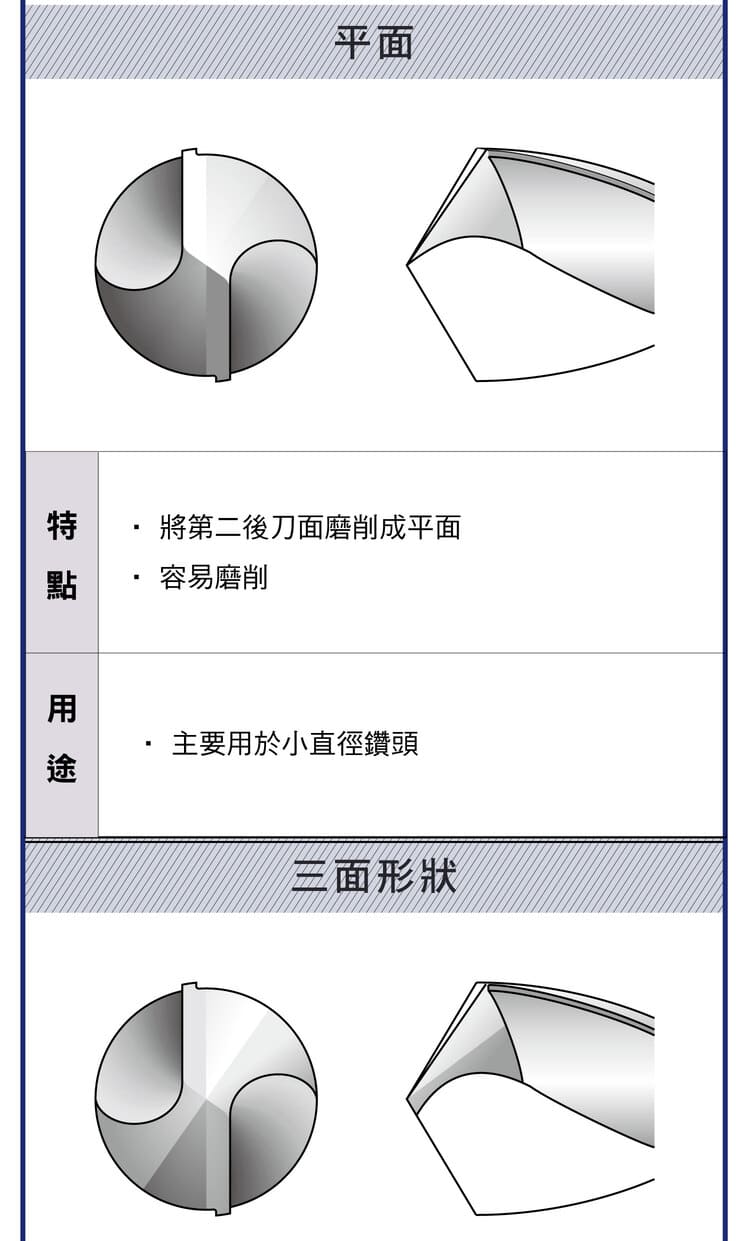
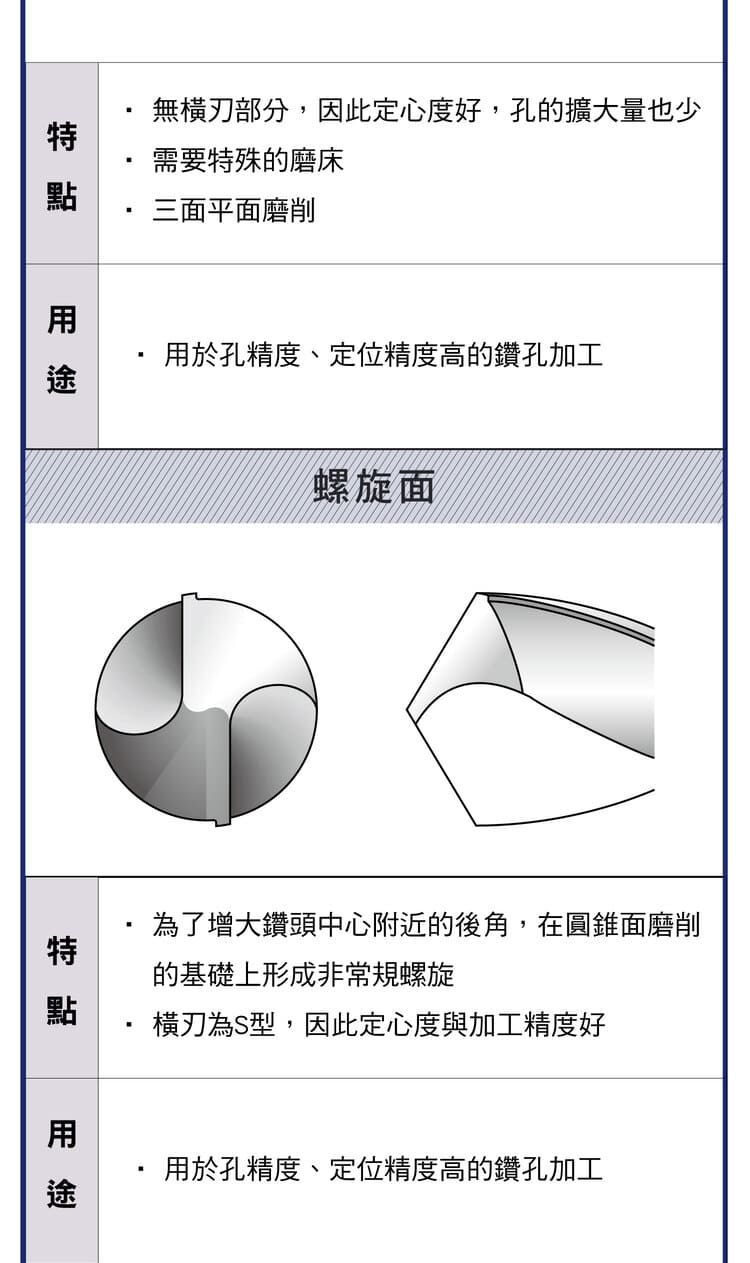
Chisel-Edge Thinning Types
| Type | Features | Use |
|---|---|---|
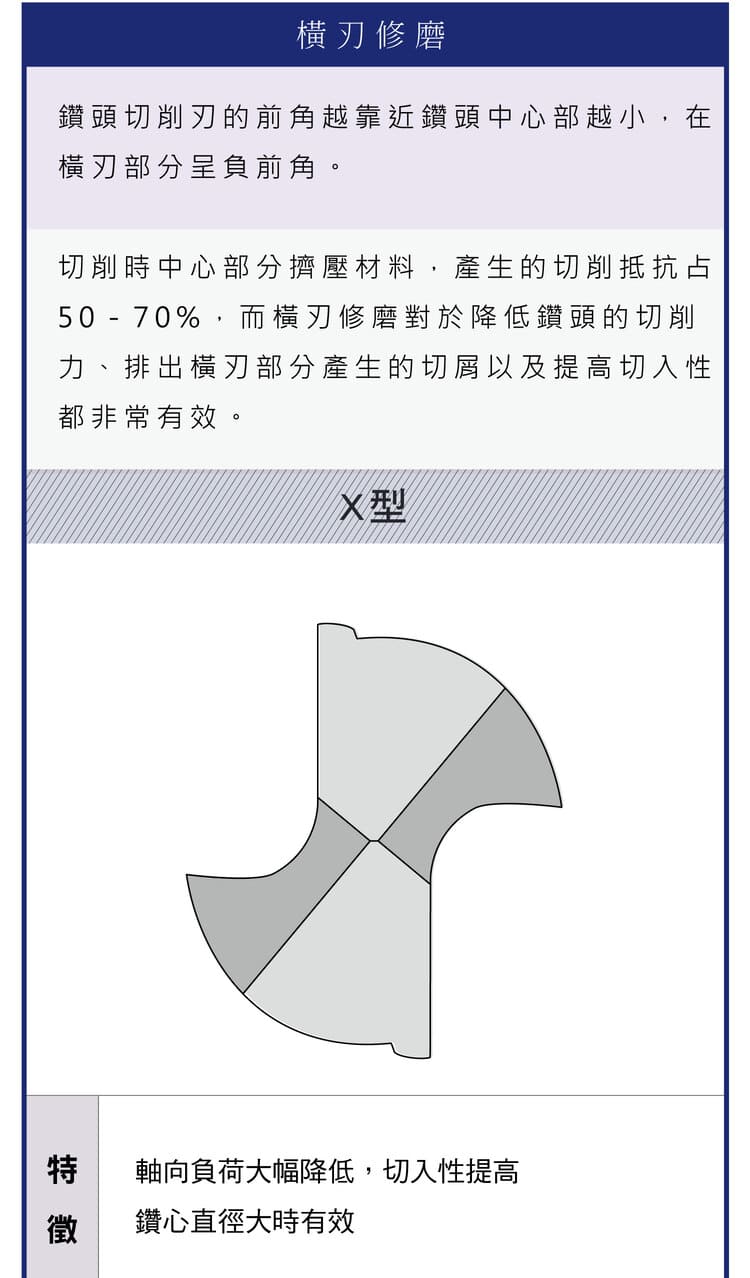
| X type | Lowers axial force, improves engagement | General machining and deep holes |
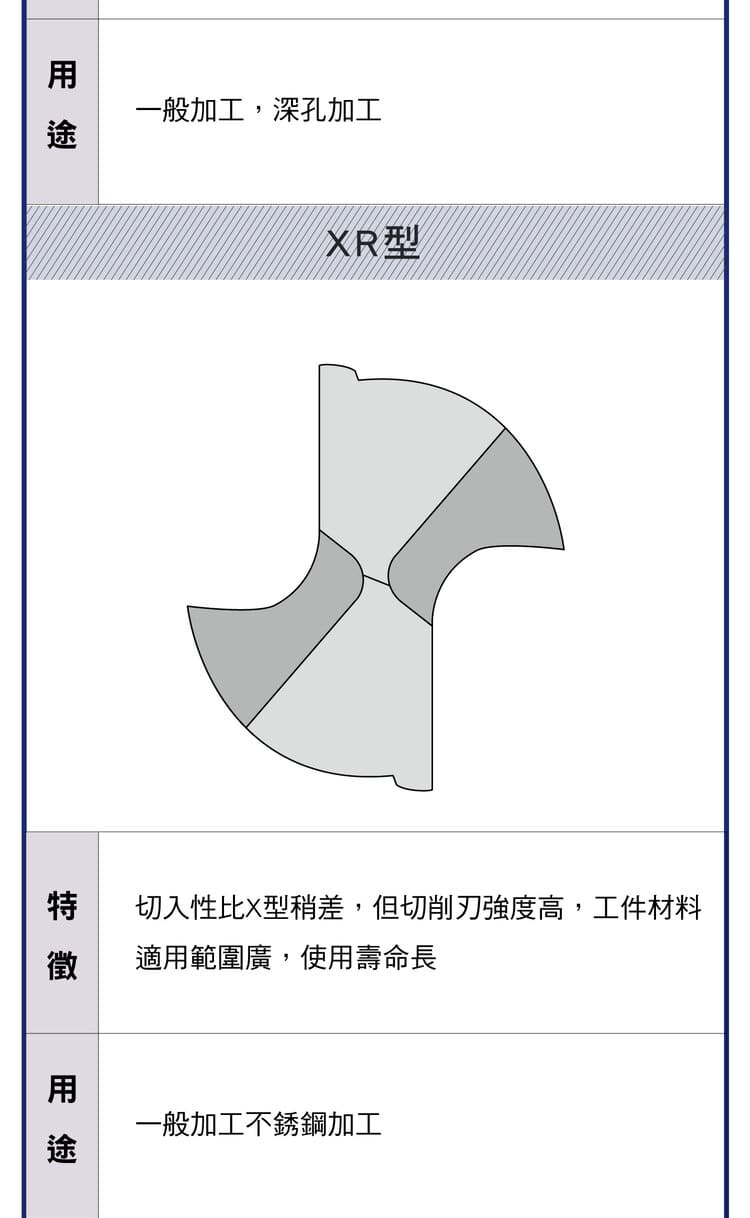
| XR type | Slightly poorer engagement than X, but high edge strength, wide workpiece range, long life | General machining and deep holes |
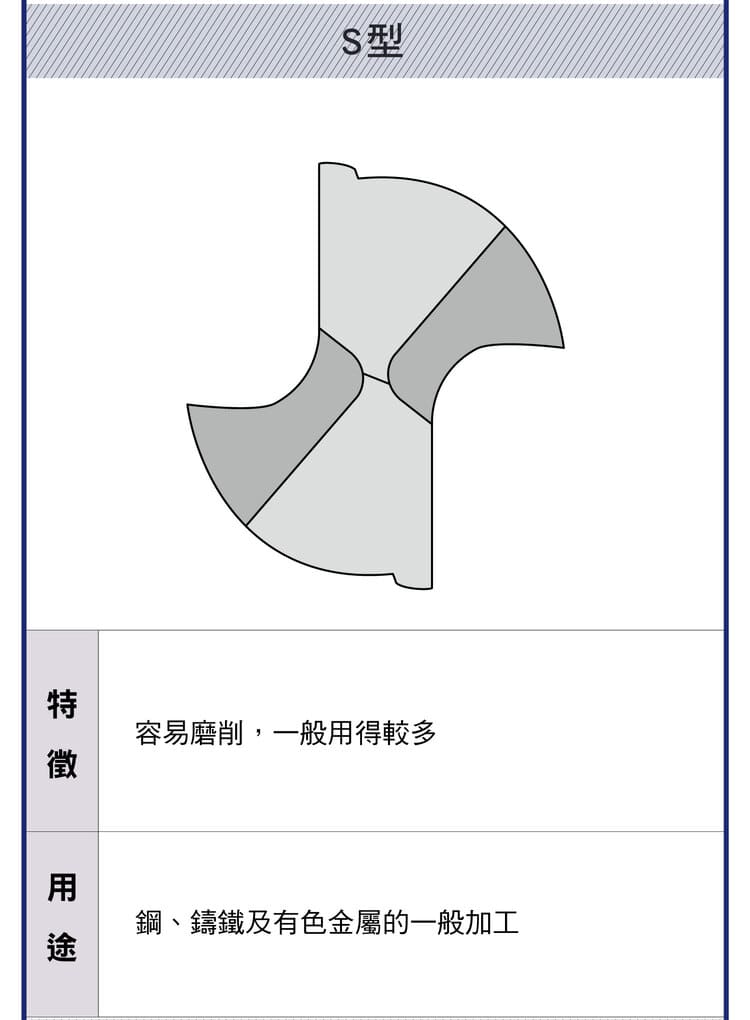
| S type | Easy to grind, wide range of use | General metal machining |
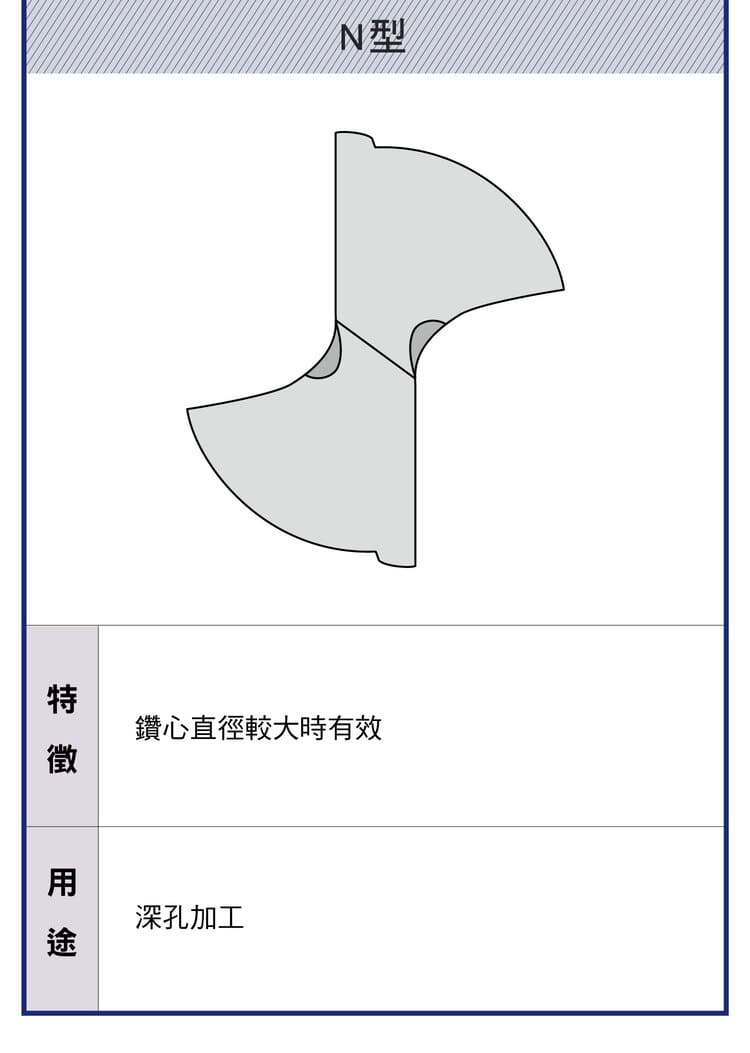
| N type | Suits large-core designs | Stainless steel |
Selection Advice & Engineering Notes
| Basis | Recommendation |
|---|---|
| Soft material | Small point angle + large helix angle |
| Hard material | Large point angle + small helix angle |
| High precision | Three-facet / spiral point |
| High efficiency | X type / XR type |
Combine tool geometry, cutting conditions and material properties to raise accuracy, improve evacuation and extend life. For speed and feed, see Drilling Parameters Guide; for part names, see Drill Bit Anatomy Explained.
FAQ
Flat and three-facet points are both for precision drilling — how do they differ?
A flat point has no chisel-edge portion, so it centres well and oversizes the hole very little, but it needs a special grinder to resharpen; a three-facet point is ground with three flat facets and is likewise used for high-precision drilling.
How do X and XR thinning differ?
X type focuses on lower axial force and better engagement; XR type engages slightly less easily but has higher edge strength, covers a wider range of workpiece materials and lasts longer. Both are mainly for general machining and deep holes; the type intended for stainless steel is N.
How to choose shape for soft vs hard materials?
Soft materials use a small point angle + large helix (good evacuation, low force); hard materials use a large point angle + small helix (strong edge, impact-resistant).
What materials suit a radius cutting edge?
A radius cutting edge is ground to an arc to lower cutting load, giving better accuracy and surface finish; it is mainly used on cast-iron plate and steel, and resharpening needs a dedicated grinder.
This article is part of Drill Bits: The Complete Guide - Start From Depth-to-Diameter, Then Pick the Drill and Set the Conditions; that guide shows how the whole topic fits together.
Published: 2026-03-25 | Last updated: 2026-10-08









