
Drill Bit Anatomy Explained: Structure and Cutting Performance
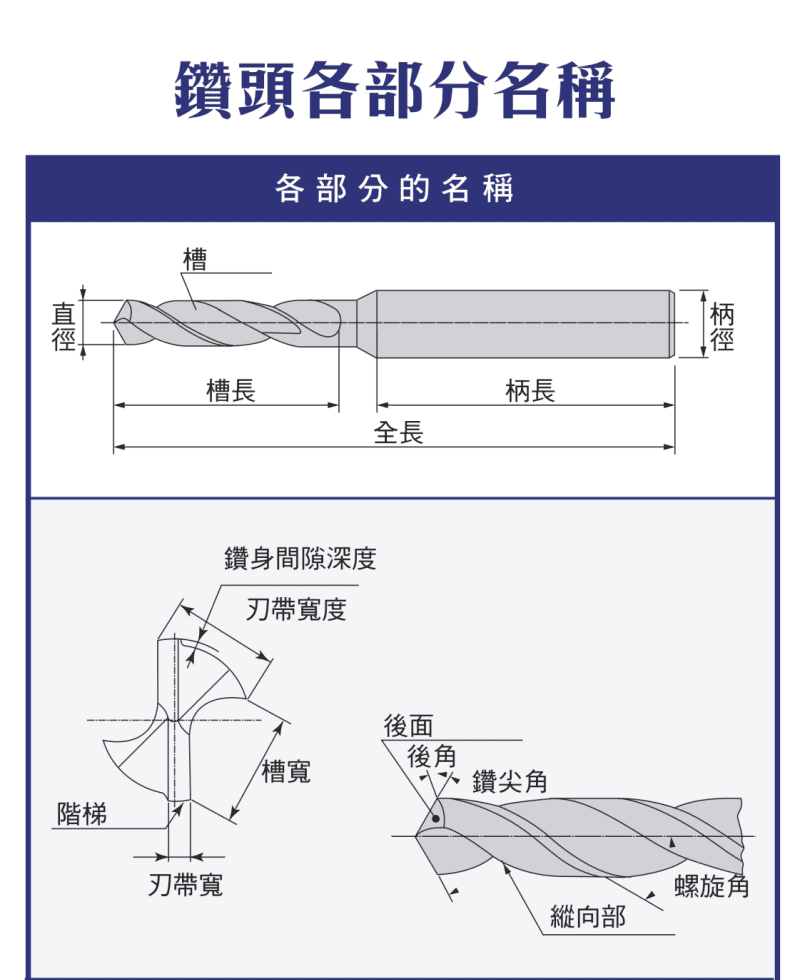
A drill's structure directly affects hole accuracy, cutting efficiency and tool life. It is made up of the margin, flute, web and chisel edge: the periphery has the highest cutting speed while the central chisel edge has zero speed, producing high axial load and plastic deformation. Chisel-edge thinning (e.g. X-type) effectively lowers cutting load, reduces vibration and improves hole accuracy — a key technique for CNC drilling quality. For point and helix geometry, see Drill Geometry and Function.
Drill Parts and Functions
| Part | Term | Function |
|---|---|---|
| Margin | Margin | Maintains hole accuracy, guides |
| Flute | Flute | Chip evacuation and cooling |
| Web | Web | Affects rigidity and strength |
| Helix angle | Helix Angle | Affects chip-evacuation efficiency |
| Point angle | Point Angle | Affects engagement and force split |
| Clearance / flank | Clearance / Flank | Avoids rubbing, ensures cutting |
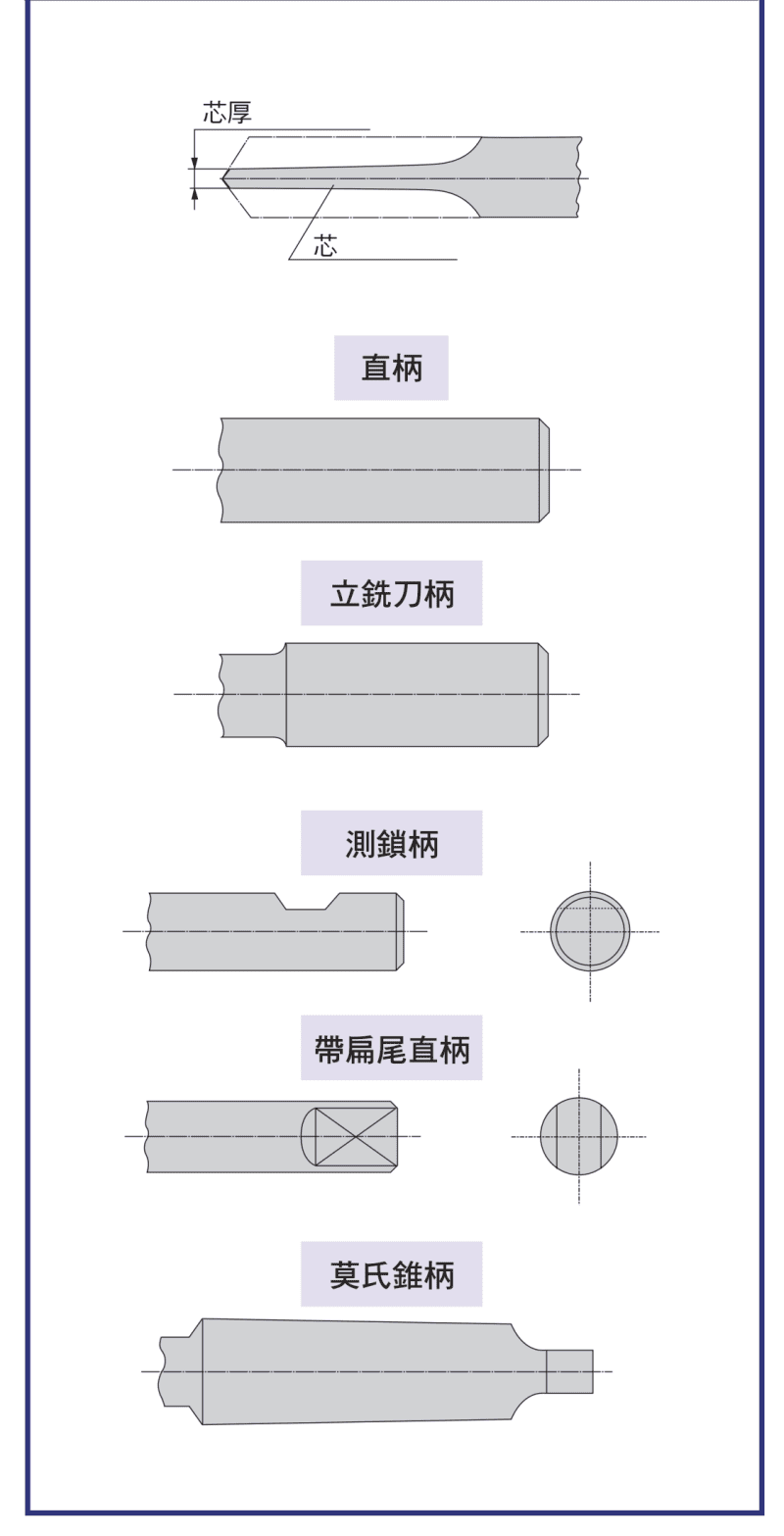
| Shank | Shank | Clamping (straight, Morse taper, etc.) |
Cutting Mechanism & Axial Load
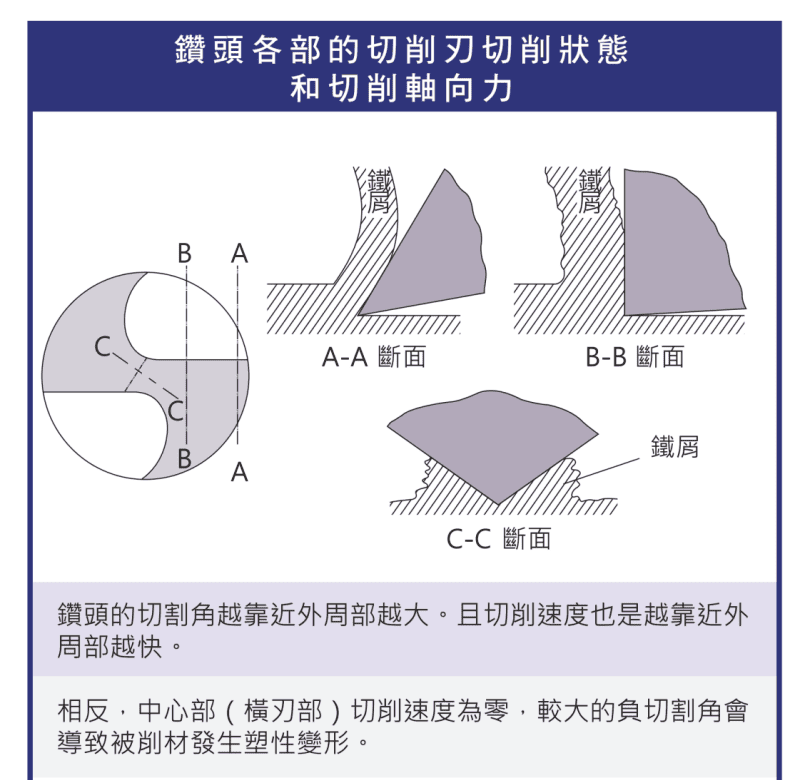
Cutting speed varies along the radius, giving uneven load.
| Location | Cutting speed | Effect |
|---|---|---|
| Periphery | Highest | Smooth cutting |
| Central chisel edge | Near 0 | Plastic deformation, axial load rises sharply |
Sections A-A, B-B and C-C show the periphery cuts smoothly while the center has the greatest resistance, causing more vibration, lower accuracy and faster wear. The chisel edge is the main source of axial load.
Importance of Chisel-Edge Thinning
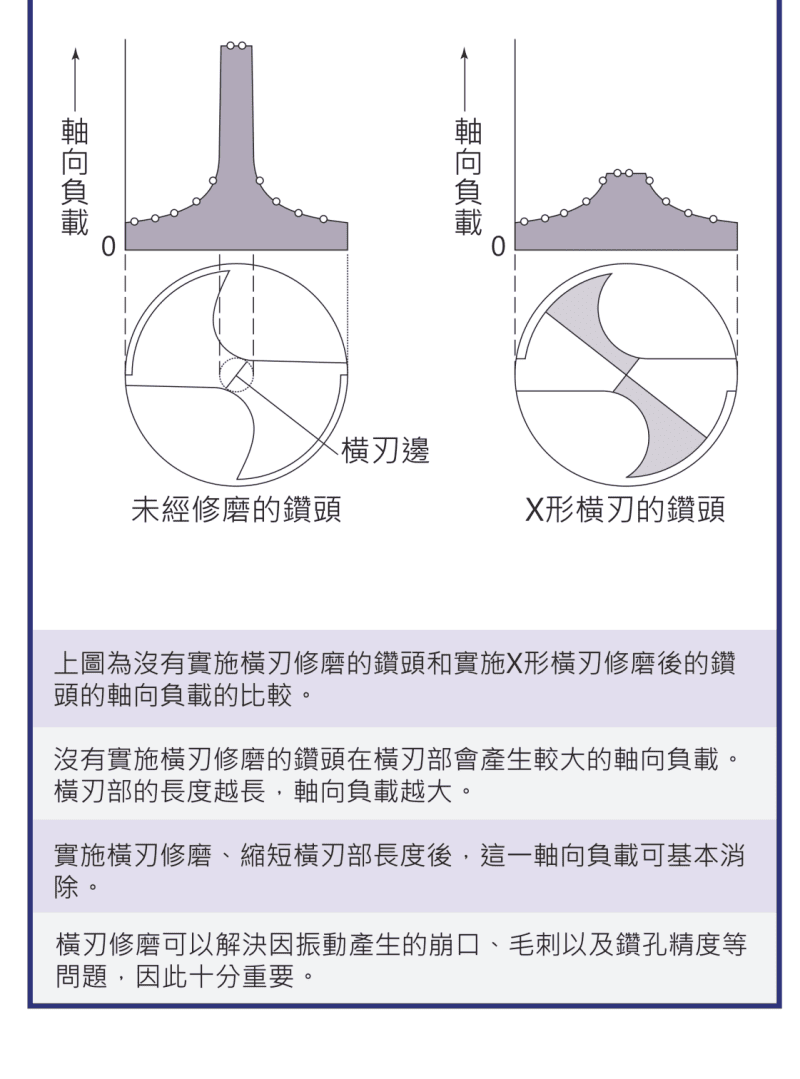
An over-long chisel edge greatly raises axial load; X-type thinning shortens it and lowers load.
| Item | No thinning | After X-type thinning |
|---|---|---|
| Chisel-edge length | Longer | Shortened |
| Axial load | High | Greatly reduced |
| Performance | More vibration, chipping, burrs | Less vibration/chipping, fewer burrs, better hole accuracy |
Drill Performance Optimization
| Aspect | Recommendation |
|---|---|
| Tool design | Choose suitable web thickness, use chisel-edge thinning |
| Cutting conditions | Control feed and speed, apply proper cooling |
| High-precision drilling | Chisel-edge thinning is essential |
| Deep-hole drilling | Strengthen chip-evacuation design |
For speed and feed, see Drilling Parameters Guide; for troubleshooting, see Drilling Troubleshooting Guide.
FAQ
What is the chisel edge and why does it matter?
The chisel edge connects the two main cutting lips at the center, where cutting speed is near zero and acts by extrusion rather than cutting—the main source of axial load, directly affecting centering, vibration and hole accuracy.
What does X-type chisel-edge thinning achieve?
It shortens the chisel edge and lowers axial load, reducing vibration and chipping, improving burrs and raising hole accuracy—especially for high-precision drilling.
How does web thickness affect a drill?
A thicker web gives more rigidity and strength but a longer chisel edge and higher axial resistance; balance rigidity against cutting load. Deep-hole drills usually reinforce the web and chip evacuation.
How does helix angle relate to chip evacuation?
The helix angle affects how smoothly chips travel up the flute; a larger angle aids evacuation and cooling for ductile materials but lowers edge strength, so choose by material.
This article is part of Drill Bits: The Complete Guide - Start From Depth-to-Diameter, Then Pick the Drill and Set the Conditions; that guide shows how the whole topic fits together.
Published: 2026-03-19 | Last updated: 2026-08-08









