
Spiral Point Tap Torque: Cutting-Force Comparison
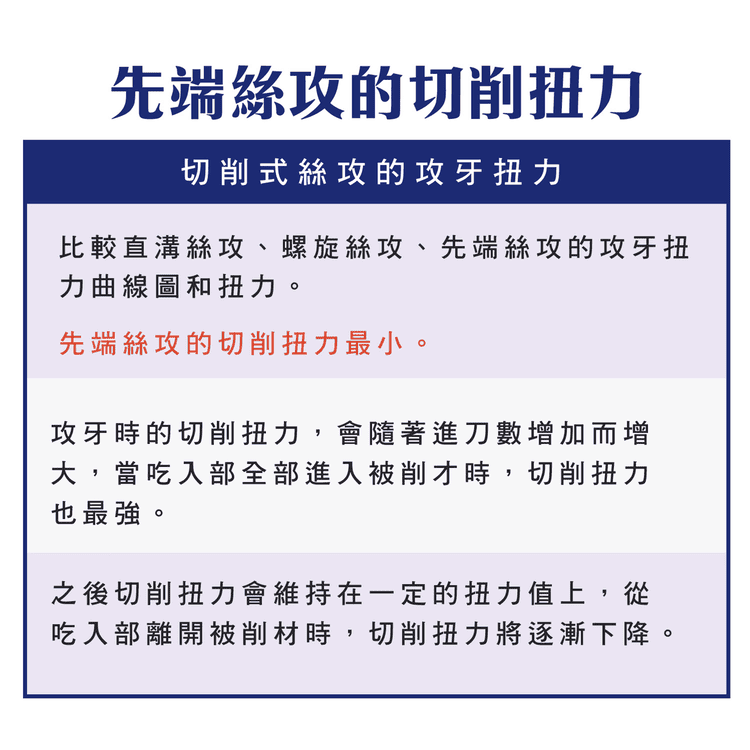
Change the tap and the torque at the spindle changes with it — and torque is what decides whether the teeth chip or the tap snaps off in the hole. Of the three cutting-tap types, the spiral-point tap has the lowest torque; this guide explains why, and on which holes that advantage actually applies. Relative torque values, the torque curve and the factors that drive torque up are covered in the Tap Torque Guide, so here we only carry the conclusions.
1. How the Three Tap Types Rank on Torque
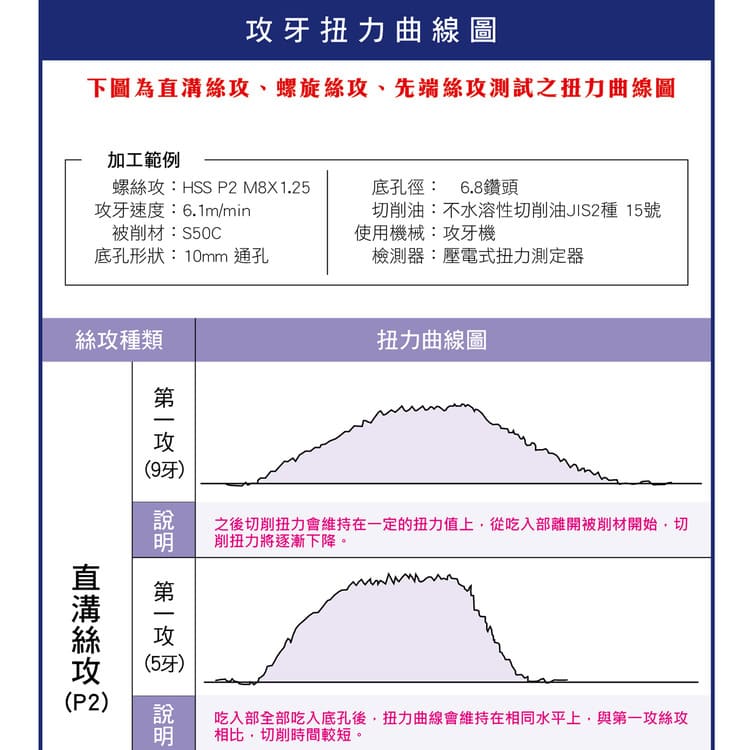
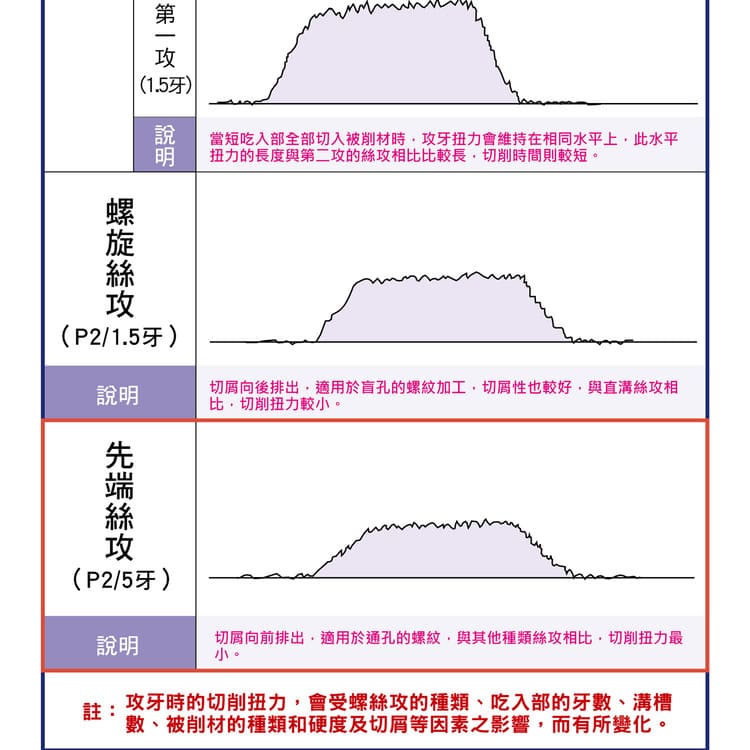
Under the same conditions the spiral-point tap has the lowest torque, the spiral-flute tap sits in the middle and the straight-flute tap is highest. For relative values, the three-stage torque curve (entry, full engagement, exit) and the estimation formula, see the Tap Torque Guide. The difference comes from where the chips go, which also decides which hole each one suits:
| Tap type | Evacuation & use |
|---|---|
| Straight-flute | Short-chipping materials such as cast iron and harsh conditions; higher cutting resistance |
| Spiral-flute | Chips upward; blind holes |
| Spiral-point | Chips forward; through holes |
2. Why Spiral-Point Torque Is Lowest
The spiral-point tap spreads cutting load, gives a smooth torque curve and a lower peak, reducing tool burden, improving stability and lowering breakage risk. Torque is lowest because chips exit forward without piling up, reducing friction and resistance in a continuous cut.
Chamfer (lead) length, flute design, material hardness and how freely the chips clear all push torque up; each is covered in section 4 of the Tap Torque Guide.
3. Application Case (Example)
For medium-carbon steel S50C, about 6 m/min, with an HSS tap (example conditions), the spiral-point tap gives the lowest torque, shorter cycle and best stability. Actual torque varies with material, diameter and machine — use the tapping-torque calculation and maker data for official parameters.
For torque calculation see the Tap Torque Guide; for the concept see the Spiral-Point Tap Guide; for models see the Spiral-Point Tap Series Guide; for cutting vs forming see Cutting Tap vs Forming Tap.
FAQ
Q: Why is spiral-point torque the lowest?
Because chips exit forward without piling up, reducing friction and resistance, and the cut is continuous with spread load — giving a smooth torque curve and lower peak. It's the lowest of the three in through-hole tapping.
Q: When is tapping torque highest?
When all the cutting threads are engaged and the cutting zone is fully in the material; after exiting, torque falls. The longer the chamfer (lead), the longer the peak torque is sustained.
Q: What are the benefits of low torque?
Low torque means less tool burden, lower breakage risk and more stability, allowing higher feed/speed and longer tool life — especially good for high-speed and automated production.
Q: How to reduce excessive torque?
Pick the right tap (spiral-point for through holes), enlarge the pilot hole to a suitable engagement, improve evacuation and cutting fluid, and lower the lead load. See the tapping-torque guide for calculations and parameters.
For the full reading guide on this topic, see Thread Machining: A Complete Reading Guide.
Published: 2026-03-24 | Last updated: 2026-10-31









