
Turning Tool Edge Preparation Guide: Chamfer, Hone & Tool Life
A turning tool's edge preparation and land design directly affect edge strength, force distribution and tool life. More edge prep gives a stronger, more chip-resistant edge but raises cutting resistance and vibration; too little invites wear and chipping. The optimal prep width is generally about half the feed, balancing tool life and stability.
1. Edge Preparation Basics
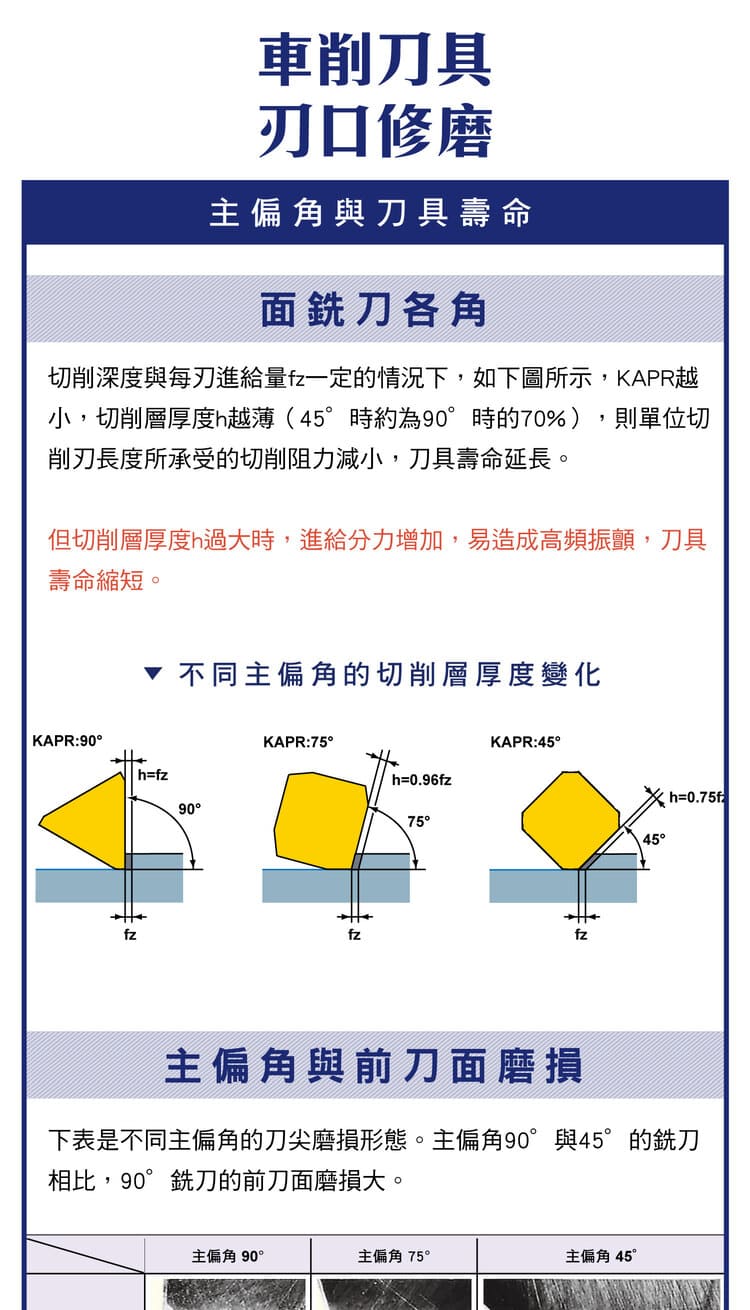
Edge preparation hones or chamfers the tip to raise edge strength and wear resistance. The main forms are hone (radius), chamfer and land.
| Form | Note |
|---|---|
| Hone (radius) | Rounded edge, smoother cutting |
| Chamfer | Bevelled edge, higher strength |
| Land | Flat at the edge, reinforces the tip |
2. Prep Amount vs Tool Life
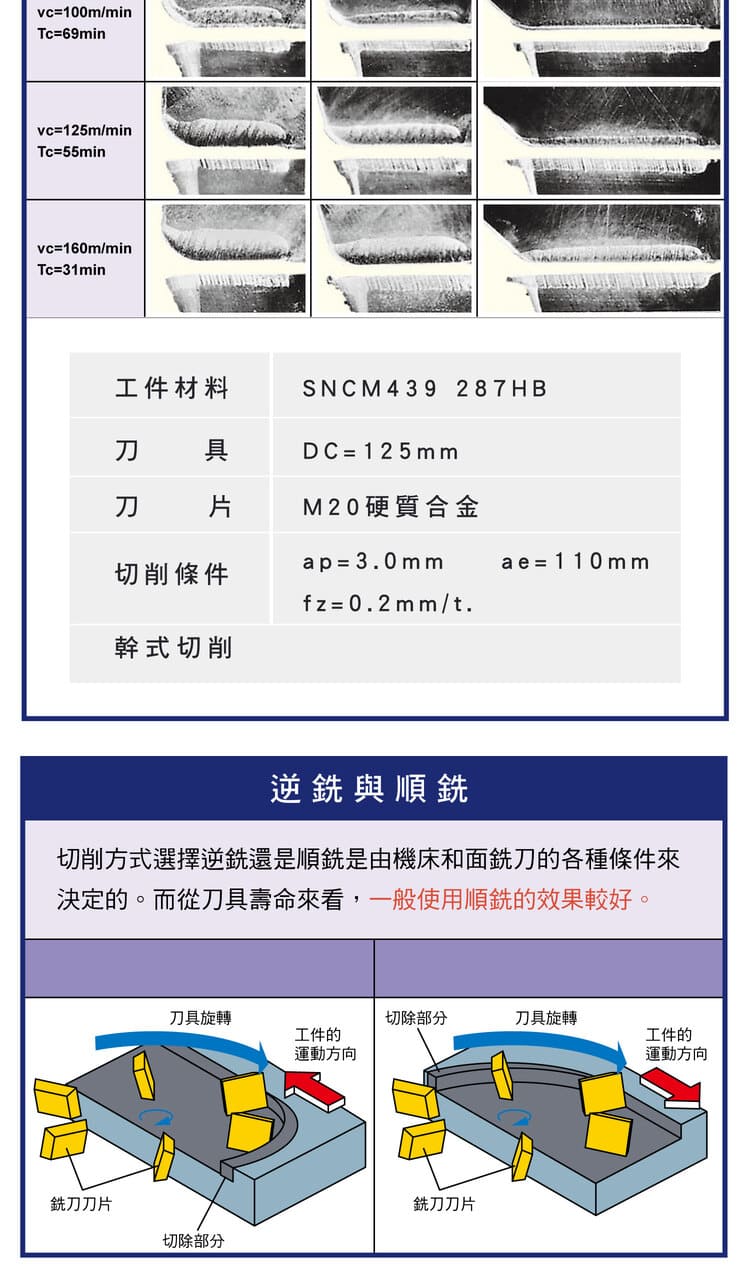
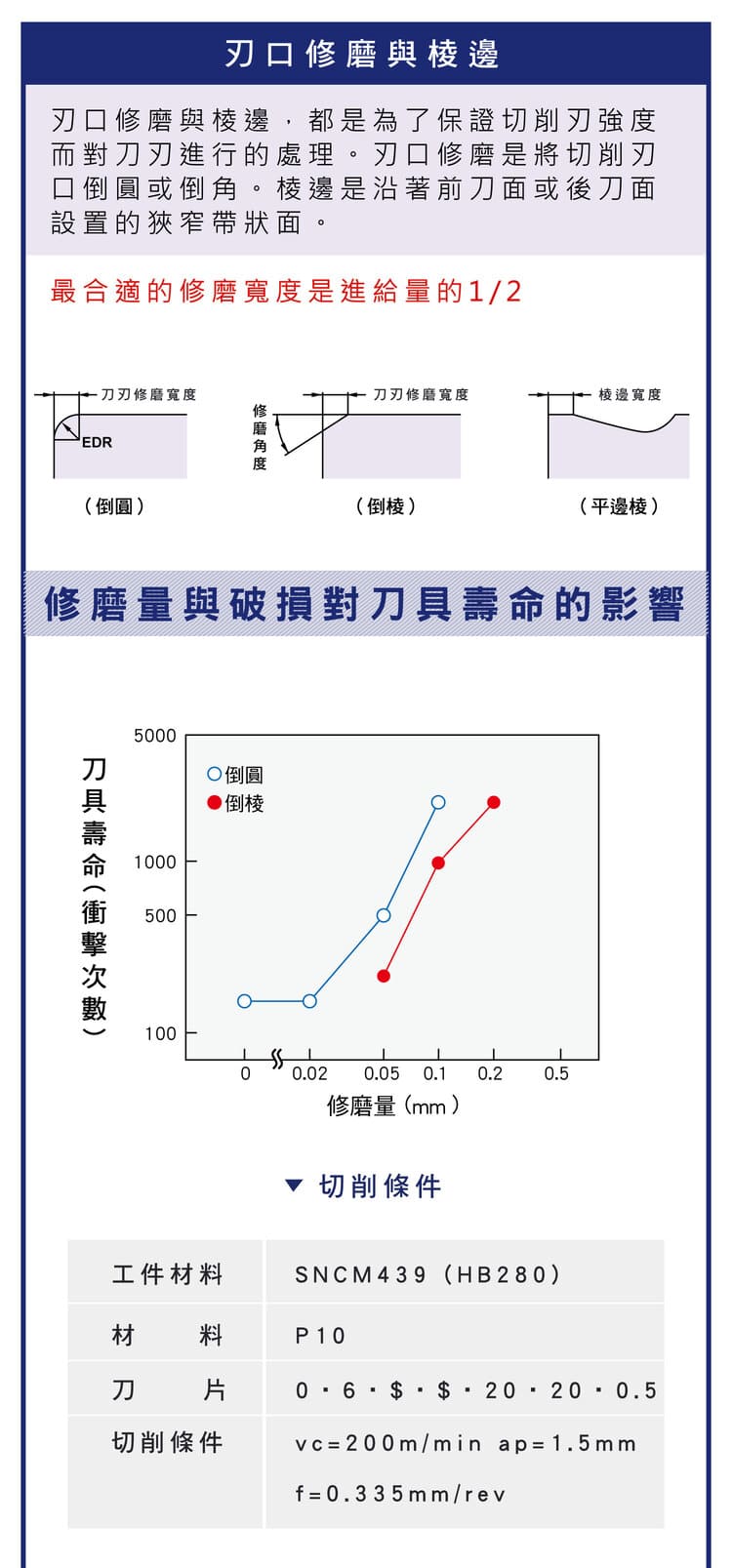
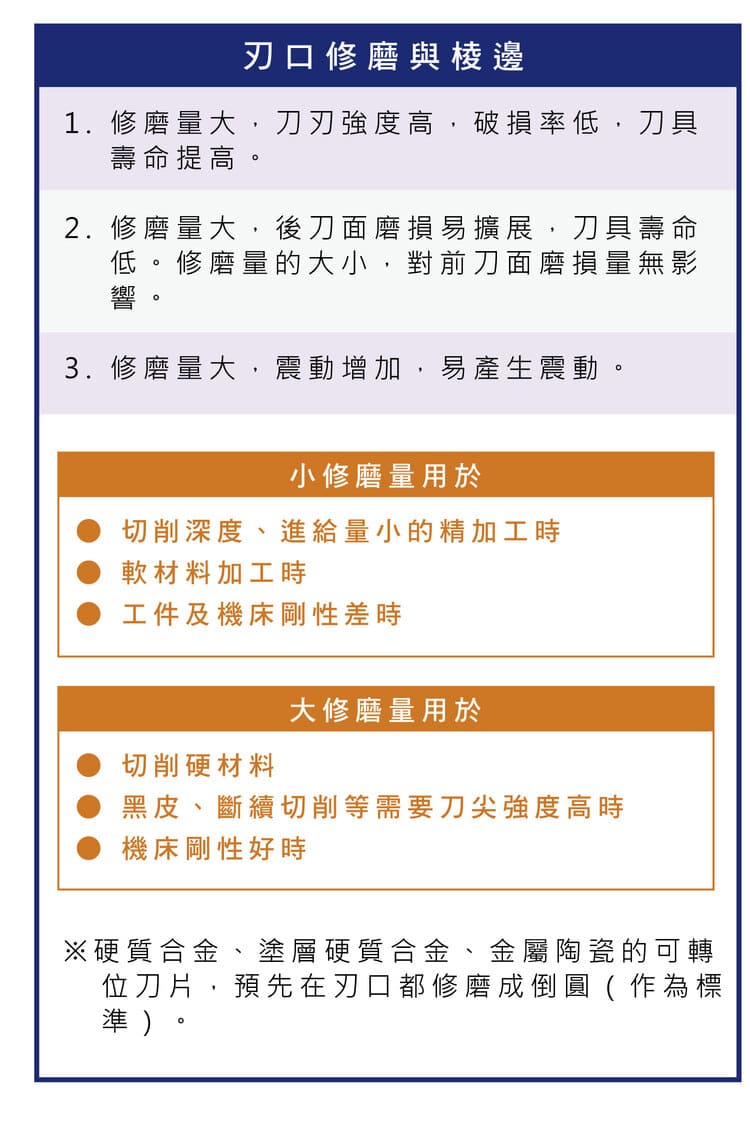
The amount must be moderate: too much raises cutting resistance, widens flank wear and vibrates; too little leaves a weak edge prone to chipping and wear.
| Prep amount | Result |
|---|---|
| More | Stronger edge, better chip resistance, longer life |
| Too much | Higher resistance, wider flank wear, vibration |
| Too little | Weak edge, chipping and wear |
3. Optimal Prep Amount
The general rule is prep width ≈ half the feed, balancing force and edge strength, improving stability and extending tool life. Calculate actual speed and feed from your material and machine — see the Turning Machining Formulas.
4. Hone vs Chamfer
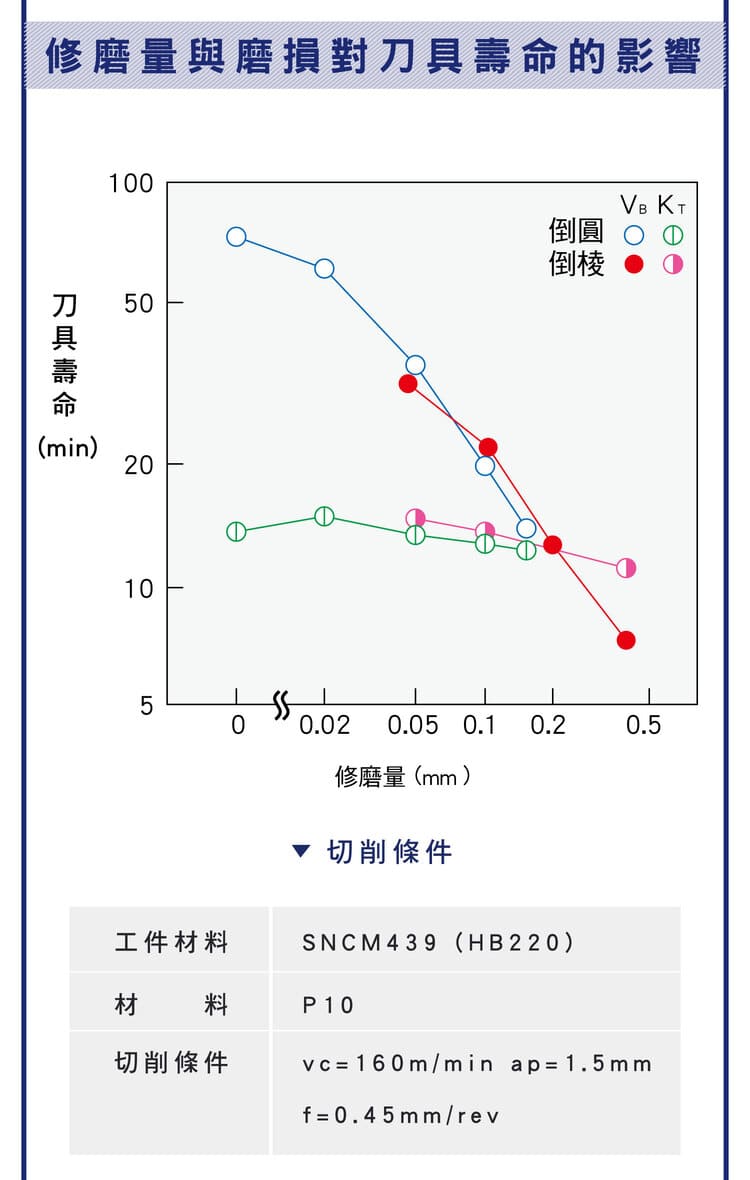
A honed edge cuts smoothly with good chip resistance, suiting general work; a chamfered edge is stronger, suiting heavy cutting and hard materials.
| Form | Trait | Best for |
|---|---|---|
| Honed edge | Smooth cut, good chip resistance | General work |
| Chamfer edge | Higher strength | Heavy cutting, hard materials |
5. Prep Amount vs Force and Vibration
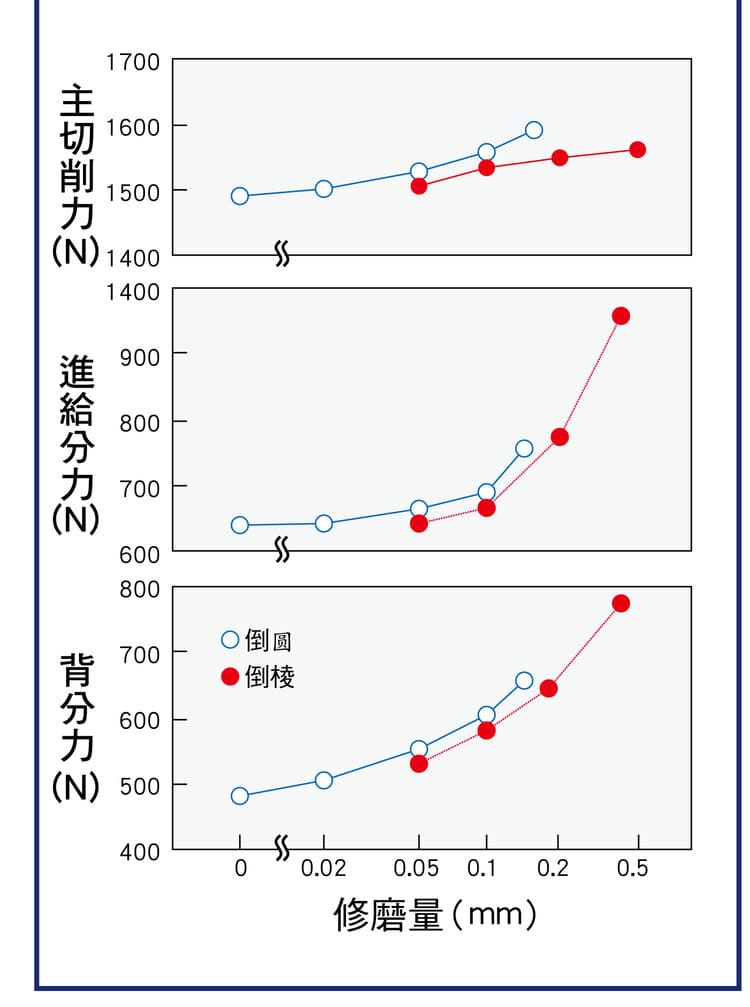
More edge prep raises main force, feed force and back force, improving stability but increasing machine load; too much raises resistance and vibrates — reduce the prep or raise rigidity. Also, a smaller lead angle thins the chip and spreads load, extending life; but too large a chip thickness still vibrates.
| Aspect | Relationship / fix |
|---|---|
| Force | More prep → main/feed/back force up; more stable but higher load |
| Vibration | More prep → resistance up → vibration; reduce prep, raise rigidity |
| Lead angle | Smaller → thinner chip, spread load, longer life; too thick a chip vibrates |
6. Example Conditions (Reference)
The table gives example conditions for an edge-prep setup, for reference only; calculate actual speed and feed from your material, tool and machine (see the Turning Machining Formulas) and don't apply directly.
| Item | Example (reference) |
|---|---|
| Material | SNCM439 |
| Insert | Carbide |
| Speed vc | ≈ 160–200 m/min |
| Depth ap | ≈ 1.5–3 mm |
| Feed f | ≈ 0.3–0.45 mm/rev |
7. Application Tips and Fixes
A small prep suits finishing, soft materials and low rigidity; a large prep suits hard materials, interrupted cutting and rigid machines. For related wear patterns, see the Tool Wear Guide.
| Problem | Cause | Fix |
|---|---|---|
| Chipping | Prep too little | Strengthen the edge |
| Fast wear | Prep too small | Increase prep amount |
| Vibration | Prep too large | Reduce prep amount |
| High resistance | Edge too dull | Adjust the prep form |
8. Engineering Focus
With edge preparation, honing radius and chamfer width as core parameters, the control goals are to extend tool life, lower chipping risk and stabilize quality — for longer tool use, lower cost and higher efficiency. For tip geometry (nose radius), see the Turning Tool Nose Radius Guide.
FAQ
Q: How much edge prep should I use?
A common rule is a prep width about half the feed. Too small leaves a weak, chip-prone edge; too large raises resistance and vibration. Balance strength against force by material hardness and operation.
Q: Hone or chamfer — which one?
A hone cuts smoothly with good chip resistance for general work; a chamfer is stronger for heavy cutting and hard materials. Hard materials and interrupted cuts favor a chamfer or larger prep; soft materials and finishing favor a hone or smaller prep.
Q: Why does vibration rise after edge prep?
Too much prep raises cutting resistance (including back force); past the machine's rigidity it vibrates. Reduce the prep, raise machine and clamping rigidity, or use a smaller lead angle to thin the chip and spread the load.
Q: How to prep the edge for hard materials?
For hard materials and interrupted cutting, increase the prep or use a chamfer to raise edge strength and lower chipping risk; also moderately reduce depth, add passes and keep rigidity and cooling stable.
For the full reading guides on this topic, see Tool Life and Wear: A Complete Reading Guide and Vibration and Chatter: A Complete Reading Guide.