
Turning Tool Nose Radius Guide: Surface Finish & Tool Life
A turning tool's nose radius directly affects tool life, surface roughness and cutting stability. A larger nose radius raises edge strength and surface quality and lowers flank and crater wear, but increases cutting force and the risk of vibration and evacuation issues. The optimal nose radius is generally about 2–3 times the feed, balancing quality and stability.
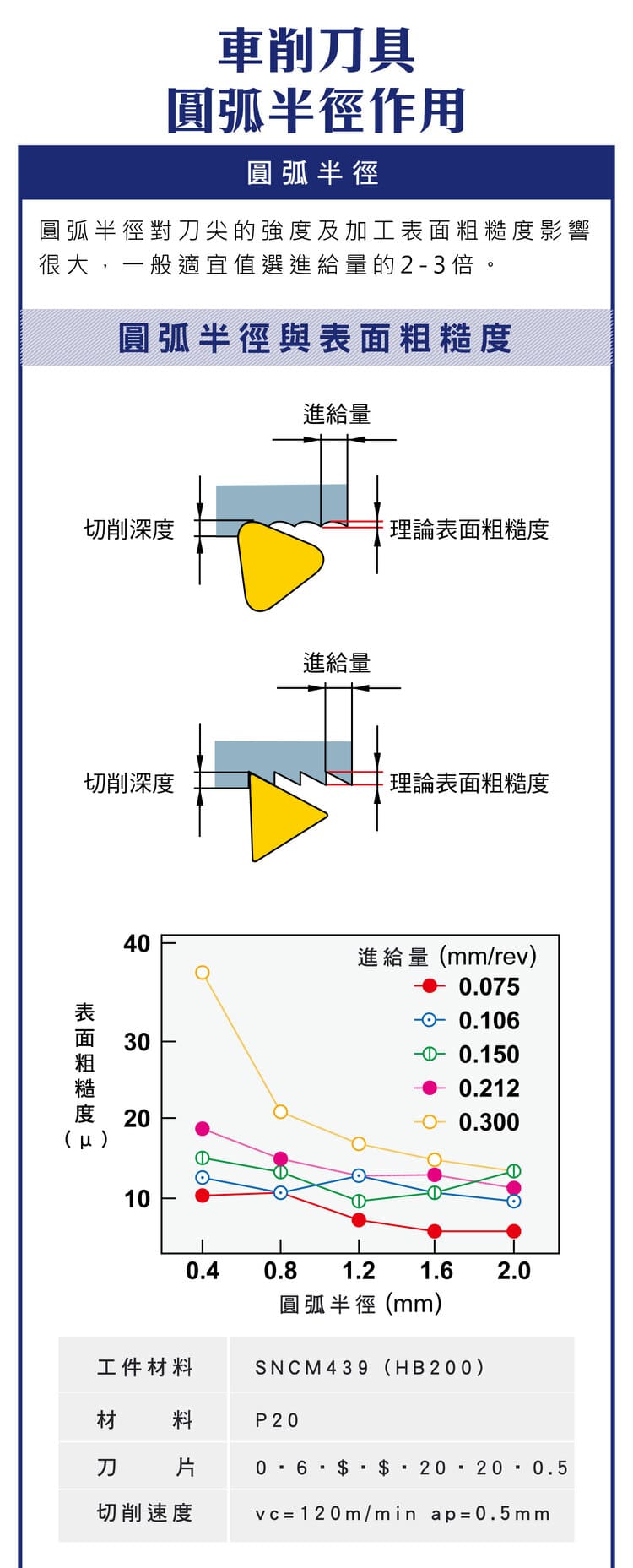
1. Nose Radius Basics
The nose radius is the corner size of the tool tip, affecting force distribution and surface quality. It raises edge strength, improves surface roughness and spreads the cutting load.
| Item | Content |
|---|---|
| Definition | Tip corner size; affects force distribution and finish |
| Function | Raise edge strength, improve finish, spread load |
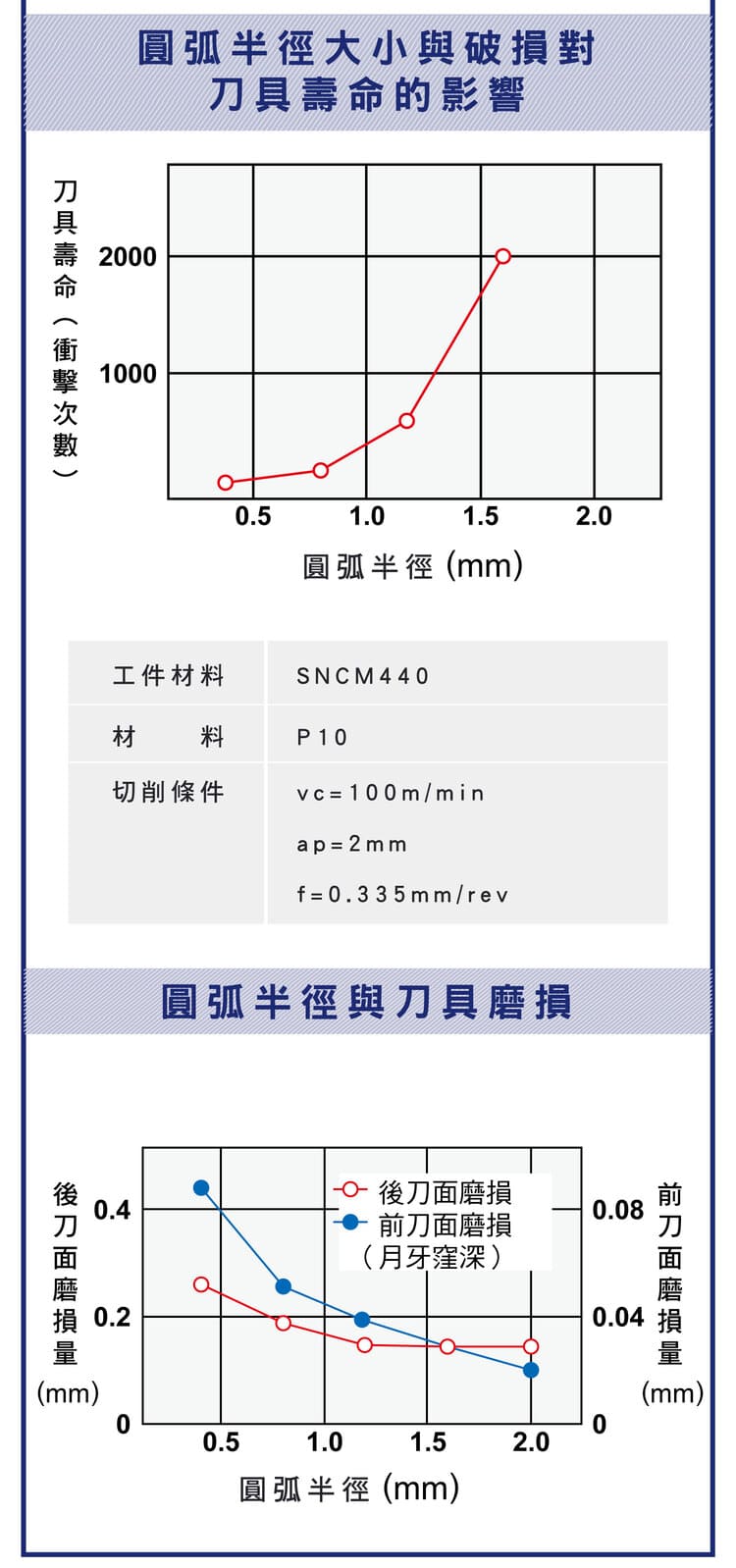
2. Nose Radius vs Tool Life and Wear
A larger nose radius spreads tip stress and adds strength, significantly extending life and improving chip resistance; flank and crater wear also drop, extending usable time and reducing tool changes.
| Larger nose radius | Benefit |
|---|---|
| Tool life | Longer, better chip resistance (spread stress, more strength) |
| Wear | Lower flank and crater wear, longer use, fewer changes |
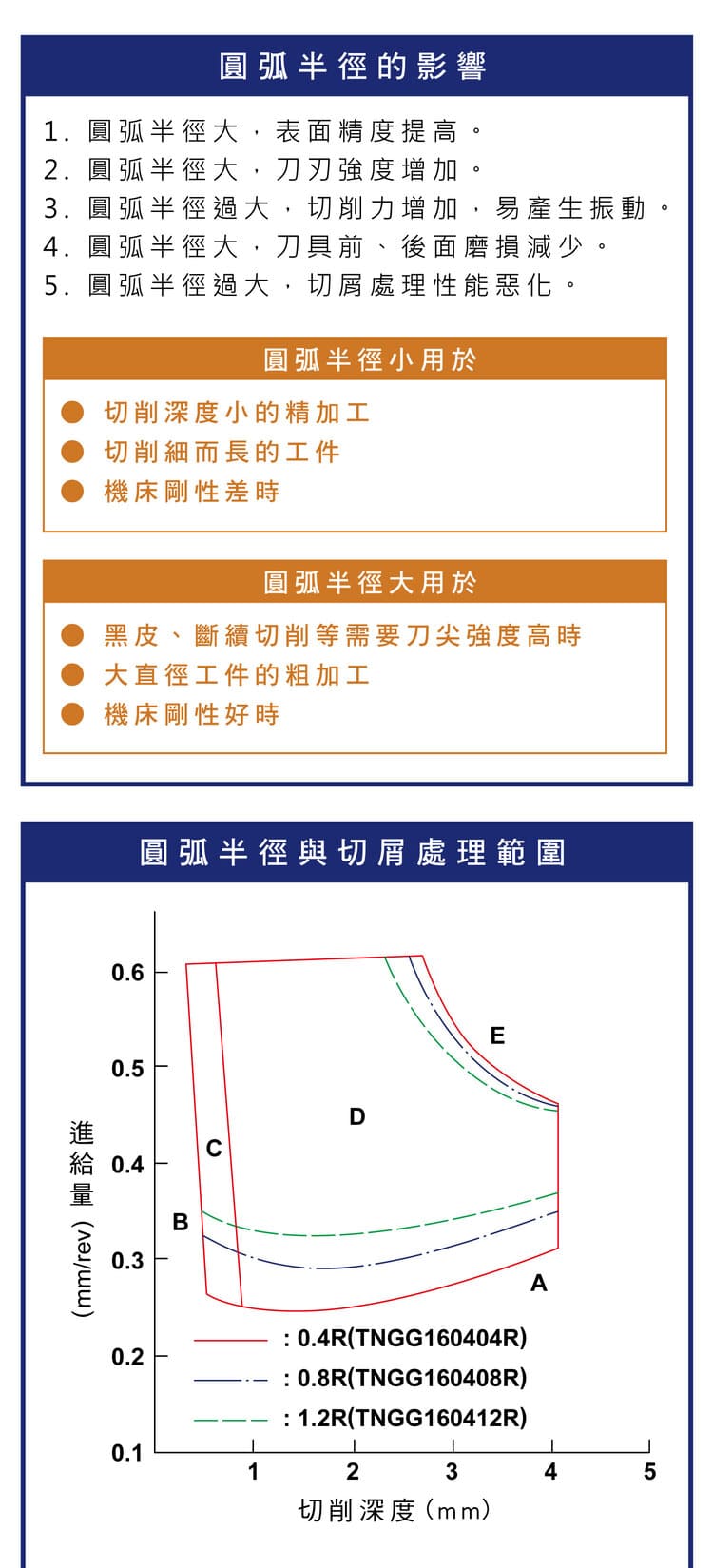
3. Nose Radius vs Surface Finish and Force
A larger nose radius lowers the height of machining marks and raises smoothness, improving surface roughness; but cutting force rises (main and back force increase), so stability improves while machine load grows.
| Aspect | Effect of larger nose radius |
|---|---|
| Surface roughness | Better (lower mark height, more smoothness) |
| Cutting force | Main force up, back force up |
| Result | More stable, but higher machine load |
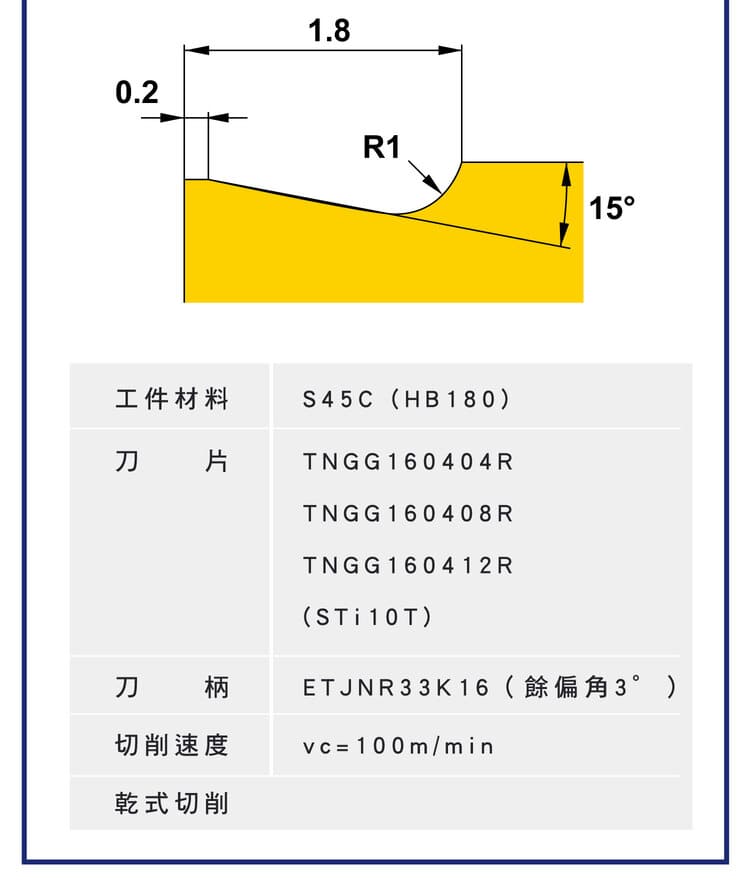
4. Problems with Too Large a Nose Radius
Too large a nose radius increases contact area and cutting resistance, bringing vibration, unstable cutting and poor evacuation. Bigger is not always better — it must match the conditions.
5. Selection Principle
The suggested rule is nose radius ≈ feed × 2–3. Logic: use a small radius for light-depth finishing, slender parts or a machine with poor rigidity (lower cutting force, less chatter); use a large radius for roughing that needs nose strength and a large depth. Looking only at surface finish, a larger radius gives a smoother surface at the same feed, provided rigidity can carry it — that is the condition behind “fine turning often uses a small feed with a larger R” in the Turning Machining Formulas: Speed, Feed & Surface Roughness.
| Nose radius | Best for |
|---|---|
| Small | Precision, small depth, slender parts, low rigidity (low feed) |
| Large | Roughing, interrupted cuts, large-diameter parts, rigid machines (high feed, large depth) |
The feed should also stay below 80% of the nose radius, or the surface can turn thread-like and the insert can break. The table lists textbook recommended feeds for each nose radius (reference values; follow the insert maker’s catalogue in practice):
| Nose radius (mm) | Recommended feed (mm/rev) |
|---|---|
| 0.4 | 0.25~0.35 |
| 0.8 | 0.4~0.7 |
| 1.2 | 0.5~1.0 |
| 1.6 | 0.7~1.3 |
| 2.4 | 1.0~1.8 |
6. Example Conditions (Reference)
The table gives example conditions for a nose-radius setup, for reference only; calculate actual speed and feed from your material, tool and machine — see the Turning Machining Formulas — and don't apply directly.
| Item | Example (reference) |
|---|---|
| Material | SNCM440 / SNCM439 |
| Insert | Carbide (P10 / P20) |
| Speed vc | ≈ 100–120 m/min |
| Depth ap | ≈ 0.5–2 mm |
| Feed f | ≈ 0.3 mm/rev |
7. Common Problems and Fixes
| Problem | Cause | Fix |
|---|---|---|
| Poor surface finish | Nose radius too small | Increase nose R |
| Tool chipping | Nose radius too small | Raise edge strength (moderately larger R) |
| Vibration | Nose radius too large | Reduce nose R |
| Poor evacuation | Nose radius too large | Adjust feed and tool size |
8. Engineering Focus
With nose radius, feed rate and depth of cut as core parameters, the control goals are to raise surface quality, lower tool wear and keep cutting stable — for longer tool life, higher efficiency and lower cost. For tip wear patterns, see the Tool Wear Guide.
FAQ
Q: How do I choose the nose radius?
A common guide is a nose radius about 2–3 times the feed. Use a small radius for finishing, small depth, slender parts or low rigidity; use a large radius for roughing, interrupted cutting, large-diameter parts or rigid machines.
Q: Does a larger radius always mean a better finish?
Within a range, yes: a large radius lowers mark height and improves roughness while adding edge strength and reducing wear. But too large a radius raises cutting force and contact area, causing vibration and poor evacuation, so match it to rigidity and feed.
Q: How do I improve poor surface roughness?
Poor roughness often comes from too small a radius or too high a feed. Moderately increase nose R, reduce feed, and keep a stable speed and good rigidity. Look up actual parameters by material and tool in the formulas guide.
Q: What if too large a radius causes vibration?
Too large a radius raises contact area and resistance, causing vibration and poor evacuation. Reduce nose R, or adjust feed and tool size and raise machine and clamping rigidity to restore stability.
For the full reading guides on this topic, see Surface Finish: A Complete Reading Guide, Tool Life and Wear: A Complete Reading Guide and Machining Calculation Reading Guide.
For the full reading guide on this topic, see Turning: The Complete Guide.
Published: 2026-03-25 | Last updated: 2026-10-20









