Logo

End Mill Parts Explained

End Mill Parts Explained | Complete Guide to End Mill Structure & Terminology A complete illustrated guide to end mill parts: overall length, cutting length, shank length, diameter, shank diameter and center hole; peripheral relief angles and margin; end-face rake face and bottom-edge structure; and ball nose radius. Understanding end mill terminology is the foundation of tool selection and management. end mill parts, end mill structure, cutting length, shank length, overall length, diameter, shank diameter, relief angle, margin width, helix angle, bottom edge, ball radius en https://cnc57.com/en/technical_information/End-Mill-Parts-Explained
CNC57 Industrial Hub

The end mill is the core cutting tool in CNC machining, and every part of its design affects accuracy, tool life and cutting efficiency—from diameter, cutting length and helix angle to the bottom edge and relief angles. Understanding each part's name and function is a fundamental skill for tool selection and management. This article walks through each part of the end mill, based on the manufacturer's structural diagrams.

Overall End Mill Parts

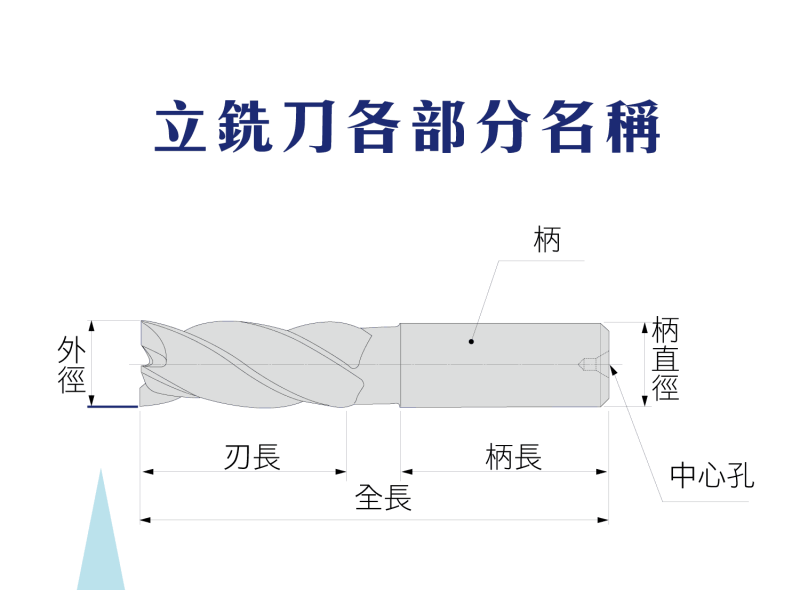
Externally, an end mill consists of a cutting section and a holding section. Key dimensions include:

  • Overall Length: total tool length, affecting clamping range and overall rigidity.
  • Cutting Length (flute length): length of the cutting edge, which sets the maximum depth of cut.
  • Shank Length: length of the holding end.
  • Diameter: the cutting-edge outer diameter, which determines machined size.
  • Shank / Shank Diameter: the holding shank and its diameter, which must match the collet.
  • Center Hole: a centering hole used in manufacturing and regrinding.

End mill overall parts: diameter, cutting length, shank length, overall length, shank, shank diameter and center hole

Peripheral Edge Structure

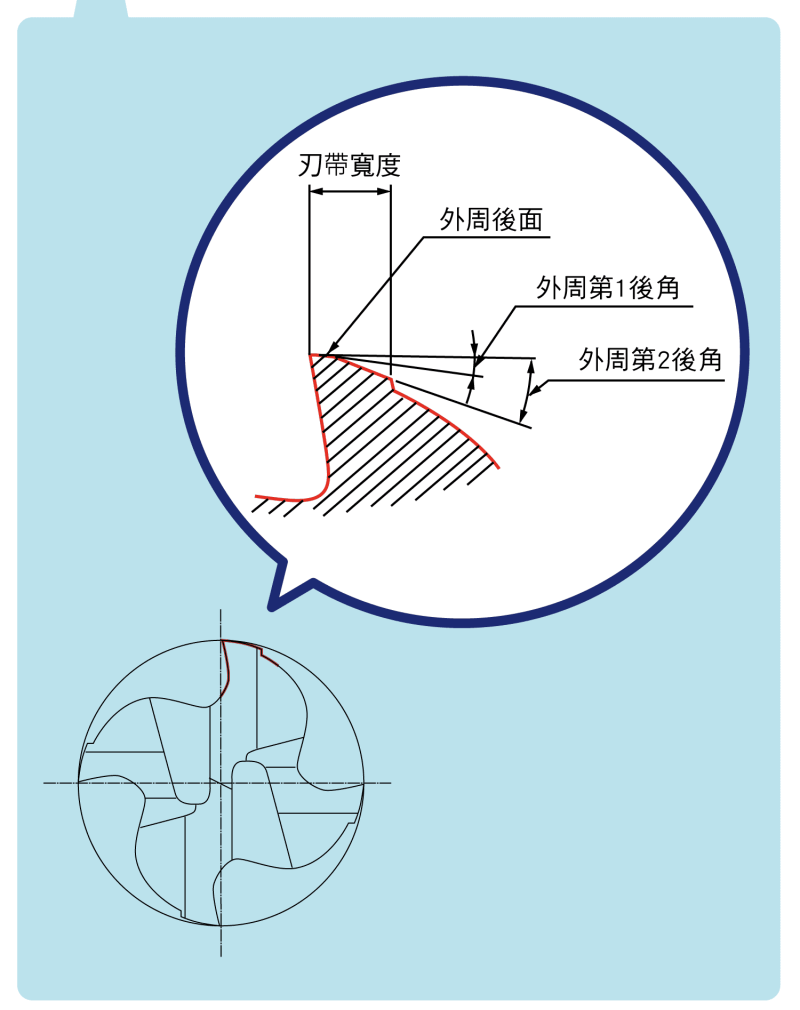
The peripheral (side) edge handles side and contour cutting. Its cross-section includes:

  • Cutting Edge: the edge that actually removes material.
  • Peripheral Flank: the relief face behind the edge, preventing rubbing against the workpiece.
  • 1st Relief Angle: the relief angle next to the edge, mainly reducing cutting resistance.
  • 2nd Relief Angle: a larger second relief angle, adding chip space and body strength.
  • Margin Width: the width of the guiding land, affecting guidance and surface accuracy.

End mill peripheral edge cross-section: margin width, peripheral flank, 1st and 2nd relief angles

End-Face Structure

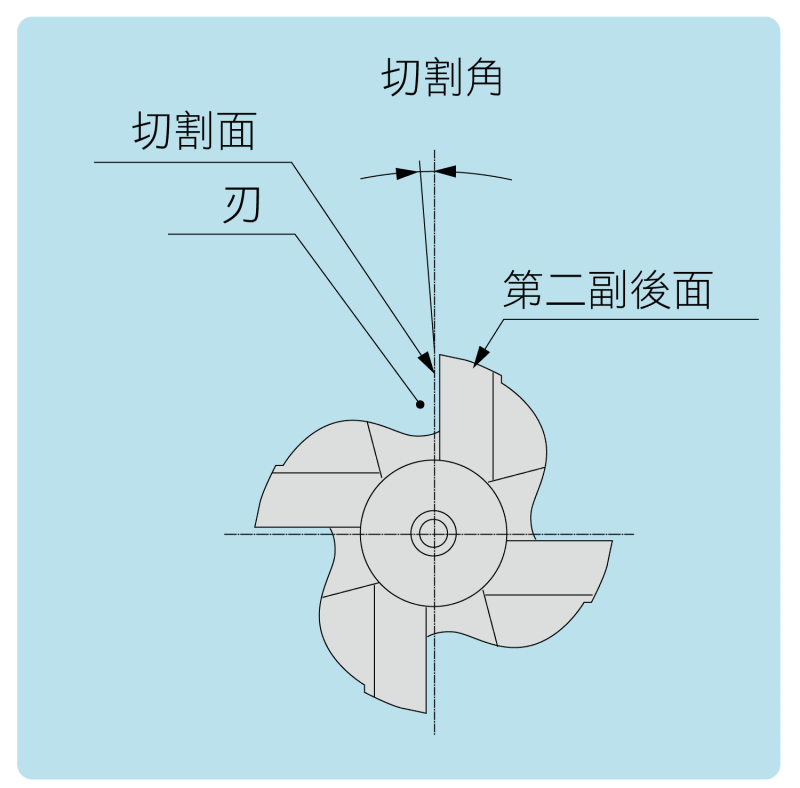
Viewed from the end face (front), the main features include:

  • Rake Face: the face the chip flows over, affecting chip formation and evacuation.
  • Edge: the end-face cutting edge.
  • Rake Angle: the angle between the rake face and the reference plane.
  • Secondary Flank: the second relief face on the end face, providing clearance and strength.

End mill end face: rake face, edge, rake angle and secondary flank

Bottom-Edge Structure

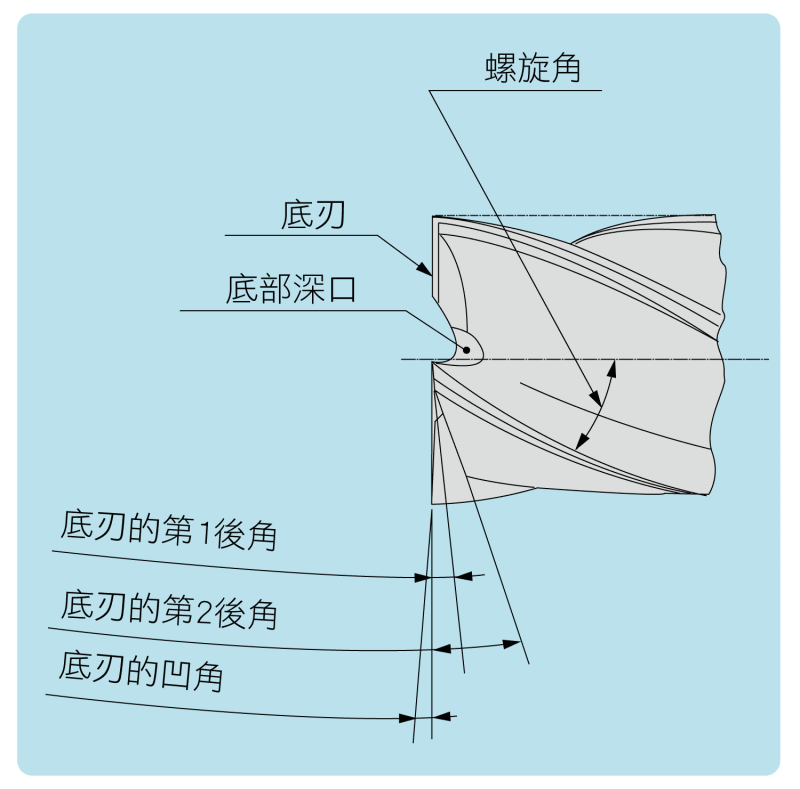
The bottom edge determines whether the end mill can perform end (plunge) cutting. It includes:

  • Bottom Edge: the cutting edge on the tool's end face.
  • Gash / Recess: chip space and center clearance at the bottom.
  • Helix Angle: the spiral inclination of the edge, affecting smoothness and chip evacuation.
  • Bottom-edge 1st / 2nd Relief Angle: the two relief angles of the bottom edge, reducing friction and adding strength.
  • Bottom-edge Concavity (dish angle): a slight inward dish so the outer edge contacts first, keeping the machined face flat.

End mill bottom-edge structure: helix angle, bottom edge, gash, bottom-edge 1st/2nd relief angle and concavity

Special Parts of a Ball Nose End Mill

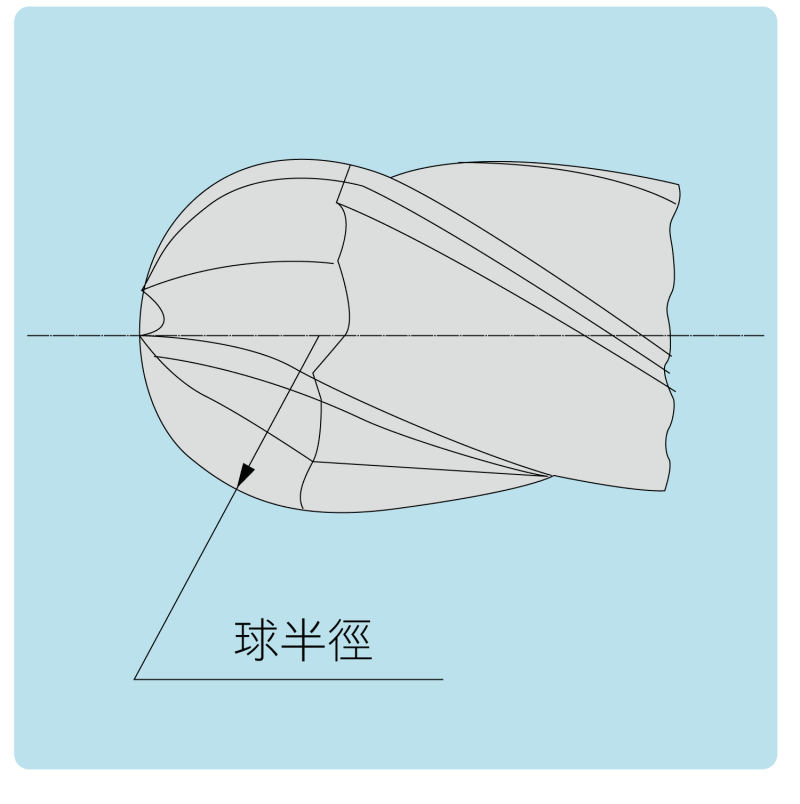
A ball nose end mill has a spherical tip; its key dimension is:

  • Ball Radius: the radius of the ball tip, which determines the scallop height and surface smoothness in surface machining—a larger radius gives a smoother surface.

Ball nose end mill structure: ball radius

Why End Mill Structure Matters

Knowing each part's name and function improves selection accuracy and reduces tool wear and machining problems—the foundation of precision machining and tool management. For each type's features and selection (square, tapered, ball nose, corner-radius, etc.), see End Mill Types and Features.

Q: What's the difference between overall length, cutting length and shank length?

A: Overall length is the total tool length; cutting length is the flute length, which sets the maximum depth of cut; shank length is the holding-end length. Choose a cutting length long enough for the depth of cut but not so long that rigidity suffers.

Q: What do the 1st and 2nd relief angles do?

A: The 1st relief angle, next to the edge, mainly reduces friction and cutting resistance; the 2nd relief angle is a larger second face that adds chip space and body strength.

Q: What is bottom-edge concavity and why is it needed?

A: A slight inward dish on the bottom edge so the outer edge contacts the workpiece first during end cutting, keeping the machined face flat and avoiding center interference.

Q: How does the ball radius affect machining?

A: The ball radius is the radius of the ball tip; a larger radius produces a lower scallop height and smoother surface, which is key to surface and mold machining quality.

Tags
Share
Recommended Articles