Metal Material Cross-Reference: Carbon, Alloy & Tool Steel
A metal material grade cross-reference is an essential tool for machining, CNC manufacturing and global sourcing, quickly mapping grades across JIS, DIN, AISI and GB. Cross-checking carbon, alloy and tool steels avoids selection errors, improves efficiency and ensures consistent properties. For the material-group concept, see ISO Workpiece Material Classification.
What Is a Grade Cross-Reference?
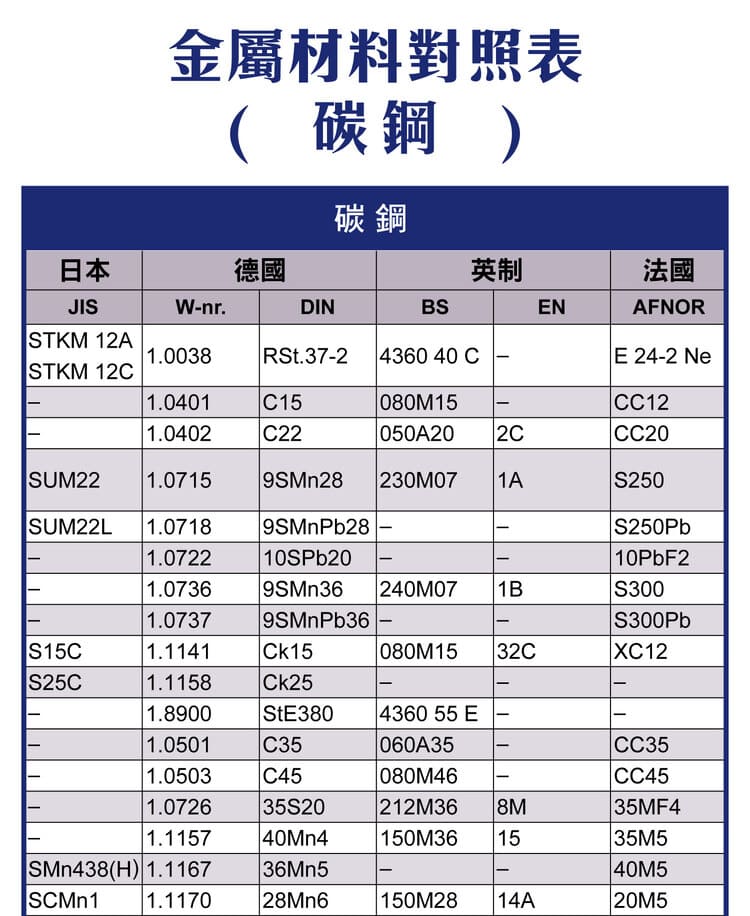
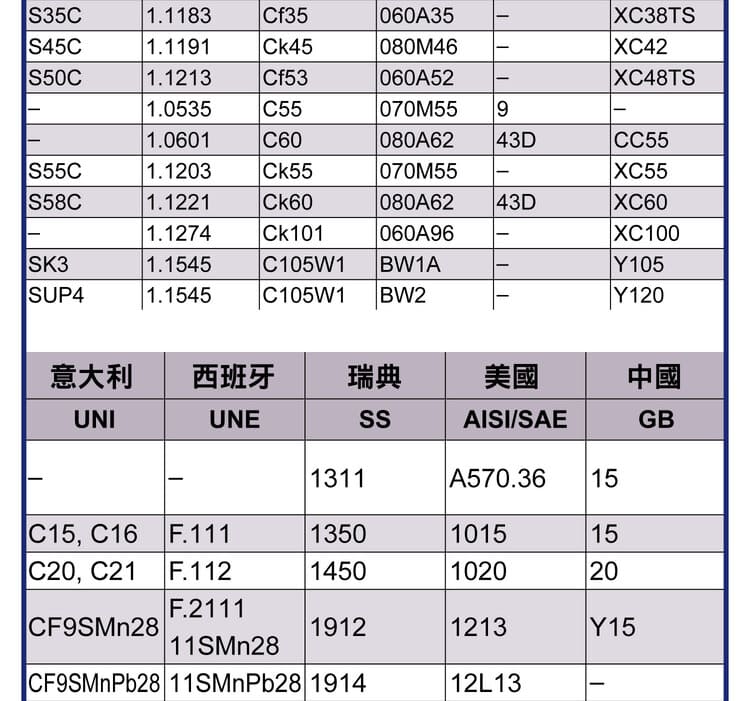
It maps steel grade codes between national systems—Japan JIS, Germany DIN/W-nr., USA AISI/SAE, UK BS, France AFNOR, China GB. Names differ but composition and properties are similar, e.g. S45C (JIS) ≈ C45 (DIN) ≈ 1045 (AISI).
Carbon Steel Cross-Reference
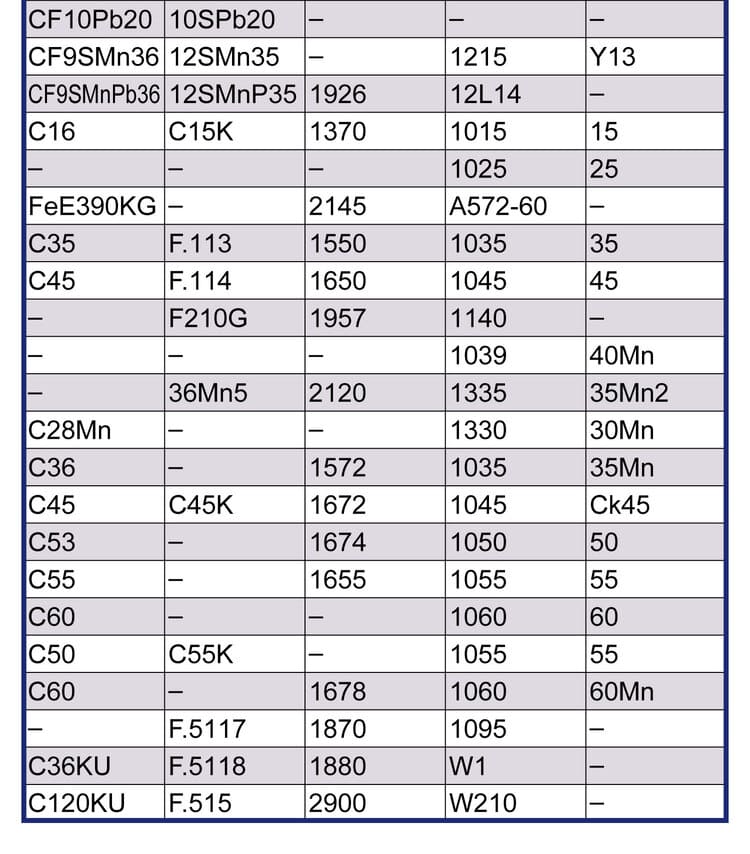
Carbon steel is classified by carbon content; the number is roughly carbon % ×100. Higher carbon means higher strength but lower machinability.
| Japan JIS | Germany DIN | USA AISI | Characteristics |
|---|---|---|---|
| S15C | C15 | 1015 | Low carbon, good machinability, carburizable |
| S25C | C25 | 1025 | Low-medium carbon |
| S45C | C45 | 1045 | Most common machine structural steel |
| S50C | C50 | 1050 | Higher-strength applications |
Alloy Steel Cross-Reference
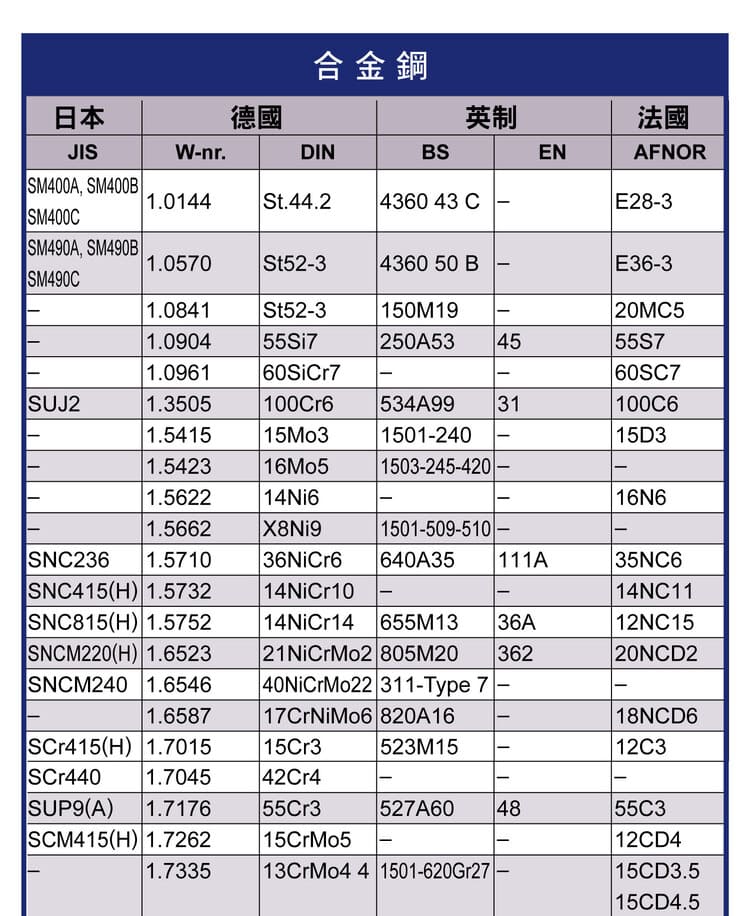
Alloy steel adds Cr (wear/strength), Mo (hot strength) and Ni (toughness) to carbon steel.
| Japan JIS | Germany DIN | USA AISI | Characteristics |
|---|---|---|---|
| SCM415 | 15CrMo5 | 4115 | Carburizing Cr-Mo steel (case hardening) |
| SCM440 | 42CrMo4 | 4140 | High-strength Q&T steel, most common in CNC |
| SNCM220 | 20NiCrMo2 | 8620 | Carburizing Ni-Cr-Mo steel |
Tool & High-Speed Steel Cross-Reference
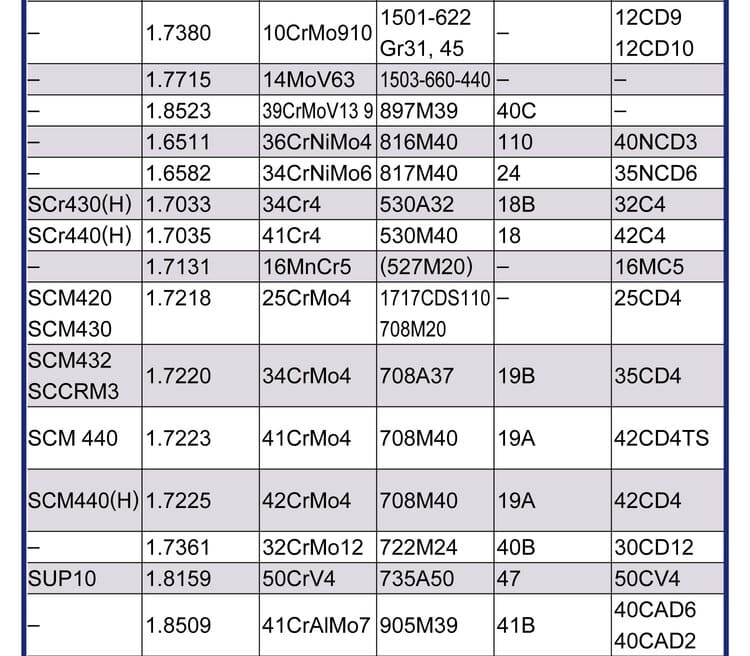
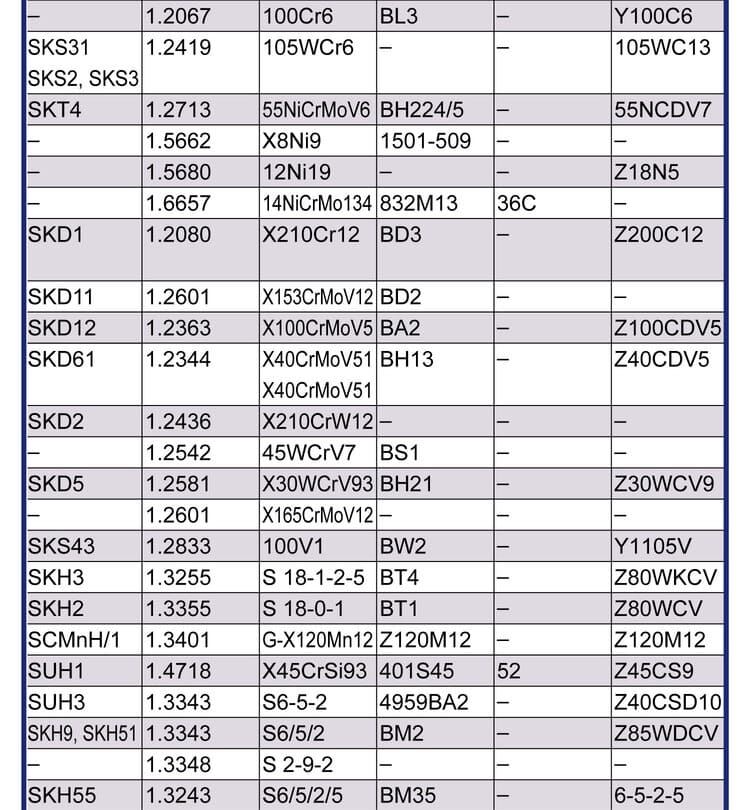
| Japan JIS | USA AISI (DIN) | Type & use |
|---|---|---|
| SKD11 | D2 | Cold-work mold steel; cutters, stamping dies |
| SKD61 | H13 | Hot-work mold steel; die-casting, forging dies |
| SKH51 | M2 | High-speed steel; cutting tools, high-wear use |
Reading the Grade Codes
| Item | Description |
|---|---|
| Number = carbon content | e.g. 1045 ≈ 0.45% C. |
| Element symbols | Cr = chromium, Mo = molybdenum, Ni = nickel, V = vanadium. |
| System differences | JIS "S+number+C" (S45C), AISI four digits (1045), DIN "letter+number" (C45). |
CNC Machining & Material Selection
Wrong material directly affects tool life, efficiency and accuracy. Common choices:
| Item | Description |
|---|---|
| Structural parts | S45C / 1045. |
| High strength | SCM440 / 4140. |
| Case hardening | SCM415 / 8620 (carburizing). |
| Molds | SKD11 / D2. |
For cutting speeds and feeds, see End Mill Cutting Conditions Guide.
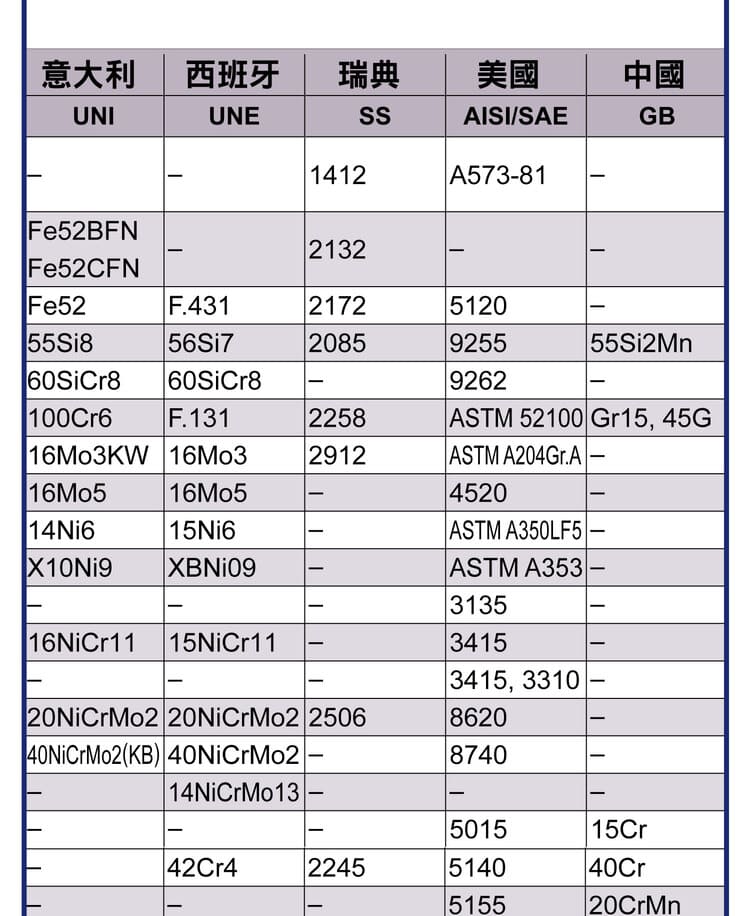
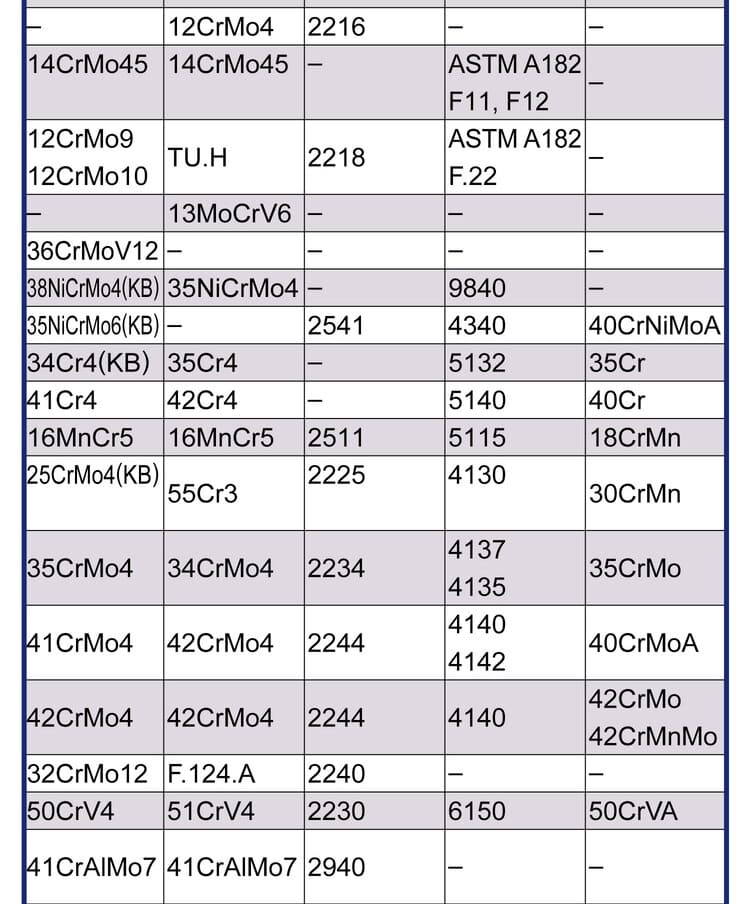
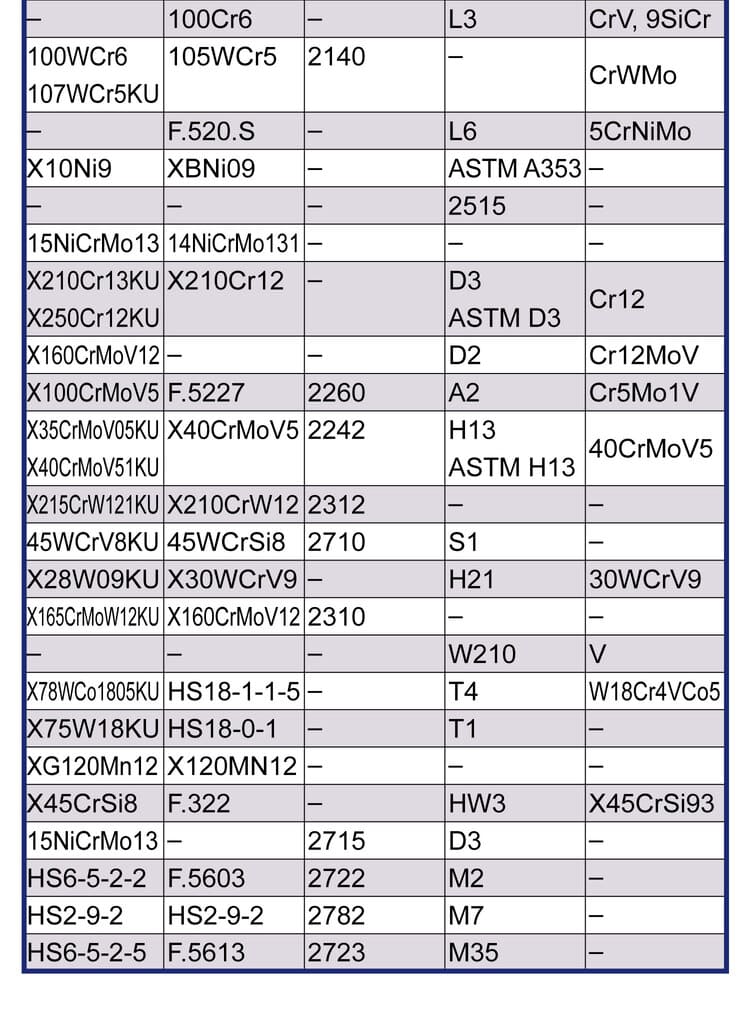
※ The tables show common-grade approximate cross-references; the full multi-country mapping is in the original images below. Verify against national standards before use.
FAQ
What does S45C correspond to?
S45C (JIS) ≈ C45 (DIN) ≈ 1045 (AISI), the most common medium-carbon machine structural steel.
What does the number in 1045 mean?
In AISI four-digit codes, the last two digits are roughly carbon % ×100—1045 ≈ 0.45% C. Higher carbon means more strength, less machinability.
What does SCM440 map to?
SCM440 ≈ 42CrMo4 (DIN) ≈ 4140 (AISI), a high-strength Cr-Mo quenched-and-tempered steel—the most common high-strength material in CNC work.
What are SKD11, SKD61, SKH51?
SKD11 ≈ D2 (cold-work mold steel), SKD61 ≈ H13 (hot-work mold steel), SKH51 ≈ M2 (high-speed steel), used for cutters and molds.
This article is part of Workpiece Materials: The Complete Guide - Name the Metal First, Then Match the Tool; that guide shows how the whole topic fits together.