
Indexable Drill Guide: 8D Deep-Hole Drilling & Insert Selection
This article is part of Drill Bits: The Complete Guide - Start From Depth-to-Diameter, Then Pick the Drill and Set the Conditions; that guide shows how the whole topic fits together.
Should that large-diameter hole move to an indexable drill? This guide helps you decide: look at hole diameter and depth first, then at how large the batch is, and finally at the cost per hole once the body is being reused. What to weigh when choosing inserts, what deep-hole drilling without pecking demands, and the practical points on chip evacuation and burrs are all here.
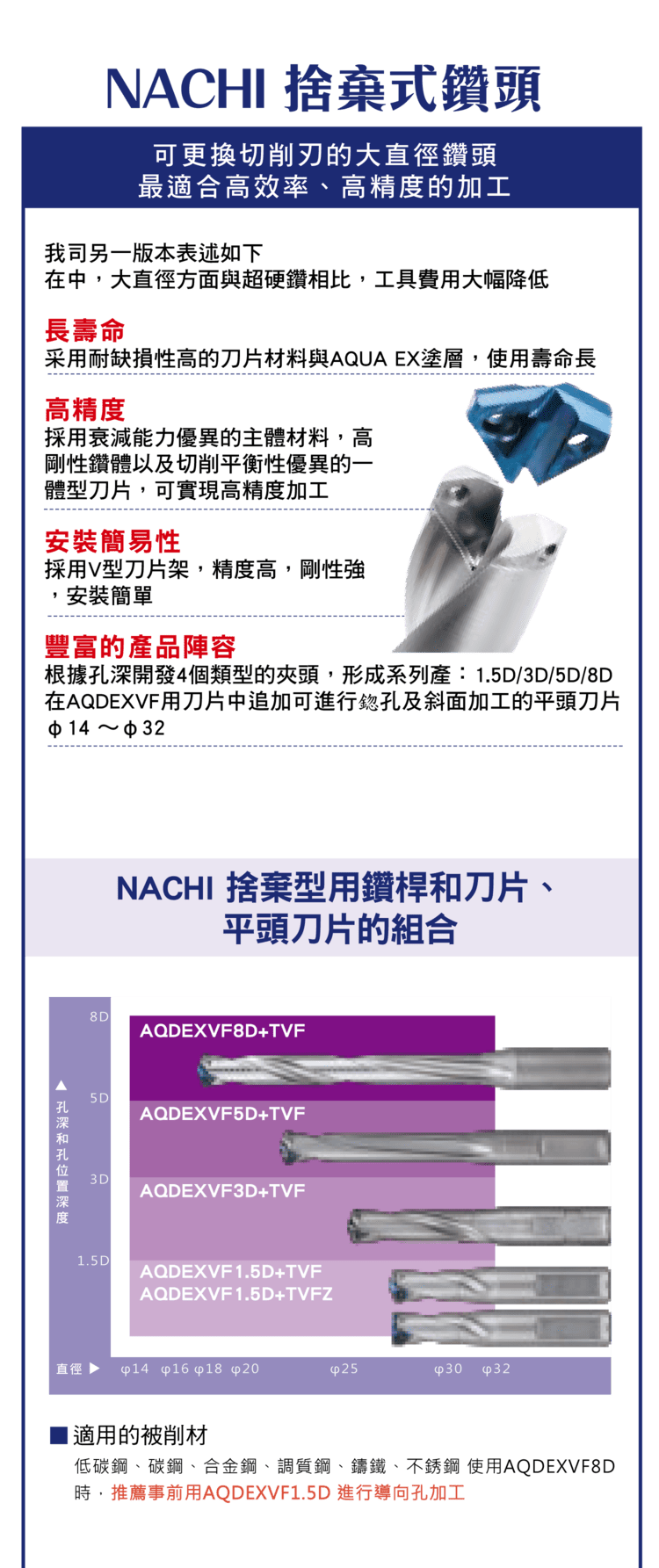
1. What Is an Indexable Drill
An indexable drill separates the cutting edge from the tool body. The insert is replaced when worn, while the holder is reused long-term — making it well suited to large diameters, deep holes and high-volume production.
| Aspect | Design / Behavior | Benefit |
|---|---|---|
| Replaceable insert | Swap only the insert; reuse the holder | Lower tooling cost, less downtime |
| Diameter range | Large-diameter holes | Single-tool completion, higher output |
| Insert change | Quick on-machine changeover | Reduced changeover downtime |
2. 8D Deep-Hole Drilling Without Pecking
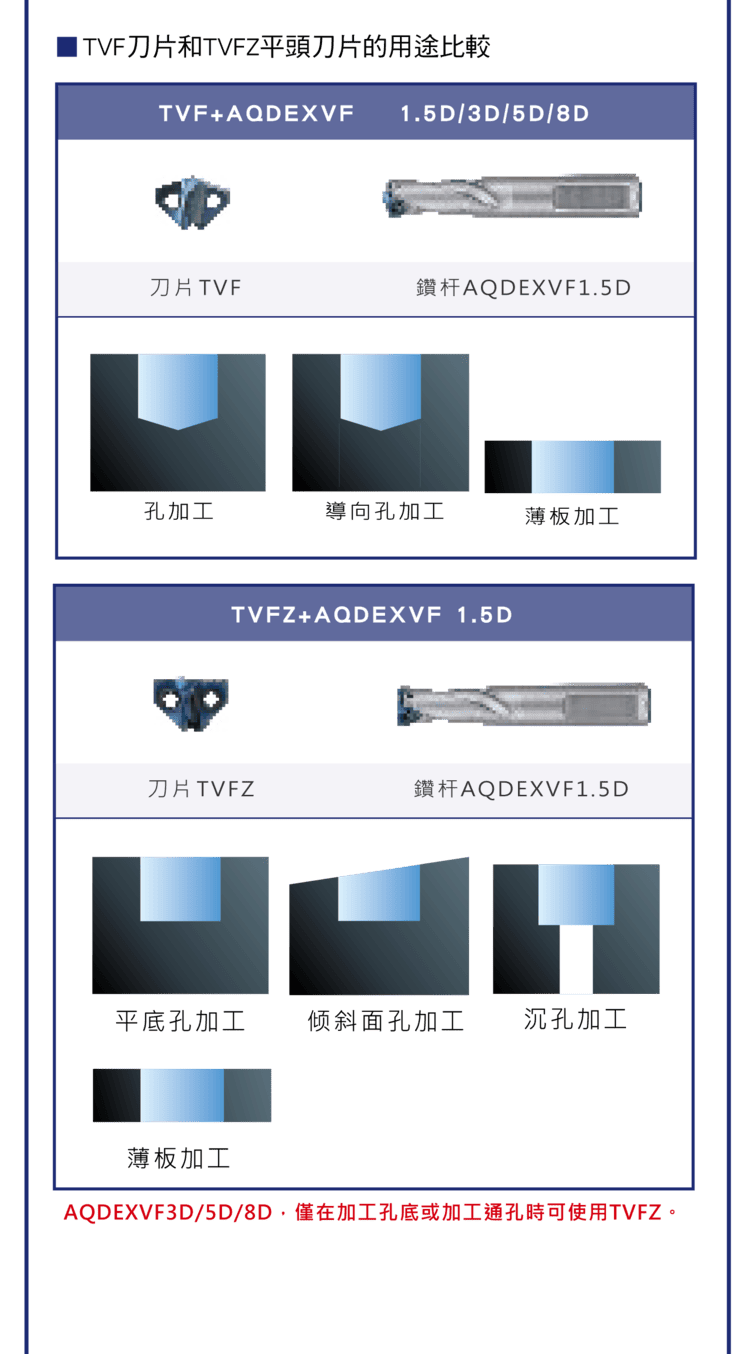
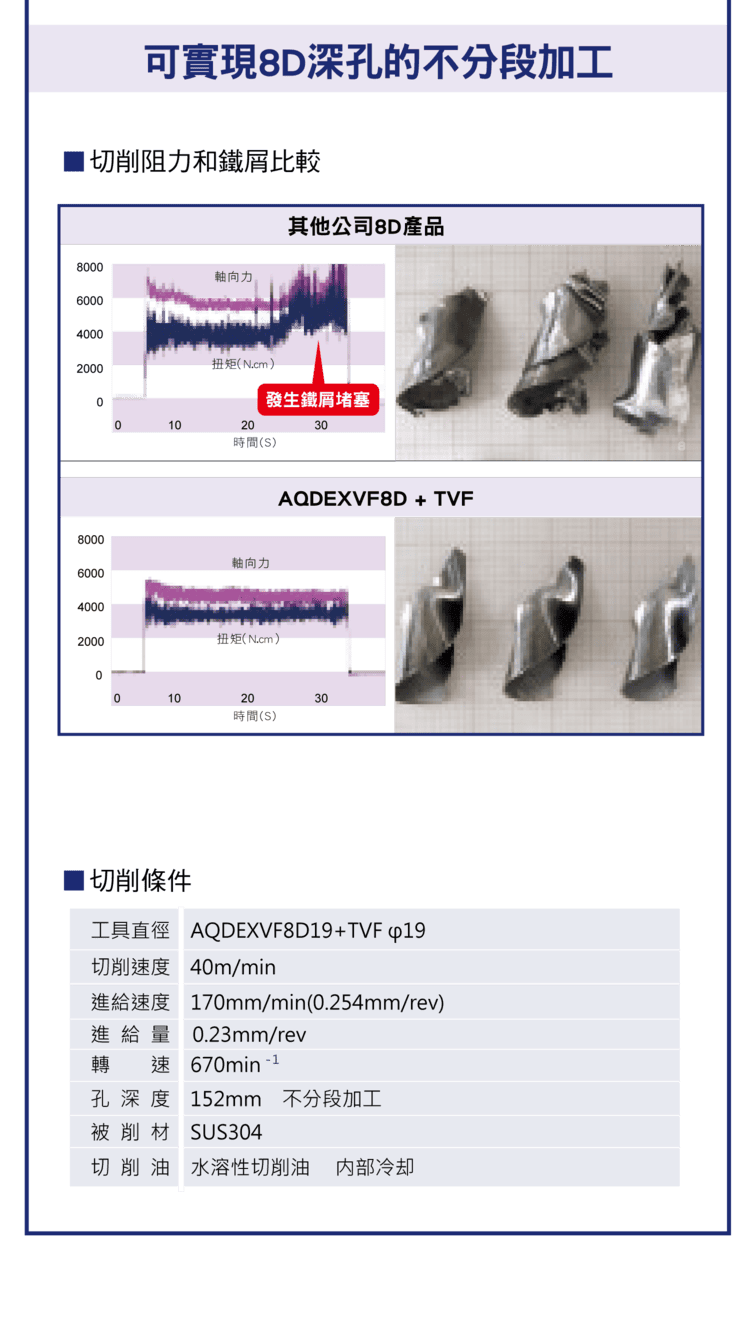
Using the AQDEXVF series as a manufacturer example, deep holes up to 8D can be drilled without pecking, with more stable cutting resistance and torque and smooth chip evacuation. Compared with a general tool:
| Item | General tool | Indexable deep-hole drill (mfr. example) |
|---|---|---|
| Deep-hole drilling | Requires peck/retract | 8D in one pass, no pecking |
| Chips | Prone to clogging | Stable evacuation |
| Result | Limited efficiency, tool prone to damage | Higher efficiency, less tool damage |
3. Cutting Stability and Chip Evacuation
Indexable deep-hole drills typically optimize the flute and insert geometry so chips flow out smoothly with less clogging, while lowering vibration and improving stability. Smooth chip evacuation is often the key to single-pass deep-hole drilling — see also Drill Performance Factors.
4. Tool Life and Wear Resistance
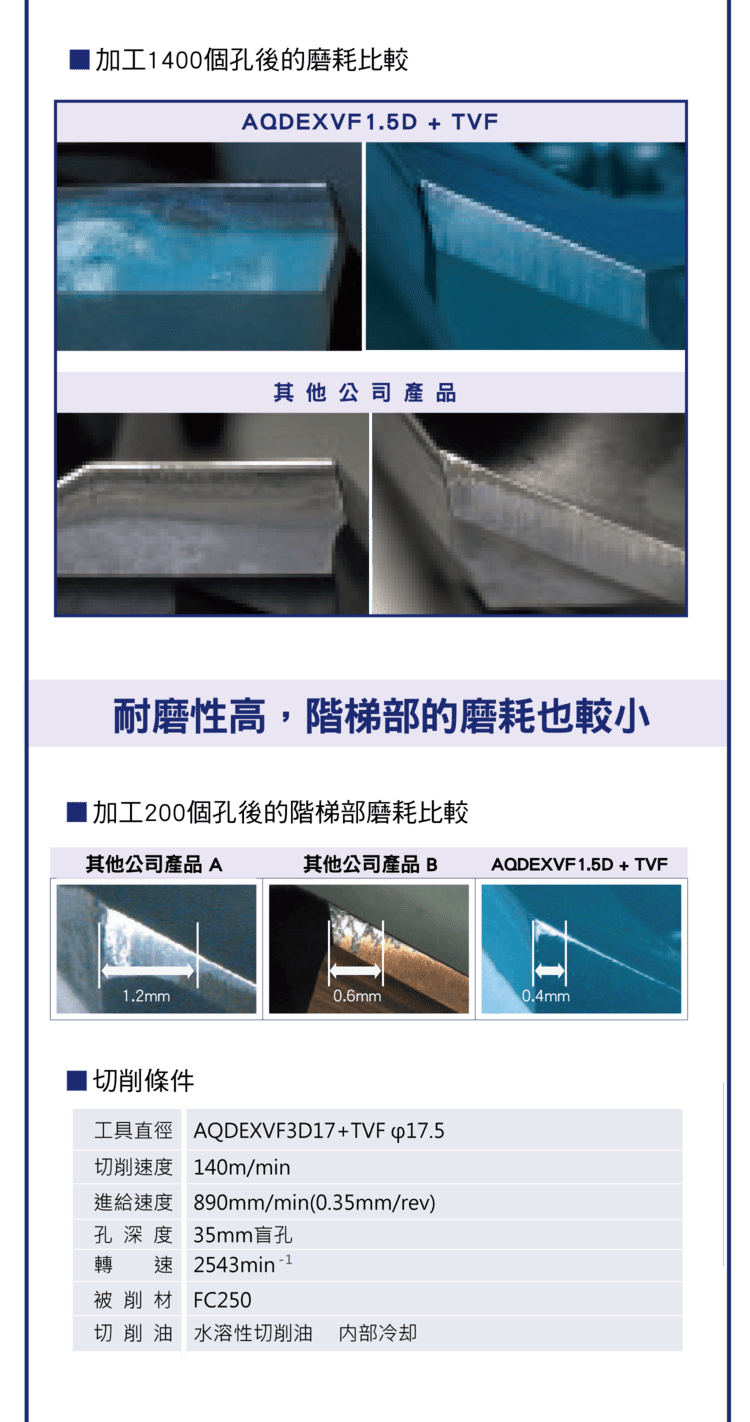
Inserts generally use wear-resistant grades with a durable coating (e.g. the manufacturer's AQUA EX coating — refer to the maker's catalog). Nose wear is smaller and service life is longer, reducing changeover frequency and overall cost.
5. TVF vs TVFZ Insert Applications
The same holder accepts different inserts by hole type. The following is a manufacturer example (refer to the maker's catalog):
| Insert | Application | Feature |
|---|---|---|
| TVF (standard) | General holes, pilot holes, thin plate | High versatility |
| TVFZ (flat) | Flat-bottom holes, inclined faces, counterbores | Suits burr-free work, better hole-bottom quality |
6. Hole Accuracy and Burr-Free Performance
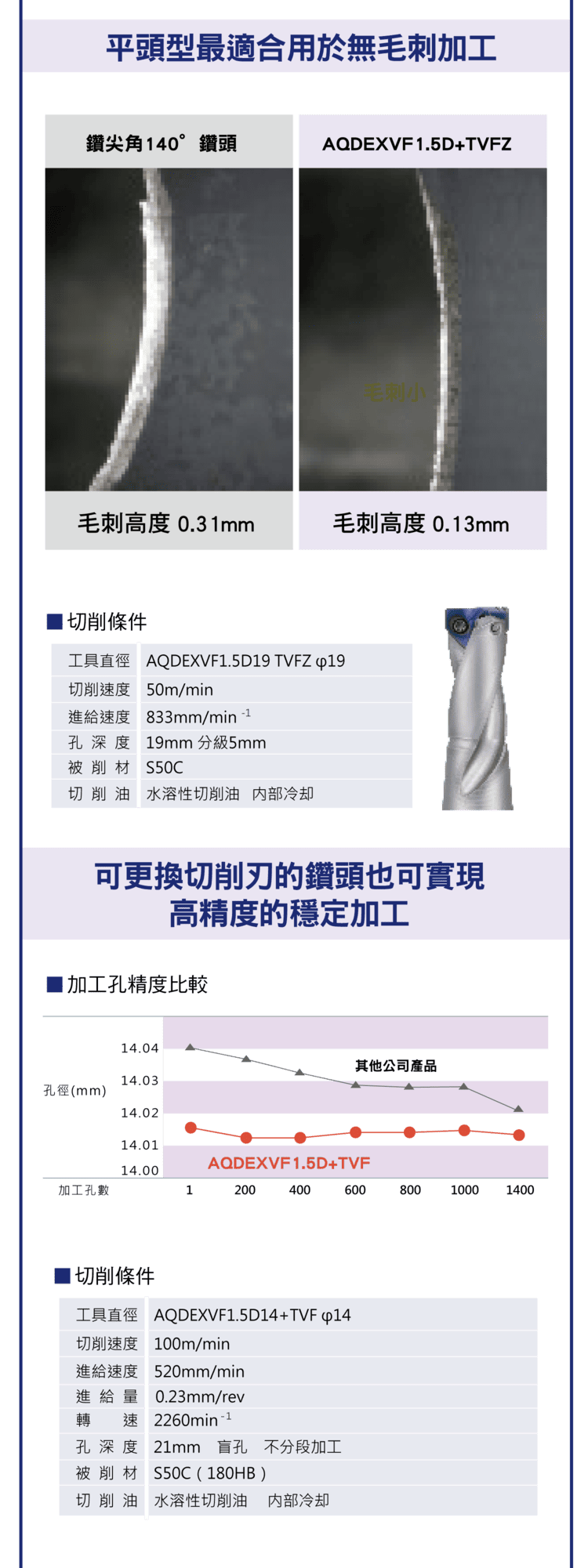
Indexable deep-hole drills deliver better hole-diameter stability and consistency, reducing secondary operations. Flat inserts also help control exit burrs. The following are manufacturer example figures (actual results vary with material and conditions):
| Item | Conventional drill (mfr. example) | Flat insert (mfr. example) |
|---|---|---|
| Exit burr | approx. 0.31 mm | approx. 0.13 mm |
| Post-process | Deburring needed | Fewer deburring steps |
7. Cutting Conditions (Reference)
The values below are manufacturer example references. Actual cutting speed and feed must be adjusted for machine rigidity, tool diameter and hole depth; base your working parameters on the method in the Drilling Parameters Guide or the maker's catalog rather than copying them directly.
| Workpiece | Cutting speed (ref.) | Feed (ref.) | Coolant |
|---|---|---|---|
| SUS304 (stainless) | approx. 40 m/min | approx. 170 mm/min | Water-soluble, internal coolant |
| S50C (medium carbon steel) | approx. 100 m/min (factory test value; no other range data available) | approx. 520 mm/min (factory test value; no other range data available) | Water-soluble, internal coolant |
※ Hole-depth range approx. 19–152 mm (manufacturer example). Figures are indicative only, not guaranteed values.
8. Product Series and Specifications
| Item | Specification (mfr. example) |
|---|---|
| Series depth | 1.5D, 3D, 5D, 8D |
| Diameter range | approx. ⌀14–⌀32 |
| Main applications | Large-diameter holes, deep holes, high-volume production |
9. Application Notes
Indexable drills are best for large-diameter, deep-hole and high-volume work. Because cutting resistance is higher, pair them with a rigid machine such as a CNC machining center, and ensure internal coolant and smooth chip evacuation to fully realize 8D deep-hole performance. For small diameters or shallow holes, a solid drill is more economical.
FAQ
Q: How does an indexable drill differ from a solid drill?
An indexable drill uses replaceable inserts — you swap only the insert while reusing the holder — which suits large diameters and production. A solid drill is one piece: more economical for small, shallow holes but with higher regrind and replacement cost.
Q: How deep can an indexable drill go?
Common series depths are 1.5D, 3D, 5D and 8D. A deep-hole series (manufacturer example) can reach 8D without pecking; actual depth still depends on machine rigidity, chip evacuation and coolant.
Q: How do I choose between TVF and TVFZ inserts?
Use TVF for general holes, pilot holes and thin plate; use the TVFZ flat insert for flat-bottom holes, inclined faces, counterbores and burr-free work. The same holder accepts both — select per the maker's catalog.
Q: What machine conditions are required?
Because cutting resistance is higher, use a rigid CNC machining center with internal (through-tool) coolant to keep deep-hole chip evacuation smooth and reduce vibration and diameter deviation.
For the full reading guides on this topic, see Tool Life and Wear: A Complete Reading Guide, Insert Selection: A Complete Reading Guide and Chip Control: A Complete Reading Guide.
Published: 2026-03-24 | Last updated: 2026-07-25









