
Thread Machining Solutions: Breakage, Wear, Oversize & Undersize
When thread machining goes wrong, breakage, wear and oversize each call for a different fix. This guide helps you locate which one you have, then decide whether to change the machine setup, the holder, the cutting fluid, or the tap design itself. The checks for each of the three are listed, with dedicated guides on oversize, chipping and undersize, and pipe taps to follow up.
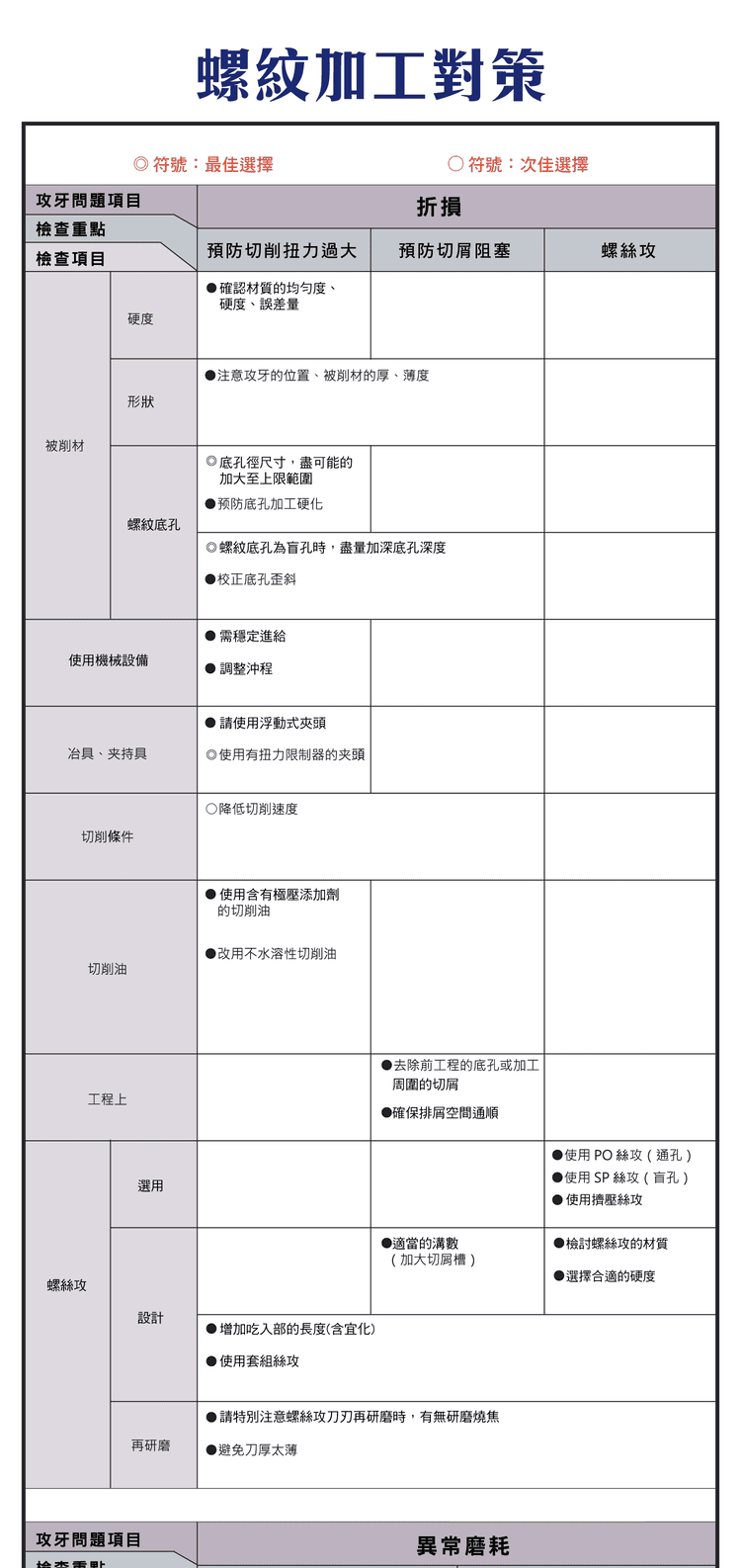
1. Problem Categories
| Problem | Symptom |
|---|---|
| Breakage | Tap fracture, chipped teeth |
| Abnormal wear | Flank wear, welding (BUE), tooth chipping |
| Oversize internal thread | Bore too large, deformed form, gauge NG |
2. Breakage Causes and Countermeasures
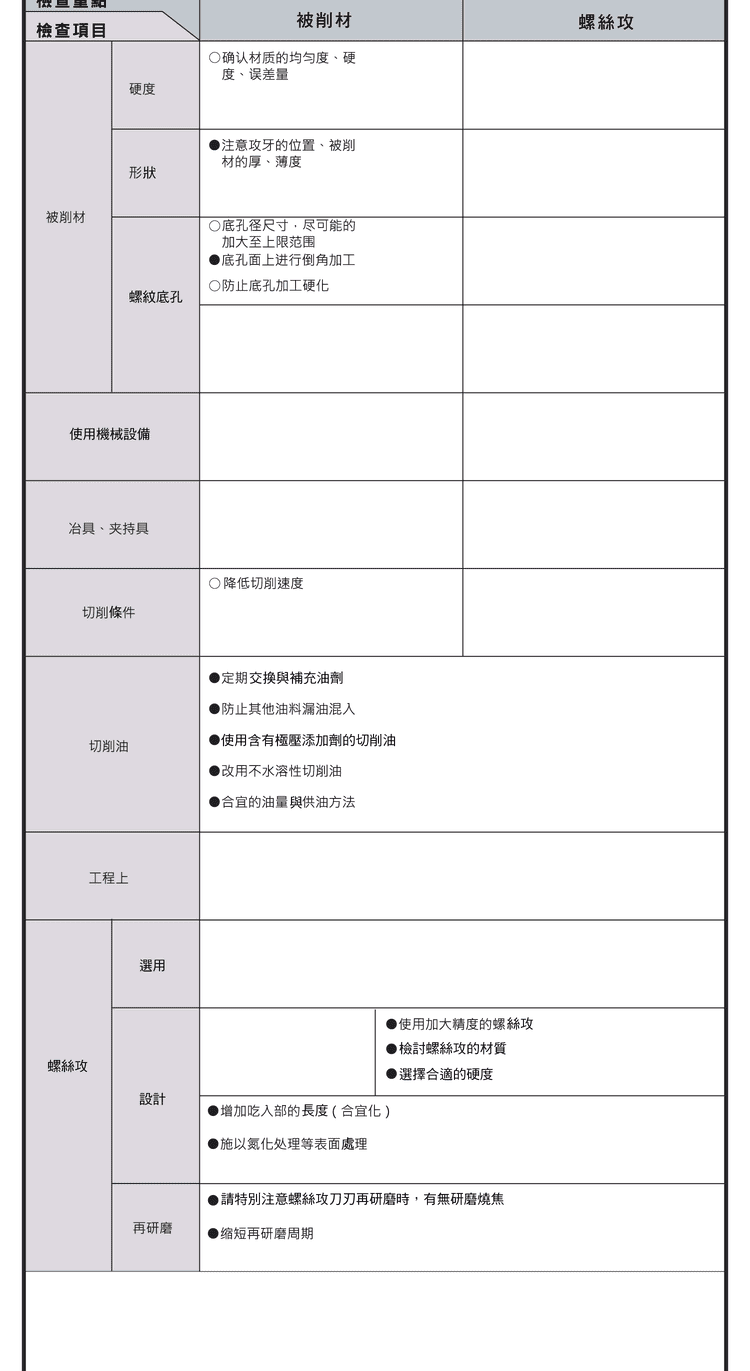
Main causes: excessive torque, chip clogging, unsynchronized feed. Countermeasures by aspect:
| Aspect | Countermeasure |
|---|---|
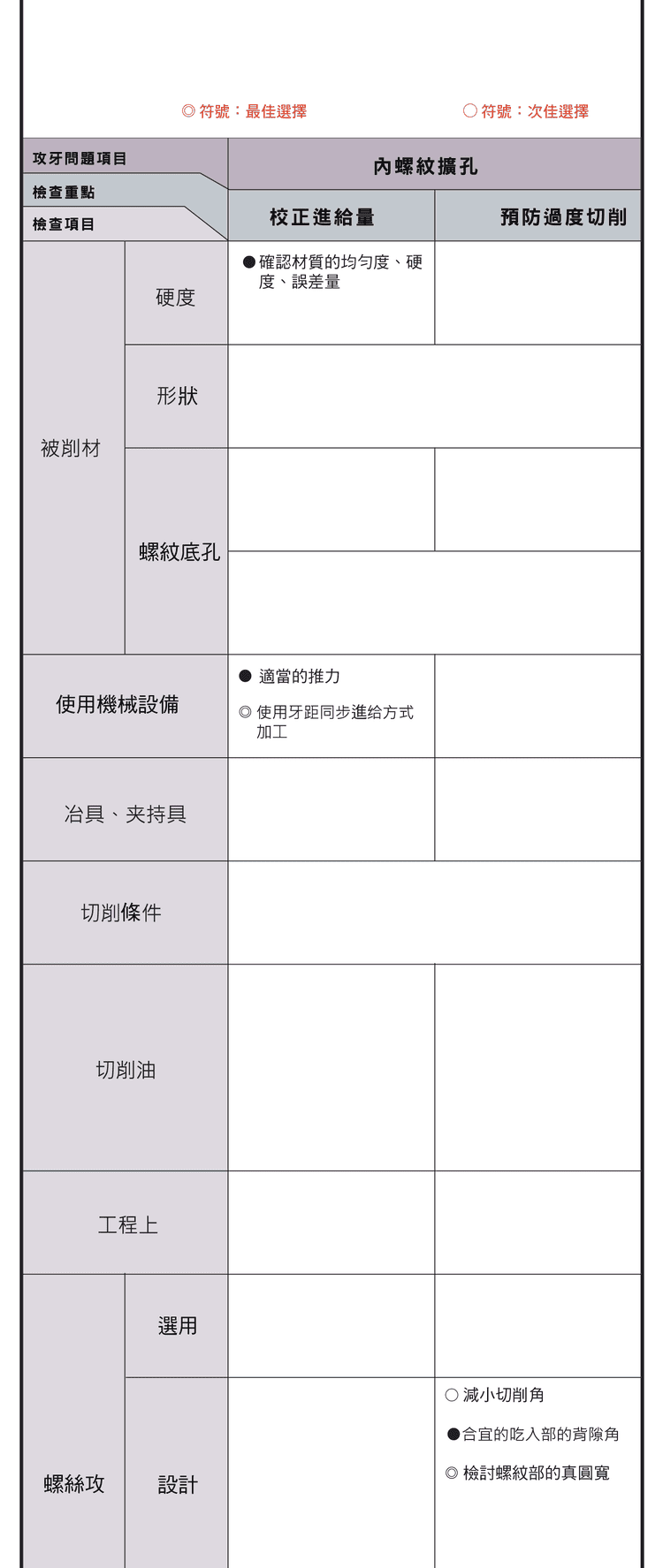
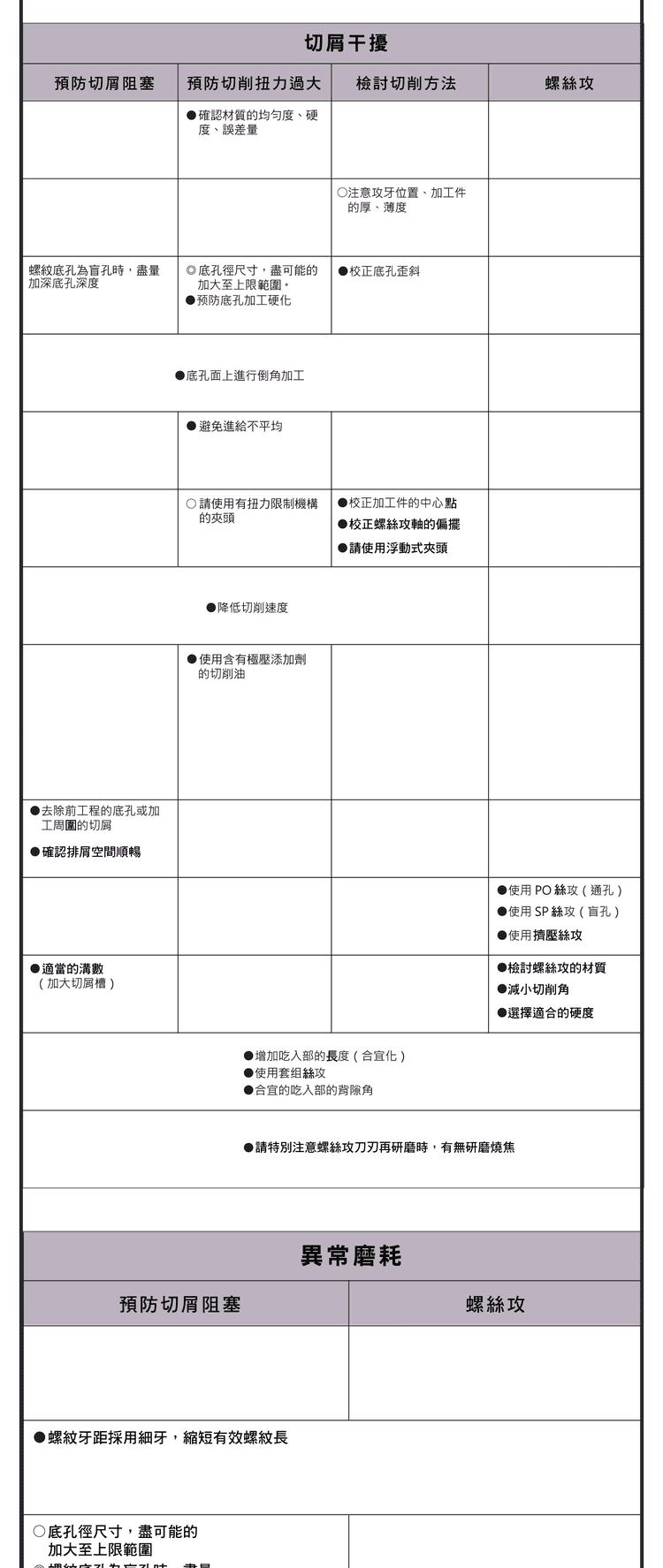
| Material | Check uniformity/hardness, avoid work-hardened zones, control thickness/position |
| Pilot hole | Size near upper limit (slightly larger), avoid hole hardening, correct skew |
| Machine | Stable feed system, tuned synchronized-tapping parameters |
| Holder | Floating holder to compensate error, or a rigid fixed holder |
| Conditions | Lower speed appropriately, avoid feed fluctuation |
| Cutting fluid | EP-additive oil, avoid low-lubricity water-based fluid |
| Process | Clear chips from the hole, keep evacuation smooth |
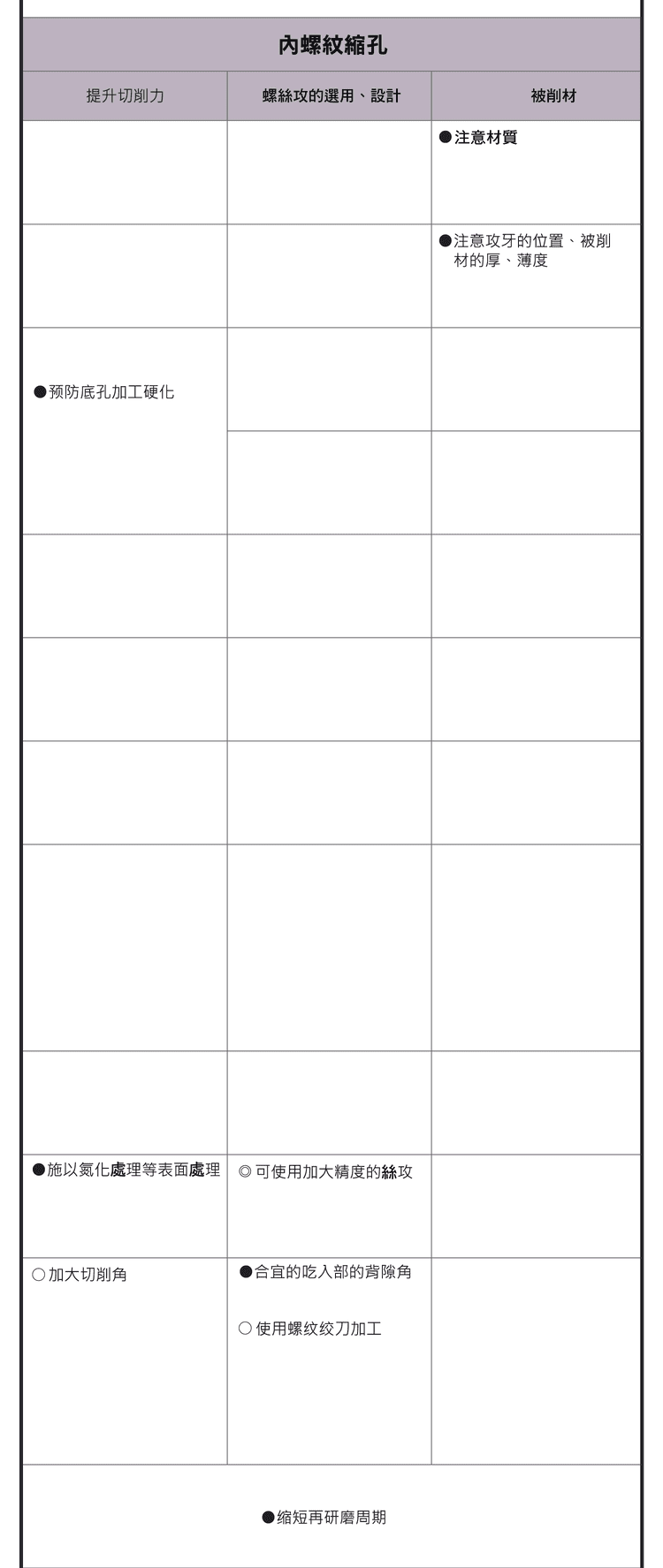
3. Abnormal Wear Countermeasures
| Aspect | Countermeasure |
|---|---|
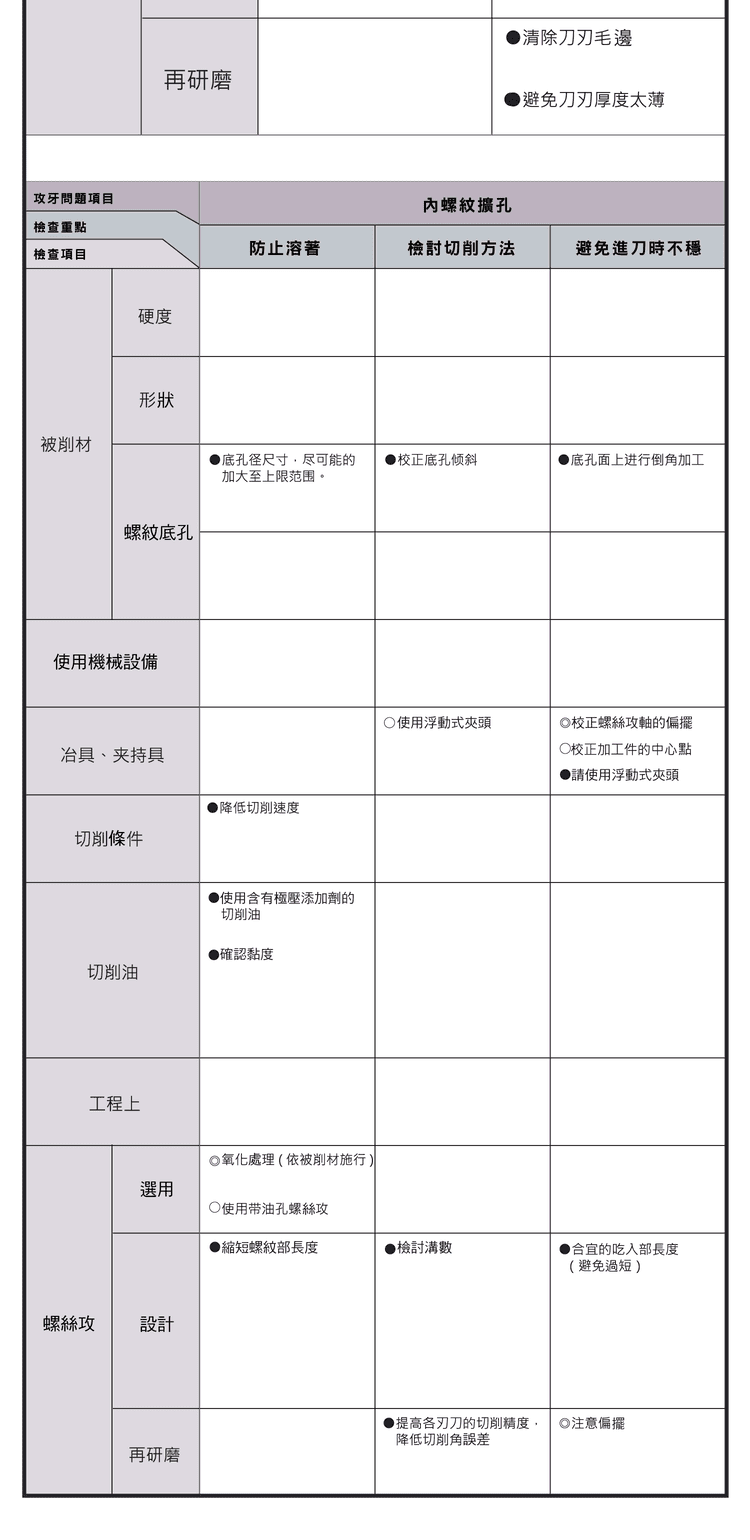
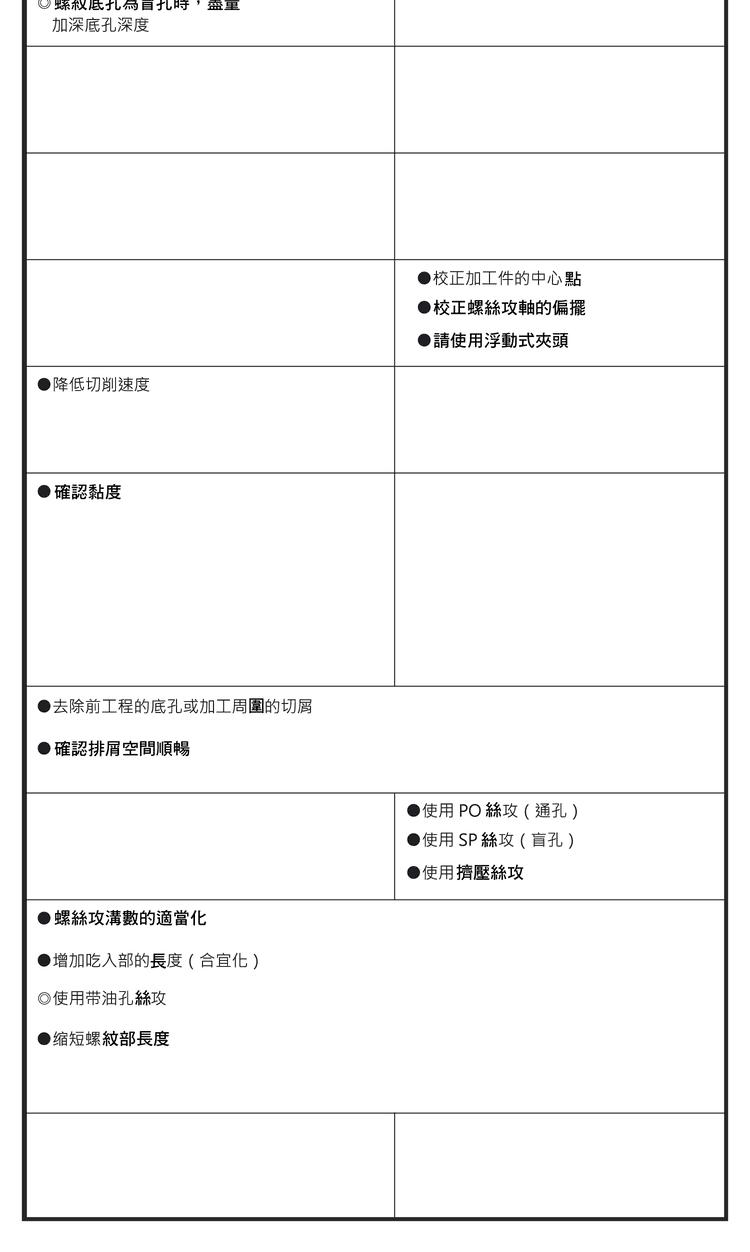
| Cutting fluid | Replace regularly, check viscosity and delivery |
| Conditions | Lower speed, steady feed |
| Tool choice | High-precision tap suited to material hardness |
| Design | More effective thread length, surface treatment (e.g. nitriding) |
| Regrinding | Avoid too-thin edges, shorten the regrind cycle |
Common wear types: flank wear, welding (built-up edge), tooth chipping.
4. Oversize and Roughness (Overview)
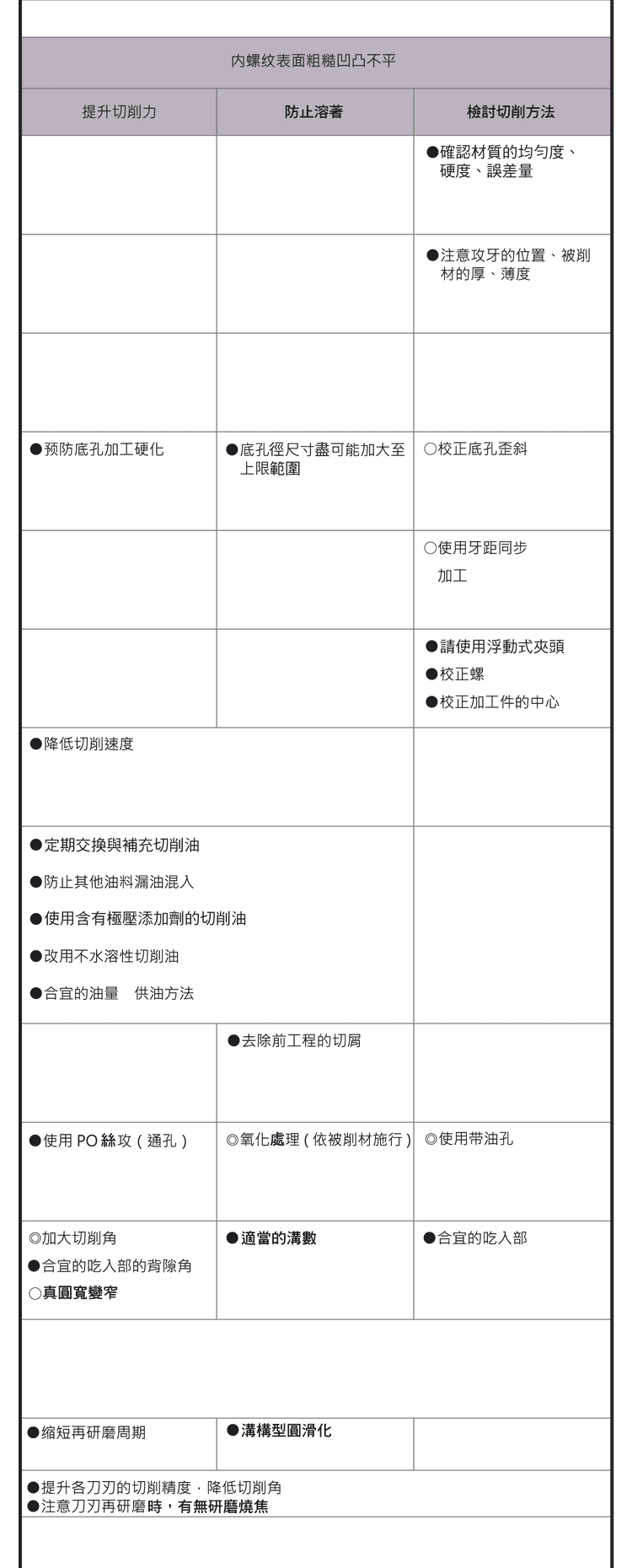
Oversize means the post-tapping bore is too large with a deformed form that fails the gauge, mainly from feed not synced to pitch, runout, wrong tap or tool wear. Fixes centre on rigid tapping (feed = pitch) or a floating holder, good concentricity and timely tool change.
※ Full oversize causes and fixes (over/under feed, runout, tap selection, wear) are in the Internal Thread Oversize Causes; chipping, undersize and evacuation/retract are in the Tapping Troubleshooting Guide.
5. Quick Checklist
Check in order: ① hole size and position → ② tap type and material match → ③ holder concentricity and synchronized feed → ④ speed and cutting fluid → ⑤ evacuation and retract timing → ⑥ tool wear. Most tapping defects trace to these six.
For speed/torque see the Tap Cutting Speed Guide and Tap Torque Guide; for pilot holes see the Metric Tap Drill Chart; for holders see the Tapping Setup Guide; for pipe-tap problems see the Pipe Tap Troubleshooting Guide.
FAQ
Q: How to avoid chipping and breakage?
The key is evacuation: retract only after the cut fully passes, add chip space, clear chips from the hole; lower speed, use EP-additive fluid and a slightly larger hole to greatly cut chipping and breakage.
Q: How to reduce abnormal tap wear?
Replace fluid regularly and confirm delivery, lower speed with steady feed, pick a high-precision tap suited to hardness, add surface treatment (e.g. nitriding) and shorten the regrind cycle while avoiding too-thin edges.
Q: What about oversize (gauge NG)?
Usually feed not synced to pitch, runout or tool wear. Use rigid tapping or a floating holder, ensure concentricity and change the tool in time. Full causes and fixes are in the Internal Thread Oversize Causes guide.
Q: What order to troubleshoot tapping?
Check hole size and position, tap type and material, holder concentricity and synchronized feed, speed and fluid, evacuation and retract timing, and tool wear. Most issues locate to these six.
For the full reading guides on this topic, see Tool Life and Wear: A Complete Reading Guide and Chip Control: A Complete Reading Guide.
Published: 2026-03-24 | Last updated: 2026-10-31









