平面銑削表面粗糙度計算:球頭刀R與步距P公式
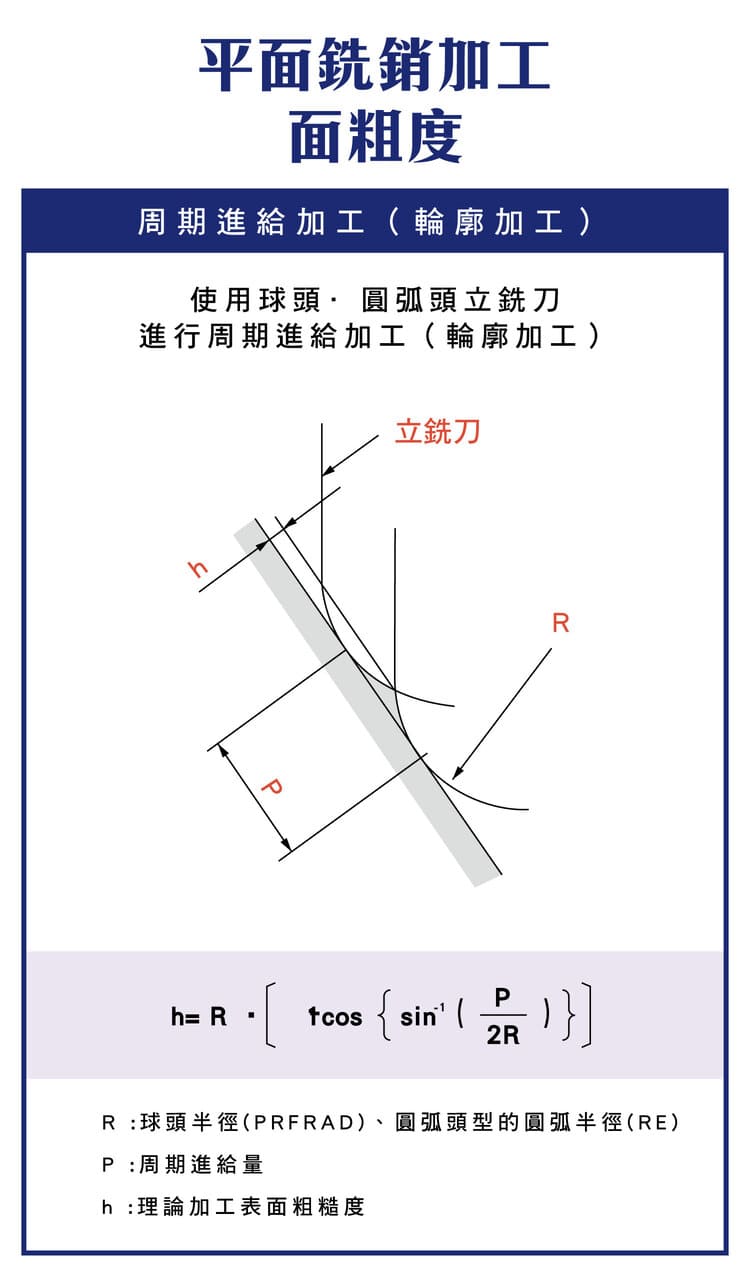
銑削加工面的理論粗糙度,主要由刀具半徑(R)與周期進給量/步距(P)決定。使用球頭或圓弧頭立銑刀做輪廓加工時,表面粗糙度可用幾何關係公式計算與預測。降低步距或增大刀具半徑都能提升表面品質,是精加工與模具加工最關鍵的參數控制核心。
一、表面粗糙度的形成原理
加工面是由刀具軌跡一道道堆疊形成,相鄰刀痕之間留有高度差(殘留高度)。刀具半徑決定刀痕的曲率、步距(周期進給)決定刀痕間距。結果:步距越大→粗糙度越高;刀具半徑越大→表面越平滑。常用於球頭/圓弧頭立銑刀的周期進給與輪廓加工。
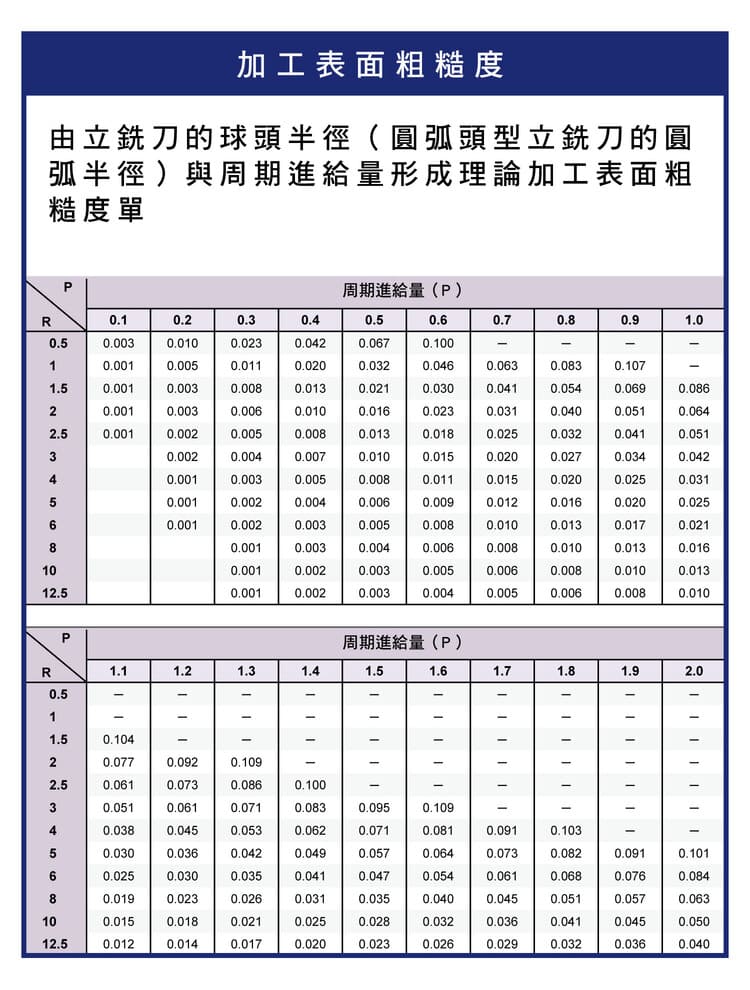
二、理論計算公式
| 項目 | 內容 |
|---|---|
| 理論粗糙度公式 | h = R × { 1 − cos [ sin⁻¹ ( P / 2R ) ] } |
| R | 刀具球頭或圓弧半徑 |
| P | 周期進給距離(步距) |
| h | 理論表面粗糙度高度 |
用途:預測加工品質、設定最佳步距與進給參數。此為理論值,實際還受振擺、震動與刀具磨耗影響。
三、參數影響關係
| 參數 | 變大時 | 建議 |
|---|---|---|
| 刀具半徑 R | 粗糙度降低、表面平滑 | 精加工用大半徑球頭 |
| 周期進給 P(步距) | 粗糙度增加、波紋明顯 | 精加工用小步距 |
加工策略:精加工→小進給+大半徑;粗加工→大進給+小半徑(先求效率再精修)。
四、粗糙度對照數據應用
不同 R 與 P 組合對應不同粗糙度 h,可建成對照表快速查詢、設定加工條件與預測品質,常用於模具加工與精密零件加工。切削速度/進給的整體公式見〈平面銑削計算公式大全〉。
五、品質最佳化策略
刀具選擇:大半徑球頭刀、高精度刀具;切削條件:降低步距與進給、穩定切削速度;加工方式:多段精加工、小步距分層加工。修光刀與振擺對實際粗糙度的影響見〈平面銑削表面粗糙度控制〉。
六、常見問題與對策
| 問題 | 原因 | 對策 |
|---|---|---|
| 表面粗糙度過高 | 步距 P 過大、半徑 R 過小 | 縮小步距、改用大半徑球頭 |
| 表面波紋明顯 | R 過小、殘留高度大 | 加大刀具半徑、多段精修 |
| 實際比理論粗 | 振擺、震動、磨耗 | 提升刀具精度、降低懸伸 |
常見問題 FAQ
Q:理論粗糙度公式 h = R×{1−cos[sin⁻¹(P/2R)]} 怎麼用?
代入刀具半徑 R 與步距 P 即可算出殘留高度 h。P 越小、R 越大,h 越小、表面越光滑。常反過來用:先設定目標 h,再回推允許的最大步距 P。
Q:步距(P)和進給量是同一回事嗎?
不完全相同。此公式的 P 是輪廓/曲面加工時相鄰刀路的「行距(步距)」,決定刀痕間距;而每刃進給 fz 是沿刀路方向的進給。曲面精加工主要靠縮小步距 P 降低粗糙度。
Q:為什麼球頭刀半徑越大表面越光滑?
半徑越大,同樣步距下相鄰刀痕之間的殘留高度越小(曲率越平),所以表面越平滑。因此精加工偏好大半徑球頭,但需兼顧細部圓角是否做得出來。
Q:算出來的理論值和實測差很多怎麼辦?
理論公式只算幾何殘留高度,實際還受刀具振擺、機台震動與磨耗影響,通常會比理論值粗。可提升刀把/主軸精度、減少懸伸、搭配修光刀,讓實測接近理論。