Pipe Tap Troubleshooting Guide: Rough Surface, Chipping & Materials
This guide covers common pipe-tapping problems and fixes — rough surface, uneven threads, chip clogging, tap wear and chipping — mapped to material tendencies (carbon steel, stainless, cast iron, aluminium). Adjusting cutting speed, fluid, machine rigidity and tap selection effectively raises tapping quality and stability while cutting defects and tool wear.
1. Surface Anomalies
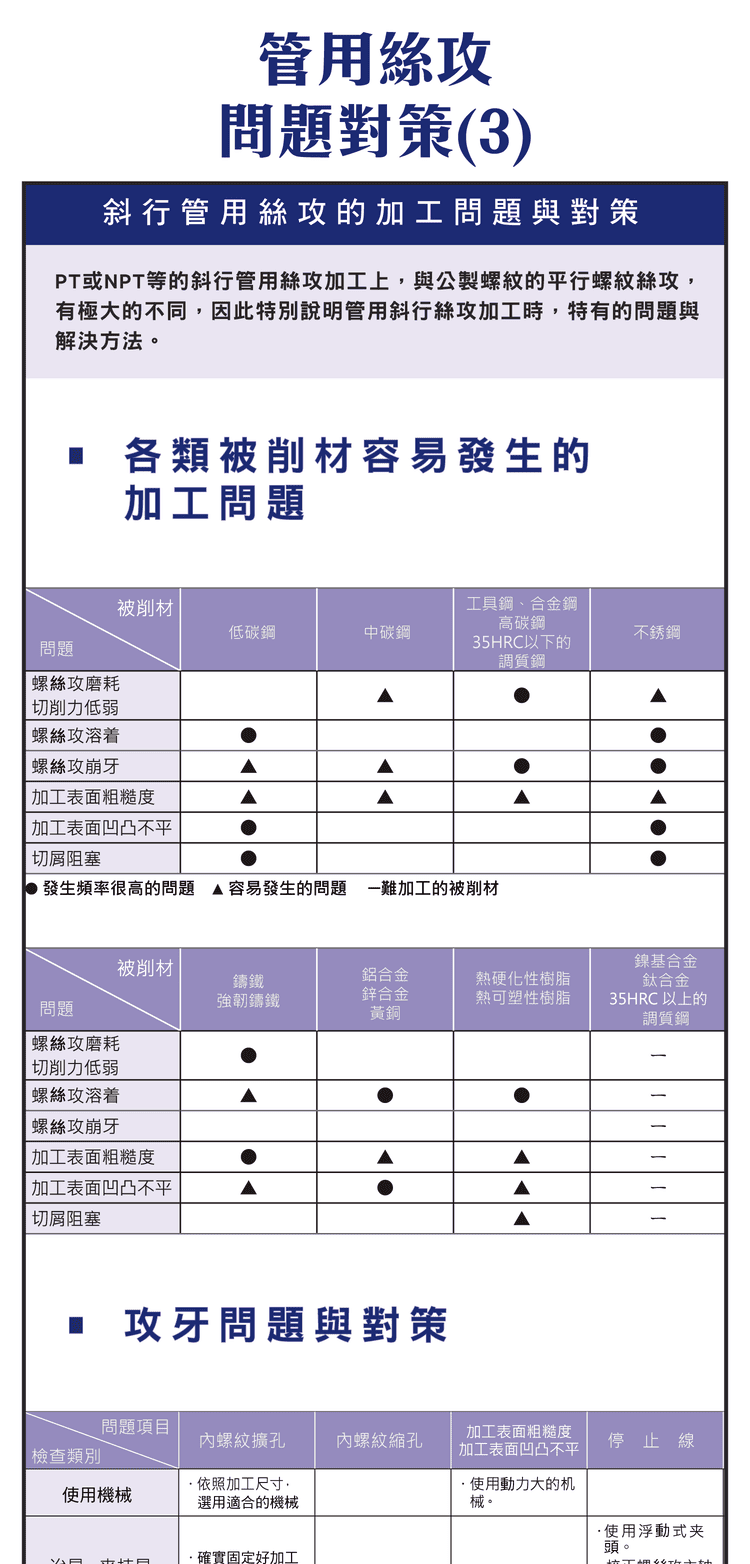
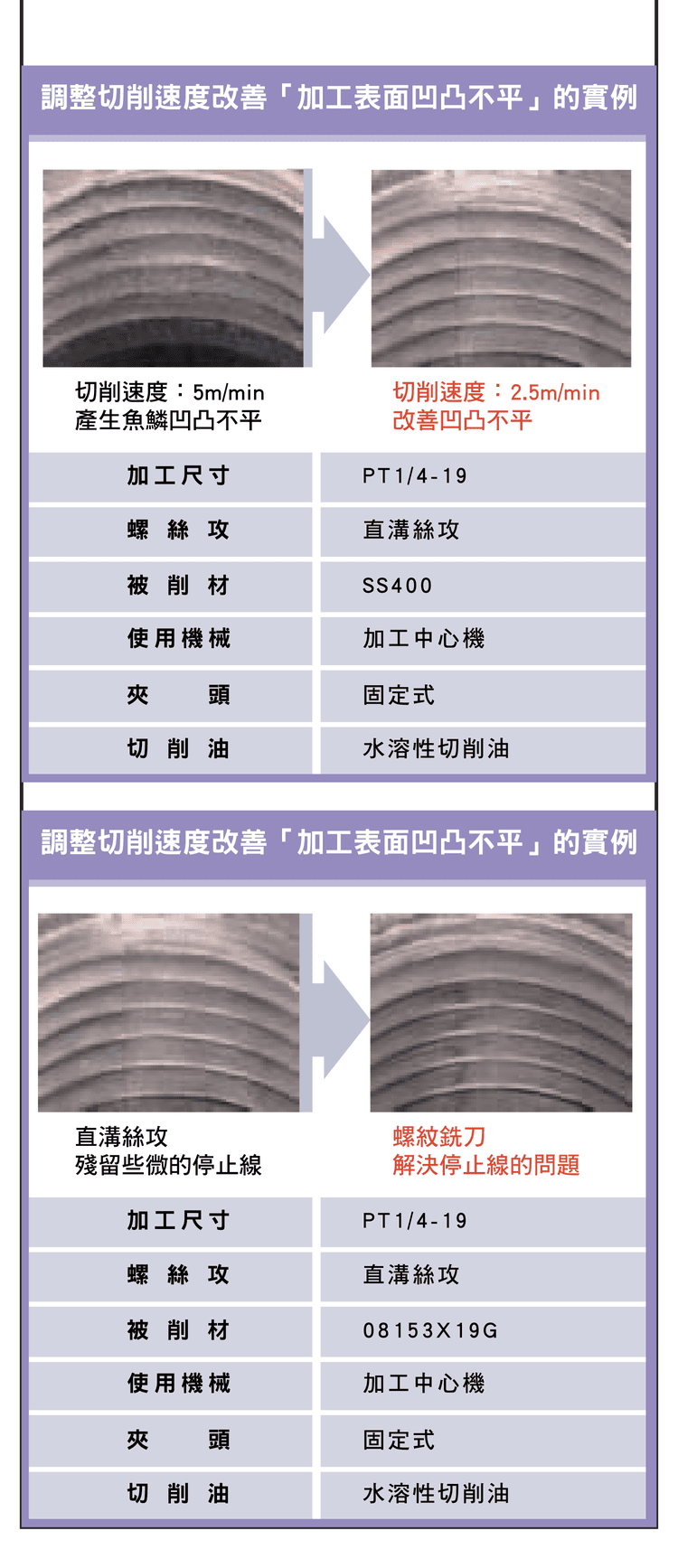
Common issues: poor surface finish, uneven threads and stop lines (machining marks). In one example, 5 m/min gives a rougher surface while lowering to 2.5 m/min clearly improves it — too high a speed degrades quality.
※ These speeds are an example; adjust to material, tap and machine.
2. Stop Lines and Marks
| Symptom | Cause | Fix |
|---|---|---|
| Line marks on the thread (stop line) | Unstable tool, poor evacuation | Switch to thread milling, raise stability |
3. Problem Tendencies by Material
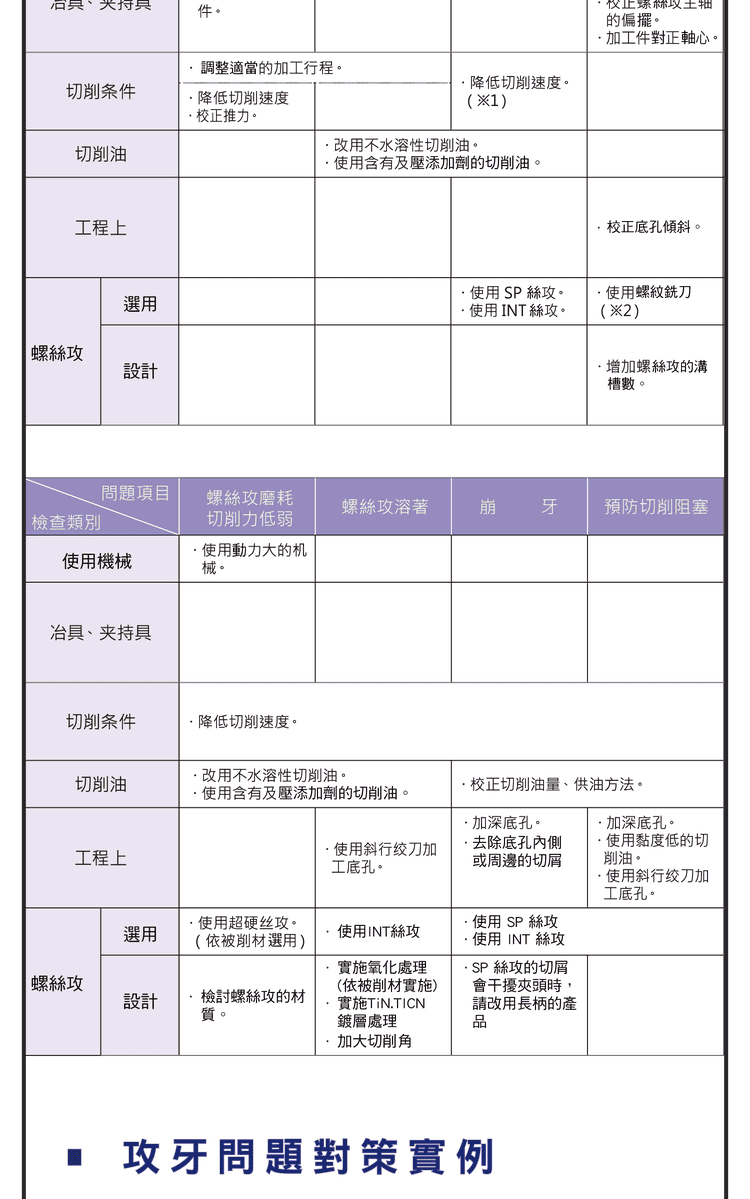
| Material | Common problem |
|---|---|
| Low/medium-carbon steel | Wear and rough surface |
| Stainless | Galling and chipping |
| Cast iron | High cutting resistance |
| Aluminium / copper | Sticking to the tool |
| Plastics | Deformation |
4. Main Defects and Fixes
| Aspect | Fix |
|---|---|
| Machine & holding | Use a rigid machine, ensure stable holding |
| Conditions | Lower speed, adjust feed appropriately |
| Cutting fluid | Use EP additives, avoid under-lubricated water-based fluid |
| Process | Deepen the hole, improve evacuation |
Common defects include tap wear, insufficient cutting force, thread galling, chipping, rough surface and chip clogging — directly affecting accuracy, tool life and quality.
5. Tap Selection and Design Optimization
| Direction | Suggestion |
|---|---|
| Selection | Carbide taps for hard materials; use better-evacuating forms (spiral/spiral-point) |
| Design | More flutes, better tool material/coating (TiN/TiCN), adjusted cutting angle |
The biggest factors are cutting speed, material, tool selection and evacuation; the best strategy is matching the right tap and conditions to the material.
For type comparison see the Pipe Tap Guide; for accuracy see the Pipe Thread Tolerance Guide; for general countermeasures see the Thread Machining Solutions; for surface treatment see the Tap Surface Treatment Guide.
FAQ
Q: Rough pipe-tap threads — what to do?
First lower the cutting speed (too high roughens the surface), improve lubrication and evacuation, and check machine rigidity and holding. If instability causes stop lines, switch to thread milling for more stability.
Q: Why does stainless pipe thread gall and chip?
Stainless work-hardens and tends to stick, so it galls and chips. Lower speed, use EP-additive fluid, choose anti-adhesion coatings (TiCN/CrN) and keep evacuation smooth.
Q: High resistance and breakage in pipe tapping?
Taper pipe threads engage fully, so resistance is inherently high. Use a rigid machine, deepen the hole for evacuation, lower speed with steady feed and ample lubrication; high-resistance materials like cast iron especially need good evacuation and tool material.
Q: When should I switch to thread milling?
When stop lines appear, for large-diameter pipe threads, or where a broken tap is hard to remove. Thread milling has no stop line, is more stable and one tool covers several sizes — good for precision or high-value pipe fittings. See Thread Milling Guide: Helical Feed, Selection & Conditions for details.
For the full reading guides on this topic, see Thread Machining: A Complete Reading Guide, Surface Finish: A Complete Reading Guide and Chip Control: A Complete Reading Guide.