
Tap Cutting Speed Guide: Vc Formula, RPM & Material Speeds
Setting the tapping speed (Vc) and spindle speed (n) correctly is key to thread quality, lower wear and avoiding breakage. Tapping speed depends on material, tap type, engaged threads, cutting fluid and hole type. This guide gives the Vc/speed formulas, how to read a speed chart and reference speeds by material, to find a suitable speed and fine-tune on the floor.
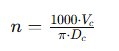
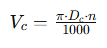
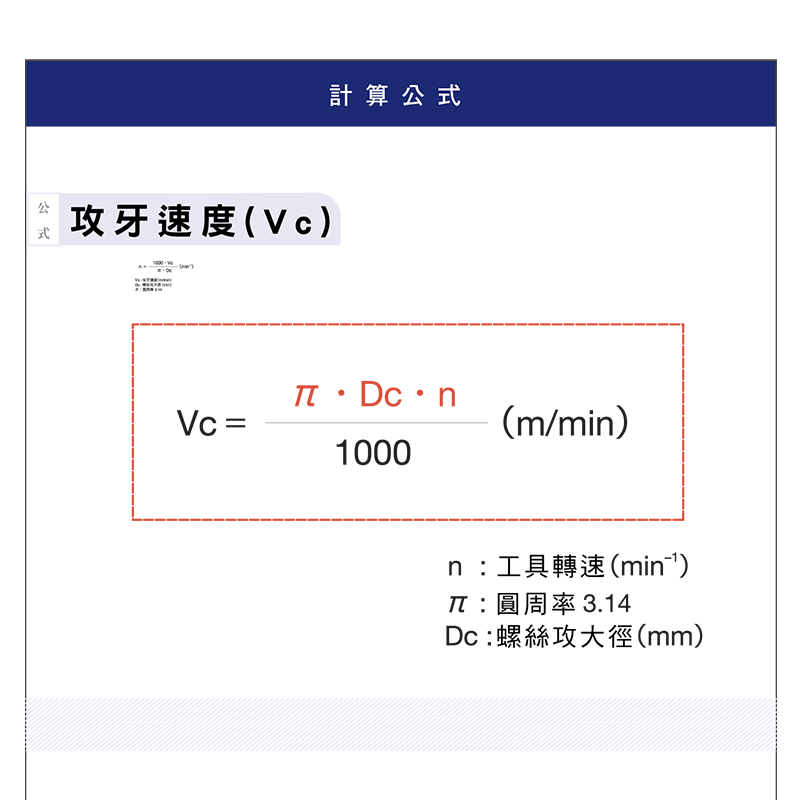
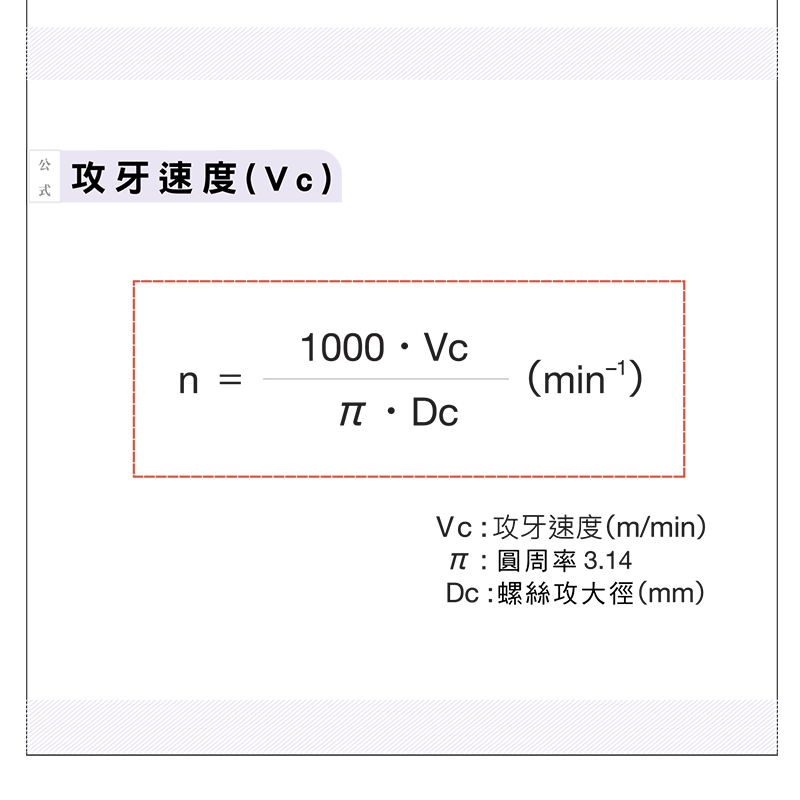
1. Vc and Spindle-Speed (n) Formula
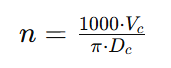
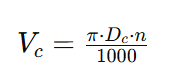
Vc = π × Dc × n ÷ 1000 ⟺ n = 1000 × Vc ÷ (π × Dc)
| Symbol | Meaning |
|---|---|
| Vc | Cutting speed (m/min) |
| n | Spindle speed (min⁻¹ / RPM) |
| Dc | Tap outer diameter (mm) |
| π | about 3.14 |
Given the speed you can back-calculate Vc — common for CNC setup, on-site correction and tool life optimization.
2. Factors Affecting Tapping Speed
| Factor | Direction |
|---|---|
| Material | Soft (aluminium, copper) faster; hard (stainless, titanium) slower |
| Tap type | Cutting tap medium; form tap slower but stable |
| Conditions | Good lubrication allows faster; deep holes slower |
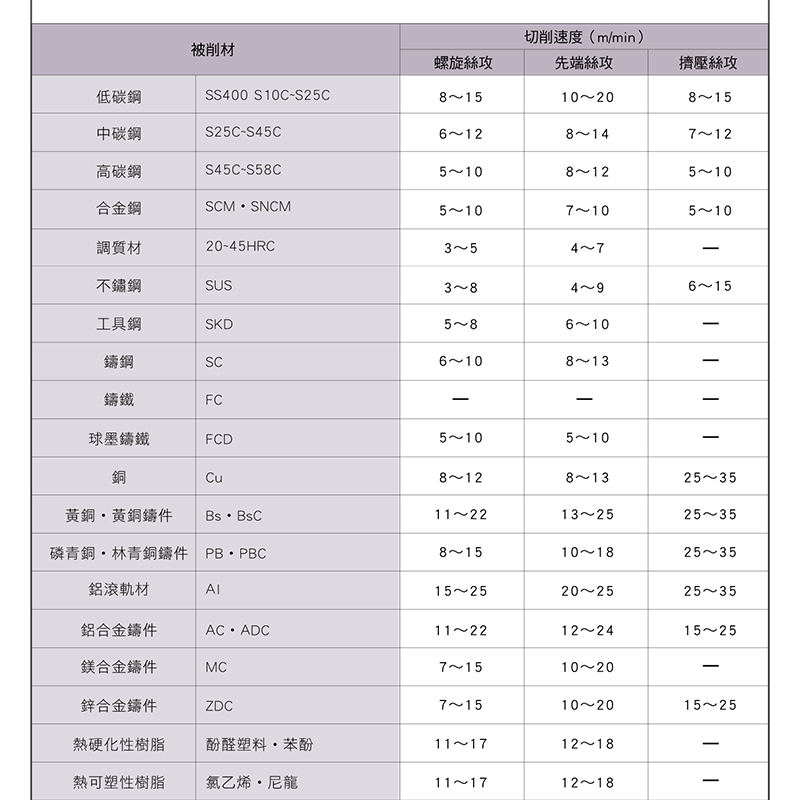
3. Reference Speeds by Material
| Material | Tapping speed Vc (ref., m/min) |
|---|---|
| Low-carbon steel (SS400) | about 8–20 |
| Medium-carbon steel (S45C) | about 6–14 |
| Stainless (SUS) | about 3–9 |
| Aluminium alloy | about 15–25 |
| Copper alloy | about 8–20 |
※ Reference ranges — adjust to tap type, maker catalog, machine and hole. Form taps usually run slower but steadier with stronger lubrication.

4. Speed Chart (Quick Lookup)
The chart maps "tap diameter Dc × RPM × cutting speed Vc" without calculation. How to read:
| Axis/line | Represents |
|---|---|
| X axis | Tap outer diameter Dc (mm) |
| Y axis | Cutting speed Vc (m/min) |
| Diagonal lines | Different spindle speeds (RPM) |
Find the diameter → follow the machine RPM line → the intersection is the cutting speed. The chart matches the formula above; its value is quick, error-free on-site setup.
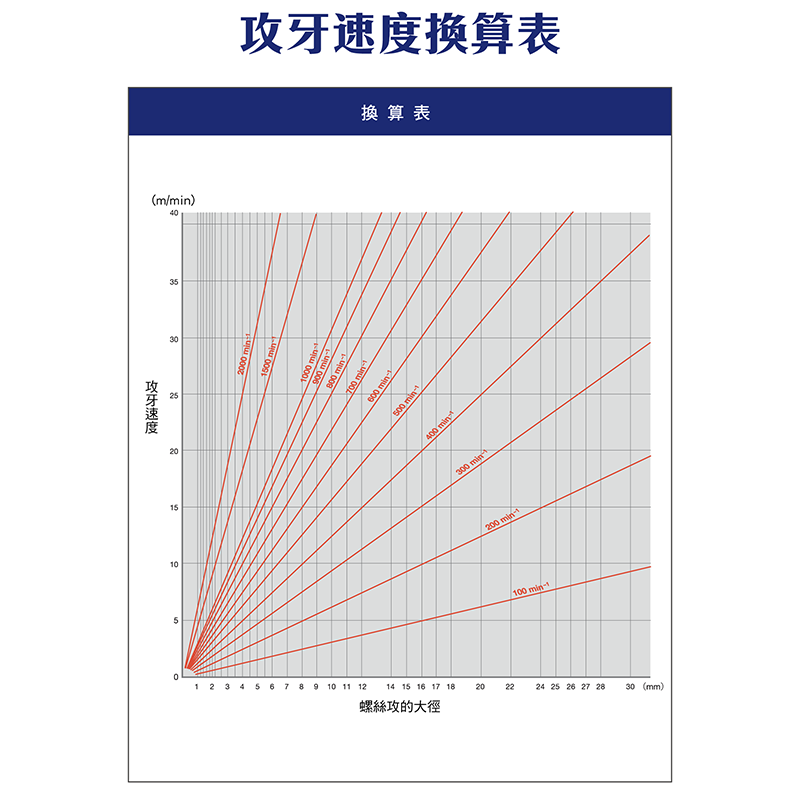
※ Original speed-chart images above; values per the original chart.
5. Setting Tips and Common Mistakes
Beginners use the middle RPM line; slow down when torque is high or wear is fast, and raise gradually when stable. Common mistakes: ignoring diameter (larger dia needs lower RPM), too fast (thread seizing, tool breakage), too slow (poor efficiency, unstable cut).
For torque see the Tap Torque Guide; for spiral-point torque see the Spiral-Point Tap Torque Analysis; for holders see the Tapping Setup Guide; for pilot holes see the Metric Tap Drill Chart.
6. Which Cutting Oil for Tapping
Speed and cutting oil have to be set together: with the right Vc but the wrong oil you still get welding, torn threads or a broken tap. Choose by tap type, symptom and hole depth:
| Situation | What to use |
|---|---|
| Forming tap | An oil with good lubricity (anti-friction); on steel a neat oil, chlorinated is fine |
| Rough finish, fast wear | Switch to a neat oil with extreme-pressure (EP) additives |
| Welding (chips fused to the edge) | Switch to a neat oil with EP additives and lower the cutting speed |
| Thread chipping, chip clogging | Adjust oil volume and delivery so the oil really reaches the cut |
| Deeper holes, long-chipping materials | From about 2-3×D deep, prefer through-coolant (oil-hole taps); with external coolant aim at least one nozzle along the tool axis |
The depth threshold follows Sandvik tapping technical data. For water-soluble vs neat oil by material see the Cutting Fluid Comparison for Drilling; for choosing among fluid types see Cutting Fluid Selection.
FAQ
Q: How do I work out tapping RPM?
Use n = 1000 × Vc ÷ (π × Dc). For M10 (Dc≈10) at Vc 10 m/min, n ≈ 1000×10 ÷ (3.14×10) ≈ 318 RPM. Look up the material Vc first, then solve for speed.
Q: Why does a larger diameter need lower RPM?
Cutting speed Vc is set by diameter × RPM, so at the same RPM a larger diameter gives too high an edge speed, more heat and wear. To keep a suitable Vc, lower the RPM on large diameters.
Q: Why tap stainless slowly?
Stainless work-hardens, conducts heat poorly and tends to gall, so too high a speed spikes heat, welding and breakage. Use a lower Vc (about 3–9 m/min) with strong lubrication and evacuation.
Q: Same speed for form taps as cutting taps?
No. Form taps usually run slower but steadier and need stronger lubrication (torque about 2–3× a cutting tap). Set the actual speed by ductility and the maker's recommendation.
For the full reading guides on this topic, see Thread Machining: A Complete Reading Guide and Machining Calculation Reading Guide.
Published: 2026-03-23 | Last updated: 2026-10-31









