Drill Geometry & Function: Helix Angle, Web and Point Angle Effects
A drill's shape directly affects cutting force, axial force, accuracy and tool life. Key parameters include helix angle, point angle, web thickness, relief angle and overall length; different designs trade off chip evacuation, stability and exit burrs. For example, a larger helix angle improves evacuation, while a thicker web raises rigidity but increases axial load. Matching geometry correctly optimizes drilling efficiency and quality. For part names first, see Drill Bit Anatomy Explained.
Why Drill Geometry Matters
A drill's shape simultaneously affects cutting force, axial load, torque, chip evacuation, accuracy and tool life — every trade-off shifts overall performance.
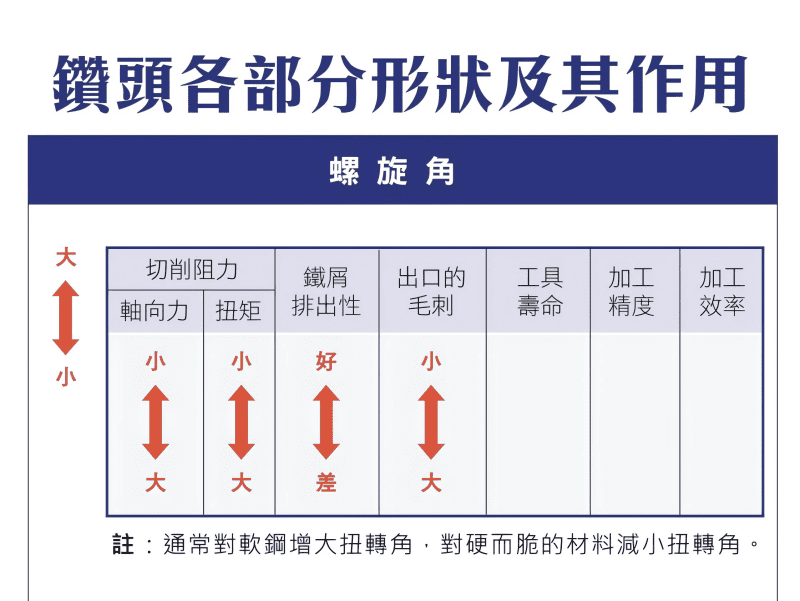
Helix Angle and Point Angle
| Parameter | Large | Small | Advice |
|---|---|---|---|
| Helix angle | Good evacuation, low cutting force | Suits hard/brittle materials | Mild steel→larger; hard/brittle→smaller |
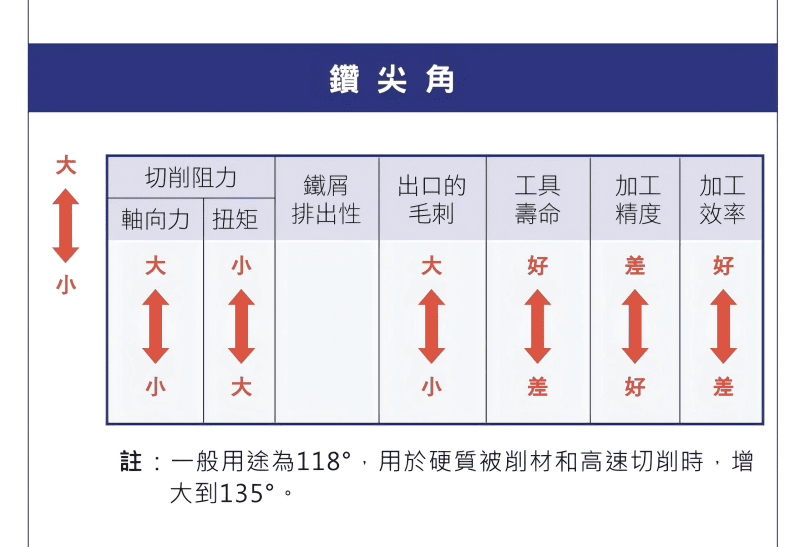
| Point angle | Large (e.g. 135°) suits hard materials and high speed | Small angle: low force, general use | Standard 118°; hard materials 135° |
Web Thickness, Relief Angle and Length
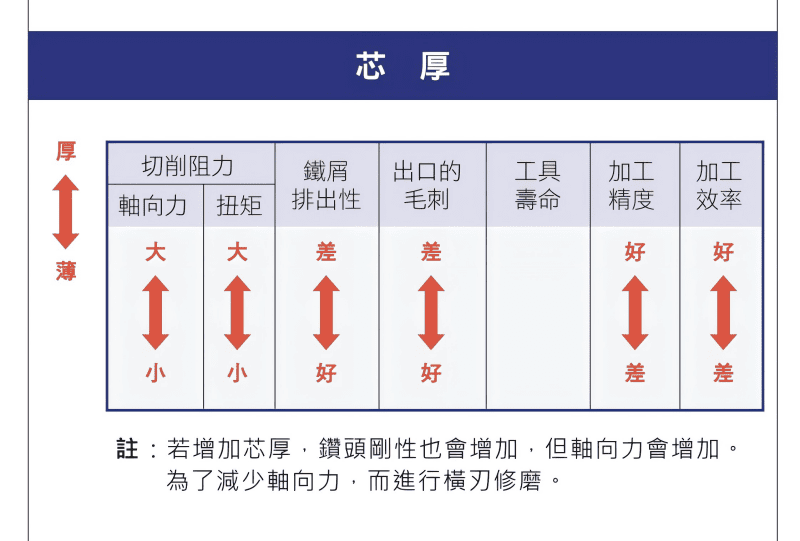
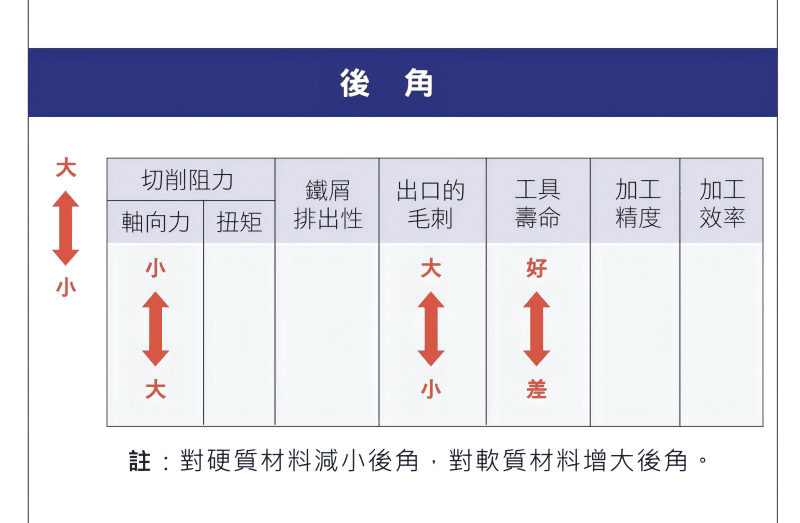
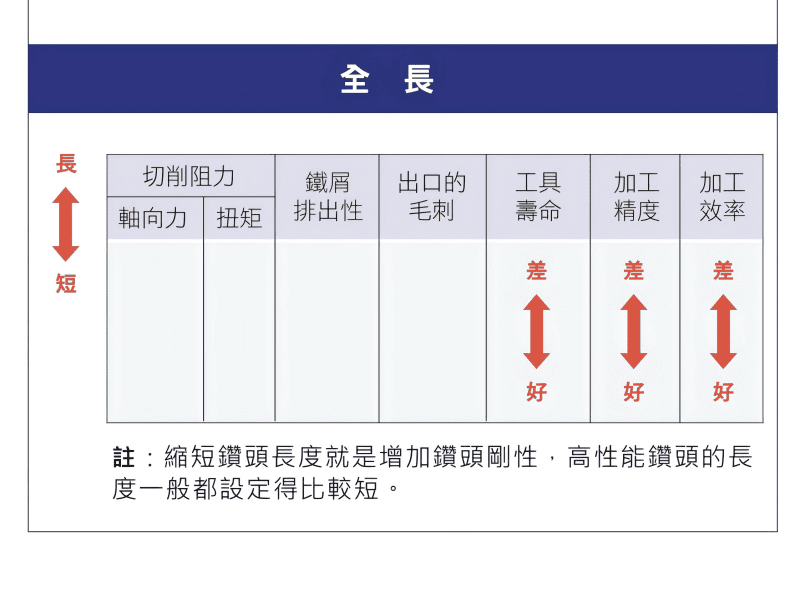
| Parameter | Large / long | Small / short | Advice |
|---|---|---|---|
| Web thickness | More rigidity but higher axial force | Thin web: better evacuation | When thickening, add chisel-edge thinning to cut load |
| Relief angle | Lower cutting force | Higher tool strength | Soft materials→larger; hard→smaller |
| Overall length | Long drill: low rigidity, vibration-prone | Short drill: rigid, stable | High-performance drills are usually shorter |
Integrated Design Strategy
There is no single best parameter; balance by material and conditions.
| Optimization goal | Core idea |
|---|---|
| Improve chip evacuation | No single best parameter; adjust by material and cutting conditions |
| Lower cutting force | |
| Control axial force | |
| Increase rigidity |
For the flute-length vs rigidity trade-off, see Drill Flute Length vs Rigidity; for speed and feed, see Drilling Parameters Guide.
FAQ
118° or 135° point angle — how to choose?
118° is the general-purpose standard with lower cutting force; 135° is flatter with better centering, suited to hard materials and high speed, often with chisel-edge thinning.
Is a larger helix angle always better?
Not always. A large helix gives good evacuation and low force for ductile materials like mild steel; hard/brittle materials need a smaller helix for edge strength to avoid chipping.
Pros and cons of a thicker web?
A thicker web raises rigidity and strength but lengthens the chisel edge and raises axial force; chisel-edge thinning is usually added to lower axial load.
Why are high-performance drills usually shorter?
Longer drills are less rigid and more vibration-prone, hurting accuracy and life; where depth allows, a shorter drill improves rigidity and stability.
For the full reading guide on this topic, see Chip Control: A Complete Reading Guide.
This article is part of Drill Bits: The Complete Guide - Start From Depth-to-Diameter, Then Pick the Drill and Set the Conditions; that guide shows how the whole topic fits together.