
Small-Diameter Deep Hole Drill: 20D Precision Small-Bore
Small-diameter oil-hole drills are built for precise small-diameter deep holes: internal coolant and low-resistance geometry hold a stable cut and long life at around 20D. On S50C and SUS304, they sharply cut early wear and breakage risk versus conventional tools and improve evacuation and hole quality. This guide covers the traits, deep-hole stability, evacuation and reference cutting conditions for precision deep holes and micro-holes.
1. Machining Traits
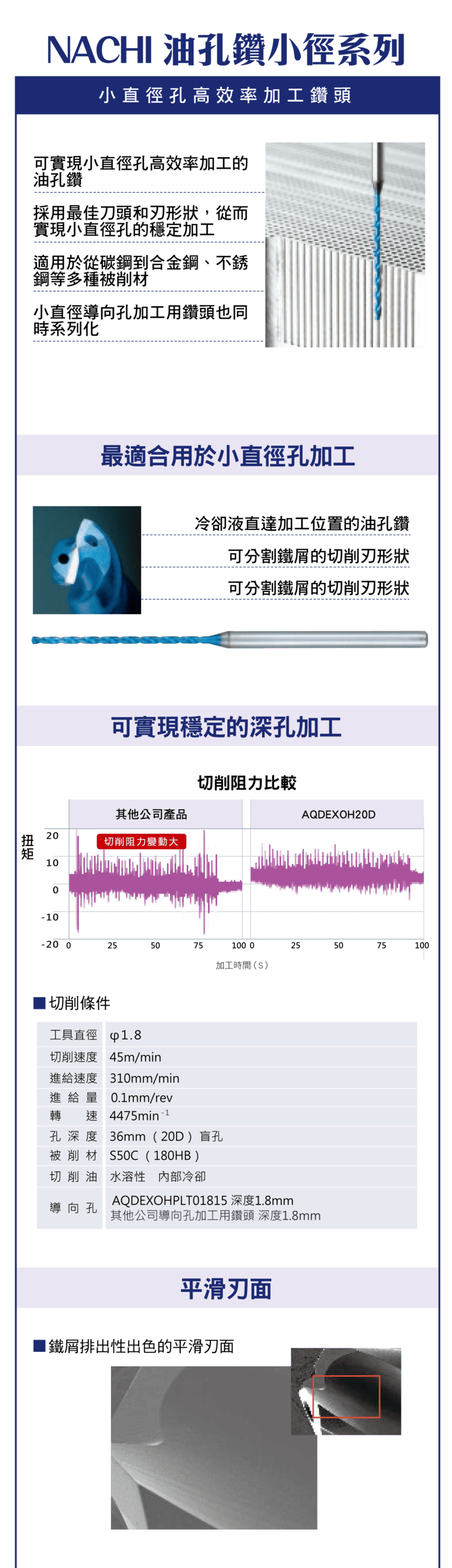
These drills use a small-diameter-specific body, internal coolant channels and precision geometry to drill around 20D deep and small-diameter holes — ideal for micro-holes and precision parts.
2. Deep-Hole Stability (Manufacturer Example)
| Item | Conventional tool | Small-dia oil-hole drill (mfr. example) |
|---|---|---|
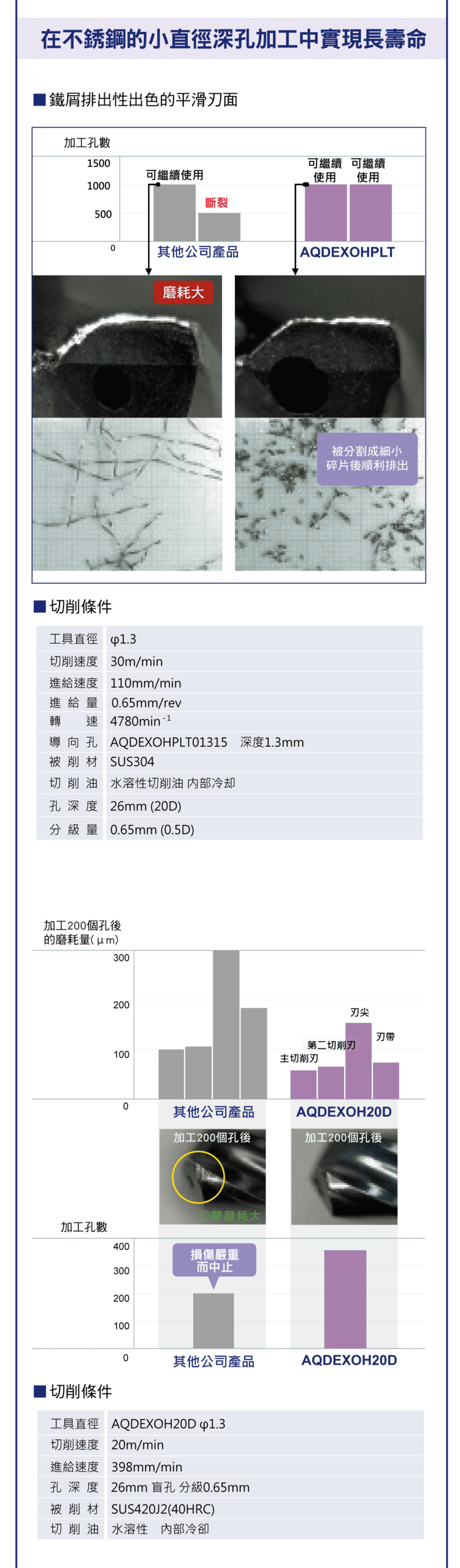
| Resistance / torque | Large torque fluctuation | Stable resistance, low torque fluctuation |
| Result | Prone to breakage | Lower breakage risk, consistent machining |
3. Tool Life and Wear (Manufacturer Example)
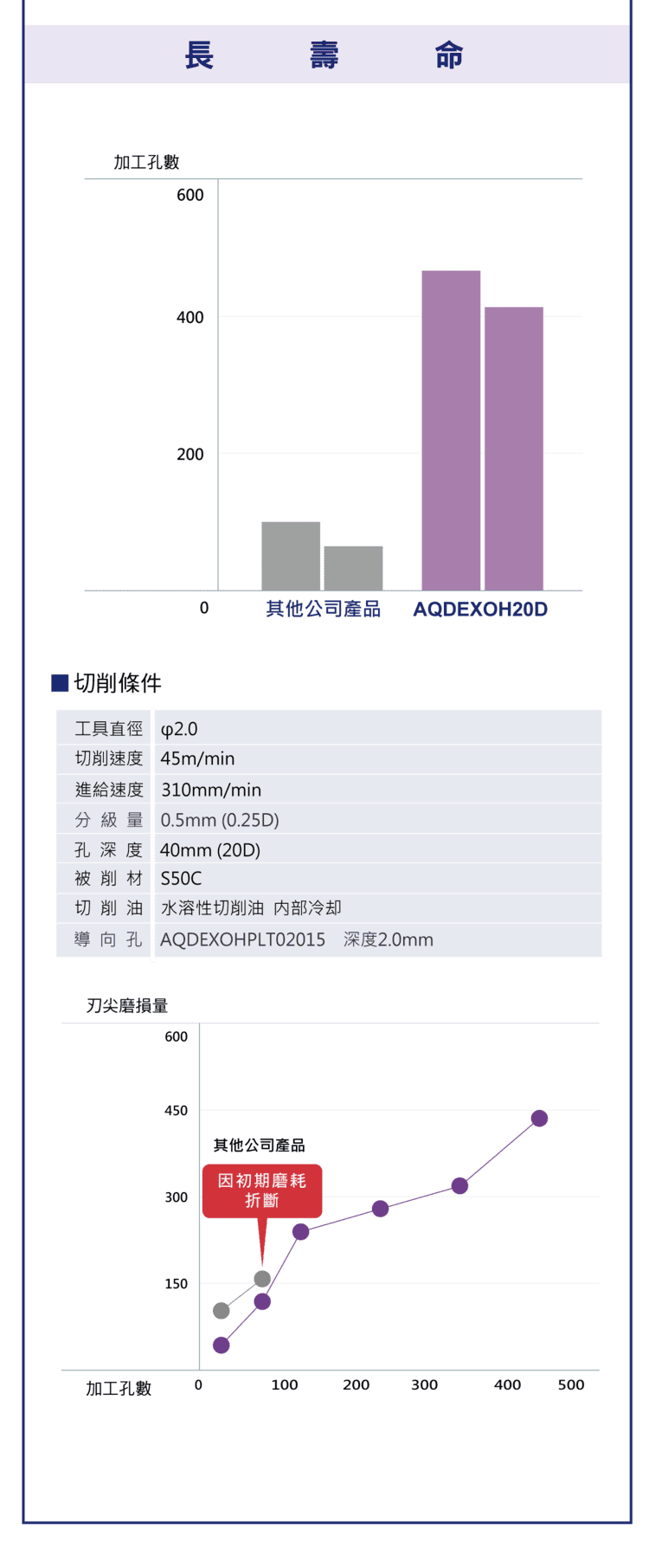
Where conventional tools break after early wear, the small-diameter oil-hole drill extends use stably — 400+ holes (manufacturer example) — with smaller nose wear and a sharp edge maintained.
4. Evacuation and Cut Quality
The low-resistance geometry splits chips into fine pieces and raises evacuation efficiency, avoiding clogging and improving wall quality; a smooth face and clear evacuation are key to small-diameter deep-hole stability. For chip reading, see the Drill Chip Formation Guide.
5. Cutting Conditions (Reference)
| Material | Cutting speed (ref.) | Feed (ref.) |
|---|---|---|
| S50C | approx. 45 m/min | approx. 0.1–0.15 mm/rev |
| SUS304 | approx. 30 m/min | approx. 0.065 mm/rev |
※ Hole depth ~20D (~26–40 mm), water-soluble internal coolant (mfr. example). Base working parameters on the Drilling Parameters Guide or the maker's catalog.
6. Guiding and Locating Accuracy
A guide hole improves location and reduces drift, giving good deep-hole straightness and stable diameter. For deep-hole guiding and through-coolant long drills, see the Deep Hole Drill Guide.
7. Applications
Suited to small-diameter deep holes, stainless work and precision machining — e.g. molds and electronic parts; pair with a rigid CNC machining center and stable internal coolant.
FAQ
Q: Why do small-diameter deep holes break tools?
Small tools have low rigidity and little flute space; deep holes evacuate poorly and torque fluctuates, so chips clog and tools break. A small-diameter oil-hole drill delivers coolant to the tip and refines chips, clearly improving this.
Q: How deep can it drill?
A manufacturer example reaches about 20D (e.g. 26–40 mm). Actual depth depends on machine rigidity, evacuation and cooling; deeper holes need steady internal coolant and guiding.
Q: How to set conditions for small-dia stainless deep holes?
SUS304 is gummy, so use lower speed (mfr. example ~30 m/min) and smaller feed (~0.065 mm/rev) with stronger internal coolant; set actual values by calculation and the catalog.
Q: Do I need a guide hole first?
Recommended. A guide hole improves location and reduces drift for better deep-hole straightness and diameter stability — especially important for small-diameter deep holes.
For the full reading guides on this topic, see Tool Life and Wear: A Complete Reading Guide and Chip Control: A Complete Reading Guide.
This article is part of Drill Bits: The Complete Guide - Start From Depth-to-Diameter, Then Pick the Drill and Set the Conditions; that guide shows how the whole topic fits together.
Published: 2026-03-24 | Last updated: 2026-10-31









