Drill and Tap Process Guide: Best Tool Combos by Hole Type
Internal-thread machining combines drilling, guiding and tapping. Matching the right drill and tap to each hole type (blind, deep, curved, inclined, thin plate) improves accuracy and efficiency, lowers breakage and interference risk, and stabilizes production quality and tool life. This guide organizes the tool combinations, drill types and tap-selection rules as a reference for CNC tapping and drilling process design.
1. Internal-Thread Process Concept
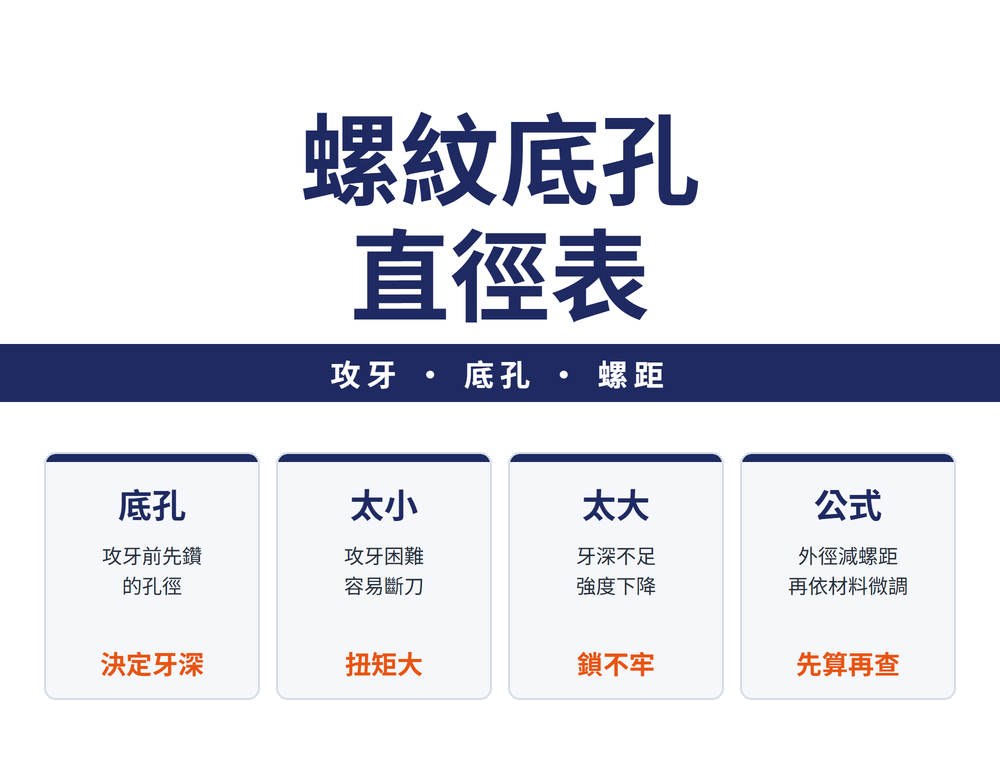
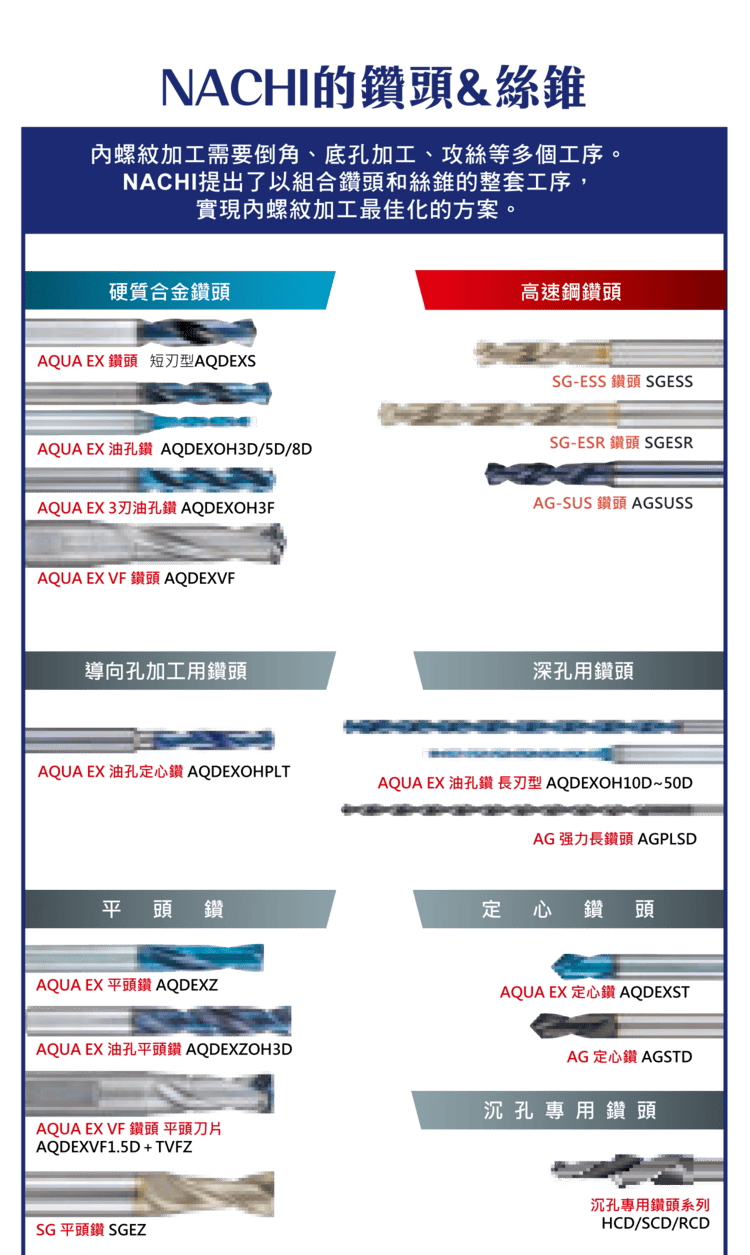
Internal-thread machining usually includes pilot-hole drilling, a guide hole or chamfer, and tapping. Each step must match its tool so size and accuracy stay consistent, avoiding tap interference and bad threads.
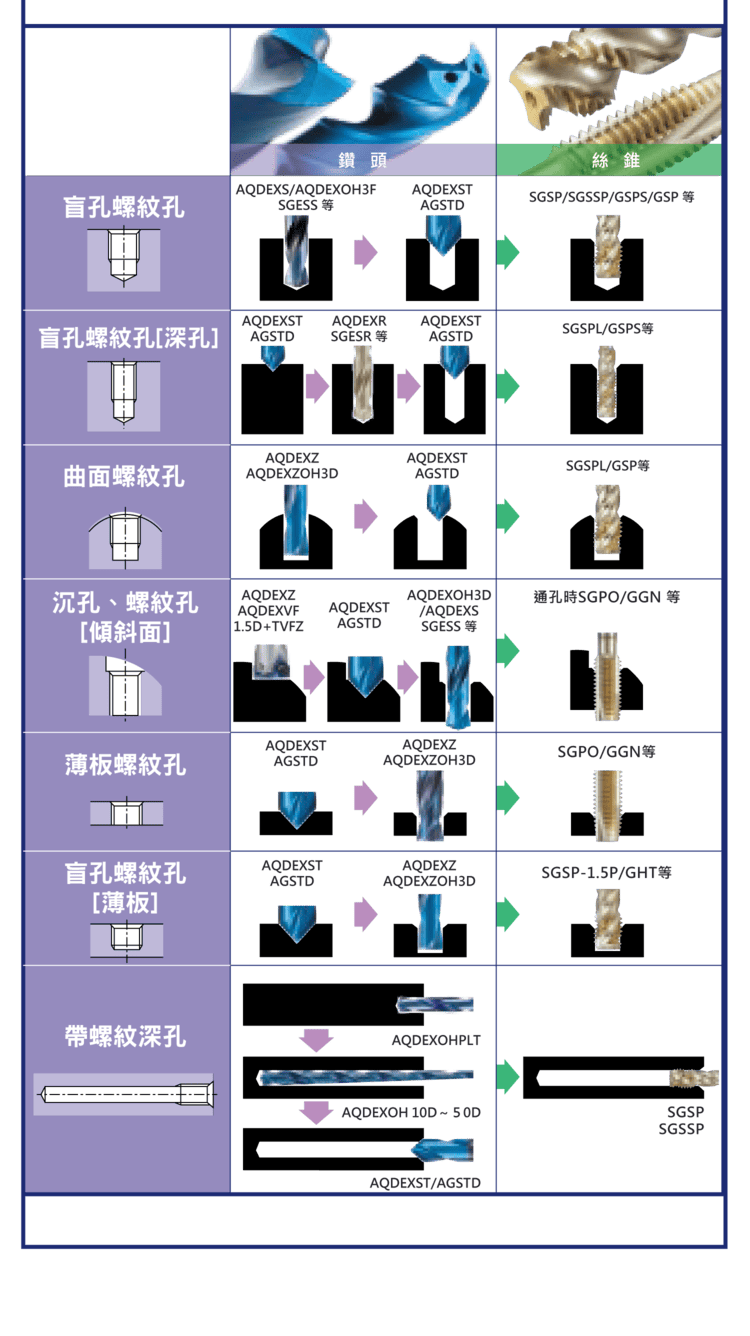
2. Tool Combinations by Hole Type (Manufacturer Example)
| Hole type | Suggested flow | Benefit |
|---|---|---|
| Blind | Drill (standard/oil-hole) → flat or center drill to true the bottom → tap | Better bottom accuracy, avoid tap interference |
| Deep | Deep-hole drill (through-coolant) → guide hole → dedicated tap | Better evacuation, lower breakage risk |
| Curved | Flat or special-edge drill to locate → finishing | Better location, less eccentricity |
| Inclined / counterbore | Flat drill to true the incline → standard drill → tap | Machine inclines directly, less vibration/drift |
| Thin plate | Thin-plate-suited drill → dedicated tap | Better thread integrity, fewer burrs |
| Threaded deep hole | Deep-hole drill (10D–50D, stable evacuation) → matching tap | Suits long holes, more stability |
※ The combinations above are a manufacturer (e.g. NACHI) example flow; follow the tool maker's recommendation and site conditions for actual use.
3. Drill Types and Applications
| Drill type | Best for |
|---|---|
| Standard (short flute) | General holes |
| Oil-hole (through-coolant) | Deep holes |
| 3-flute | High efficiency and accuracy |
| Flat drill | Flat-bottom holes, inclines, curved locating |
| Center drill | Guiding and centering |
4. Tap Selection
| Condition | Suggested tap |
|---|---|
| Through hole | Spiral-point tap |
| Blind hole | Spiral-flute tap |
| High strength / thin plate | Forming (chipless) tap |
The tap must match the pilot-hole size and material; for pilot-drill selection, see the Flat Drill Guide and Deep Hole Drill Guide.
5. Benefits of an Integrated Process
Designing the drilling, guiding and tapping tools and flow together raises efficiency, lowers tool wear and stabilizes quality — ideal for CNC production, precision parts, molds and automotive components.
FAQ
Q: Do I need a guide hole or chamfer before tapping?
Recommended. A guide hole or chamfer helps the tap enter cleanly and avoids torn threads and interference; for blind holes, a flat or center drill can true the bottom for better accuracy.
Q: How do I choose taps for through vs blind holes?
Use a spiral-point tap for through holes (chips push forward) and a spiral-flute tap for blind holes (chips lift out). High-strength or thin plate can use a forming (chipless) tap.
Q: Deep-hole tapping keeps breaking — what helps?
Deep holes need evacuation. Use a through-coolant (oil-hole) deep-hole drill for the pilot, a dedicated tap, and steady coolant with pecking to lower breakage risk.
Q: How do I tap on an inclined or curved face?
First true the incline/curve with a flat or special-edge drill to create a flat locating face, then drill and tap — this reduces eccentricity and vibration and improves location.
This article is part of Drill Bits: The Complete Guide - Start From Depth-to-Diameter, Then Pick the Drill and Set the Conditions; that guide shows how the whole topic fits together.