Straight Shank Drill Spec & Runout: Back-Taper & Accuracy
A straight-shank drill's shank-diameter spec and runout control directly affect drilling accuracy and stability. The shank nominally equals the drill diameter but is slightly smaller due to back-taper, estimated by "drill diameter − (back-taper range × back-taper amount)". Runout rises with the length-to-diameter ratio and affects hole position and diameter accuracy. This guide covers shank design, back-taper, runout calculation and measurement as a reference for better drilling quality.
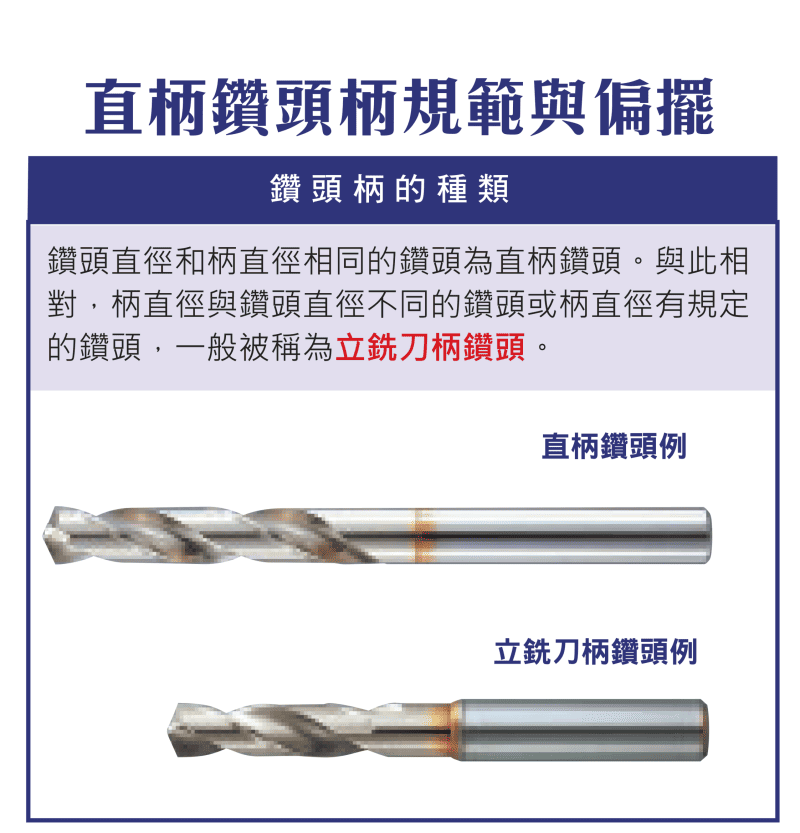
1. Straight Shank and Shank Spec
| Type | Shank diameter |
|---|---|
| Straight-shank drill | Drill diameter ≈ shank diameter |
| End-mill-shank drill | Shank differs from cutting diameter (precision grade) |
2. Shank Design and Back-Taper
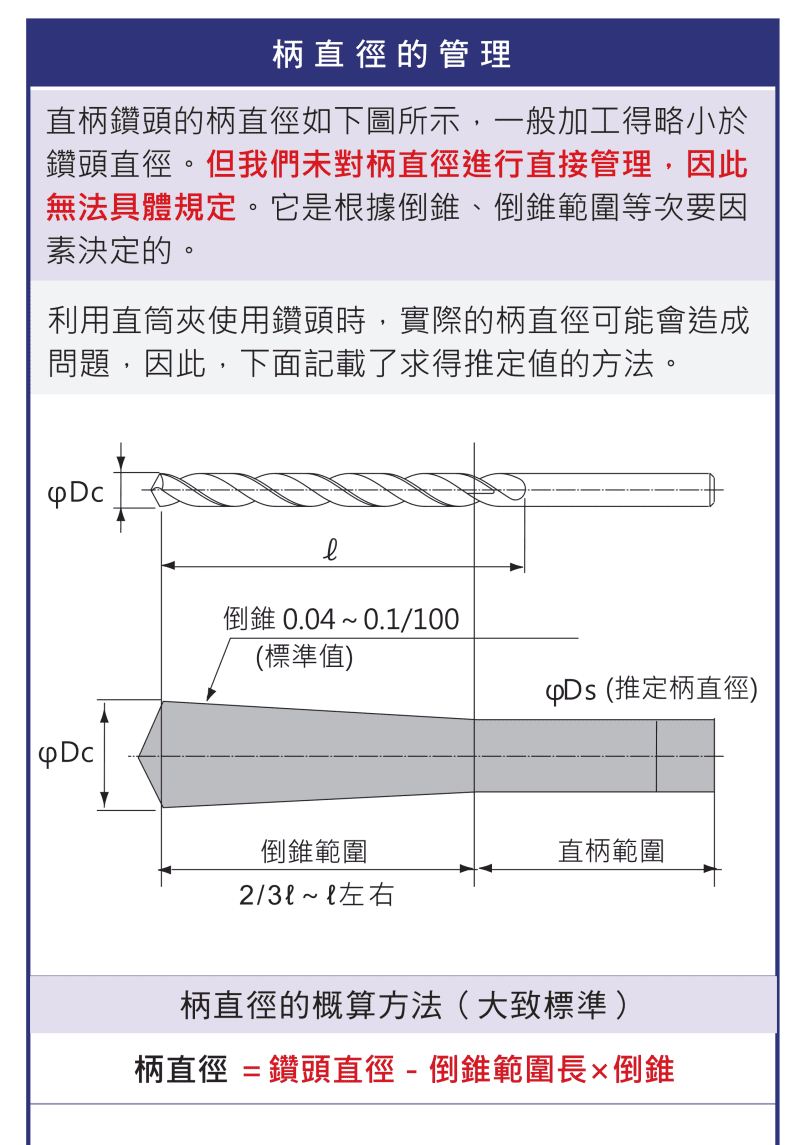
The real shank diameter is usually slightly smaller than the drill diameter, set by back-taper. Back-taper traits (reference): value about 0.04–0.1 / 100, range about 2/3 of the flute length.
3. Estimating Shank Diameter
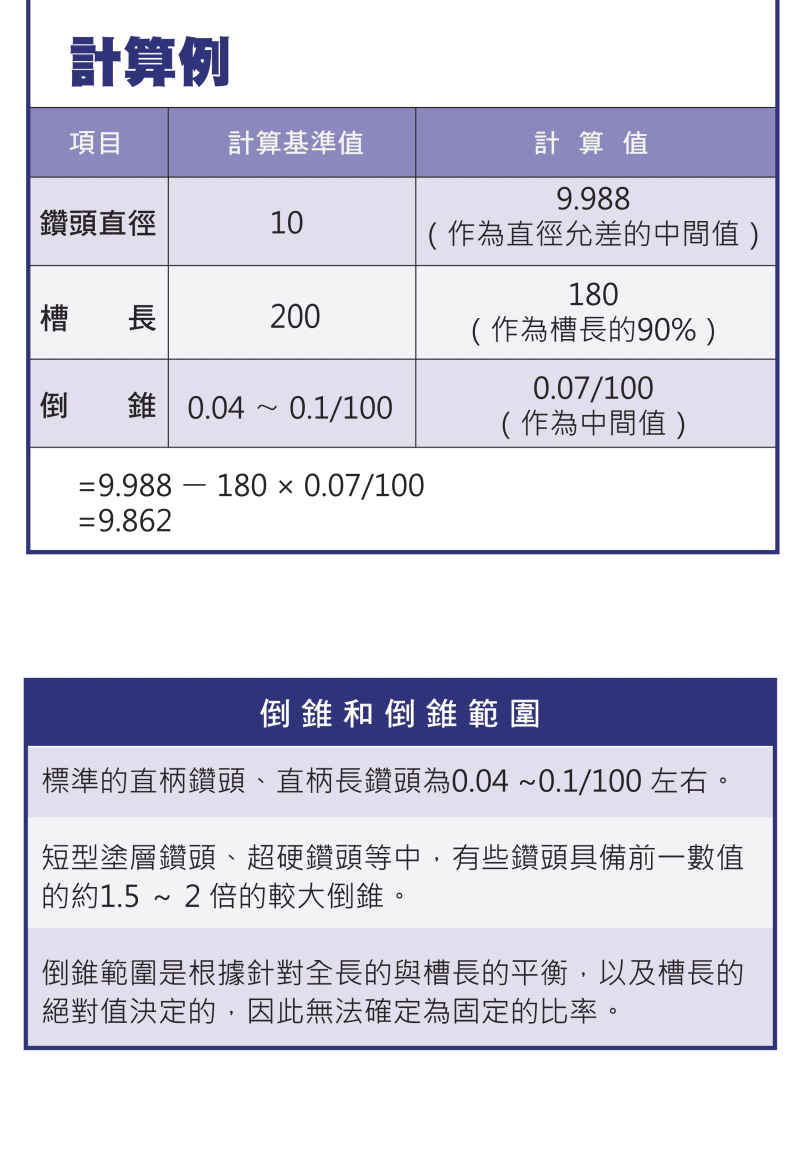
Shank diameter = Drill diameter − (back-taper range × back-taper amount)
| Example parameter | Value |
|---|---|
| Drill diameter | 10 mm |
| Flute length (×90%) | 200 mm |
| Back-taper | 0.07 / 100 |
| Estimated shank dia | approx. 9.91 mm |
4. Runout: Sources and Effects
| Runout source | Effect |
|---|---|
| Tool manufacturing error | Diameter enlargement |
| Poor holding | Hole-position offset |
| Spindle accuracy | Lower surface quality |
5. Runout Calculation and Measurement
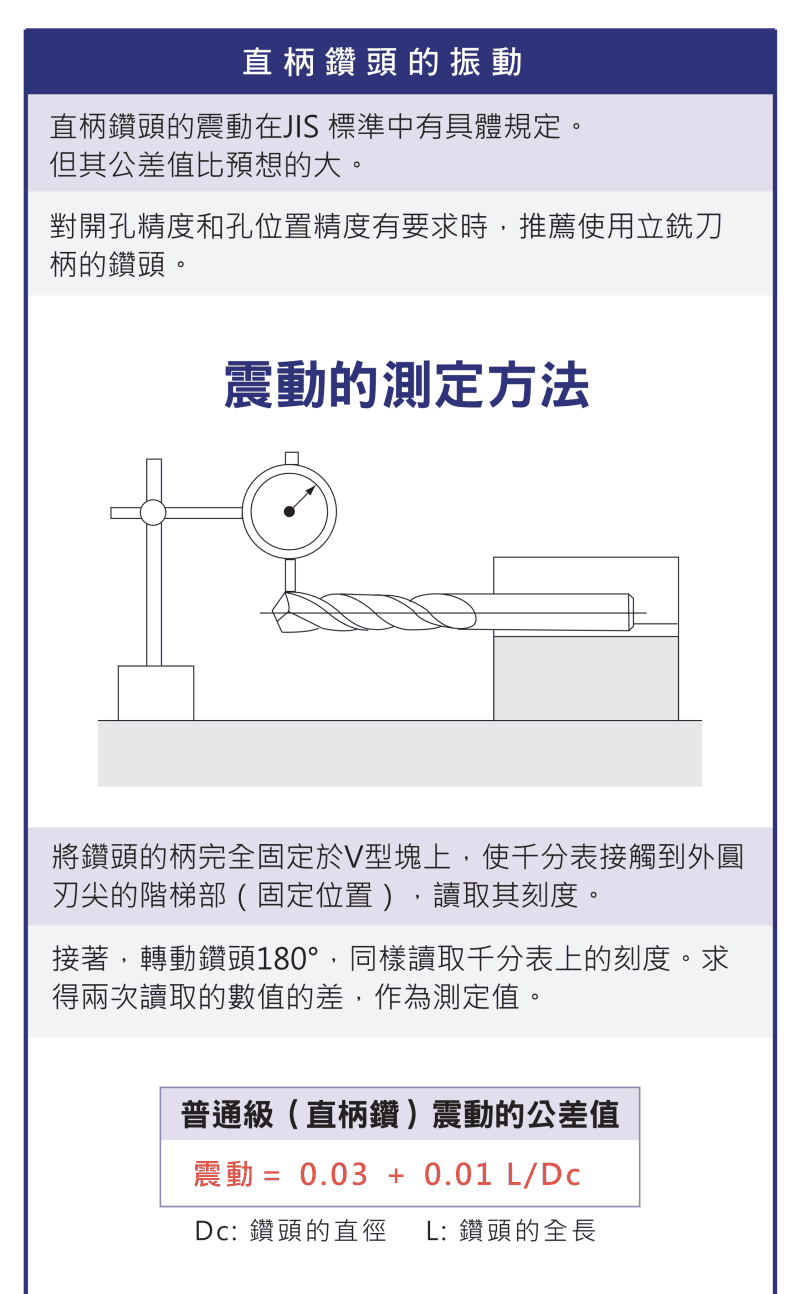
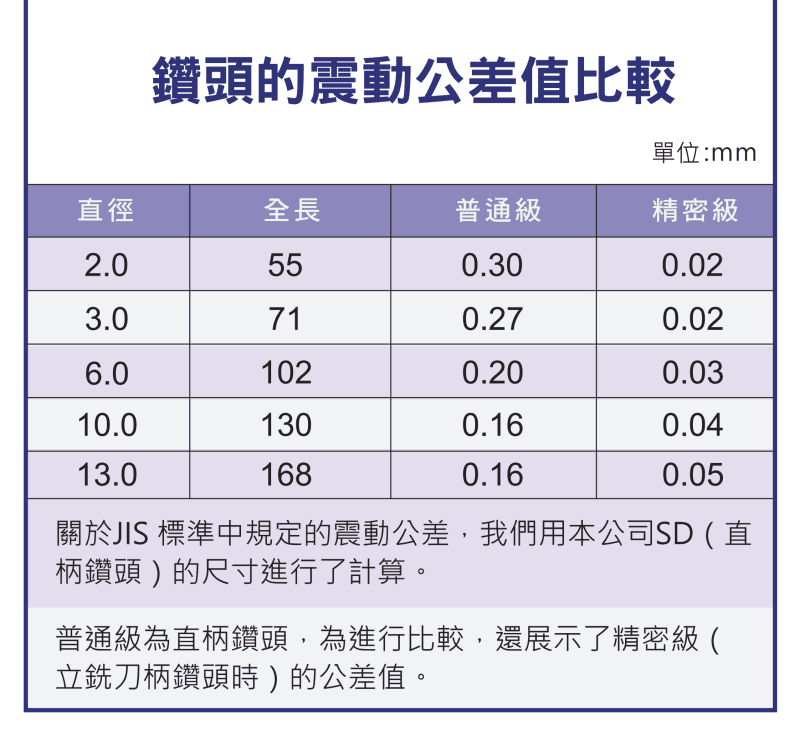
JIS runout = 0.03 + 0.01 × (L / Dc)
L is overall length, Dc is diameter. A larger length-to-diameter ratio means more runout. Measurement: fix the drill in a V-block, touch the edge with a dial indicator, rotate 180° and take the difference.
6. Standard vs Precision Grade
| Grade | Runout and use |
|---|---|
| Standard (straight shank) | Larger runout, general work |
| Precision (end mill shank) | Smaller runout, higher accuracy — first choice for precision work |
7. Optimization Tips
Control tool overhang, raise holding rigidity, choose low-runout tools, and pick the shank form for the job. For shank form (taper vs straight) and cooling, see the Through-Coolant Drill Guide; for Morse-taper shank specs, see the Drill Shank Morse Taper Guide.
FAQ
Q: Does a straight-shank shank equal the cutting diameter?
Nominally yes, but it's slightly smaller due to back-taper, estimated by "drill diameter − (back-taper range × back-taper amount)". For a ⌀10 drill, about 9.91 mm.
Q: How is runout calculated and measured?
A JIS reference is 0.03 + 0.01 × (L/Dc); more length-to-diameter means more runout. Measure by placing the drill in a V-block, touching the edge with a dial indicator and taking the difference over 180°.
Q: What problems does high runout cause?
High runout enlarges the hole, offsets its position and lowers surface quality. Sources include tool manufacturing error, poor holding and insufficient spindle accuracy.
Q: Which shank for precision work?
Use a precision-grade end-mill-shank drill for lower runout and higher accuracy; also control overhang and raise holding rigidity to reduce runout.
For the full reading guide on this topic, see Hole Accuracy: A Complete Reading Guide.
This article is part of Drill Bits: The Complete Guide - Start From Depth-to-Diameter, Then Pick the Drill and Set the Conditions; that guide shows how the whole topic fits together.