Choosing a Wire Brush: Knotted or Crimped, and Which Wire
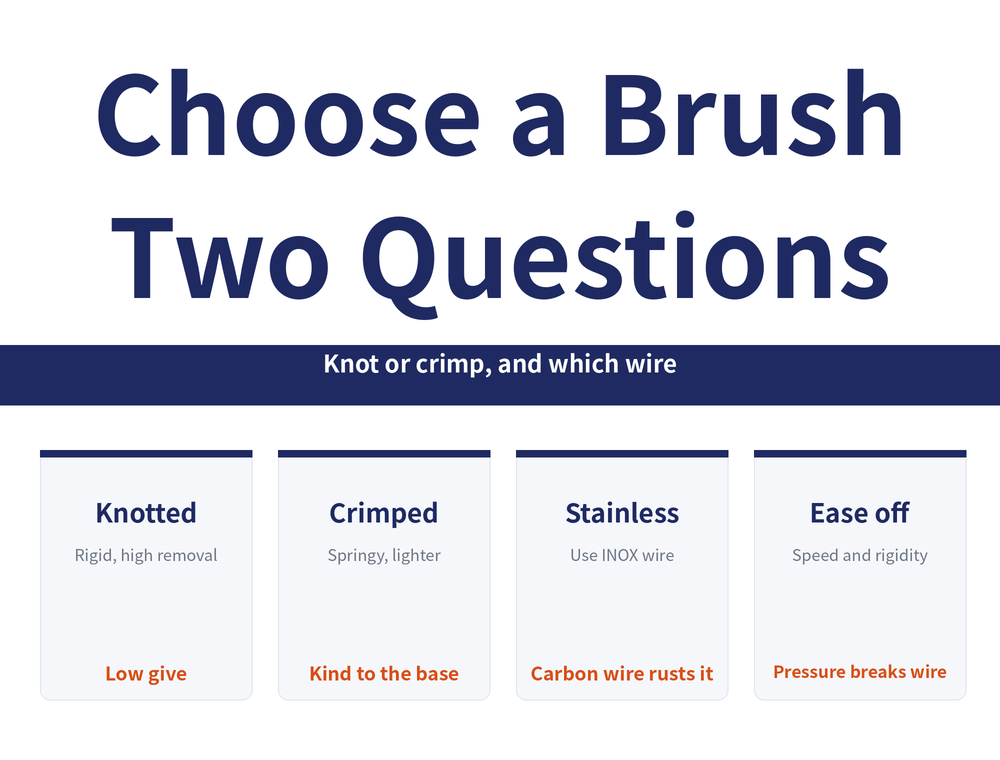
A wire brush is handy for rust, paint and weld cleanup, but selection is just two questions: knotted or crimped wire, and which wire material. This guide maps both, with one key point: brush stainless only with stainless wire, or it leaves iron that rusts.
1. Knotted or Crimped: Decide the Wire Form
| Wire form | Character | Good for |
|---|---|---|
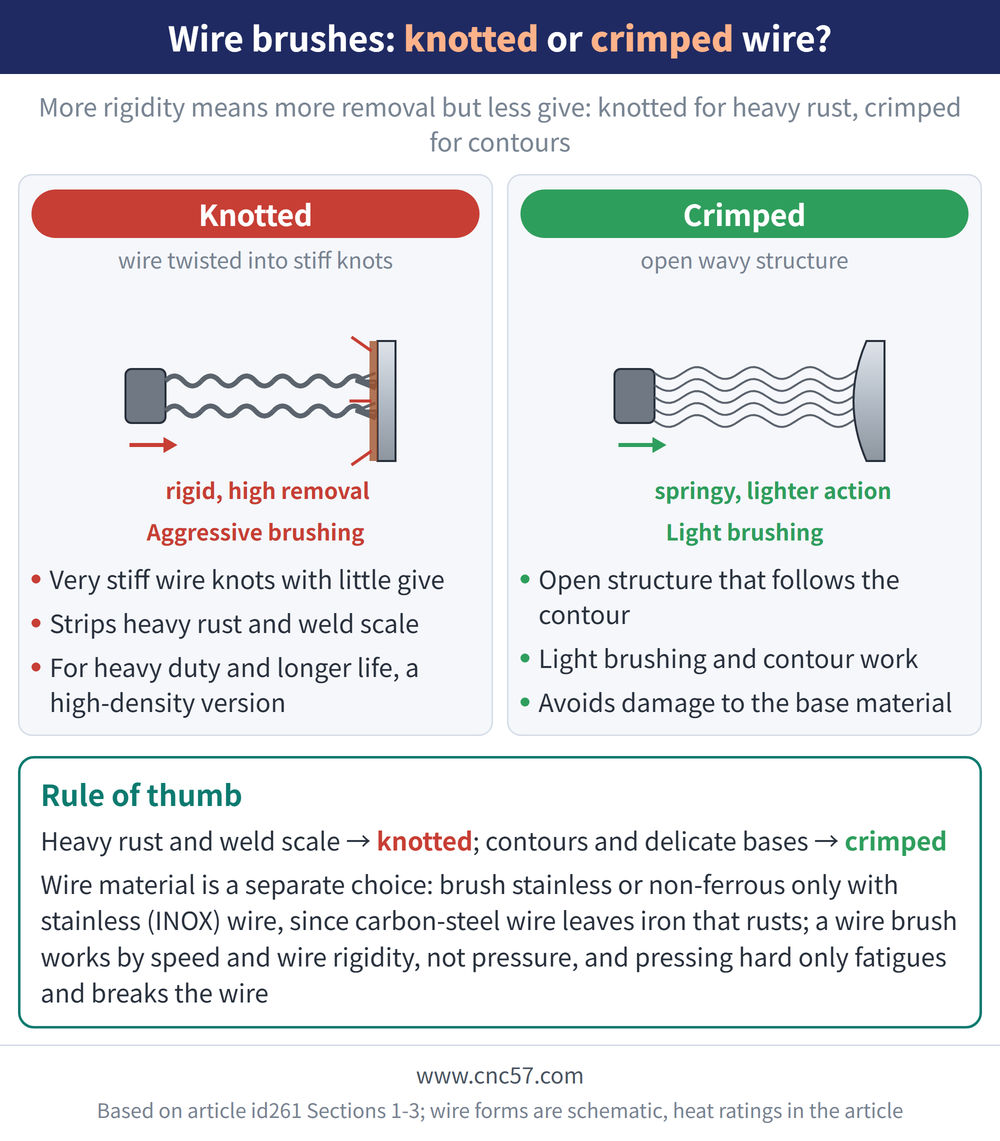
| Knotted | Very stiff wire knots, rigid, high removal, low give | Aggressive brushing: heavy rust, weld scale |
| Crimped | Open wavy structure, springy, lighter action | Light brushing, contours, avoiding damage to the base |
In short: more rigidity means more removal but less give. Knotted for heavy rust, crimped for contours.
2. Wire Material: Heat and Contamination
| Wire | Heat | Use |
|---|---|---|
| Steel (ST) | About 300°C max | Plain steel, high tensile |
| Stainless (INOX, grade 1.4310) | About 450°C max | Stainless and non-ferrous; leaves no rust-forming residue |
| Diamond (DIA) | — | Aggressive brushing on high-strength material |
Key point: brush stainless or non-ferrous only with INOX wire. Plain carbon-steel wire carries iron onto the stainless surface, and rust spots follow. The heat figures are maker examples.
3. Using It Without Wearing It Out
The same rule as a mounted point: a wire brush works by speed and wire rigidity, not pressure. Keep to the recommended speed and do not press hard; pressure does not brush faster, it only fatigues and breaks the wire and shortens life.
For heavy duty with longer life, a high-density version (such as COMBITWIST HD, which the maker rates at least three times the standard life) helps. For finishing and rust protection on stainless, compare the stainless steel guide.
4. Frequently Asked Questions (FAQ)
Q: How do I choose knotted vs crimped?
Heavy rust and weld scale: knotted (rigid, high removal). Contours and delicate bases: crimped (springy, lighter).
Q: Which wire for stainless?
Stainless (INOX). Plain carbon-steel wire leaves iron that rusts on stainless; INOX wire leaves no rust-forming residue and takes more heat (about 450°C vs 300°C).
Q: The brush keeps shedding wires, what now?
Usually too much pressure. A wire brush works by speed and rigidity; pressure just fatigues the wire. Keep to the speed and ease off.
Q: Any option for longer life?
A high-density version such as COMBITWIST HD, which the maker rates at least three times the standard life.
This article is part of Deburring and Surface Finishing: The Complete Guide - Which Tool, Which Material, and What to Do in Volume; that guide shows how the whole topic fits together.
Published: 2026-08-11 | Last updated: 2026-08-11