Tap Surface Treatment Guide: Oxide, Nitriding & PVD Coatings
A tap's surface treatment directly affects tool life, cutting stability and thread quality. This guide covers oxide, nitriding and PVD coatings (TiN, TiCN, TiAlN, CrN): oxide lowers friction and prevents welding, nitriding raises surface hardness and wear resistance, and coatings greatly boost heat and wear resistance. Choosing the right treatment by material and conditions is key to efficiency and lower tool cost.
1. Why Surface Treatment Matters
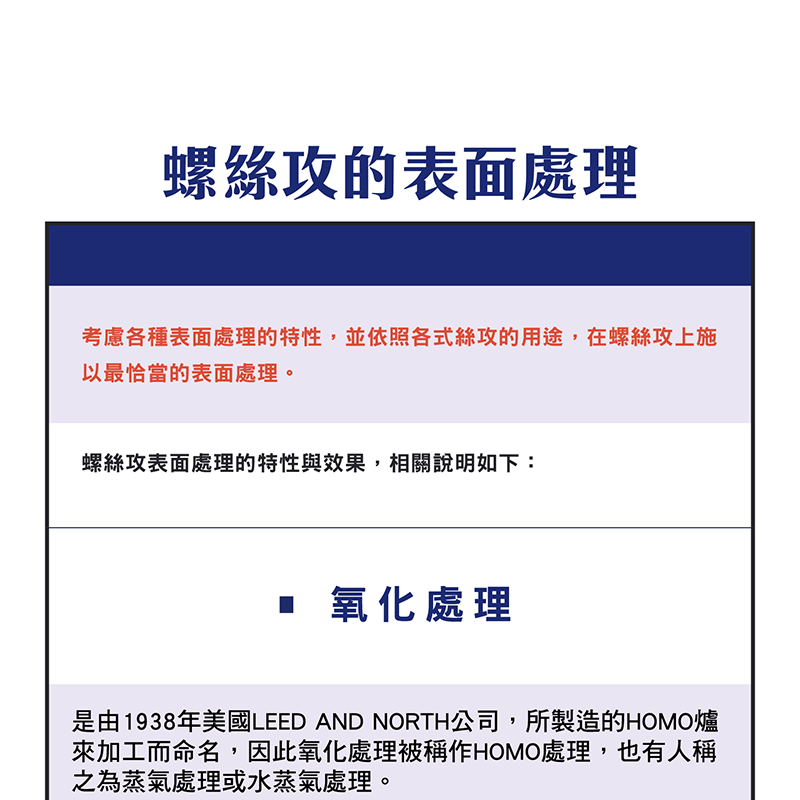
Taps endure high friction and heat; the right treatment lowers friction, prevents chip welding, improves wear resistance and extends tool life.
2. Three Treatment Families
| Treatment | Principle & traits | Use |
|---|---|---|
| Oxide | Fe₃O₄ black film at ~500–550°C; porous, holds oil, lowers friction, no hardness gain | General steel, stainless (SUS304, sticky); low cost |
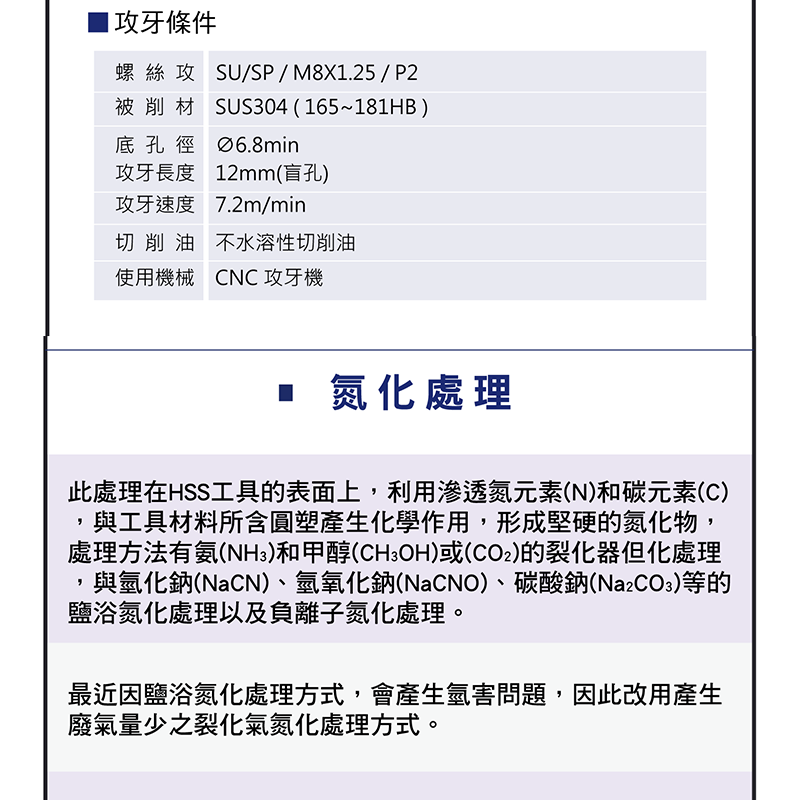
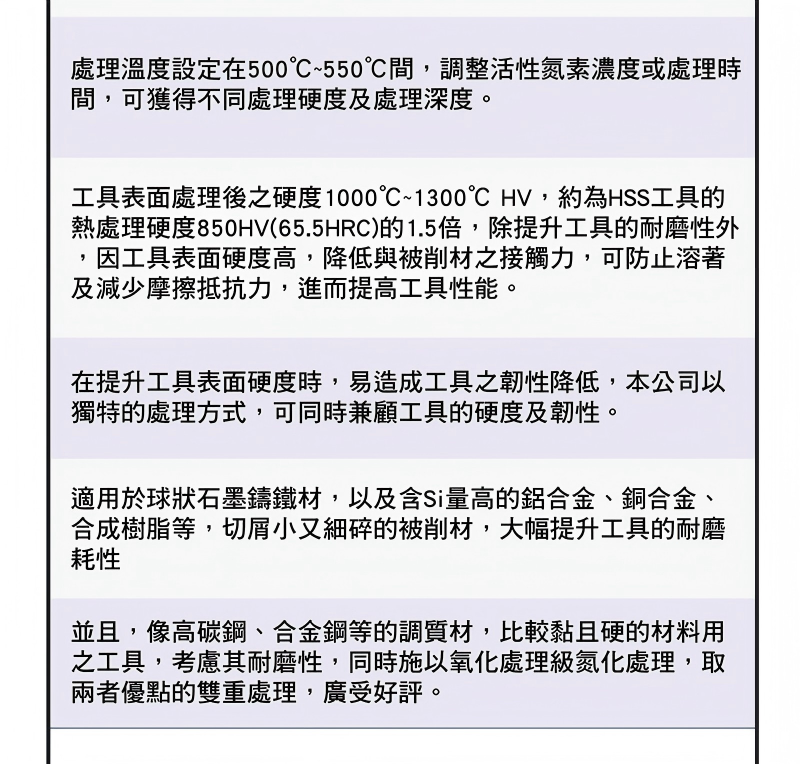
| Nitriding | N/C diffusion forms a hard compound layer; higher hardness and wear resistance | Abrasive settings, harder materials |
| PVD TiN | Titanium nitride (gold); hard, wear-resistant, low friction | General steel |
| PVD TiCN | Titanium carbonitride; higher hardness and wear resistance | Harder materials, wear needs |
| PVD TiAlN | Aluminium titanium nitride; high heat and hot hardness | High-speed, high-temp, dry |
| PVD CrN | Chromium nitride; anti-adhesion, corrosion-resistant | Aluminium, copper, sticky materials |
3. Oxide Treatment Points
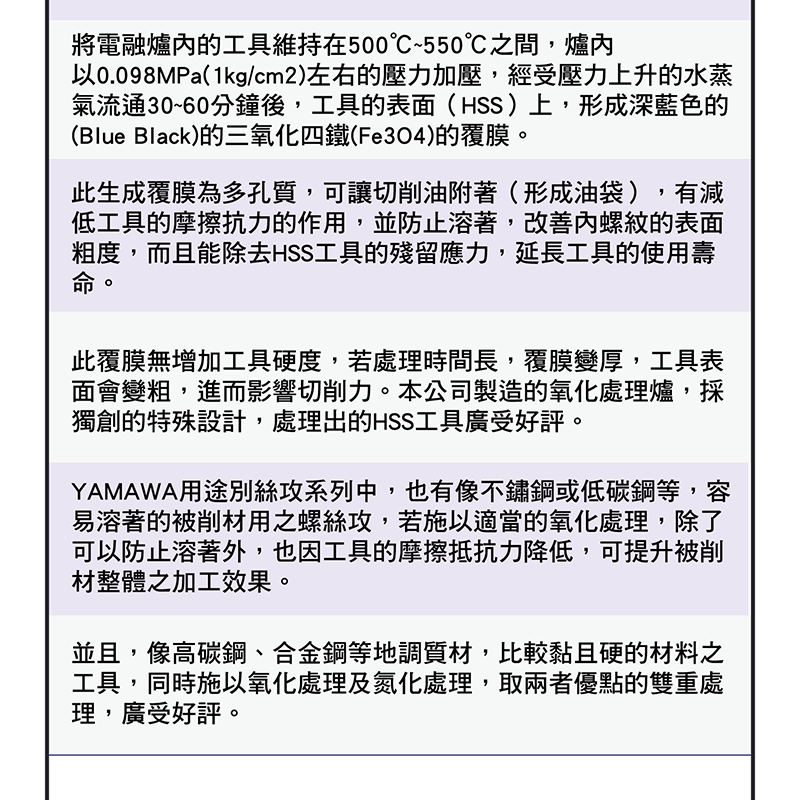
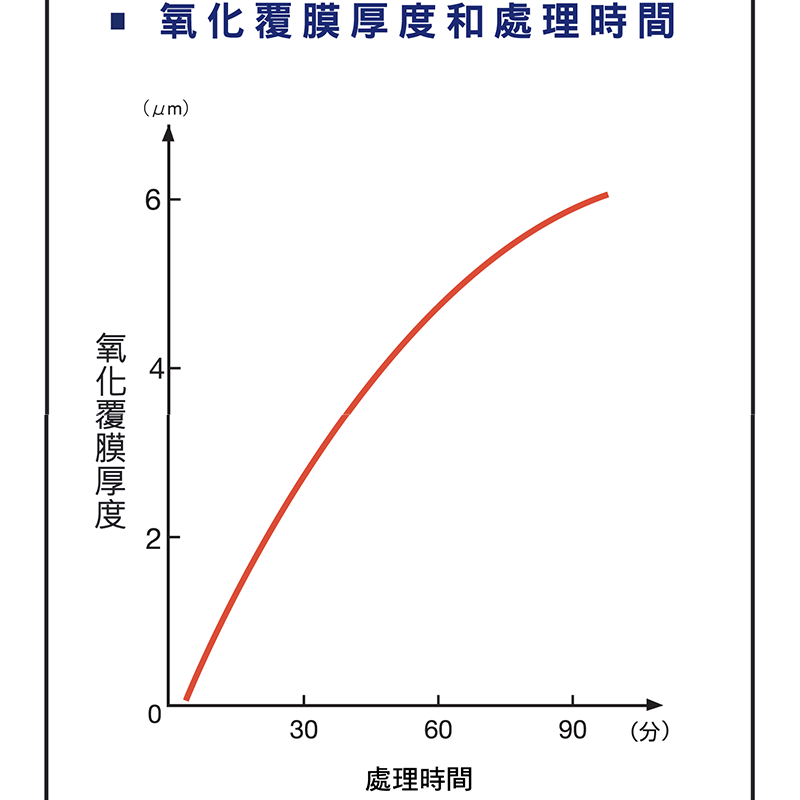
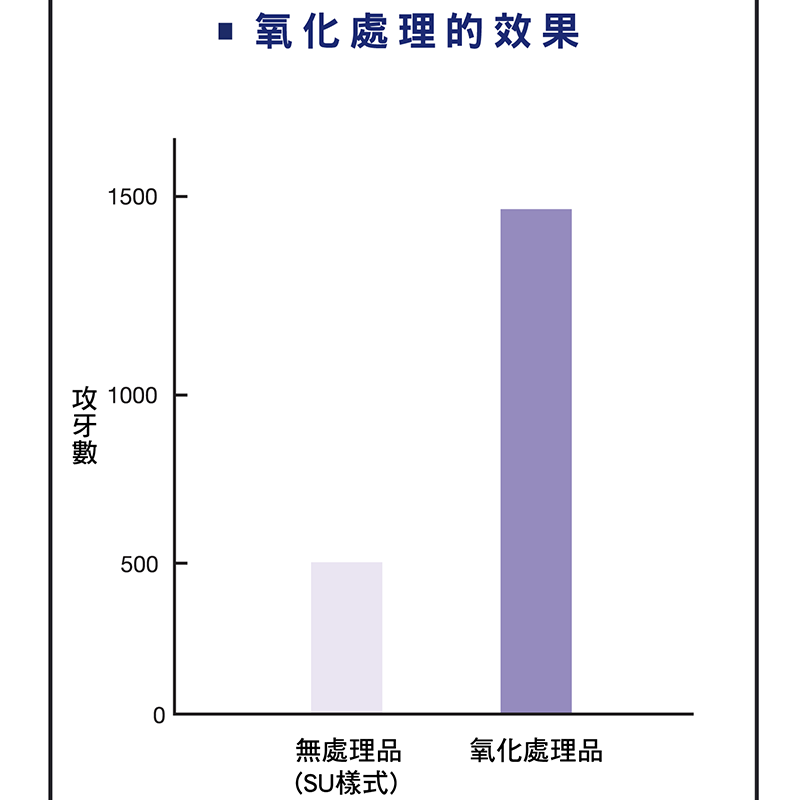
Oxide forms an Fe₃O₄ black film at ~500–550°C; it is porous, absorbs cutting oil, lowers the friction coefficient and improves stability but adds no hardness. Film thickness grows with time (tapering later), so avoid over-oxidizing — too thick a film hurts cutting. Tests show tapping life rises about 2–3× with less friction and clogging, ideal for sticky materials like SUS304.
4. Nitriding and PVD Coatings
Nitriding diffuses N/C to form a hard compound layer, raising surface hardness and wear resistance for abrasive settings. PVD coatings (TiN/TiCN/TiAlN/CrN) deposit hard thin films that greatly improve heat and wear resistance: TiAlN for high speed/heat, CrN for sticky materials (aluminium, copper), TiN for general use, TiCN for harder materials.
PVD Coating Comparison: TiN, TiCN, TiAlN & CrN
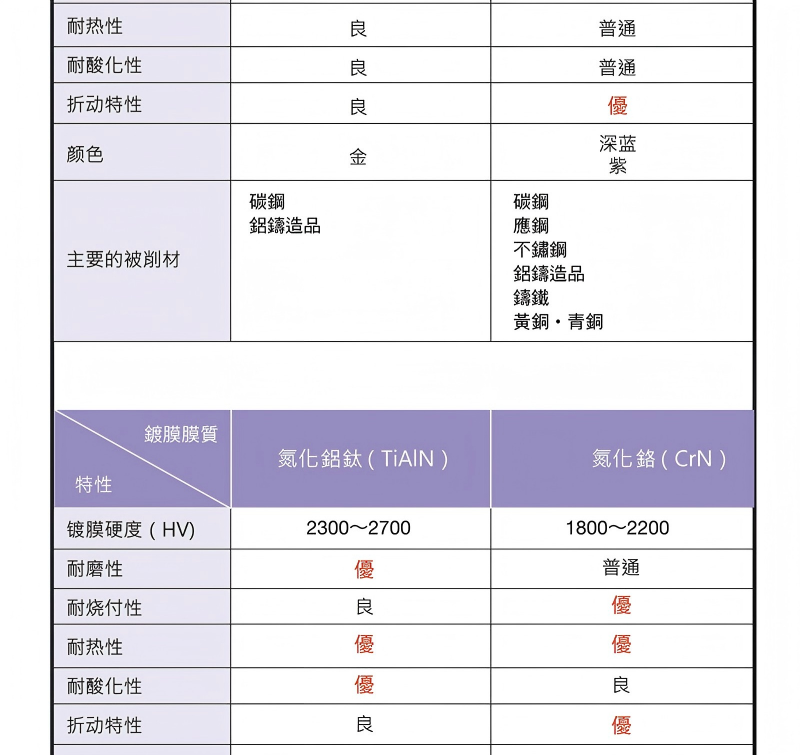
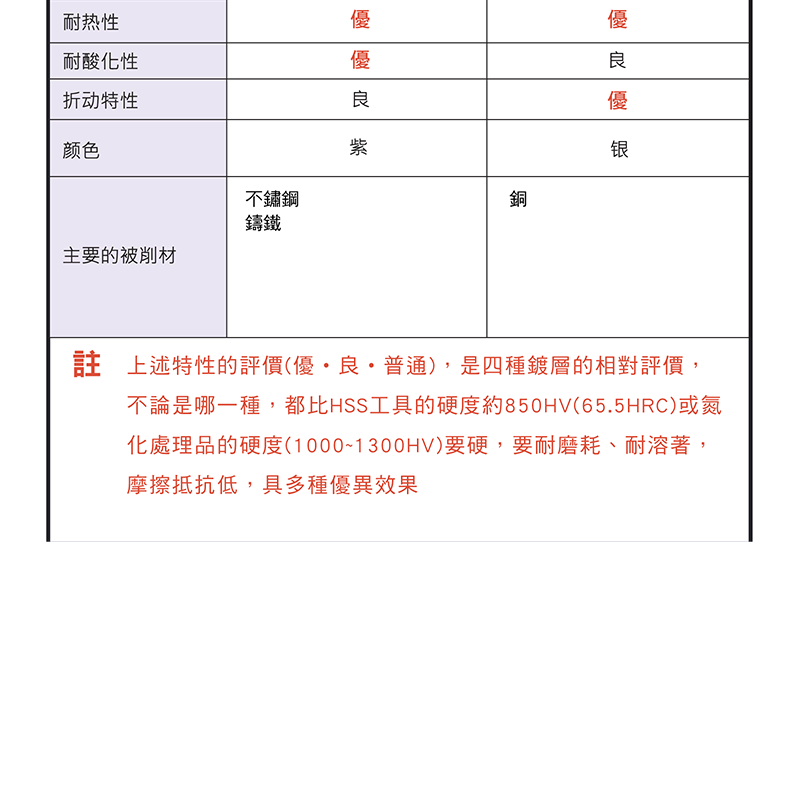
| Property | TiN | TiCN | TiAlN | CrN |
|---|---|---|---|---|
| Coating hardness (HV) | 2000–2400 | 3000–3500 | 2300–2700 | 1800–2200 |
| Wear resistance | Good | Excellent | Excellent | Fair |
| Anti-seizure | Good | Good | Good | Excellent |
| Heat resistance | Good | Fair | Excellent | Excellent |
| Oxidation resistance | Good | Fair | Excellent | Good |
| Sliding property | Good | Excellent | Good | Excellent |
| Colour | Gold | Dark blue / purple | Purple | Silver |
| Main work materials | Carbon steel, cast aluminium | Carbon steel, stainless steel, cast aluminium, cast iron, brass / bronze (one further item unverified — see note) | Stainless steel, cast iron | Copper |
※ Excellent / Good / Fair are relative comparisons among these four coatings, not absolute values; per the original chart all four are harder than HSS itself (approx. 850 HV) and than nitrided tools (approx. 1000–1300 HV). Transcribed cell by cell, with no conversion.
※ One item unverified: the TiCN work-material cell lists a further item that is not a standard cutting term and could not be confirmed against the manufacturer catalogues on file, so it is not guessed at and not included. Follow the tap manufacturer's specification.
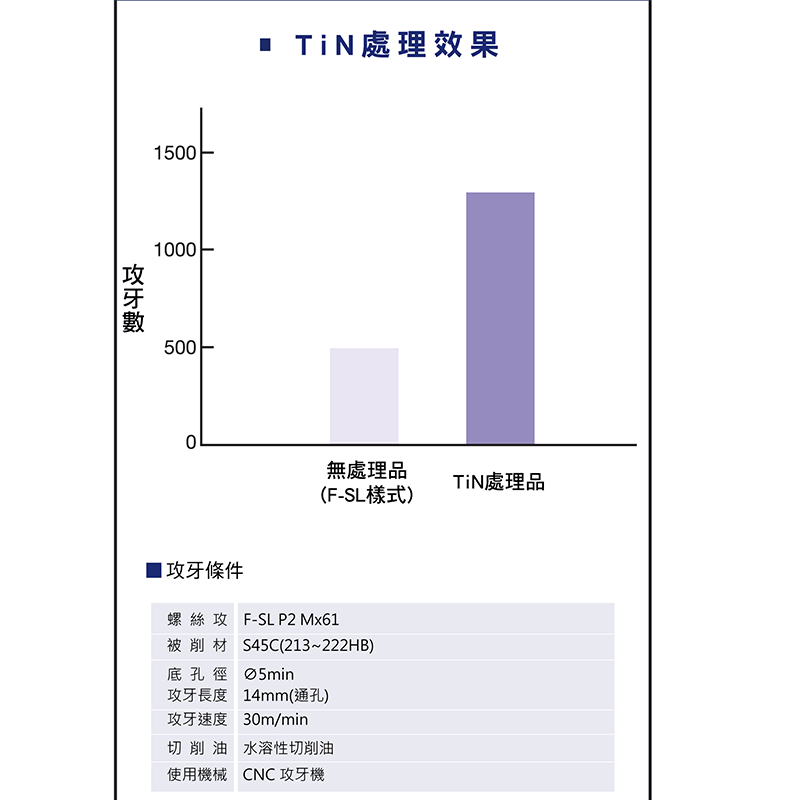
※ Full treatment-trait and comparison images above; details per the original images and maker data.
5. Selection Advice
For sticky materials (stainless, aluminium) consider oxide or anti-adhesion CrN; for hard materials and wear needs use nitriding or TiCN; for high-speed, high-temp or dry work use TiAlN; general steel does well with TiN. Choose by material, speed and dry/wet, with suitable cutting fluid.
For material/models see the Carbide Tap Guide and Spiral-Point Tap Series Guide; for speed/torque see the Tap Cutting Speed Guide and Tap Torque Guide; for the tool overview see the Thread Tool Chart.
FAQ
Q: Oxide vs coating?
Oxide forms a porous Fe₃O₄ black film that mainly lowers friction and prevents welding, adds no hardness and is low-cost; PVD coatings are hard films that greatly raise hardness, wear and heat resistance. Oxide suits general/sticky materials; coatings suit high-speed, hard work.
Q: Which treatment for tapping stainless?
Stainless tends to gall, so use oxide (porous, oil-holding, ~2–3× life) or anti-adhesion CrN; for high-speed work use TiAlN. Pair with good cutting fluid and a suitable speed.
Q: TiN, TiCN or TiAlN?
TiN is general and cost-effective; TiCN is harder for tougher materials and wear; TiAlN has high hot hardness for high-speed, high-temp and dry work. Choose by material hardness and machining temperature.
Q: Is a thicker oxide film better?
No. Thickness grows with time but tapers, and too thick hurts cutting and size. Keep it in the optimal time window to balance oil-holding/friction and cutting performance.
For the full reading guide on this topic, see Thread Machining: A Complete Reading Guide.