Drill Flute Length vs Rigidity: Choosing the Best Flute
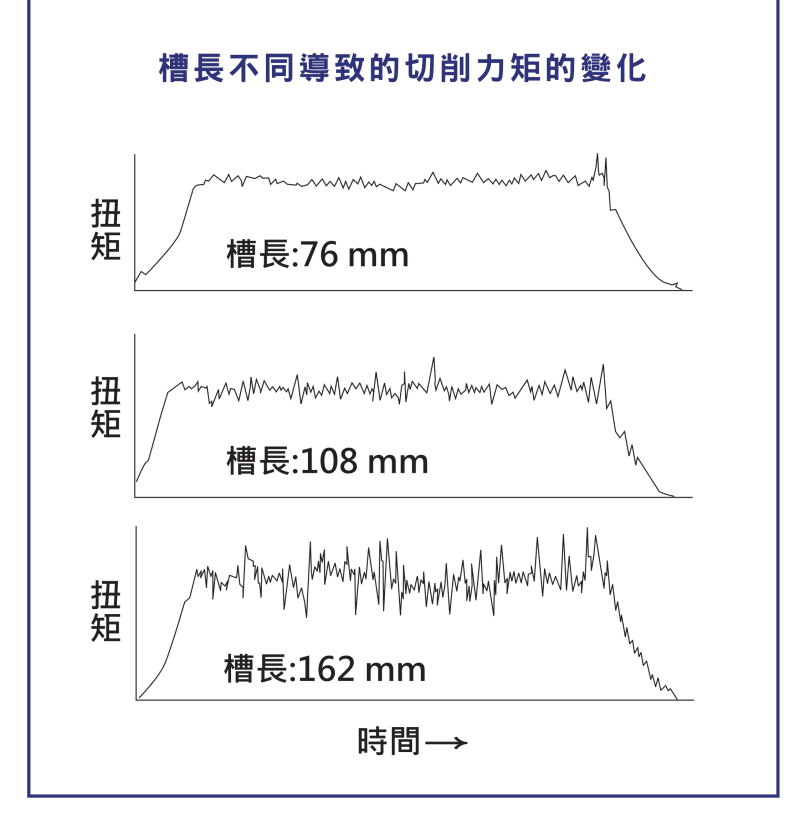
Drill flute length and rigidity are clearly inversely related: the longer the flute, the lower the rigidity, so vibration and runout rise and cause instability, faster wear and lower accuracy; a shorter flute means higher rigidity, a more stable cut and longer life. In practice, choose the shortest effective flute length for the hole depth and job. This guide explains flute length vs rigidity and life, and the rules for flute design and evacuation allowance.
For the length-class breakdown (stub, standard, long) and depth-to-diameter ratios, see Jobber, Stub and Taper Length Drill Bits.
1. Flute Length vs Rigidity
| Flute length | Rigidity and effect |
|---|---|
| Longer | Lower rigidity, prone to vibration/runout, unstable cut |
| Shorter | Higher rigidity, stable cut, longer life |
2. Flute Length vs Tool Life
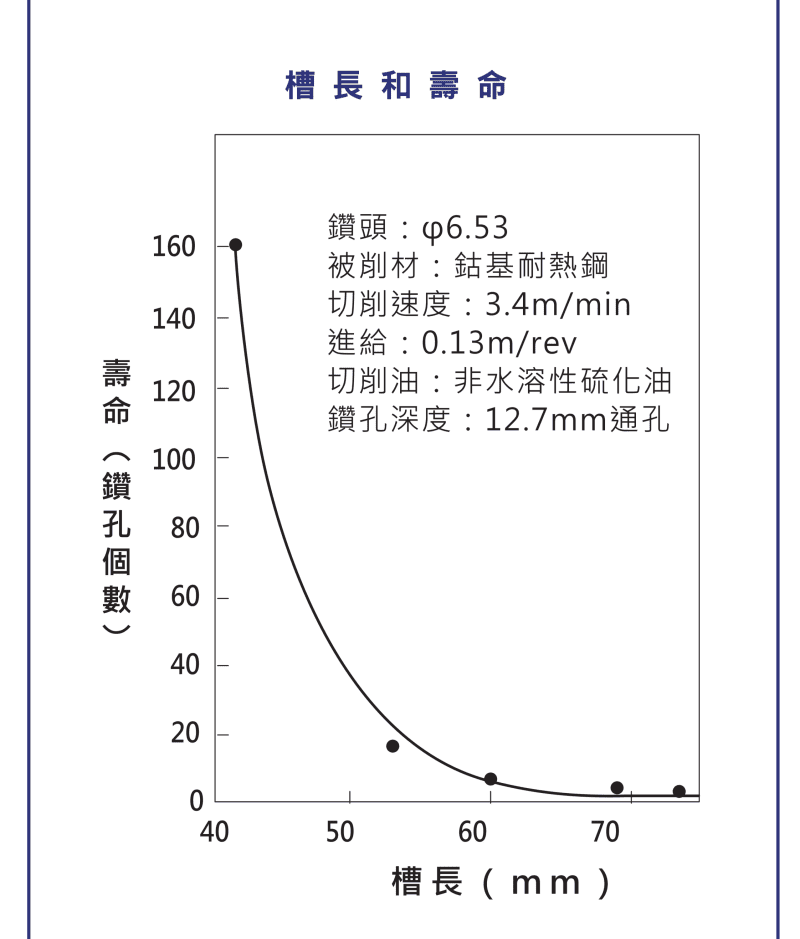
A longer flute lowers rigidity and destabilizes the cut, shortening tool life. The following are manufacturer example test conditions:
| Item | Condition (mfr. example) |
|---|---|
| Drill | φ6.53 |
| Material | Cobalt-based heat-resistant steel |
| Cutting speed | approx. 3.4 m/min |
| Feed | approx. 0.13 mm/rev |
3. Flute Design and Evacuation Allowance
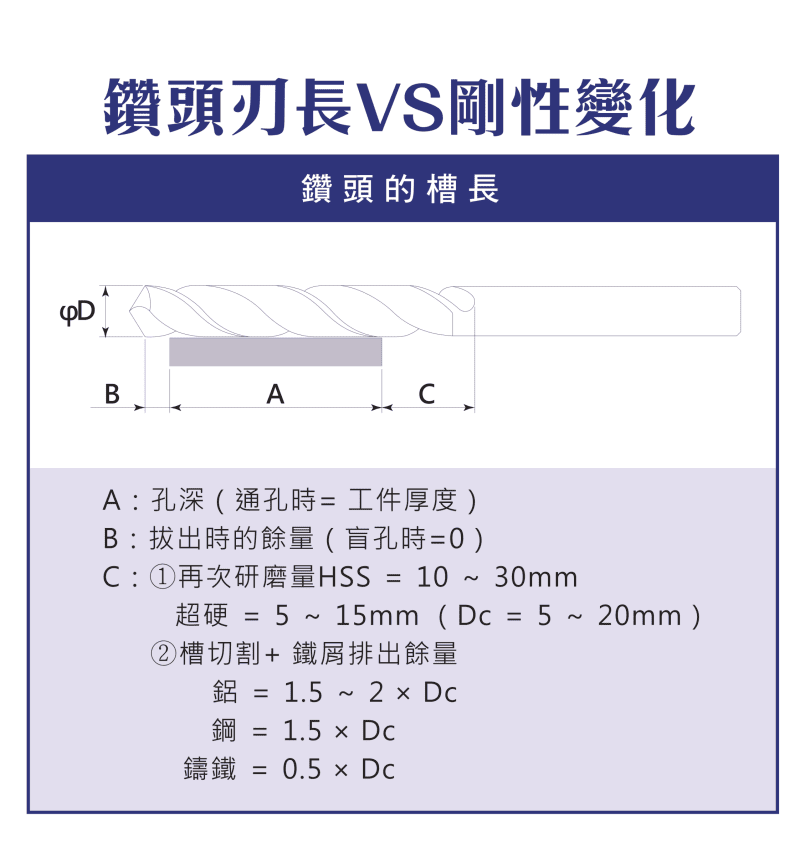
Effective flute length must include: A hole depth, B retract allowance, and C evacuation & regrind allowance. Common evacuation-allowance guidance by material:
| Material | Evacuation allowance (ref.) |
|---|---|
| Aluminum | approx. 1.5–2 × Dc |
| Steel | approx. 1.5 × Dc |
| Cast iron | approx. 0.5 × Dc |
4. Material Hardness vs Life
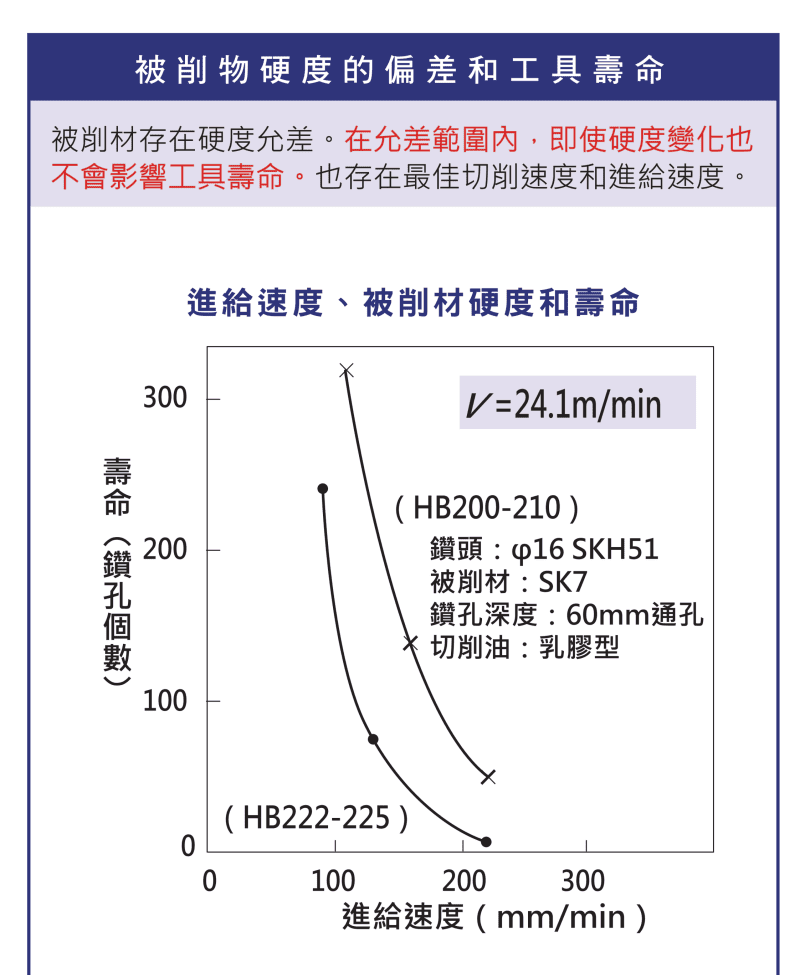
Within a reasonable hardness range (about HB 180–225), hardness has limited effect on tool life; the real drivers remain cutting speed and feed. For setting conditions, see the Drilling Parameters Guide.
5. Optimization Tips
| Tip | Note |
|---|---|
| Shortest usable flute | Prefer it, allowing for depth and evacuation |
| Avoid over-length | Long drills vibrate, hurting accuracy and life |
| Deep-hole pairing | Use rigid tools and proper conditions, or an internal-coolant deep-hole drill |
For deep-hole evacuation and guiding design, see the Deep Hole Drill Guide.
6. Common Mistakes
Common mistakes: over-choosing long-flute drills, ignoring evacuation space, and disregarding tool rigidity — all amplify vibration and runout and lower both accuracy and tool life.
FAQ
Q: Is a longer flute always better?
No. A longer flute lowers rigidity and is prone to vibration and runout, hurting accuracy and life. Choose the shortest effective flute that still fits the hole depth and evacuation allowance.
Q: How do I size the flute length?
Effective flute = hole depth + retract allowance + evacuation & regrind allowance. Evacuation reference: aluminum ~1.5–2×Dc, steel ~1.5×Dc, cast iron ~0.5×Dc.
Q: Do deep holes require long-flute drills?
Deep holes need enough flute, but long flutes lack rigidity. Prefer a rigid internal-coolant deep-hole drill and locate with a pilot drill to balance flute need and stability.
Q: Does harder material always shorten drill life?
Within a reasonable range (about HB 180–225) the effect is limited; life depends more on speed and feed. Only at very high hardness must you clearly lower speed and use heat-resistant tools.
For the full reading guides on this topic, see Tool Life and Wear: A Complete Reading Guide and Chip Control: A Complete Reading Guide.
This article is part of Drill Bits: The Complete Guide - Start From Depth-to-Diameter, Then Pick the Drill and Set the Conditions; that guide shows how the whole topic fits together.