End Mill Selection Guide
An end mill's shape directly affects how it cuts and the resulting quality. Different types—square, corner-radius, ball nose and tapered end mills—suit slotting, surface machining, deep milling and counterboring respectively. Choosing the right shape improves chip evacuation, lowers cutting force and improves accuracy. This article focuses on choosing a cutter by machining operation; to first understand each type's construction and features, see End Mill Types and Features.
Matching End Mill Shape to Machining Operation
Different end mill shapes suit different operations. Common operations include slotting, side milling, corner R, deep milling, surface machining and counterboring. Choosing the right tool improves efficiency and stability. The table below summarizes the suitable tool and characteristics for each operation for quick reference.
| Operation | Suitable tool | Characteristics |
|---|---|---|
| Slotting, side milling | Square end mill | High cutting efficiency, ideal for right-angle and flat machining, well suited to general slotting and side milling |
| Corner R machining | Corner-radius end mill | Machines corner transitions, reduces stress concentration and improves part durability |
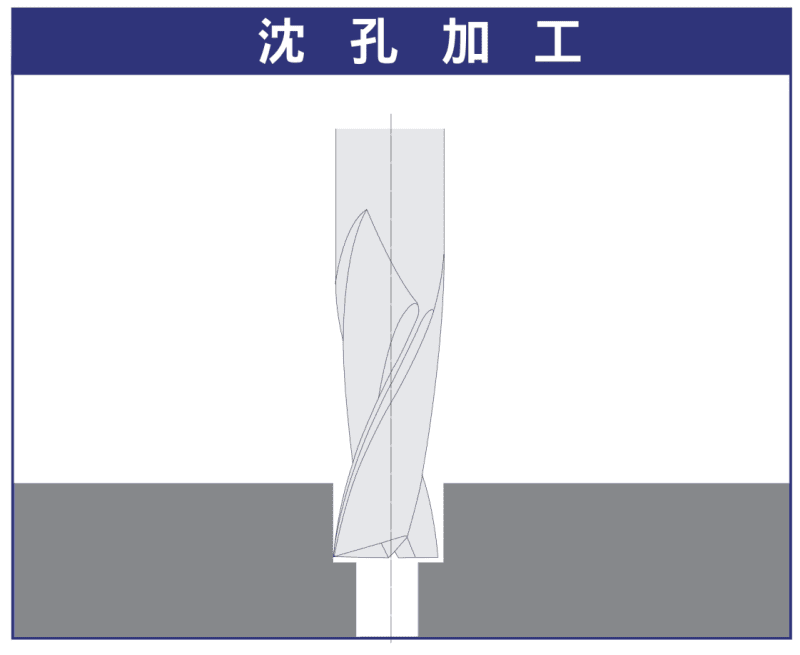
| Deep milling | Square end mill (roughing end mill as an extension) | Requires good chip-evacuation space and controlled length-to-diameter ratio to avoid vibration and tool breakage |
| Surface (curved) machining | Ball nose end mill | Suited to 3D surfaces and mold machining, enabling contour and profile milling with good surface quality |
| Counterbore machining | Tapered end mill, tapered ball nose end mill | Suited to counterbores and slope machining with good angle control |
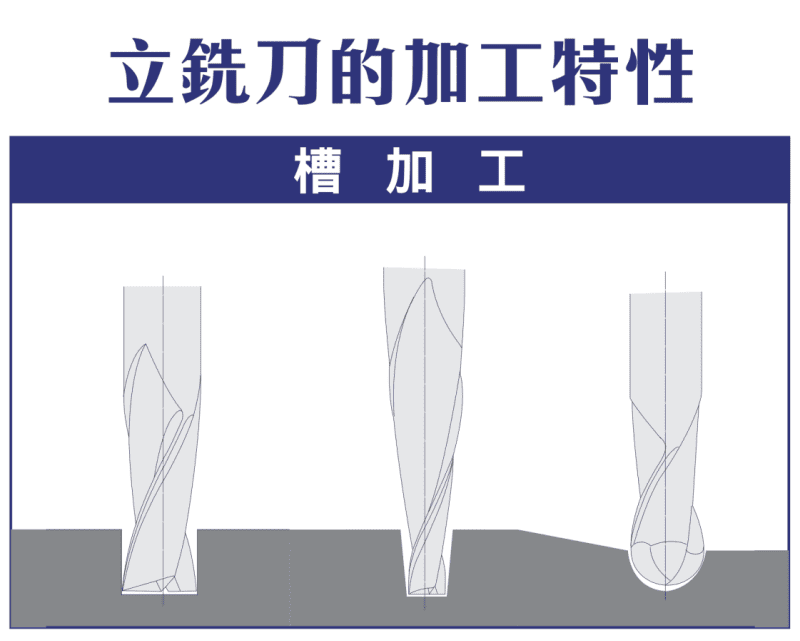
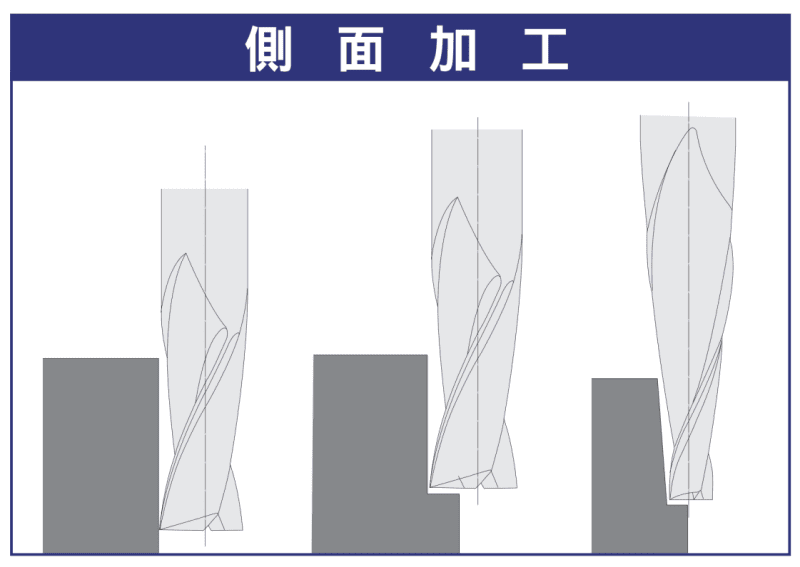
Slotting & Side Milling
Suitable tool: square end mill. High cutting efficiency, ideal for right-angle and flat machining, and well suited to general slotting and side milling.
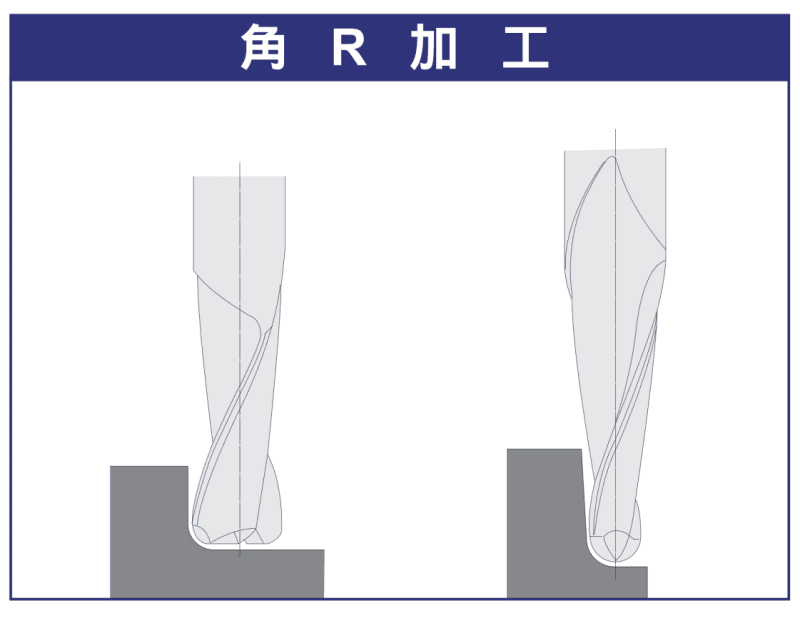
Corner R Machining
Suitable tool: corner-radius end mill. Machines corner transitions, reduces stress concentration and improves part durability.
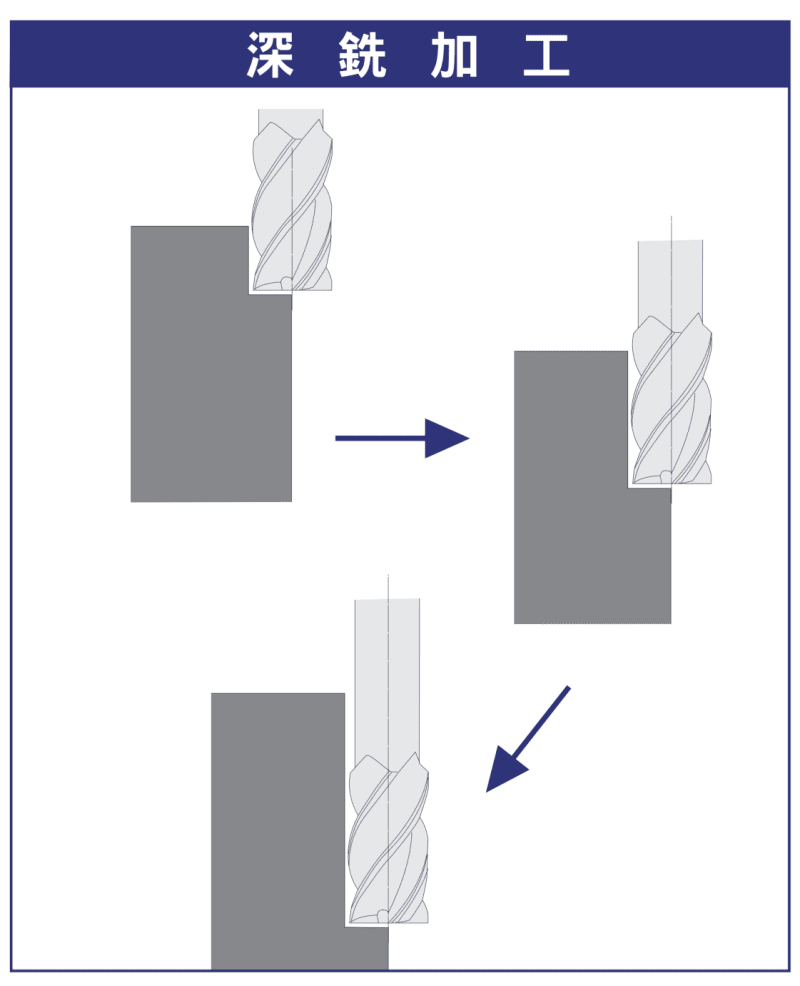
Deep Milling
Suitable tool: square end mill (roughing end mill as an extended option). Requires good chip-evacuation space and controlled length-to-diameter ratio to avoid vibration and tool breakage.
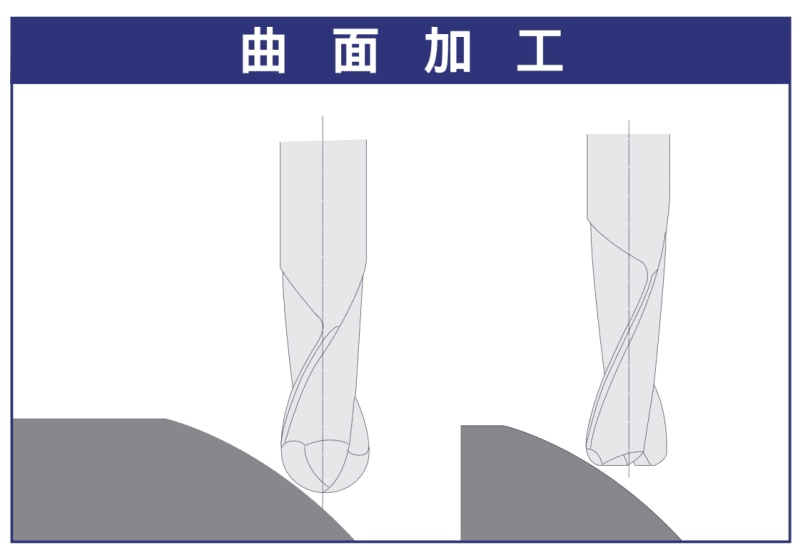
Surface (Curved) Machining
Suitable tool: ball nose end mill. Suited to 3D surfaces and mold machining, enabling contour and profile milling with good surface quality.
Counterbore Machining
Suitable tools: tapered end mill, tapered ball nose end mill. Suited to counterbores and slope machining with good angle control.
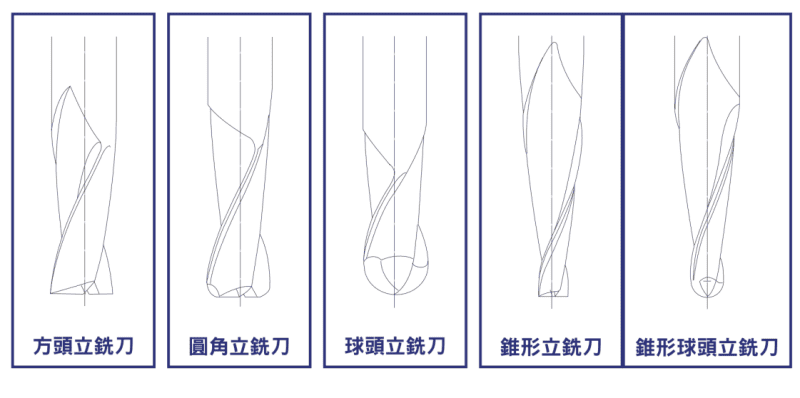
Tool Type & Application Summary
| Tool type | Main applications |
|---|---|
| Square end mill | Slotting, side milling |
| Corner-radius end mill | Corner R machining, added strength |
| Ball nose end mill | Surface machining, mold machining |
| Tapered end mill | Slope machining, draft angles |
| Tapered ball nose end mill | Compound surface machining |
How to Choose the Right End Mill Shape
| Selection basis | Condition | Recommended tool / design |
|---|---|---|
| By operation | Flat | Square end mill |
| Surface | Ball nose end mill | |
| Corner R | Corner-radius end mill | |
| Deep hole | High-rigidity tool | |
| By material | Aluminum | High helix angle tool |
| Steel | Standard or low helix angle | |
| By accuracy | Roughing | Roughing end mill |
| Finishing | Ball nose or corner-radius end mill |
For each type's construction and characteristics (square, tapered, roughing, ball nose, corner-radius, heavy-cutting), see End Mill Types and Features.
FAQ
Which end mill should I use for slotting and side milling?
A square (flat) end mill—high cutting efficiency and ideal for right-angle and flat machining—is the first choice for general slotting and side milling.
Which tool is best for 3D surface / mold machining?
A ball nose end mill—it enables contour and profile milling with good surface quality, suited to 3D surfaces and molds.
What should I watch for in deep milling?
Use a square end mill (roughing end mill as an extension), ensure good chip-evacuation space, control the length-to-diameter ratio, and avoid vibration and tool breakage.
How do I choose an end mill shape by need?
Flat → square; surface → ball nose; corner R → corner-radius; deep hole → high-rigidity tool. Aluminum → high helix; steel → standard/low helix. Roughing → roughing end mill; finishing → ball nose or corner-radius. For each type's characteristics, see End Mill Types and Features.
This article is part of End Mills: The Complete Guide - Know the Cutter, Choose It, Set the Conditions; Toolpaths Are Another Line; that guide shows how the whole topic fits together.