Tap Structure Guide: Part Names, Chamfer & Cutting Angles
A tap is the core tool for internal-thread machining, and its structure directly affects cutting efficiency, tool life and thread quality. Key geometry — chamfer, threading section, flute, relief and rake — governs chip evacuation and cutting load. This guide covers tap part names, chamfer design (taper/plug/bottoming), relief and rake angles, and how the number of chamfer threads affects stability, to help engineering and purchasing select quickly.
1. What a Tap Is
A tap cuts internal threads, widely used on CNC machining centres, lathes, mold making and metalworking. Its geometry sets cutting-load distribution, chip direction and torque control.
2. Tap Part Names
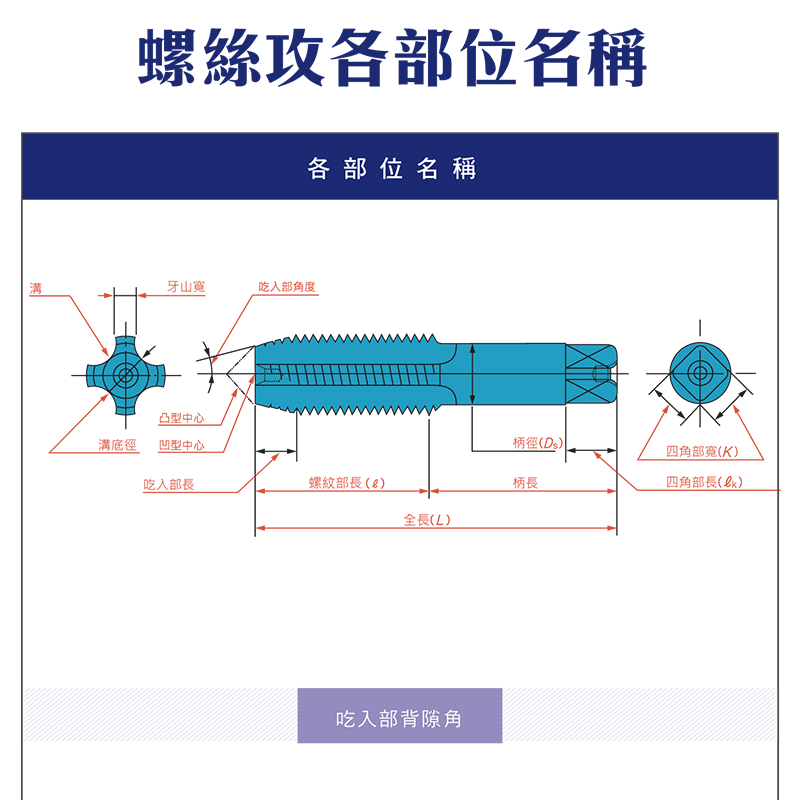
| Part | Function |
|---|---|
| Chamfer | Leads in the cut, lowers impact, does the initial cutting |
| Threading section | Forms the thread |
| Flute | Chip evacuation and cutting space |
| Shank / square | Holding and torque transmission |
| Major / minor dia | Sets thread size and depth |
3. Chamfer Design
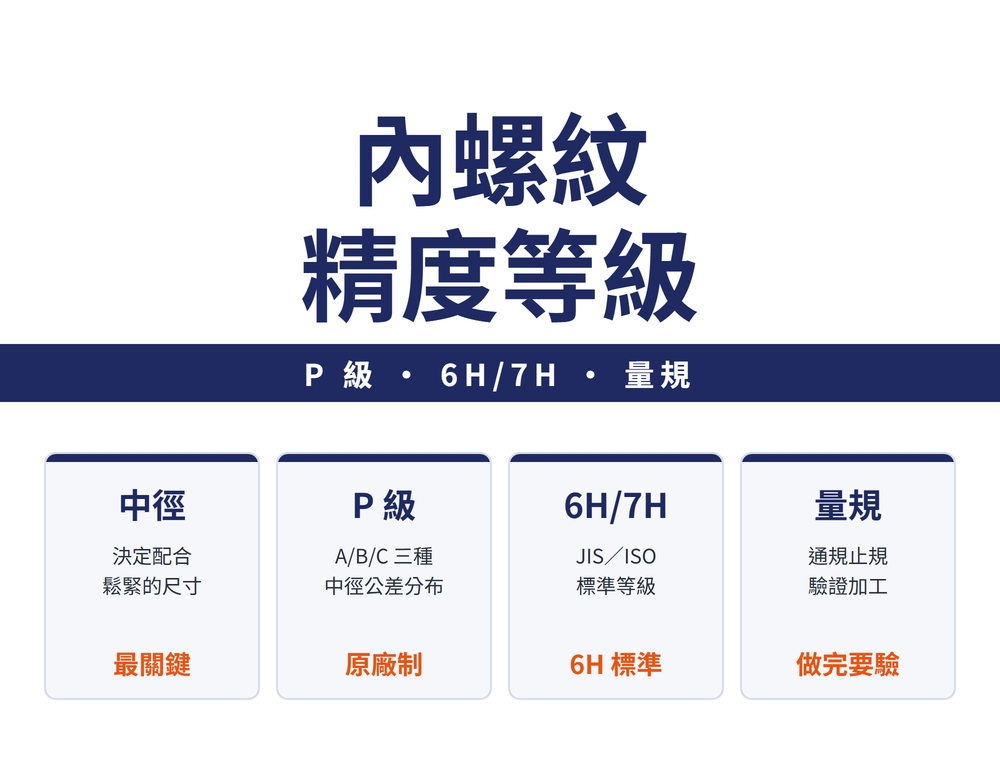
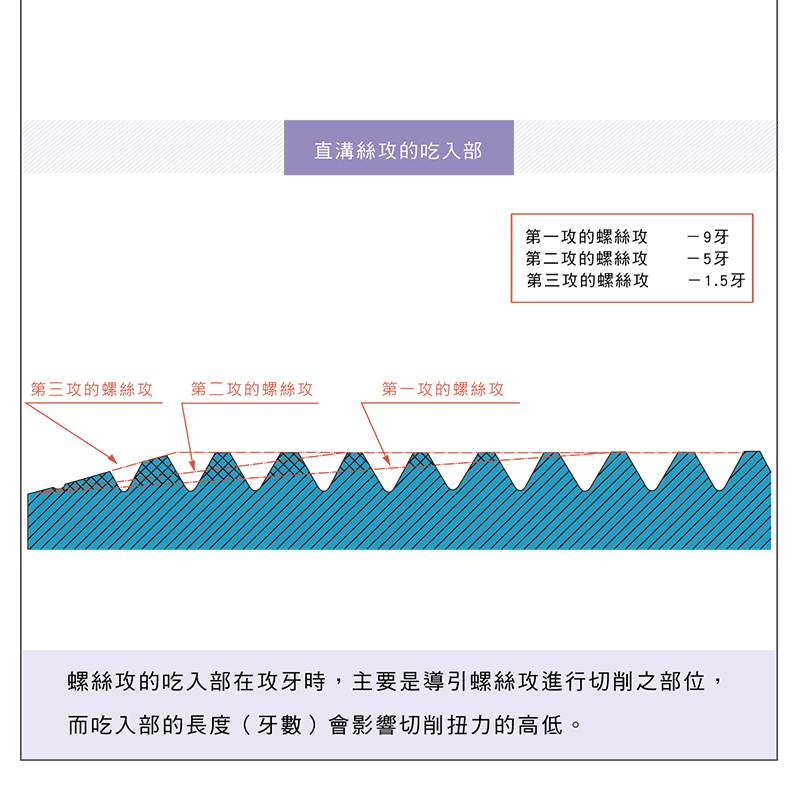
The chamfer is the most important cutting lead-in, handling the initial cut, controlling load distribution and stability. By number of chamfer threads it splits into three types:
| Type | Chamfer threads (approx.) | Use |
|---|---|---|
| Taper (1st) | about 9 threads | Long lead-in, smooth force; starting/through holes |
| Plug (2nd) | about 5 threads | General |
| Bottoming (3rd) | about 1.5 threads | Short lead-in; blind holes to the bottom |
More chamfer threads give a smoother force; fewer suit blind holes.
4. Relief and Rake Angles
| Geometry | Effect |
|---|---|
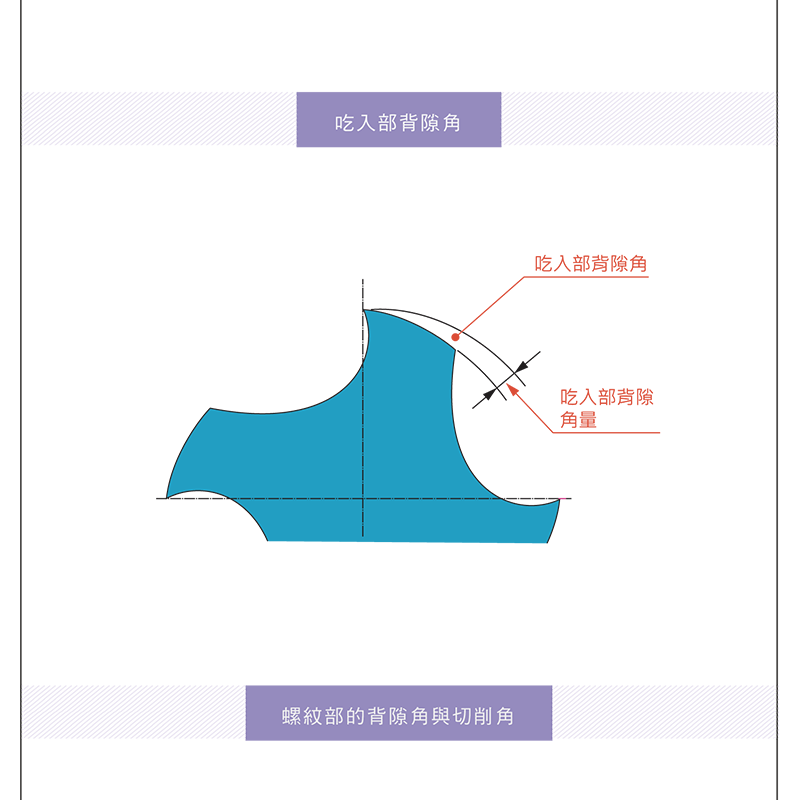
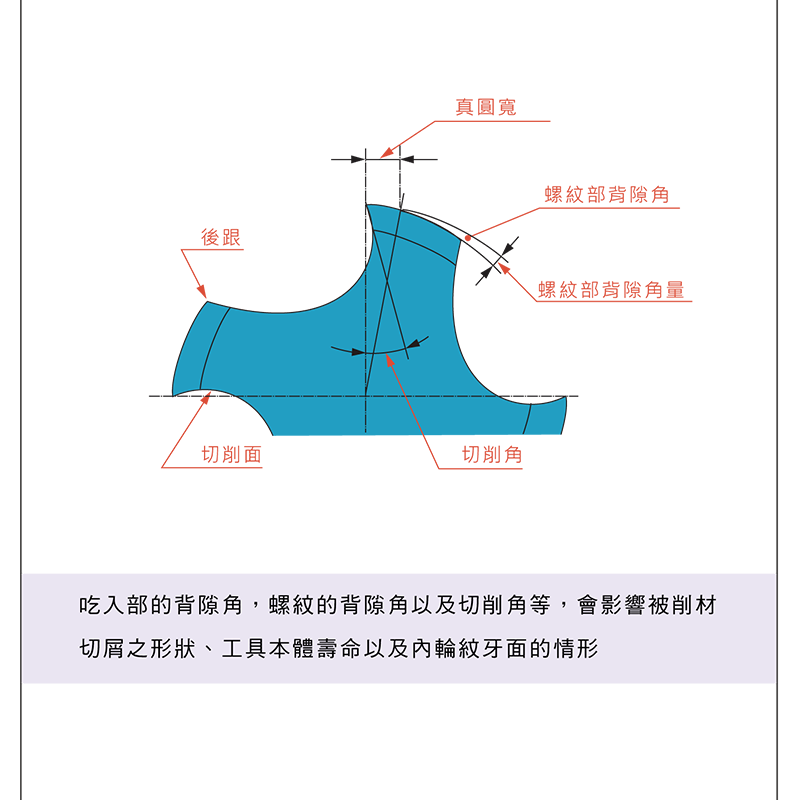
| Chamfer/thread relief | Affects friction and tool life; too little raises resistance and wear |
| Rake angle | Affects chip formation and evacuation; wrong rake roughens the surface |
Poor geometry raises resistance, speeds wear and roughens threads; see the cutting-geometry guide for detailed angles.
5. Cutting-Zone Geometry and Mechanism
Key cutting-zone geometry includes land width, relief, the cutting face and rake, together setting chip shape, evacuation and heat. In tapping, the chamfer cuts progressively with several threads engaged, forming a continuous thread; the keys are load distribution, chip direction and torque control. Good design and selection give stable tapping and longer life.
For flute design see the Tap Flute Design Guide; for rake/relief detail see the Tap Cutting Geometry Guide; for spiral-point lead-in see the Spiral-Point Tap Guide; for the tool overview see the Thread Tool Chart.
FAQ
Q: Taper, plug or bottoming tap?
It's the chamfer length: taper ~9 threads (long lead-in, smooth, for starting/through holes), plug ~5 (general), bottoming ~1.5 (short lead-in, for blind holes to the bottom). Hand tapping often uses all three in sequence.
Q: Why is the chamfer important?
The chamfer handles the initial cut and lead-in, deciding how load spreads across the threads. More chamfer threads smooth the force; fewer suit blind holes. Poor chamfer geometry gives a rough start and concentrated torque that breaks taps.
Q: What do relief and rake each affect?
Relief affects friction and tool life (too little raises resistance, heat and wear); rake affects chip formation and evacuation (wrong rake roughens the surface). Match both to the material — see the cutting-geometry guide.
Q: Consider flute and chamfer together?
Yes. The flute sets chip direction and space, the chamfer sets lead-in and load distribution; match both to hole type (through/blind) and material for smooth evacuation and stable machining.
For the full reading guide on this topic, see Thread Machining: A Complete Reading Guide.