Thread Size Chart: Metric & Unified Pitch/TPI Reference
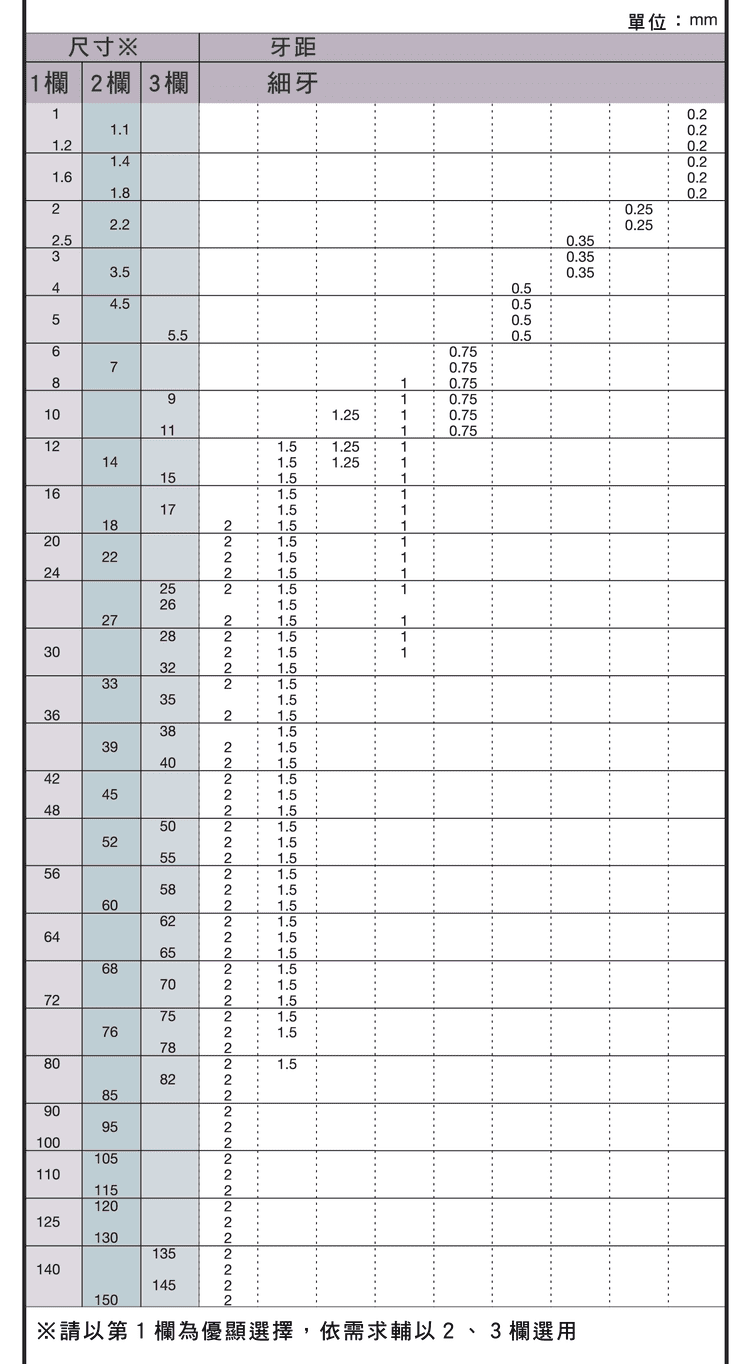
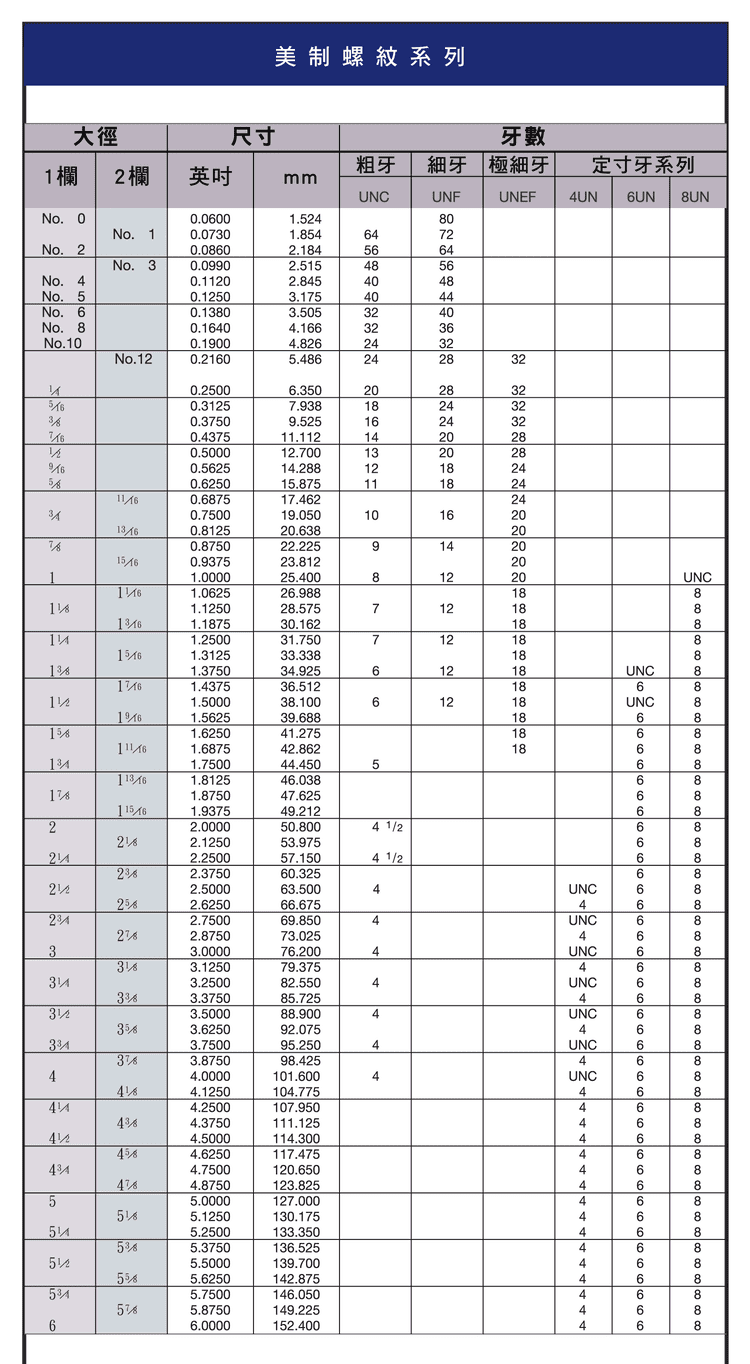
This guide compiles a full thread size chart covering metric, Unified (UNC/UNF/UNEF) and trapezoidal (Tr) threads, with pitch, TPI and size cross-references. Standardized data lets you quickly look up coarse and fine specs by diameter and convert between TPI and pitch — useful for tap selection, thread machining and mechanical design, a key reference for machining and CNC.
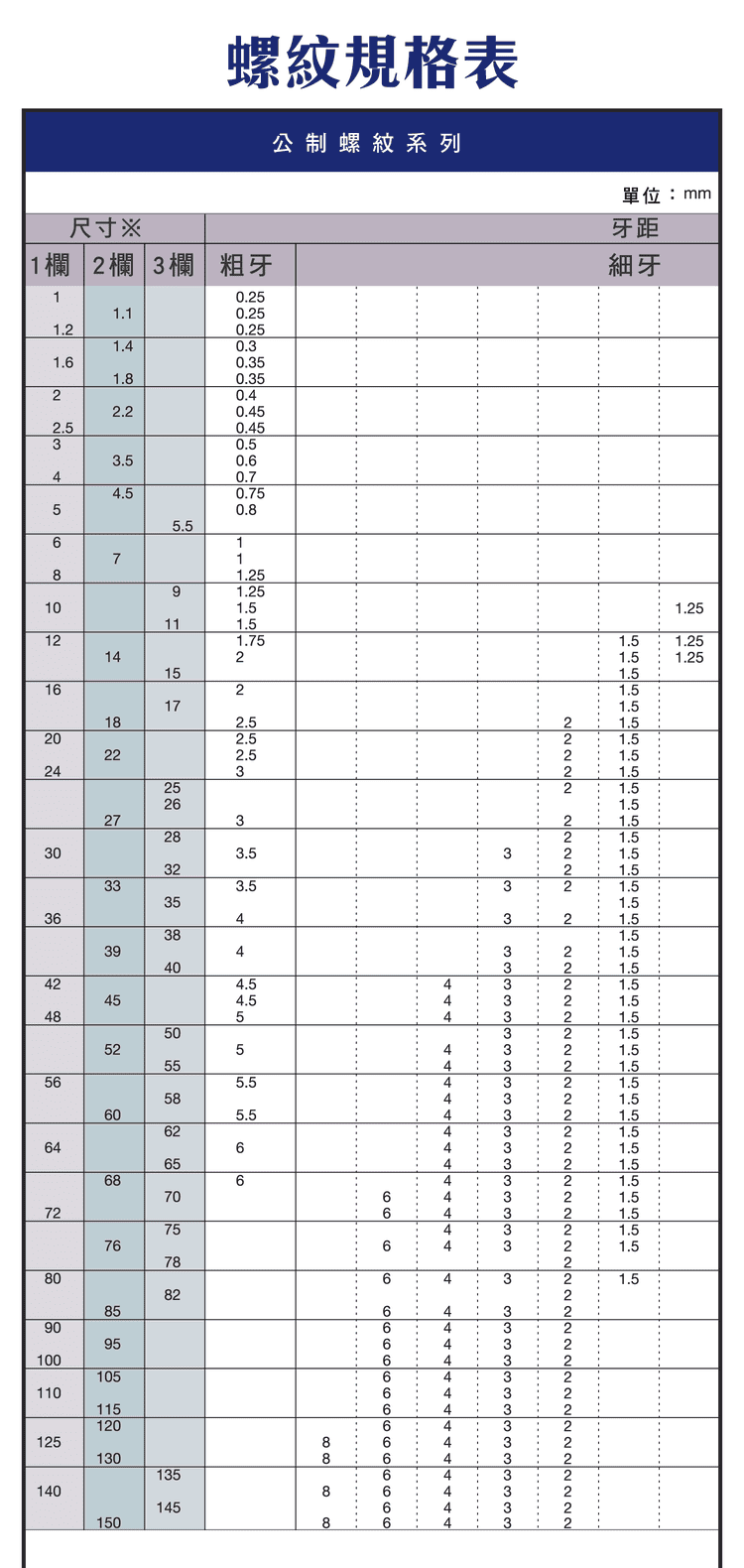
1. Common Metric Pitches (Coarse)
| Size | Coarse pitch(mm) | Common fine pitch(mm) |
|---|---|---|
| M6 | 1.0 | 0.75 |
| M8 | 1.25 | 1.0 |
| M10 | 1.5 | 1.25 / 1.0 |
| M12 | 1.75 | 1.5 / 1.25 |
| M16 | 2.0 | 1.5 |
One major diameter can have several pitches: coarse for general work, fine for precision or high-strength needs.
2. Unified Threads (by TPI)
| Series | Example | Note |
|---|---|---|
| UNC (coarse) | 1/4"-20 | Fewer TPI, coarser; general fastening |
| UNF (fine) | 1/4"-28 | More TPI, finer; precision and anti-loosening |
| UNEF (extra fine) | 1/4"-32 | Even more TPI; high-precision locking |
| UN (special series) | 4UN / 6UN / 8UN | Constant-pitch series; common on large diameters |
Higher TPI = finer thread, for different strength and locking needs.
3. TPI ↔ Pitch Conversion
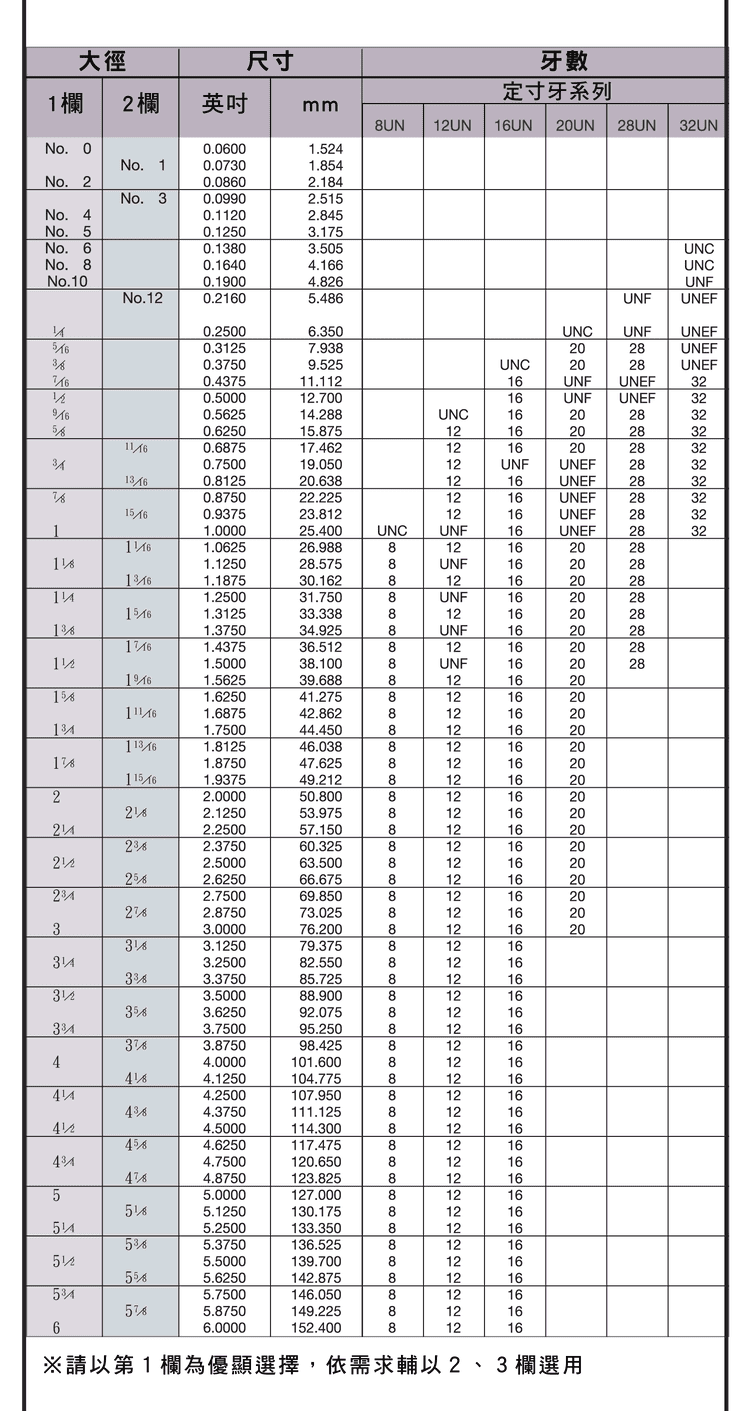
TPI and pitch (mm) convert with: pitch (mm) = 25.4 ÷ TPI.
| TPI | Pitch(mm) |
|---|---|
| 10 | 2.54 |
| 20 | 1.27 |
| 100 | 0.254 |
Use for metric/imperial conversion, parameter setup and tool selection.
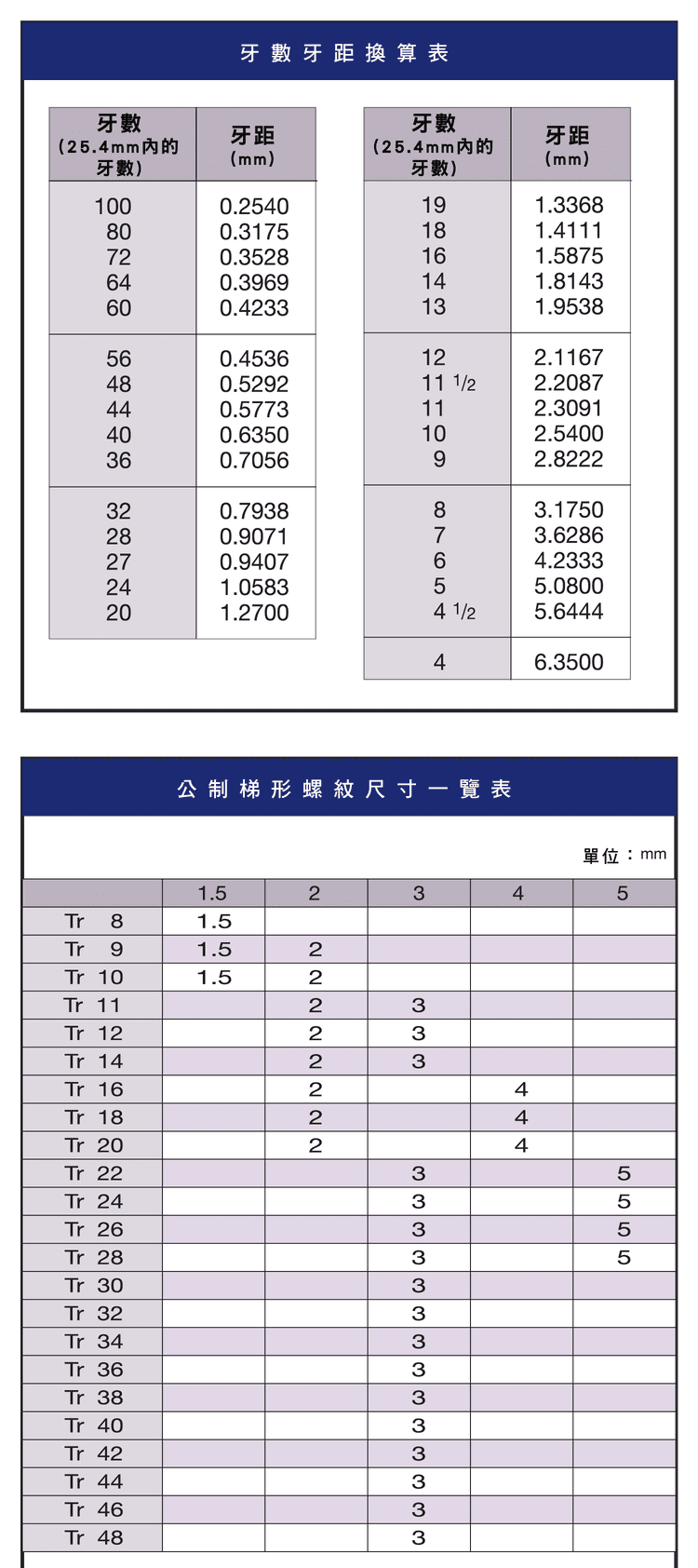
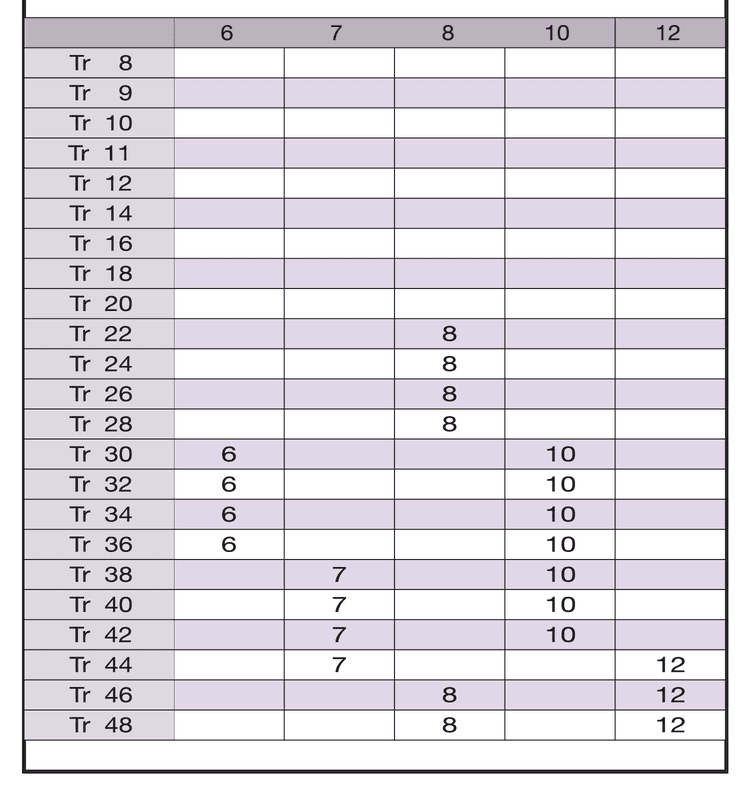
※ Full metric/Unified/trapezoidal charts above; complete sizes per the original tables.
4. How to Use the Chart
First confirm metric (mm pitch) or Unified (TPI), then look up coarse/fine pitch or TPI by diameter, match tolerance on the tolerance chart, and estimate the pilot hole from minor dia and pitch.
For forms see the Standard Thread Form Guide; for codes see the Thread Designation Chart; for tolerance see the Metric Tolerance Chart; for pilot holes see the Metric Tap Drill Size Chart.
FAQ
Q: Coarse or fine thread?
Coarse has a larger pitch, machines faster and resists damage — good for general fastening; fine has a smaller pitch, higher locking accuracy and better anti-loosening — good for precision parts, thin walls and vibration. One diameter often has several pitches, so confirm first.
Q: How do I convert TPI and pitch?
Use pitch (mm) = 25.4 ÷ TPI. For example 20 TPI ≈ 1.27mm and 10 TPI ≈ 2.54mm. It's common for metric/imperial comparison, setting parameters and selecting tools.
Q: Why does one M size have several pitches?
Metric threads come in coarse and fine, so one major diameter can have several fine pitches (e.g. M10 with 1.5 coarse, 1.25/1.0 fine). Different pitch changes pitch, minor dia and pilot hole — confirm the pitch before choosing a tap or inspecting.
Q: Do trapezoidal (Tr) threads use this chart?
Trapezoidal threads are listed separately (metric Tr); their form and pitch system differ from V threads and they are mainly for transmission. Use the dedicated trapezoidal specs — don't apply V-thread data directly.
For the full reading guide on this topic, see Thread Machining: A Complete Reading Guide.