Metric Tap Drill Size Chart: M1–M100 Pilot Holes
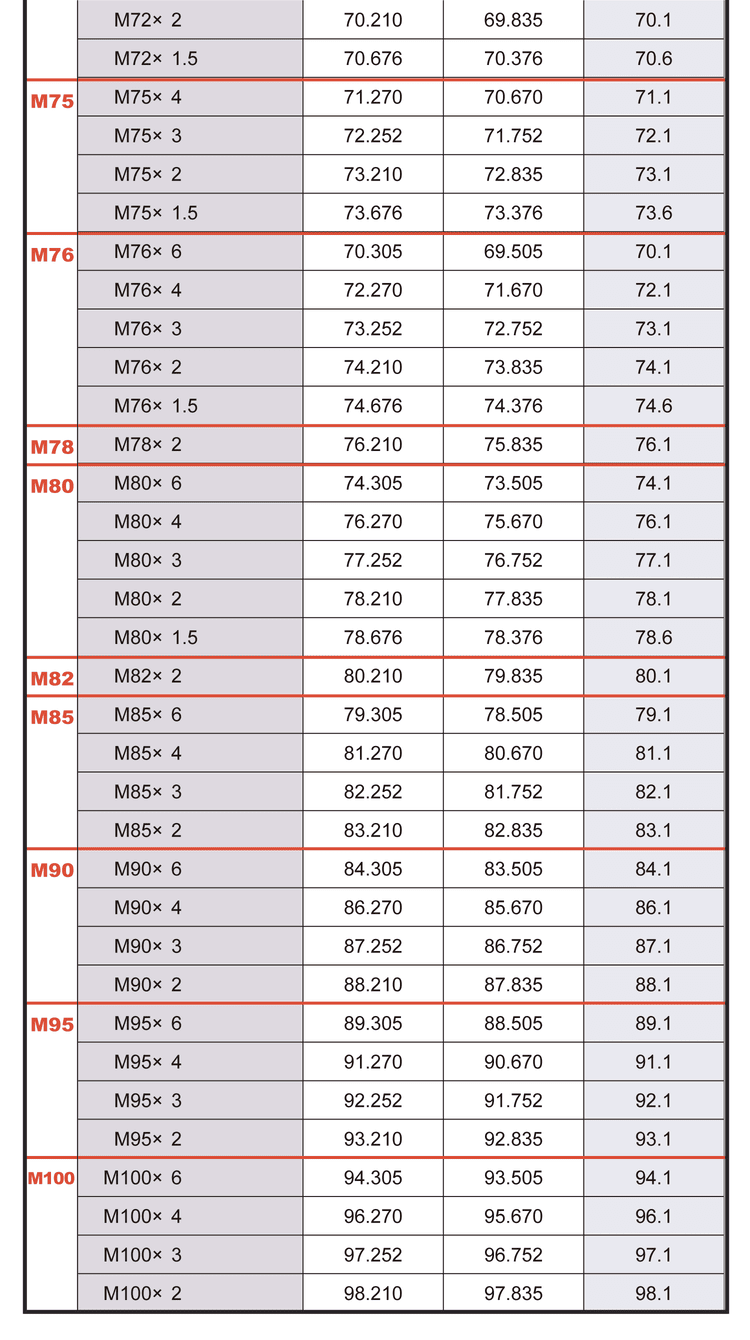
The metric tap-drill (pilot-hole) chart gives pilot-hole sizes for M1–M100, covering internal minor diameter (D1) max/min and the recommended tap-drill size. It's a key reference for CNC and manual tapping, avoiding over-tight threads, stripped crests and tap breakage. Choosing the right hole size improves stability, extends tool life and secures thread fit — widely used in machinery, molds and automation.
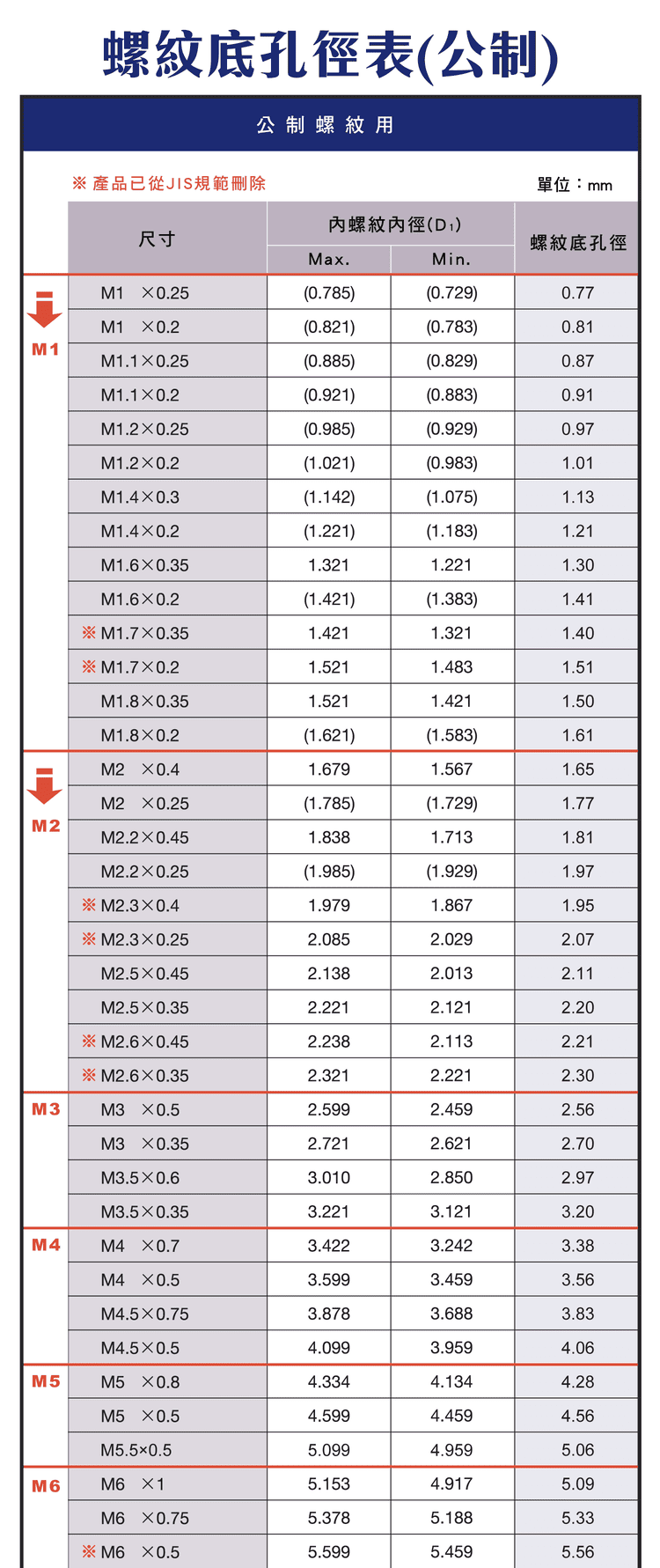
Scope of this page: the complete M1-M100 reference. If you only need the common M3-M30 sizes and the formula on one screen, see the Quick Tap Drill Size Chart; for form (roll) taps use the Form Tap Drill Size Chart.
1. Basic Concept
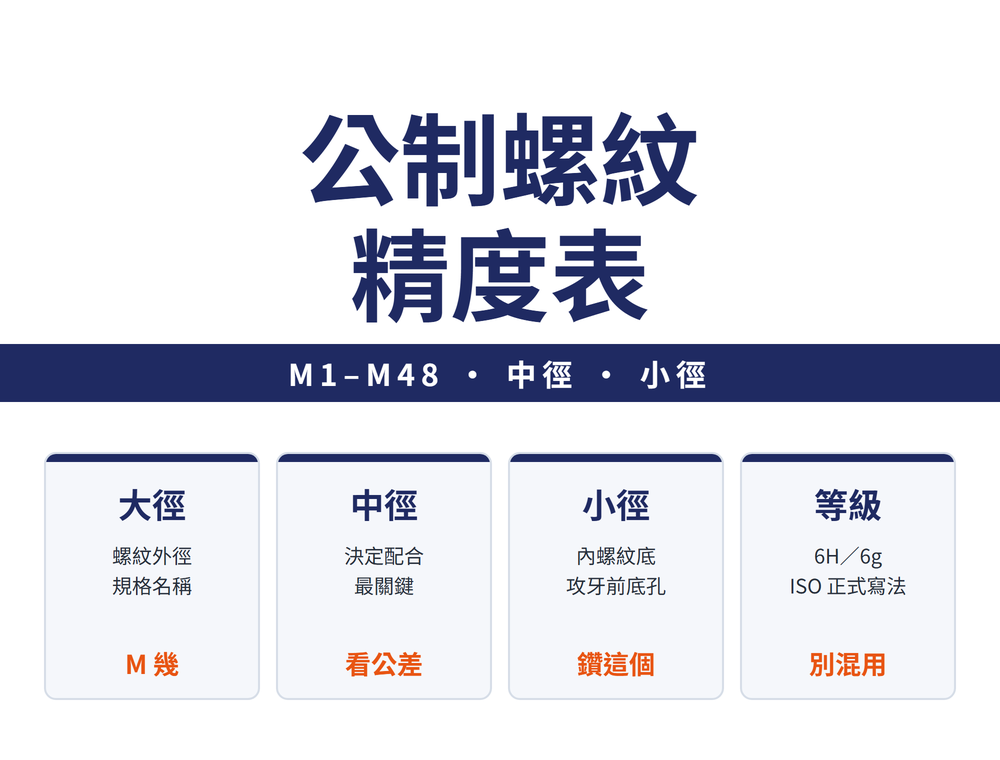
Tap-drill size is the pilot hole drilled before tapping; the internal minor diameter (D1) is the root diameter of the thread. The tap-drill size is close to the minor diameter and directly affects thread depth and strength: too small raises tapping load and breaks taps; too large gives shallow threads and lower strength.
2. Common Formula
Metric coarse tap drill ≒ major diameter − pitch (P)
For example M10×1.5 → 10 − 1.5 = 8.5 mm. Fine-tune for material and precision in practice.
3. Common Metric Coarse Tap Drills
| Size | Pitch(mm) | Tap drill(mm) |
|---|---|---|
| M3 | 0.5 | 2.5 |
| M4 | 0.7 | 3.3 |
| M5 | 0.8 | 4.2 |
| M6 | 1.0 | 5.0 |
| M8 | 1.25 | 6.8 |
| M10 | 1.5 | 8.5 |
| M12 | 1.75 | 10.2 |
| M16 | 2.0 | 14.0 |
※ Common coarse examples; full M1–M100, fine pitches and minor Max/Min per the original tables below.
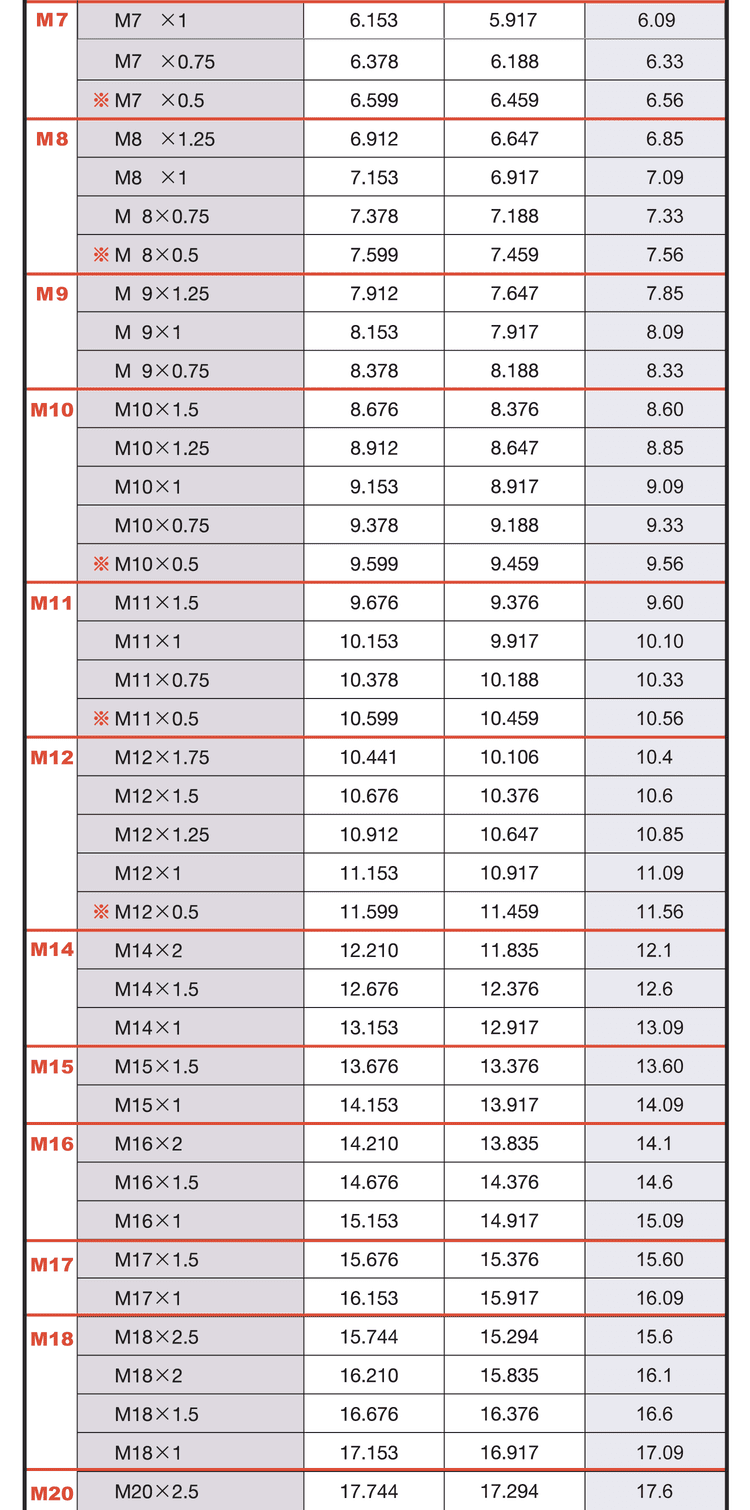
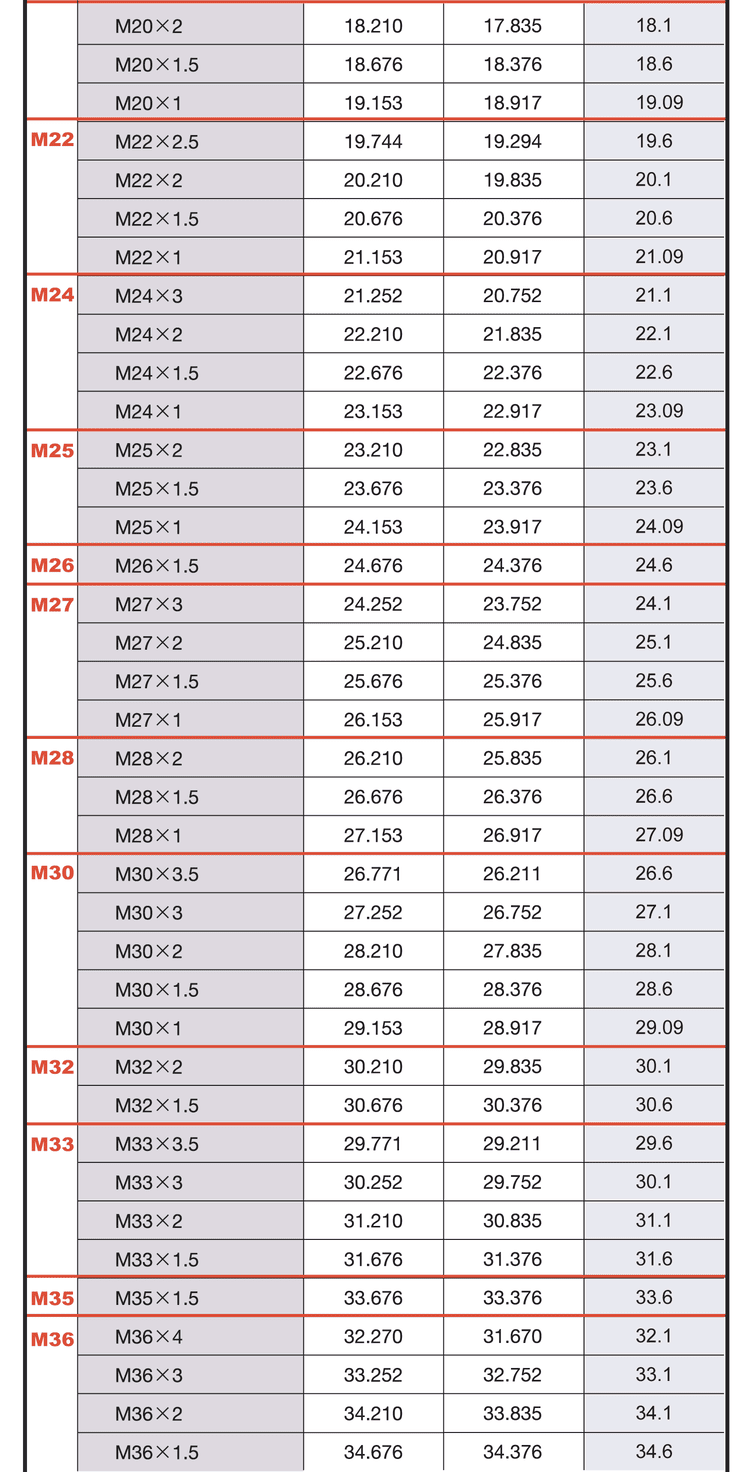
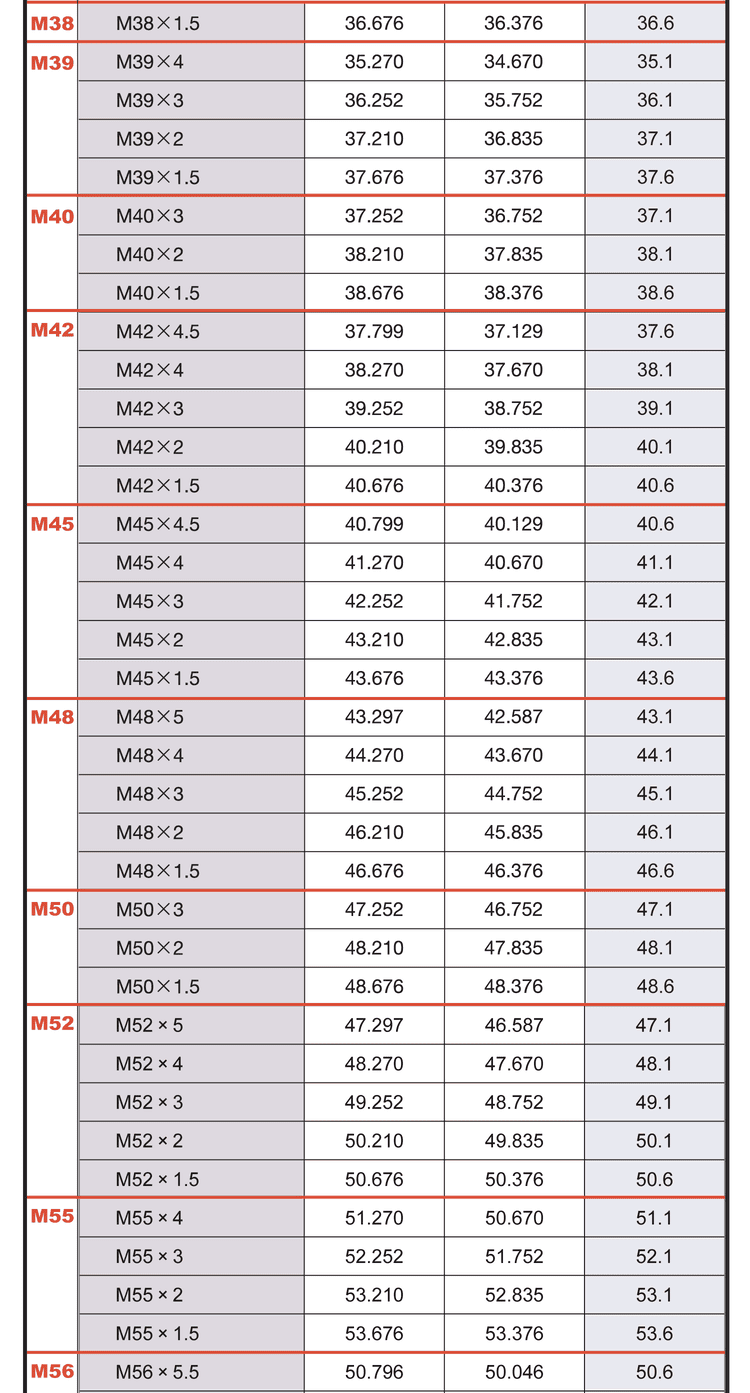
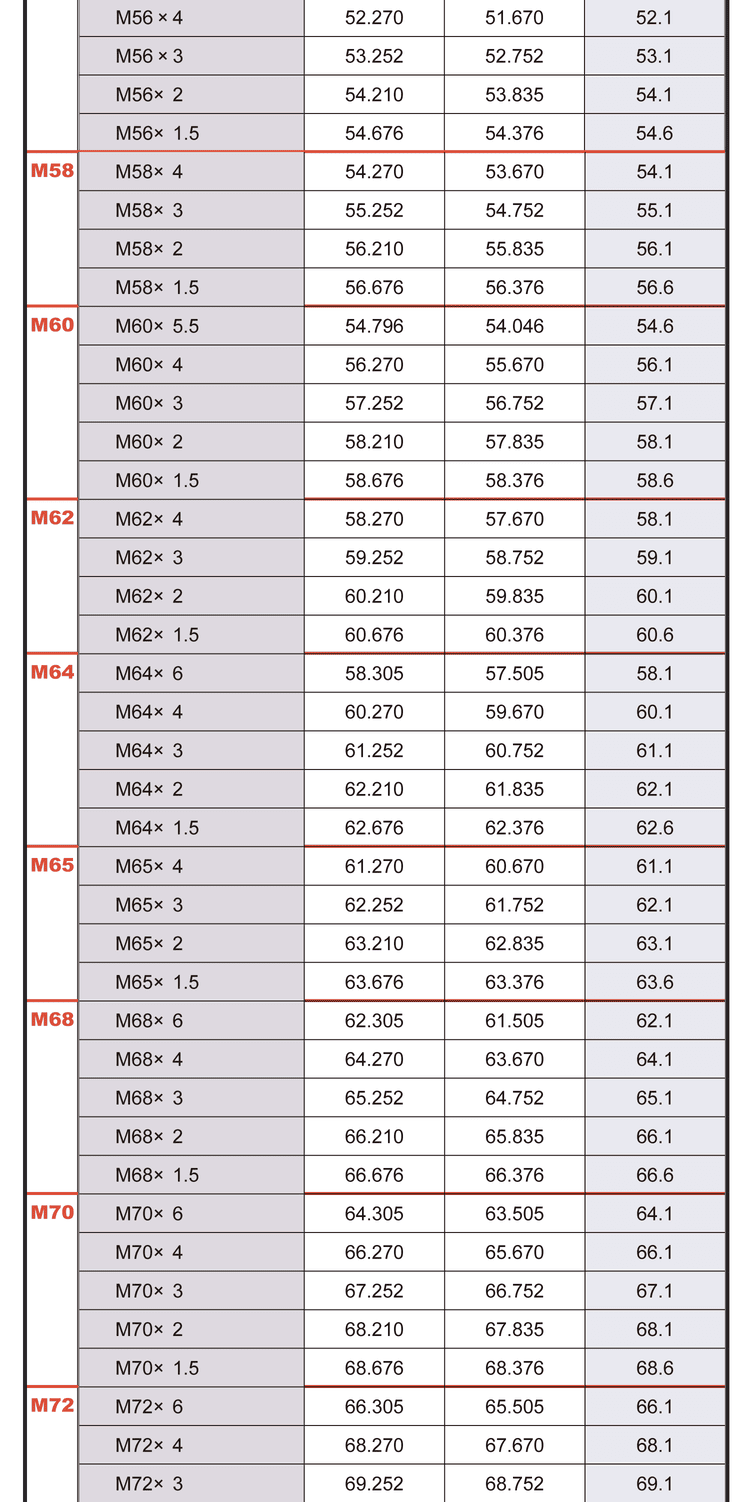
※ Full M1–M100 tap-drill charts above; values per the original tables.
4. Adjusting by Material
| Material | Hole adjustment | Purpose |
|---|---|---|
| Steel | Standard or slightly larger | Lower tapping load |
| Aluminium | Slightly smaller | Higher thread strength |
| Stainless | Enlarge the hole | Avoid tap breakage, reduce galling |
5. Common Problems and Fixes
| Problem | Cause | Fix |
|---|---|---|
| Tap breakage | Hole too small, poor evacuation | Enlarge hole, use cutting fluid |
| Loose thread | Hole too large, shallow thread | Reduce hole size |
| Rough surface | Tool wear | Replace tap, optimize cutting conditions |
6. Typical Size Ranges
Small sizes (M1–M3) for precision electronics and micro parts; mid sizes (M4–M12) for machinery and jigs; large sizes (M14+) for heavy industry and structures.
For metric tolerance and minor dia see the Metric Thread Tolerance Chart; for pitch and size see the Thread Size Chart; for tapping torque see the Tap Torque Guide; for unified and special pilot holes see the Unified Tap Drill Chart and Special Thread Tap Drill Chart.
FAQ
Q: How do I quickly estimate a metric tap drill?
For coarse threads use "tap drill ≒ major − pitch", e.g. M10×1.5 → 8.5mm, M8×1.25 → 6.8mm. Fine threads have smaller pitch so the hole is larger; then adjust for material and precision.
Q: What if the hole is too small or too large?
Too small → high tapping torque, stripped crests or broken taps; too large → shallow threads with lower strength and engagement. The tap drill is close to the internal minor dia, balancing strength and machining stability.
Q: Should I enlarge the hole for stainless?
Slightly, yes. Stainless work-hardens and tends to gall, so a slightly larger hole lowers tapping load and breakage risk, with suitable cutting fluid; aluminium can go slightly smaller for higher thread strength.
Q: Same hole for CNC and manual tapping?
CNC tapping prefers a standard or slightly larger hole for stability; manual tapping can go slightly smaller for engagement. In practice, adjust by material, tap type and target engagement (commonly ~60–75%).
For the full reading guides on this topic, see Thread Machining: A Complete Reading Guide and Hole Accuracy: A Complete Reading Guide.