Thread Types Guide: Internal/External, Profiles & Standards
Threads are grouped by use and standard into metric, inch, pipe and transmission types, with flank angles of 60°, 55°, 30° and 29°. Standards like ISO, UNC, UNF, BSPT, NPT and ACME serve mechanical structures, fluid sealing and power transmission respectively. Understanding internal/external diameters and flank-angle traits improves assembly accuracy, sealing and durability — a key foundation for CNC machining and mechanical design.
1. General Machine Threads
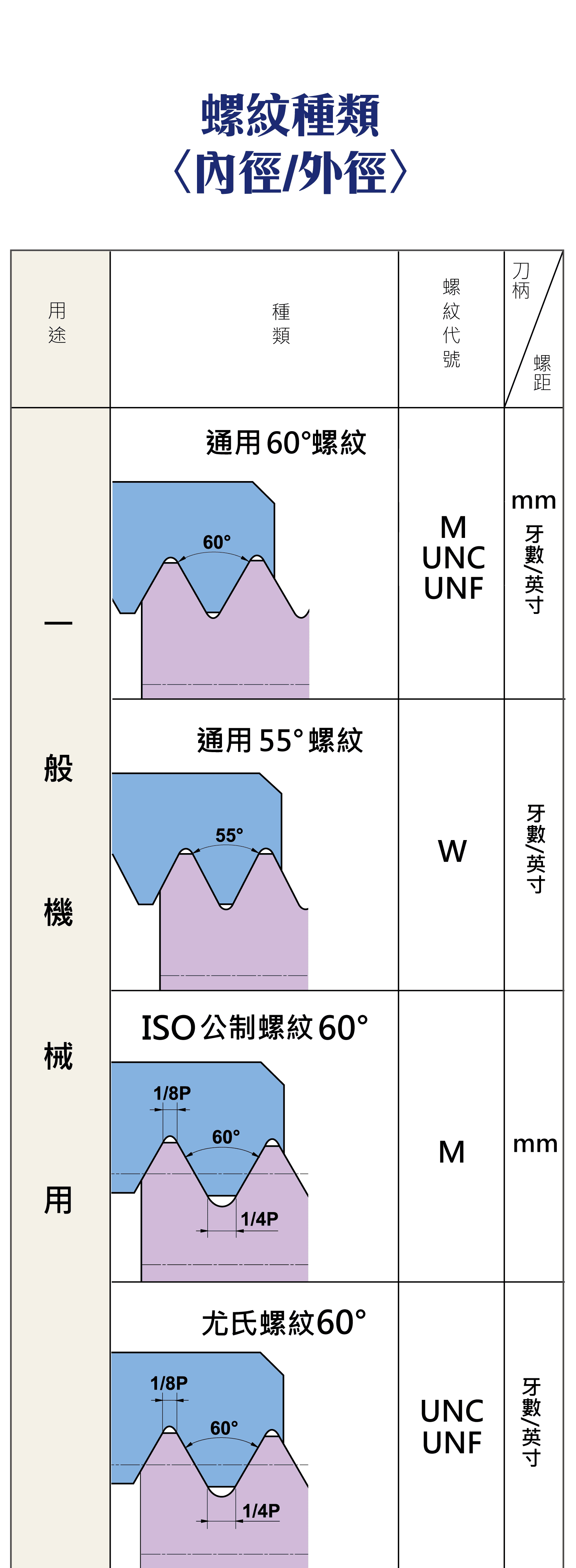
The two most common general threads for mechanical connection:
| Thread | Codes | Traits |
|---|---|---|
| General 60° | M / UNC / UNF | Most common standard, easy to cut, fits most parts |
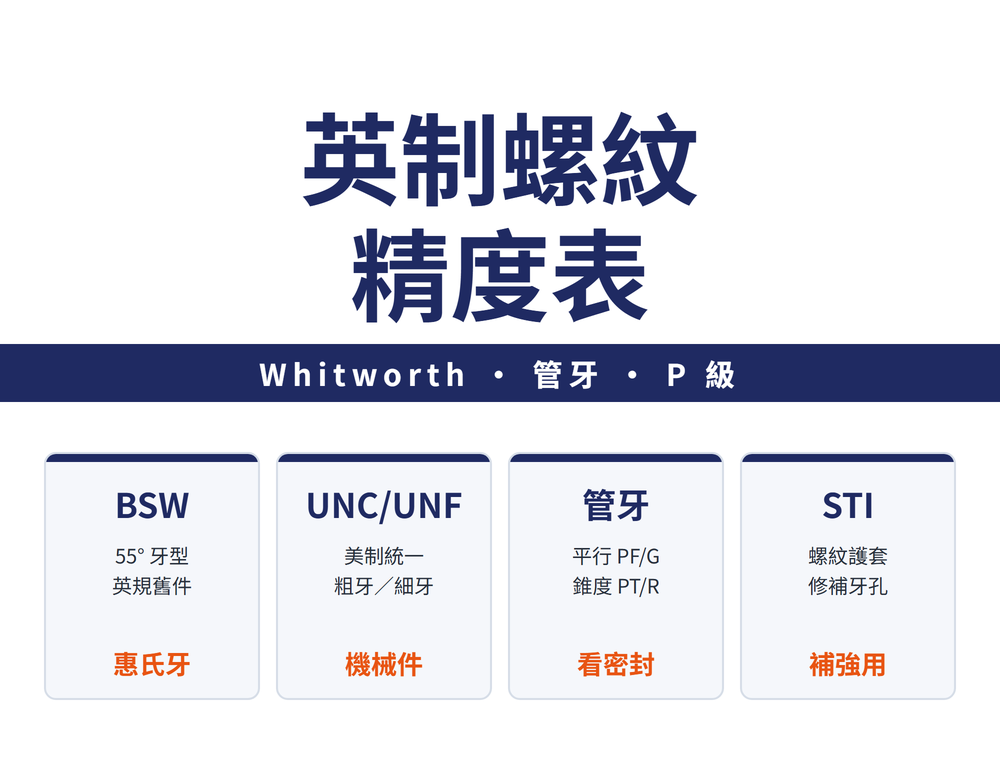
| General 55° (Whitworth) | W | Inch system, rounder form, for low-stress use |
2. Pipe Threads (Fluid & Sealing)
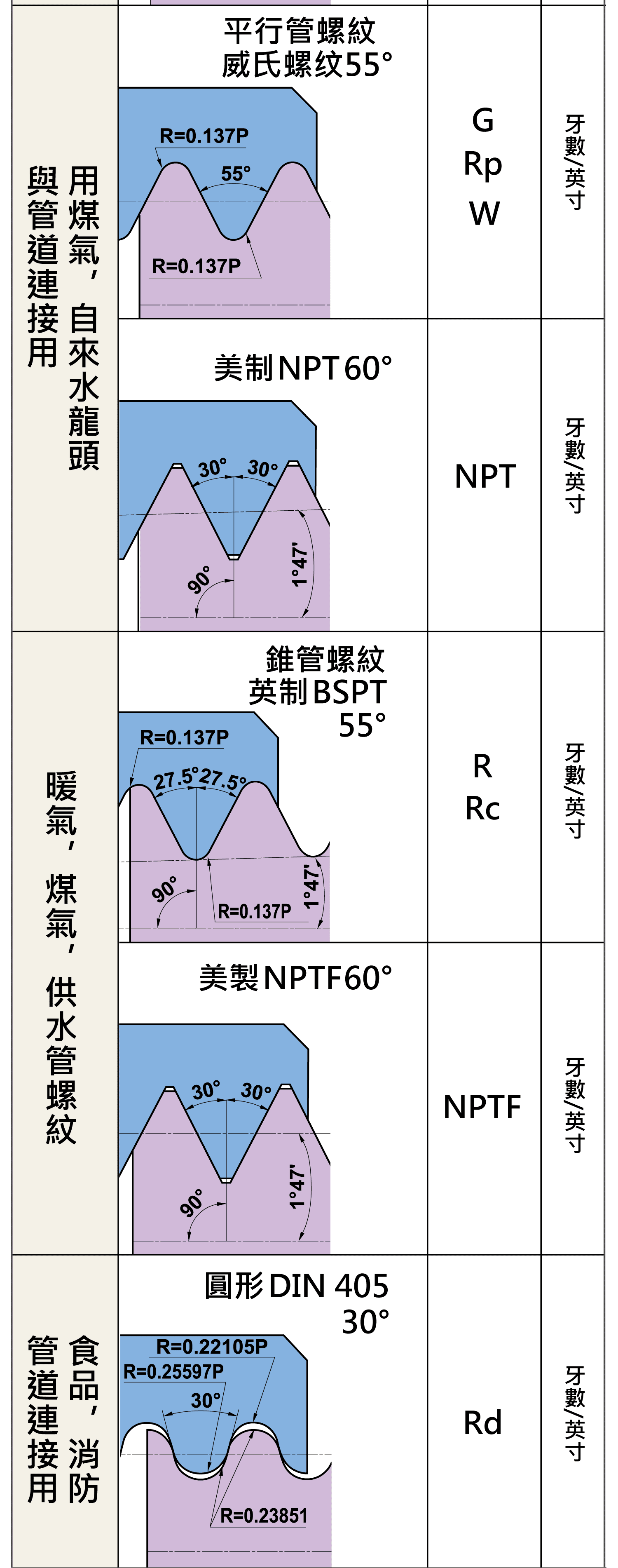
Pipe-connection and sealing threads, mostly tapered for self-sealing:
| Thread | Codes / angle | Traits |
|---|---|---|
| BSPP / BSPT | G / Rp / R / Rc (55°) | Inch pipe thread, good sealing |
| NPT | 60° | Tapered, self-sealing design |
| NPTF | 60° | Leak-free sealing, high-pressure systems |
3. Special-Purpose & Transmission Threads
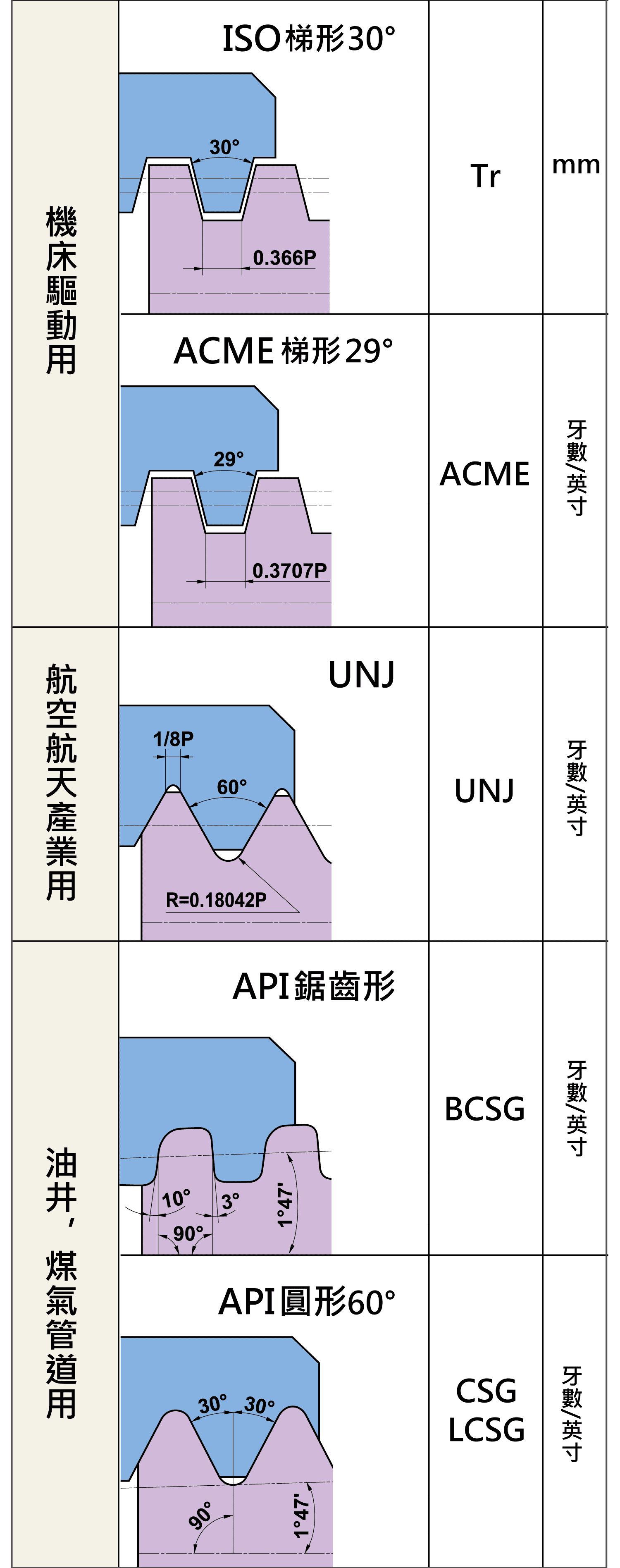
Threads for transmission, contamination resistance and special mechanisms:
| Thread / angle | Use | Traits |
|---|---|---|
| DIN 405 round (30°) | Food, fire piping | Contamination resistant, wear resistant |
| ISO trapezoidal (Tr 30°) | Mechanical transmission | High load capacity |
| ACME (29°) | US transmission systems | High efficiency |
4. High-End & Industry Threads
Dedicated threads for aerospace, oil and gas and other high-reliability uses:
| Thread | Note | Traits |
|---|---|---|
| UNJ (aerospace) | Rounded root design | Enhanced fatigue strength, high reliability |
| API (oil & gas) | BCSG (buttress), CSG, LCSG (round) | High-pressure sealing, heavy-load use |
5. Selection Approach
Choose by use: general connection → 60° V (M/UNC/UNF); pipe sealing → tapered BSPT/NPT; power transmission → trapezoidal (Tr) / ACME; aerospace and oil/gas high-reliability → UNJ/API. For profile geometry, see the Thread Profile Guide; for external/internal machining parameters, see the External Thread Machining Guide and Internal Thread Machining Guide.
FAQ
Q: How do I tell metric from inch threads?
Metric threads use "M + diameter × pitch" (e.g. M8×1.25) at a 60° angle; inch threads use threads per inch (TPI), commonly UNC/UNF (60°) and Whitworth W (55°). They are not interchangeable, so confirm the standard matches the mating part.
Q: Why are pipe threads mostly tapered?
Pipe threads like NPT and BSPT are tapered so the flanks wedge together on tightening for a self-seal, ideal for fluid and gas lines. BSPP is a parallel pipe thread that usually needs a washer or O-ring to seal.
Q: How do transmission threads differ from connection threads?
Transmission threads (trapezoidal Tr 30°, ACME 29°) have a small angle and flat crest for load capacity and transmission efficiency, used in lead screws and drives; connection threads (60° V) focus on fastening and versatility. Their uses differ and shouldn't be mixed.
Q: Why do aerospace and oil/gas need dedicated threads?
Aerospace UNJ uses a rounded root to boost fatigue strength and reliability; oil/gas API threads (buttress BCSG, round LCSG, etc.) are designed for high-pressure sealing and heavy loads, ensuring seal and structural safety in extreme conditions.
For the full reading guide on this topic, see Thread Machining: A Complete Reading Guide.